Services

Company RegistrationVisa ServicesBanking ServicesAccounting ServicesLegal ServicesHR Services

Partners

Partner modelsReferral program

Resources

BlogNews

About the company

About UsContact us

Latest articles


UPPERSETUP logo

Online platform for business registration in the UAE

Email

support@uppersetup.com

Phone

+971 52 184 1181

© 2026 UPPERSETUP Technology Ltd.
All content on this website is protected by copyright

Terms of ServiceTerms of UsePrivacy Policy
Send WhatsApp message
  1. Home
  2. Blog

Blog

All articles
RERA
Bankruptcy
Fujairah Free Zone
JAFZA
IT-startups
Hong Kong
RAKICC
Accounting
ADAFZ - Abu Dhabi Airport Free Zone
Personal Data
Laws and Regulations
Dubai International Academic City
Company Re-domiciliation
Dubai Maritime City
Meydan Free Zone
Fund
DWTC
Dubai South Free Zone
Employment Law
DIAC
Visas
Government programs
Healthcare
RAKEZ
Masdar City Free Zone
CRS
UAQ Free Trade Zone
Legal services
UAE
Digital Assets
Комплайнс
Knowledge base
UPPERSETUP
Work permit
Permits and Approvals
DIFC
Property
Finance
Deadlines & Рrocess
Offices & Infrastructure
Commercial Arbitration
Dubai Media City
Company setup
Dubai Knowledge Park
SAIF Zone
Investments
Banking
Dubai Silicon Oasis
KEZAD
Dubai Production City
Intellectual Property
HR
Dubai Design District (d3)
Innovation City
Free Zone
Dubai Industrial City
Dubai Studio City
Dubai Science Park
Virtual assets
arbitrateAD
Astana Hub
Dubai Healthcare City
Business
Hamriyah Free Zone
Customs
AML
Sharjah Media City
Trademark Registration
AIFC
Kazakhstan
DMCC
Tax
DAFZA
Hong Kong
Education Industry
Dubai CommerCity
Dubai Outsource City
Trade
twofour54
Industries
ADGM
Certification
Regulatory environment
Dubai Internet City
Residence Permit
Cybersecurity
Ajman Free Zone
Service

Recommended

The Hong Kong Money Lenders Licence in 2026: Who Needs One, What Changed on 1 August, and What the Reform Will Change Next
Hong KongLaws and RegulationsRegulatory environment

The Hong Kong Money Lenders Licence in 2026: Who Needs One, What Changed on 1 August, and What the Reform Will Change Next

A Hong Kong money lenders licence is the authority to carry on the business of lending money, granted by the Licensing Court on an application filed through the Companies Registry and vetted by the Police. It runs for 12 months and must be renewed annually. Its holder is bound not only by the Money Lenders Ordinance (Cap. 163) but by sixteen licensing conditions, which from 1 August 2026 impose, for the first time, a hard cap on a borrower’s debt service burden and a complete ban on asking for loan referees.

Product Marking and Traceability in Kazakhstan: Motor Oils, Beer, Food Supplements and Light-Industry Goods, 2026–2029
KazakhstanTradeCertificationCustoms

Product Marking and Traceability in Kazakhstan: Motor Oils, Beer, Food Supplements and Light-Industry Goods, 2026–2029

Marking goods with means of identification means printing a two-dimensional DataMatrix code on the pack, behind which a state-run digital system keeps the history of that one physical unit from the production line to the till. In 2026 Kazakhstan moved from four product groups to more than twenty: beer, motor oils and food supplements joined tobacco, footwear, medicines and saiga derivatives, and light-industry goods start in December 2026. The practical answer is simple: if your product is on the list, you cannot import it or sell it without a marking code, and a retail till may process the sale only once the code has been scanned.

The Russia–UAE Tax Treaty from 1 January 2026: 10% on Dividends, Interest and Royalties, Residence, and What Actually Changes for Company Owners
TaxLaws and RegulationsUAE

The Russia–UAE Tax Treaty from 1 January 2026: 10% on Dividends, Interest and Royalties, Residence, and What Actually Changes for Company Owners

From 1 January 2026, payments from Russia to the United Arab Emirates are subject to withholding tax capped at 10%, replacing the previous 15% on dividends and 25% on interest, royalties and certain services. The legal basis is the Agreement between the Government of the United Arab Emirates and the Government of the Russian Federation for the Elimination of Double Taxation with Respect to Taxes on Income and on Capital and the Prevention of Tax Evasion and Avoidance, signed on 17 February 2025 and in force since 18 July 2025. At the same time, the Russian Ministry of Finance removed the UAE from both of its “offshore” lists, and the narrow 2011 agreement ceased to have effect.

Abu Dhabi Airport Free Zone (ADAFZ) in 2026: Legal Basis, Tax Status and What It Actually Costs
ADAFZ - Abu Dhabi Airport Free Zone

Abu Dhabi Airport Free Zone (ADAFZ) in 2026: Legal Basis, Tax Status and What It Actually Costs

Abu Dhabi Airports Free Zone is a free zone operated by Abu Dhabi Airports Company PJSC across three airports: Zayed International, Al Ain International and Al Bateen Executive. Companies are incorporated under the zone’s own 2011 regulations, fall within the generic Free Zone Person definition in Article 1 of Decree-Law No. 47 of 2022, and sit inside a VAT Designated Zone — all three airports appear on the list made under Cabinet Decision No. 59 of 2017. ADAFZ does not publicly disclose a price list, a visa quota or a processing time — the portal’s tariff page renders empty to an outside visitor.

ADGM 2026: The Complete Breakdown — Jurisdiction, Structures, Regulators, Taxes, and Who It Works For
ServiceADGMUAEFree ZoneCompany setup

ADGM 2026: The Complete Breakdown — Jurisdiction, Structures, Regulators, Taxes, and Who It Works For

Abu Dhabi Global Market (ADGM) is an international financial centre established in 2015 under Abu Dhabi Law No. 4 of 2013. Physically located on Al Maryah and Al Reem Islands in Abu Dhabi, it constitutes a separate jurisdiction with its own law, regulators, and courts. UAE federal civil and commercial legislation does not apply within ADGM — the centre operates under its own independent legal framework.

AIFC 2026: A Complete Breakdown — Structures, Tax Incentives Until 2066, Registration, and Comparison With ADGM/DIFC
Company setupAIFCKazakhstanFree Zone

AIFC 2026: A Complete Breakdown — Structures, Tax Incentives Until 2066, Registration, and Comparison With ADGM/DIFC

The Astana International Financial Centre (AIFC) is a separate jurisdiction within the Republic of Kazakhstan with its own English common law system, an independent court, and a dedicated tax regime — not an ordinary free economic zone.

Ajman Free Zone 2026: A Complete Breakdown of the UAE’s Oldest Budget Free Zone
Ajman Free ZoneUAEFree Zone

Ajman Free Zone 2026: A Complete Breakdown of the UAE’s Oldest Budget Free Zone

Ajman Free Zone (AFZ) is one of the UAE’s oldest free economic zones, launched in 1988 in the emirate of Ajman, now overseen by the umbrella structure Free Zones Authority of Ajman (FZA).

DNFBP AML Compliance in the UAE 2026: Who Is Covered, What’s Required, and Who Supervises
AMLUAELegal services

DNFBP AML Compliance in the UAE 2026: Who Is Covered, What’s Required, and Who Supervises

DNFBP (Designated Non-Financial Businesses and Professions) is a category of businesses that are not financial institutions but must comply with AML/CFT requirements on par with banks: real estate agents, dealers in precious metals and stones, trust and company service providers, accountants, auditors, lawyers, notaries, and commercial gaming operators.

Astana Hub in 2026: New Participation Rules, the Auditor-Confirmed Report and the New Counter-Obligations
Astana HubCompany setupRegulatory environmentKazakhstan

Astana Hub in 2026: New Participation Rules, the Auditor-Confirmed Report and the New Counter-Obligations

From 23 January 2026 the activity of Astana Hub participants is governed by new Rules approved by Order No. 703/НҚ of 31 December 2025, and since July 2026 by an amended version of those Rules. The Rules replaced a 2018 order that had stood for seven years and introduced two genuinely new duties: an annual report on the structure of income, the data in which is confirmed by an auditor, and counter-obligations to develop the IT ecosystem. At the same time the tax reliefs moved into a new Tax Code — Code No. 214-VIII of 18 July 2025, in force from 1 January 2026.

The Business Registration Ordinance (Cap. 310) in 2026: fee, levy, exemptions and branches
Hong KongLaws and RegulationsCompany setup

The Business Registration Ordinance (Cap. 310) in 2026: fee, levy, exemptions and branches

The Business Registration Ordinance (Cap. 310) requires every person carrying on business in Hong Kong to register that business with the Business Registration Office of the Inland Revenue Department (IRD) within one month of commencement and to pay two distinct amounts: the business registration fee and the levy that funds the Protection of Wages on Insolvency Fund. For certificates commencing on or after 1 April 2026 a one-year certificate costs HK$2,350(HK$2,200 fee plus HK$150 levy) and a three-year certificate HK$6,170 (HK$5,720 plus HK$450). Registration under Cap. 310 is not a licence to trade and says nothing about whether the business is lawful.

Hong Kong’s Competition Ordinance (Cap. 619) in 2026: the First Conduct Rule, the Second Conduct Rule, the Merger Rule, Commission Investigations, Penalties of up to 10% of Turnover, Director Disqualification and Competition Tribunal Practice 2017–2026
Hong KongLaws and RegulationsRegulatory environment

Hong Kong’s Competition Ordinance (Cap. 619) in 2026: the First Conduct Rule, the Second Conduct Rule, the Merger Rule, Commission Investigations, Penalties of up to 10% of Turnover, Director Disqualification and Competition Tribunal Practice 2017–2026

The Competition Ordinance (Cap. 619) is Hong Kong’s principal competition statute: Ordinance No. 14 of 2012, passed by the Legislative Council (LegCo) on 14 June 2012, gazetted on 22 June 2012 and brought fully into operation on 14 December 2015.

CRS and Automatic Exchange of Information in 2026: Classifying the Entity and the Account, Getting the Self-Certification Right, and the Mistakes That Cost Most
CRSTaxUAE

CRS and Automatic Exchange of Information in 2026: Classifying the Entity and the Account, Getting the Self-Certification Right, and the Mistakes That Cost Most

CRS classification begins with the entity, not the account: you first decide whether a person is a Financial Institution or a Non-Financial Entity, and only then which of its accounts are reportable. The Common Reporting Standard is the OECD’s standard for the automatic exchange of financial account information, brought into UAE law by Cabinet Resolution No. 93 of 2021 and Ministerial Resolution No. 134 of 2021. An error at the first step invalidates everything that follows: a wrong entity status produces either unfiled reports or reports on accounts that never had to be reported at all.

DIFC 2026: The Complete Breakdown — Jurisdiction, Structures, Regulators, Taxes, and Who It Actually Works For
Company setupDIFCUAEFree Zone

DIFC 2026: The Complete Breakdown — Jurisdiction, Structures, Regulators, Taxes, and Who It Actually Works For

The Dubai International Financial Centre (DIFC) is a separate jurisdiction within Dubai with its own legal system based on English common law, its own judicial system, its own financial regulator, and its own corporate legislation.

DIFC vs ADGM Employment Law in 2026: The Complete Comparison for Employers
ADGMUAEDIFCLaws and RegulationsEmployment Law

DIFC vs ADGM Employment Law in 2026: The Complete Comparison for Employers

The DIFC and the ADGM are the only two jurisdictions in the UAE where the federal labour law does not apply and employment is governed by the zone’s own legislation. The Dubai International Financial Centre applies the Employment Law, DIFC Law No. 2 of 2019, currently in Consolidated Version No. 5 of July 2025. The Abu Dhabi Global Market has applied the Employment Regulations 2024 since 1 April 2025, as amended by the Employment Regulations (Amendment No. 1) 2025. The two regimes look similar on the page and diverge at roughly fifteen points that carry a price tag: notice periods, a mandatory DEWS-type savings plan versus a classic gratuity, the discrimination compensation cap, limitation periods and the size of regulatory fines.

DMCC 2026: A Complete Breakdown of the UAE’s Largest Free Zone
DMCCCompany setupUAEFree Zone

DMCC 2026: A Complete Breakdown of the UAE’s Largest Free Zone

DMCC (Dubai Multi Commodities Centre) is the UAE’s largest free zone by number of registered companies, located in Jumeirah Lakes Towers (JLT), Dubai, specialising in commodities trading, finance, and technology, including dedicated platforms for virtual assets and artificial intelligence.

UAE DMTT 2026: The 15% Top-Up Tax for Large Multinational Enterprises
TaxKnowledge baseLegal servicesUAE

UAE DMTT 2026: The 15% Top-Up Tax for Large Multinational Enterprises

The Domestic Minimum Top-up Tax (DMTT) is a UAE tax topping up the effective tax rate to 15%, introduced by Cabinet Decision No. 142 of 2024 and applicable for financial years beginning on or after 1 January 2025. It applies only to multinational groups with consolidated annual revenue of €750 million or more in at least two of the preceding four financial years. This implements the OECD/G20 Pillar Two global standard (GloBE Model Rules). For the vast majority of small and medium-sized businesses, this tax does not apply — the €750m threshold filters out everything except the largest-scale groups.

Dubai CommerCity in 2026: the Complete Breakdown of Dubai’s E-Commerce Free Zone — DIEZA, Licences, VAT Designated Zone Status, QFZP, the Customs Platform and Decree-Law No. 14 of 2023
Company setupDubai CommerCityUAEFree Zone

Dubai CommerCity in 2026: the Complete Breakdown of Dubai’s E-Commerce Free Zone — DIEZA, Licences, VAT Designated Zone Status, QFZP, the Customs Platform and Decree-Law No. 14 of 2023

Dubai CommerCity (DCC) is a Dubai free zone built specifically for digital commerce: a joint venture between the Dubai Integrated Economic Zones Authority (DIEZA) and wasl Asset Management Group, located in Umm Ramool next to Dubai International Airport and forming part of the Dubai Integrated Economic Zones (DIEZ) as land plot No. 2150115. A company in DCC is registered under the DIEZA Implementing Regulations 2023 as an FZCO, a PLC or a branch, holds one of six licences (Trade, Service, Industrial, E-commerce, General Trading or Dual License with DET), and keeps its stock in the Business Cluster and the Logistics Cluster, both under customs control: for VAT purposes the zone has been on the list of Designated Zones as “CommerCity Dubai” since 1 January 2021. The decisive tax point in 2026 is that the 0 per cent corporate tax rate is available to a DCC company only as a Qualifying Free Zone Person (QFZP), and every sale to a natural person (B2C) is an Excluded Activity under Ministerial Decision No. 229 of 2025 — so the classic B2C marketplace or web-shop model in DCC pays 9 per cent, or relies on Small Business Relief up to AED 3,000,000 of revenue.

Dubai Design District (d3) in 2026: the Free Zone for Design, Fashion and Architecture — Regulator, Licences, Showrooms and Tax Status
Dubai Design District (d3)BusinessDeadlines & РrocessUAEFree ZoneCompany setup

Dubai Design District (d3) in 2026: the Free Zone for Design, Fashion and Architecture — Regulator, Licences, Showrooms and Tax Status

Dubai Design District (d3) is a specialist cluster for design, fashion, architecture and the creative industries, launched in 2013 and part of the portfolio of TECOM Group PJSC, a public company listed on the Dubai Financial Market. Licensing, visas and zoning are administered by the Dubai Development Authority (DDA) — the same regulator that oversees Dubai Internet City, Dubai Media City and the other TECOM clusters.

Dubai Industrial City in 2026: Regulation, Free Zone Status, VAT and Corporate Tax
Company setupDubai Industrial CityUAE

Dubai Industrial City in 2026: Regulation, Free Zone Status, VAT and Corporate Tax

Dubai Industrial City is a TECOM Group industrial district in Dubai that sits administratively within the jurisdiction of the Dubai Development Authority (DDA), which states on its own site that it is responsible for company registration and licensing across the group’s districts. No published Dubai instrument names the district as a free zone, and for VAT Dubai Industrial City is not on the Designated Zone list — which is what drives the economics of locating there.

Dubai International Academic City in 2026: Universities, Education Operators and the New Federal Higher Education Law
Company setupDubai International Academic CityUAEFree Zone

Dubai International Academic City in 2026: Universities, Education Operators and the New Federal Higher Education Law

Dubai International Academic City (DIAC) is the business park of the education cluster inside the Dubai Development Authority free zone, licensing universities, branch campuses of foreign universities, schools, nurseries and education service companies. From 1 January 2026 the regime for free zone universities has been rebuilt: Federal Decree-Law No. 31 of 2025 on Higher Education and Scientific Research applies expressly to “universities, institutes, and colleges established in the free zones”, requires federal Institutional Licensure and subjects every programme to federal Program Accreditation. A DIAC licence costs AED 15,000 a year for any of the five segments, and the minimum paid-up capital across all five is AED 50,000 — five times the zone’s standard AED 10,000.

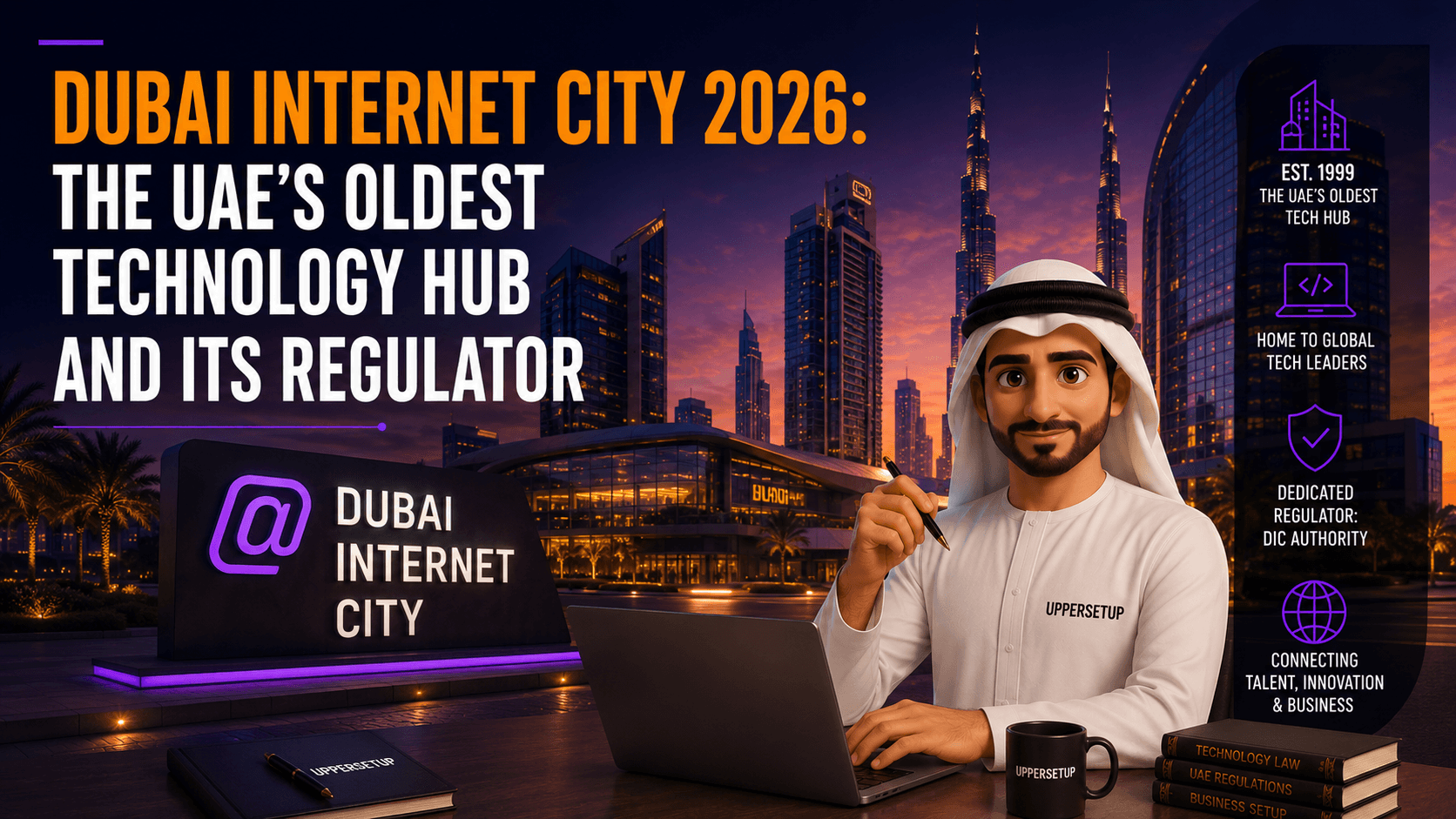
Dubai Internet City 2026: The UAE’s Oldest Technology Hub and Its Regulator
Company setupIT-startupsUAEFree ZoneDubai Internet City

Dubai Internet City 2026: The UAE’s Oldest Technology Hub and Its Regulator

Dubai Internet City (DIC) is the UAE’s oldest and largest technology free zone, launched in October 2000 as the first zone in the MENA region created specifically for IT companies.

Dubai Knowledge Park in 2026: HR, Training and Professional Development — Licences, KHDA and Tax
Company setupFree ZoneUAEDubai Knowledge Park

Dubai Knowledge Park in 2026: HR, Training and Professional Development — Licences, KHDA and Tax

Dubai Knowledge Park (DKP) is a district of the Dubai Development Authority free zone in which companies engaged in human resources, recruitment, corporate training and professional development are licensed. The annual licence costs AED 15,000 for any of the fourteen segments in Part Six of Decision No. 1 of 2021, the minimum paid-up capital of an FZ-LLC is AED 10,000, and a freelancer permit is AED 7,500 a year. The defining feature of the jurisdiction: training activity requires two permissions at once — a DDA licence and a KHDA Authorisation — while recruitment activity runs into the federal prohibition in Article 6 of Federal Decree-Law No. 33 of 2021.

Dubai Maritime City in 2026: what it costs to set up a maritime company in Dubai, which licence Trakhees actually issues, and why this is not a free zone in the ordinary sense
Company setupDubai Maritime CityUAEFree Zone

Dubai Maritime City in 2026: what it costs to set up a maritime company in Dubai, which licence Trakhees actually issues, and why this is not a free zone in the ordinary sense

Dubai Maritime City is, in the Dubai Government Media Office’s description, “a 249-hectare waterfront platform”, with 6,000-tonne and 3,000-tonne ship lifts, workshops, warehouses, office towers and residential blocks. It is a genuine industrial cluster with genuine numbers: design capacity of 1,000 vessels a year, a record 52 vessels on the dry berths on 28 July 2026, and 202 vessel calls in July 2026. Legally, however, Dubai Maritime City is neither a free zone created by its own statute nor a regulator in its own right. The law that created the “city” bearing that name was superseded on 6 February 2023 and nothing equivalent replaced it.

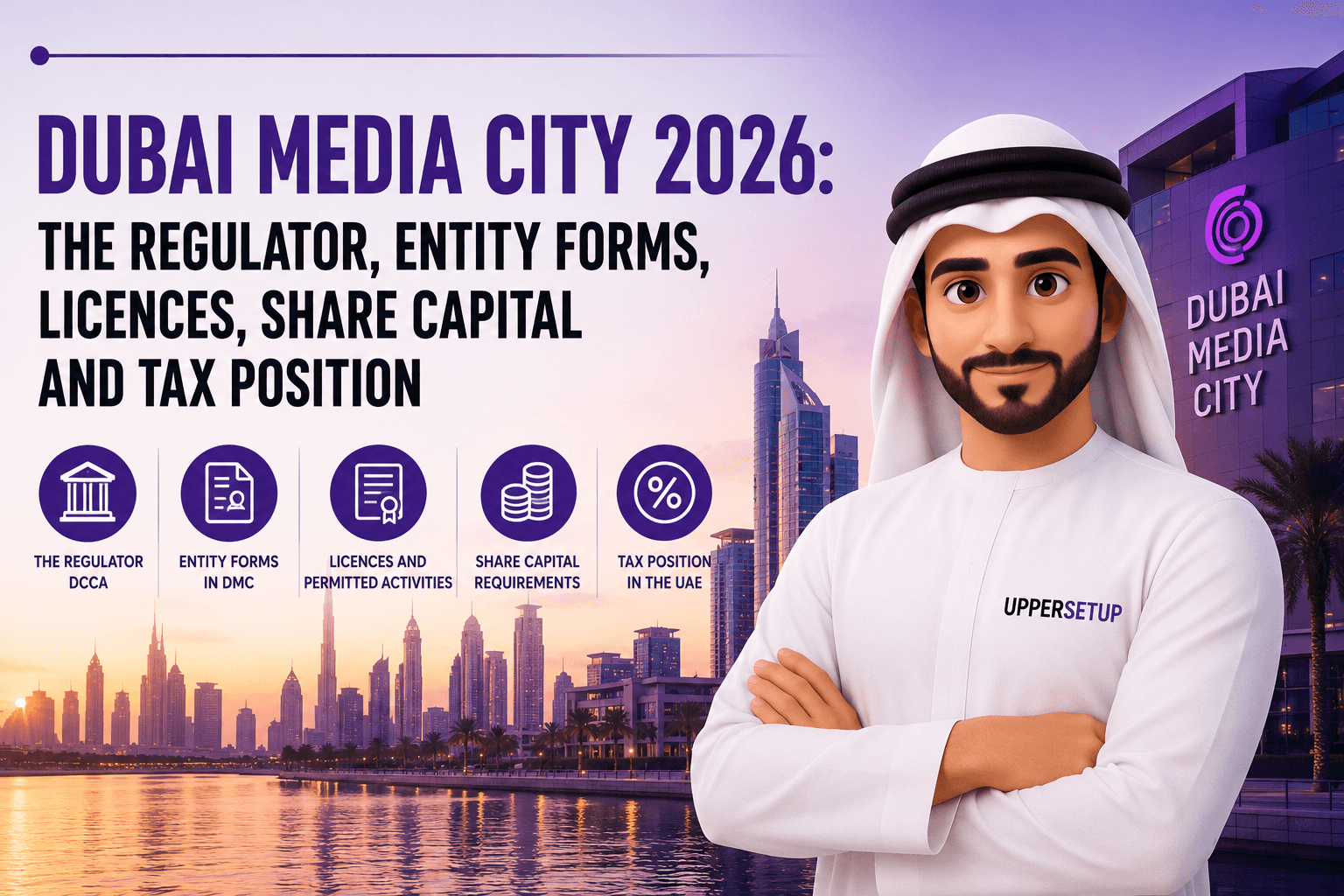
Dubai Media City 2026: the Regulator, Entity Forms, Licences, Share Capital and Tax Position
Dubai Media CityCompany setupUAEFree Zone

Dubai Media City 2026: the Regulator, Entity Forms, Licences, Share Capital and Tax Position

Dubai Media City (DMC) is the media cluster within the free zone regulated by the Dubai Development Authority (DDA). Its legal basis is Law No. 15 of 2014, issued on 27 October 2014, which superseded Law No. 1 of 2000 establishing the Dubai Technology and Media Free Zone. Three forms of presence are available: a Free Zone Limited Liability Company (FZ-LLC), a branch of a foreign or UAE company, and a freelancer permit. The law fixes no single minimum share capital — the requirement is set by the licensed activity.

Dubai Outsource City in 2026: BPO, call centres and back-office outsourcing — the licence, AED 300,000 capital, tax and the telemarketing rules
Company setupFree ZoneUAEDubai Outsource City

Dubai Outsource City in 2026: BPO, call centres and back-office outsourcing — the licence, AED 300,000 capital, tax and the telemarketing rules

Dubai Outsource City (DOC) is a TECOM Group business district in Dubai, part of the free zone administered by the Dubai Development Authority (DDA) and dedicated to outsourcing and shared-service providers: call centres, transaction processing, IT support, document management and disaster-recovery data centres. The DOC licence is issued under a single segment, 17.1 Outsource, with eight activities, costs AED 15,000 a year and requires a minimum paid-up capital of AED 300,000 — thirty times the standard AED 10,000 that applies in most other DDA districts. The district was launched in 2004 as Dubai Outsource Zone; according to TECOM it hosts more than 80 customer companies from the aviation, banking and telecommunications industries.

Dubai Production City in 2026: licence segments, fees, capital and tax status
Company setupDubai Production CityFree Zone

Dubai Production City in 2026: licence segments, fees, capital and tax status

Dubai Production City (DPC) is not a free zone of its own. It is a licensing business unit inside the single Dubai Development Authority zone, and it has no statute. No law, decree or Dubai Executive Council resolution names DPC: the zone exists as cadastral plots inside the Clusters under Law No. 15 of 2014, and as a licensing business unit created by a decision of the DDA Director General.

Dubai Science Park in 2026: Pharma, Biotech and Medtech — the DDA Licence, EDE Registration and DHA Licensing
Company setupDubai Science ParkRegulatory environmentUAE

Dubai Science Park in 2026: Pharma, Biotech and Medtech — the DDA Licence, EDE Registration and DHA Licensing

Dubai Science Park is one of the ten districts for which the Dubai Development Authority (DDA) issues licences under its Decision No. 1 of 2021, and one of the ten districts TECOM Group calls its own — two lists of ten that do not coincide. A DDA licence opens the door to life sciences activity but confers no right either to sell medicines and medical devices or to treat patients: the product layer belongs to the federal Emirates Drug Establishment (EDE), and patient-facing services to the Dubai Health Authority (DHA). All three licences run in parallel, and none substitutes for another.

Dubai Silicon Oasis and DIEZ in 2026: the Umbrella IFZA Sits Under — Who Issues the Licence, Who Keeps the Register, and What It Means for Tax
Company setupDubai Silicon OasisUAEFree Zone

Dubai Silicon Oasis and DIEZ in 2026: the Umbrella IFZA Sits Under — Who Issues the Licence, Who Keeps the Register, and What It Means for Tax

Dubai Silicon Oasis (DSO) is a Dubai free zone, and the Dubai Integrated Economic Zones Authority (DIEZ) is the body that runs it, issues the licences and keeps the register of companies. IFZA (the International Free Zone Authority) is not a free zone: it is a commercial operator occupying premises inside Dubai Silicon Oasis and selling incorporations of companies that are, in law, created in the DSO free zone under DIEZ regulations. A company “in IFZA” is a company in Dubai Silicon Oasis.

Dubai South Free Zone 2026: A Complete Breakdown of the Aviation and Logistics Hub
Dubai South Free ZoneUAEFree Zone

Dubai South Free Zone 2026: A Complete Breakdown of the Aviation and Logistics Hub

Dubai South Free Zone is the free economic zone built around Al Maktoum International Airport, operated and licensed by the Dubai World Central Corporation (DWCC), a subsidiary of the Dubai Aviation City Corporation (DACC).

Dubai Studio City in 2026: Film, TV and Production — the Regulator, the Licences, the Tax and Why the Rebate Is in Abu Dhabi
Dubai Studio CityUAECompany setupFree Zone

Dubai Studio City in 2026: Film, TV and Production — the Regulator, the Licences, the Tax and Why the Rebate Is in Abu Dhabi

Dubai Studio City is one of ten business parks in the free zone constituted by Dubai Law No. 15 of 2014; it is licensed by the Dubai Development Authority (DDA) and operated by TECOM Group PJSC. A production licence costs AED 15,000 a year and requires paid-up capital of AED 50,000; a satellite television licence costs AED 25,000–40,000 a year and requires AED 1,000,000. Media activity inside the zone is licensed by the DDA, not by the federal regulator.

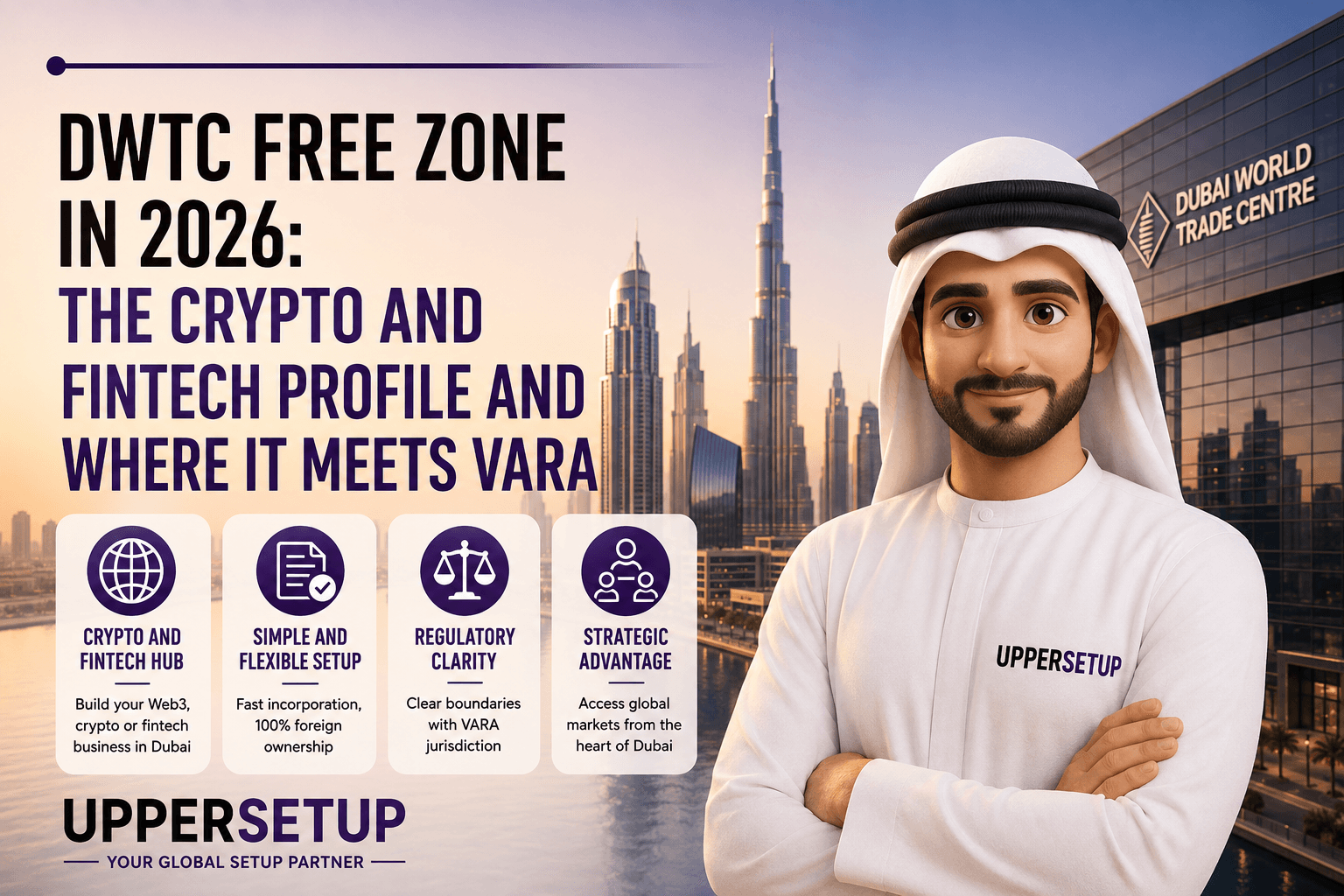
DWTC Free Zone in 2026: The Crypto and Fintech Profile and Where It Meets VARA
Company setupFree ZoneDWTC

DWTC Free Zone in 2026: The Crypto and Fintech Profile and Where It Meets VARA

The Dubai World Trade Centre Free Zone incorporates companies and issues commercial licences, but it does not regulate virtual assets: the regulator is VARA, whose remit covers every free zone in Dubai except the DIFC. A virtual asset business in DWTC needs two licences from two different bodies: an operational licence from the DWTC Authority and a VASP licence from VARA. The detail almost nobody spells out: the DWTC non-operational licence is valid for one year, and if the VARA VASP licence is not obtained within it, the licence is not renewed and the fees paid are forfeited.

The Employment Ordinance (Cap. 57) in 2026: the 417/468 Rule, the End of MPF Offsetting, and a HKD 43.1 Minimum Wage
Hong KongTaxLaws and Regulations

The Employment Ordinance (Cap. 57) in 2026: the 417/468 Rule, the End of MPF Offsetting, and a HKD 43.1 Minimum Wage

Three things in Hong Kong employment law moved at once in 2026. The continuous contract threshold fell from 18 hours a week to 17, with an alternative of 68 hours across four weeks. Offsetting of an employer’s mandatory MPF contributions against severance and long service payments has been abolished for service after 1 May 2025. And the statutory minimum wage has stood at HKD 43.1 an hour since 1 May 2026 — the first rate produced by a formula rather than settled by negotiation.

UAE Family Foundation 2026: Tax Transparency Under Article 17 of the Corporate Tax Law
Legal servicesTaxADGMUAEDIFCRAKICC

UAE Family Foundation 2026: Tax Transparency Under Article 17 of the Corporate Tax Law

A Family Foundation in the UAE is not a distinct legal entity type — it is a tax status. Article 17 of Federal Decree-Law No. 47 of 2022 (the Corporate Tax Law) allows a foundation, trust, or similar entity to obtain Unincorporated Partnership status — fiscal transparency under which income is taxed in the hands of the beneficiaries rather than at the level of the structure itself. Trusts without separate legal personality (such as DIFC/ADGM trusts) are automatically transparent. Foundations with separate legal personality (DIFC Foundation, ADGM Foundation, RAK ICC Foundation) must apply to the Federal Tax Authority (FTA) and obtain approval. For individual beneficiaries, personal investment and real estate income is generally outside Corporate Tax regardless of the foundation’s own transparency status.

The UAE Finfluencer License 2026: Registering Financial Content Creators with the SCA
Knowledge baseUAELegal services

The UAE Finfluencer License 2026: Registering Financial Content Creators with the SCA

The Finfluencer License is mandatory registration with the Securities and Commodities Authority (SCA) for any individual providing financial recommendations via social media who has 1,000 or more followers.

Fujairah Free Zone 2026: The UAE’s Only Zone on the Indian Ocean
Fujairah Free ZoneUAEFree Zone

Fujairah Free Zone 2026: The UAE’s Only Zone on the Indian Ocean

Fujairah is the only UAE emirate with direct access to the east coast, facing the Gulf of Oman and the Indian Ocean, allowing zone residents to bypass the Strait of Hormuz for shipping.

UAE Golden Visa Through Business 2026: Three Routes, Real Thresholds, and Key Mistakes
VisasUAE

UAE Golden Visa Through Business 2026: Three Routes, Real Thresholds, and Key Mistakes

A UAE business owner can obtain a Golden Visa through three routes in 2026. Route A: company stake valued at AED 2,000,000 or more (paid-up capital or share value) + FTA letter confirming tax payments — 10 years. Route B: innovative project valued at AED 500,000 or more + approval from an accredited incubator or a UAE-licensed auditor letter — 5 years. Route C: basic salary of AED 30,000 per month as director of their own company — 10 years. All routes are self-sponsored with no 180-day rule.

GPSSA Pension Fund for UAE Nationals 2026: Contributions, Pension Calculation, Penalties
AccountingTaxKnowledge baseUAE

GPSSA Pension Fund for UAE Nationals 2026: Contributions, Pension Calculation, Penalties

GPSSA (General Pension and Social Security Authority) is the federal pension fund for UAE nationals working in the government and private sectors in every emirate except Abu Dhabi (which has its own Abu Dhabi Pension Fund). Important: this system covers UAE nationals only — foreign employees do not receive a pension, they receive an end-of-service gratuity instead. Since 31 October 2023, two regimes apply in parallel: the old regime (Federal Law No. 7 of 1999, 20% contributions) for those registered with GPSSA before that date, and the new regime (Federal Decree-Law No. 57 of 2023, 26% contributions) for anyone entering the UAE workforce for the first time on or after that date.

Hamriyah Free Zone 2026: Sharjah’s Industrial Zone with a Deep-Water Port
Hamriyah Free ZoneUAEFree Zone

Hamriyah Free Zone 2026: Sharjah’s Industrial Zone with a Deep-Water Port

Hamriyah Free Zone (HFZA) is an industrial free economic zone in the emirate of Sharjah, the UAE’s second-largest free zone after JAFZA.

IFZA 2026: The Complete Breakdown — the UAE’s Most Registered Free Zone
Company setupUAEFree Zone

IFZA 2026: The Complete Breakdown — the UAE’s Most Registered Free Zone

IFZA (International Free Zone Authority) is the UAE’s most popular free zone by number of registrations — an operator within Dubai Silicon Oasis (DSO), which since 1 January 2022 falls under the Dubai Integrated Economic Zones Authority (DIEZ) pursuant to Dubai Law No. 16 of 2021. Established in August 2018 in Fujairah, IFZA relocated to Dubai (Dubai Silicon Oasis) in August 2020. IFZA issues two base licence types — Commercial and Professional — with the ability to combine several business activities under a single licence. Base cost starts at approximately AED 12,900 per year, with no minimum capital requirement. The key practical difference from DAFZA/DMCC: IFZA is not a VAT Designated Zone, and it operates through a network of Professional Partners rather than dealing directly with applicants.

Innovation City 2026: RAK DAO’s Rebrand into the World’s First AI-Powered Free Zone
Innovation CityUAEFree Zone

Innovation City 2026: RAK DAO’s Rebrand into the World’s First AI-Powered Free Zone

Innovation City is the new name for the Ras Al Khaimah Digital Assets Oasis (RAK DAO) free economic zone, established in 2023 in the emirate of Ras Al Khaimah.

JAFZA in 2026: the Jebel Ali Free Zone, Designated Zone Status, Offshore Companies and the Port
Free ZoneUAEJAFZA

JAFZA in 2026: the Jebel Ali Free Zone, Designated Zone Status, Offshore Companies and the Port

Jebel Ali Free Zone (Jafza) is the oldest free zone in the UAE, established in 1985 and part of the DP World group. The zone describes itself as the largest customs bonded zone in the Middle East, home to more than 11,000 companies. Three distinct statuses matter commercially: a free zone under corporate law, a Designated Zone for VATunder Cabinet Decision No. 59 of 2017, and a registry for offshore companies under the zone's own regulations.

KEZAD 2026: Abu Dhabi’s Largest Trade, Logistics, and Industrial Zone
KEZADUAEFree Zone

KEZAD 2026: Abu Dhabi’s Largest Trade, Logistics, and Industrial Zone

KEZAD (Khalifa Economic Zones Abu Dhabi) is the largest integrated trade, logistics, and industrial zone in Abu Dhabi and the wider region, formed on 19 September 2022 by AD Ports Group through the merger of Khalifa Industrial Zone Abu Dhabi (KIZAD) and Specialised Economic Zones (ZonesCorp). The zone spans 12 economic zones across roughly 550 km² in Abu Dhabi, Al Ain, and Al Dhafra, of which approximately 100 km² is designated as Free Zone, with the remainder operating as a Domestic Economic Zone — a mainland-equivalent jurisdiction under the same operator. Unlike Masdar City Free Zone and most Dubai zones, a key part of KEZAD (Khalifa Industrial Zone) is officially included in the VAT Designated Zones list under Cabinet Decision No. 59 of 2017.

Masdar City Free Zone 2026: A Complete Breakdown of Abu Dhabi’s Hub for Clean-Tech and Sustainability
Masdar City Free ZoneUAEFree Zone

Masdar City Free Zone 2026: A Complete Breakdown of Abu Dhabi’s Hub for Clean-Tech and Sustainability

Masdar City Free Zone (MCFZ) is a free economic zone in Abu Dhabi focused on clean technology, renewable energy, and sustainability companies, though it formally permits more than 800 business activities, including consultancy, media, education, healthcare, and ICT. Licences are issued by the Masdar City Free Zone Authority, while company name reservation goes through the Abu Dhabi Department of Economic Development (ADDED) — a two-tier regulatory structure typical of most Abu Dhabi free zones. Base licence cost starts at approximately AED 7,000 per year for a zero-visa package, with a minimum capital requirement of AED 50,000 for an FZ-LLC. Masdar City companies can apply for the 0% Corporate Tax rate subject to Qualifying Free Zone Person (QFZP) conditions.

Meydan Free Zone 2026: A Complete Breakdown of Dubai’s Autonomous Free Zone
Meydan Free ZoneUAEFree Zone

Meydan Free Zone 2026: A Complete Breakdown of Dubai’s Autonomous Free Zone

Meydan Free Zone (MFZ) is an autonomous free economic zone in central Dubai, established by Law No. 5 of 2009 as Meydan City Corporation. Unlike most other free zones, Meydan operates under its own statutory law and its own Companies and Licensing Regulations, under which the federal Commercial Companies Law (Federal Law No. 32 of 2021) does not apply within the zone. The minimum capital for registration is AED 100,000. The zone is known for its flagship service, Fawri: a fully digital 60-minute business licence. Meydan companies can apply for the 0% Corporate Tax rate subject to Qualifying Free Zone Person (QFZP) conditions, but the zone is not a VAT Designated Zone.

The MPF in Hong Kong: Employer Obligations, Deadlines and Penalties in 2026
Hong KongTaxVisasLaws and Regulations

The MPF in Hong Kong: Employer Obligations, Deadlines and Penalties in 2026

An employer in Hong Kong must enrol every employee aged 18 to 64 in a Mandatory Provident Fund scheme within the first 60 days of employment and remit monthly mandatory contributions of 5 per cent of relevant income from its own funds, plus 5 per cent deducted from the employee. The duty covers full-time and part-time employees alike. The regulator is the Mandatory Provident Fund Schemes Authority (MPFA).

The New CIES: Hong Kong Investment Residency from HK$30 Million — Thresholds, Permissible Assets, Obligations and the Route to Permanent Residence
Hong KongVisasResidence Permit

The New CIES: Hong Kong Investment Residency from HK$30 Million — Thresholds, Permissible Assets, Obligations and the Route to Permanent Residence

The New Capital Investment Entrant Scheme is Hong Kong’s investor entry route, open for applications since 1 March 2024. The threshold is HK$30 million: at least HK$27 million in permissible assets and a mandatory HK$3 million into the CIES Investment Portfolio managed by the Hong Kong Investment Corporation. The scheme does not confer permanent residence on entry — it grants a limited period of stay, and the right of abode arises no earlier than seven years later.

OTC Dealers and Custodians of Virtual Assets in Hong Kong: the 2026 Bill with No Transitional Period — How Not to Stop Your Business on the Day the Law Commences
Hong KongDigital AssetsLaws and Regulations

OTC Dealers and Custodians of Virtual Assets in Hong Kong: the 2026 Bill with No Transitional Period — How Not to Stop Your Business on the Day the Law Commences

Licensing of OTC virtual asset dealers and licensing of virtual asset custodians in Hong Kong are two new regimes that the Government has committed to introducing into the Legislative Council in a dedicated bill before the end of 2026, as amendments to the Anti-Money Laundering and Counter-Terrorist Financing Ordinance (Cap. 615). The defining feature of both regimes, stated expressly in the consultation conclusions of 24 December 2025, is the absence of a transitional period: there will be neither a “deeming arrangement” (a provisional licence while an application is being considered) nor a non-contravention period of the kind trading platforms enjoyed in 2023–2024. The regimes will commence on a date fixed by the Government, and from that date anyone who carries on a business of buying and selling virtual assets for clients, or of safekeeping their private keys, without an SFC licence must stop operating. The entry threshold is already known: paid-up share capital of HK$5,000,000 for a dealer and HK$10,000,000 for a custodian, plus liquid capital (up to HK$3,000,000 for a dealer and HK$3,000,000 for a custodian), at least two responsible officers, a Hong Kong company or a registered branch of a foreign company, and custody of client assets only with an SFC-licensed custodian.


Hong Kong Patent Box 2026: the 5% Rate on IP Income, Two-Tiered Rates and the FSIE Regime for Holding Companies
Hong KongTaxIntellectual Property

Hong Kong Patent Box 2026: the 5% Rate on IP Income, Two-Tiered Rates and the FSIE Regime for Holding Companies

Three separate regimes drive the effective profits tax rate of a Hong Kong company that earns from intellectual property and from passive income. The patent box gives 5% on the concessionary portion of IP income. The two-tiered profits tax rates give 8.25% on the first HKD 2,000,000 of assessable profits and 16.5% above. FSIE is not a relief at all: it deems specified foreign-sourced dividends, interest, IP income and disposal gains received in Hong Kong by a member of an MNE group to be Hong Kong sourced unless an exception is met.

PDPO Cap. 486 in 2026: The Reform That Never Came, and Governing AI Without a Statute
Hong KongLaws and Regulations

PDPO Cap. 486 in 2026: The Reform That Never Came, and Governing AI Without a Statute

The Personal Data (Privacy) Ordinance (Cap. 486) stands in 2026 substantially as it stood before the reform announced in January 2020: one of six proposed directions has been enacted. The Privacy Commissioner for Personal Data still cannot impose an administrative fine — every monetary penalty requires a conviction in court. Hong Kong has no mandatory breach notification duty. Artificial intelligence is governed not by statute but by guidance, none of which carries the status of a code of practice.

RAKEZ 2026: The Complete Breakdown — History, Zones, Licences, Costs, and Who It Really Works For
Company setupUAEFree ZoneRAKEZ

RAKEZ 2026: The Complete Breakdown — History, Zones, Licences, Costs, and Who It Really Works For

Among entrepreneurs first exploring the UAE free zone market, RAKEZ is often perceived as a 'budget alternative to Dubai'. That is accurate but fundamentally incomplete.

RAKICC 2026: A Complete Breakdown of Ras Al Khaimah’s Offshore Registry
Company setupUAERAKICC

RAKICC 2026: A Complete Breakdown of Ras Al Khaimah’s Offshore Registry

RAKICC (Ras Al Khaimah International Corporate Centre) is the sole offshore corporate registry in the emirate of Ras Al Khaimah, registering International Business Companies (IBCs) with no right to conduct commercial activity within the UAE.

UAE R&D Tax Credit 2026: Up to 50% Credit on Qualifying R&D Expenditure
TaxKnowledge baseLegal servicesUAE

UAE R&D Tax Credit 2026: Up to 50% Credit on Qualifying R&D Expenditure

The R&D Tax Credit is a non-refundable UAE tax credit on qualifying research and development expenditure, introduced by Cabinet Decision No. 215 of 2025 and Ministerial Decision No. 24 of 2026, applicable for tax periods beginning on or after 1 January 2026. The credit rate is tiered: 15%, 35%, and 50%, depending on both the level of R&D expenditure and the average number of staff dedicated to R&D. The maximum credit is AED 2 million per tax period (50% of the maximum qualifying expenditure of AED 5 million). The credit is applied against Corporate Tax liability and, where applicable, Top-up Tax (DMTT).

SAIF Zone in 2026: Sharjah’s Industrial and Logistics Free Zone — Legal Architecture, Tariffs, Designated Zone Status and the QFZP Regime
Company setupUAESAIF ZoneFree Zone

SAIF Zone in 2026: Sharjah’s Industrial and Logistics Free Zone — Legal Architecture, Tariffs, Designated Zone Status and the QFZP Regime

SAIF Zone (Sharjah Airport International Free Zone, هيئة المنطقة الحرة لمطار الشارقة الدولي) is a free zone of the Emirate of Sharjah, located immediately adjacent to Sharjah International Airport and established by Emiri Decree No. 2 of 1995. The zone has held Designated Zone status for UAE VAT purposes since 1 January 2018 and sits squarely inside the federal corporate tax perimeter, where its licensees can access the 0% rate only by satisfying the Qualifying Free Zone Person (QFZP) conditions. The emirate-level tax guarantee runs to 29 May 2073 under Emiri Decree No. 28 of 2023. The zone publishes no corporate rulebook of its own — no companies law, no employment regulations, no court — so federal UAE law applies to SAIF Zone companies to a far greater extent than in the UAE’s financial free zones.

Hong Kong Salaries Tax 2026: Source of Income, the 60-Day Rule, Directors’ Fees and Leaving Hong Kong
Hong KongTax

Hong Kong Salaries Tax 2026: Source of Income, the 60-Day Rule, Directors’ Fees and Leaving Hong Kong

Salaries tax in Hong Kong is charged not on residents but on income “arising in or derived from Hong Kong” from an office, an employment of profit or a pension — residence and nationality are irrelevant. The controlling question is always where the source of employment is located, not where the services were physically performed. The answer determines whether the whole income, part of it, or none of it is taxable, and whether the 60-day rule is available at all.

SHAMS (Sharjah Media City) in 2026: What the UAE’s Cheapest Licence Actually Costs — and What It Does Not Buy You
Company setupUAESharjah Media City

SHAMS (Sharjah Media City) in 2026: What the UAE’s Cheapest Licence Actually Costs — and What It Does Not Buy You

A starter SHAMS licence costs either AED 5,750 or AED 5,760 a year — the zone publishes both prices across its own live sites, for three activities and for five respectively — and neither figure includes visas or the immigration card. Sharjah Media City is a free zone of the Emirate of Sharjah, created by Amiri Decree No. 11 of 2017 and answerable to the Sharjah Media Council. The zone occupies the bottom of the UAE price range and is built around a single product: a legal entity with a co-working seat. That is precisely where the problem starts, because this configuration almost certainly fails the economic substance test that a zero rate of corporate tax depends on.
The Significant Controllers Register in Hong Kong: Obligations, Deadlines and Penalties in 2026
Hong KongLaws and Regulations

The Significant Controllers Register in Hong Kong: Obligations, Deadlines and Penalties in 2026

Every company incorporated in Hong Kong must keep a Significant Controllers Register (SCR) — an internal record of the individuals and legal entities that control the company. The register is neither published nor filed with the registry: it is held by the company and produced on demand to authorised officers. The requirement sits in the new Division 2A of Part 12 of the Companies Ordinance (Cap. 622) and has applied since 1 March 2018.
UAE Small Business Relief 2026: Last Chance for 0% Corporate Tax Before 31 December
TaxLegal servicesUAE

UAE Small Business Relief 2026: Last Chance for 0% Corporate Tax Before 31 December

Small Business Relief (SBR) is a transitional measure under the UAE corporate tax framework. Any UAE-resident taxable person with revenue at or below AED 3 million may elect SBR and be treated as having zero taxable income for that tax period — effectively 0% corporate tax. SBR is available only for tax periods ending on or before 31 December 2026. The UAE Ministry of Finance has not announced any extension.
twofour54 Abu Dhabi 2026:Media Zone with Direct Access to Government Contracts
twofour54UAEFree Zone

twofour54 Abu Dhabi 2026:Media Zone with Direct Access to Government Contracts

twofour54 is a media and creative free zone in Abu Dhabi, regulated by the Media Zone Authority – Abu Dhabi (MZA).
UAQ Free Trade Zone in 2026: the complete breakdown — legal basis, FZE/FZC forms, licences, cost from AED 5,500, Designated Zone status and corporate tax
UAQ Free Trade ZoneUAECompany setupFree Zone

UAQ Free Trade Zone in 2026: the complete breakdown — legal basis, FZE/FZC forms, licences, cost from AED 5,500, Designated Zone status and corporate tax

UAQ Free Trade Zone (UAQ FTZ, Umm Al Quwain Free Trade Zone) is the free zone of the emirate of Umm Al Quwain (UAE), governed by a government body, the Umm Al Quwain Free Trade Zone Authority, which — according to the zone’s own rules — was established by Emirate Law No. 3 of 2014 on the foundation of the Ahmed Bin Rashid Port and Free Zone created by Emiri Decree No. 2 of 1987. The zone registers companies in three forms — the Free Zone Establishment (FZE), the Free Zone Company (FZC) and the Branch — issues commercial, consultancy, service and industrial licences and a freelance permit, and its cheapest official package without a visa (UAQ LYTE) costs AED 5,500 a year with renewal at the same price. Both of the zone’s sites — in Ahmed Bin Rashid Port and on Sheikh Mohammed Bin Zayed Road — have been on the list of Designated Zones for VAT under Cabinet Decision No. 59 of 2017 since 1 January 2018. The key difference from what the marketing promises: Designated Zone status is a VAT and customs instrument, while the 0 % corporate tax rate depends not on it but on meeting the Qualifying Free Zone Personconditions of Article 18 of Federal Decree-Law No. 47 of 2022.

UAE Excise Tax 2026: the Tiered Volumetric Model on Sweetened Drinks and the New Minimum Price for Vape Liquids
TaxUAE

UAE Excise Tax 2026: the Tiered Volumetric Model on Sweetened Drinks and the New Minimum Price for Vape Liquids

From 1 January 2026 UAE excise tax on sweetened drinks is charged as an amount per litre rather than a percentage of price, and that amount turns on the sugar content per 100 millilitres. The former flat 50 per cent of the excise price is gone. The new regime sits in Cabinet Decision No. 197 of 2025, issued on 27 November 2025.

Merger control in Kazakhstan in 2026: when you need AZRK clearance, when a notification is enough, and what a mistake costs
KazakhstanLaws and Regulations

Merger control in Kazakhstan in 2026: when you need AZRK clearance, when a notification is enough, and what a mistake costs

Antimonopoly clearance for economic concentration is prior approval by the Agency for the Protection and Development of Competition of the Republic of Kazakhstan (AZRK) of a transaction that changes control over a business and may affect the state of competition. The Kazakh regime sits in Chapter 18 “Protection of Competition” of the Entrepreneurial Code (Code of the Republic of Kazakhstan No. 375‑V of 29 October 2015), and the duty to obtain clearance arises only above a single financial threshold — ten-million times the monthly calculation index, which is KZT 43,250,000,000 in 2026.

Arbitration in Hong Kong in 2026: Cap. 609, the Arbitration Law Reform Programme and HKIAC Statistics
Hong KongCommercial Arbitration

Arbitration in Hong Kong in 2026: Cap. 609, the Arbitration Law Reform Programme and HKIAC Statistics

Arbitration in Hong Kong is governed by Cap. 609, the Arbitration Ordinance — a statute built on the 2006 version of the UNCITRAL Model Law and in force since 1 June 2011. As at this article’s verification date the consolidated text of Cap. 609 carries a version date of 16 December 2022: the last instrument to amend it was Ordinance No. 6 of 2022 on outcome related fee structures (ORFS). The Hong Kong International Arbitration Centre, HKIAC, registered 582 new cases in 2025, of which 388 were arbitrations, with a total amount in dispute of HKD 126.2 billion.

Opening a Bank Account in Kazakhstan for a Foreign Company and a Non-Resident: The 2026 Guide
KazakhstanBanking

Opening a Bank Account in Kazakhstan for a Foreign Company and a Non-Resident: The 2026 Guide

A foreign company can open an account with a Kazakhstan bank without establishing a local legal entity, branch or representative office. To do so, the foreign legal entity must be placed on tax registration with the state revenue authorities and obtain a Business Identification Number (BIN), while its director or authorised representative must obtain an Individual Identification Number (IIN).

UAE Bankruptcy and Insolvency Law 2026: Procedures, Director Liability, and Business Protection
Legal servicesUAE

UAE Bankruptcy and Insolvency Law 2026: Procedures, Director Liability, and Business Protection

Corporate bankruptcy and restructuring in the UAE is governed by Federal Decree-Law No. 51 of 2023 (Financial Restructuring and Bankruptcy Law), in force since 1 May 2024. A debtor must file an application within 60 days from the date payments are suspended or from the date it becomes aware it will be unable to meet its debts. There are three procedures: preventive settlement (before formal bankruptcy), restructuring, and liquidation. Since 15 July 2025, all cases are heard by a dedicated Bankruptcy Court based in Abu Dhabi. DIFC and ADGM companies are excluded and follow their own separate insolvency regimes.

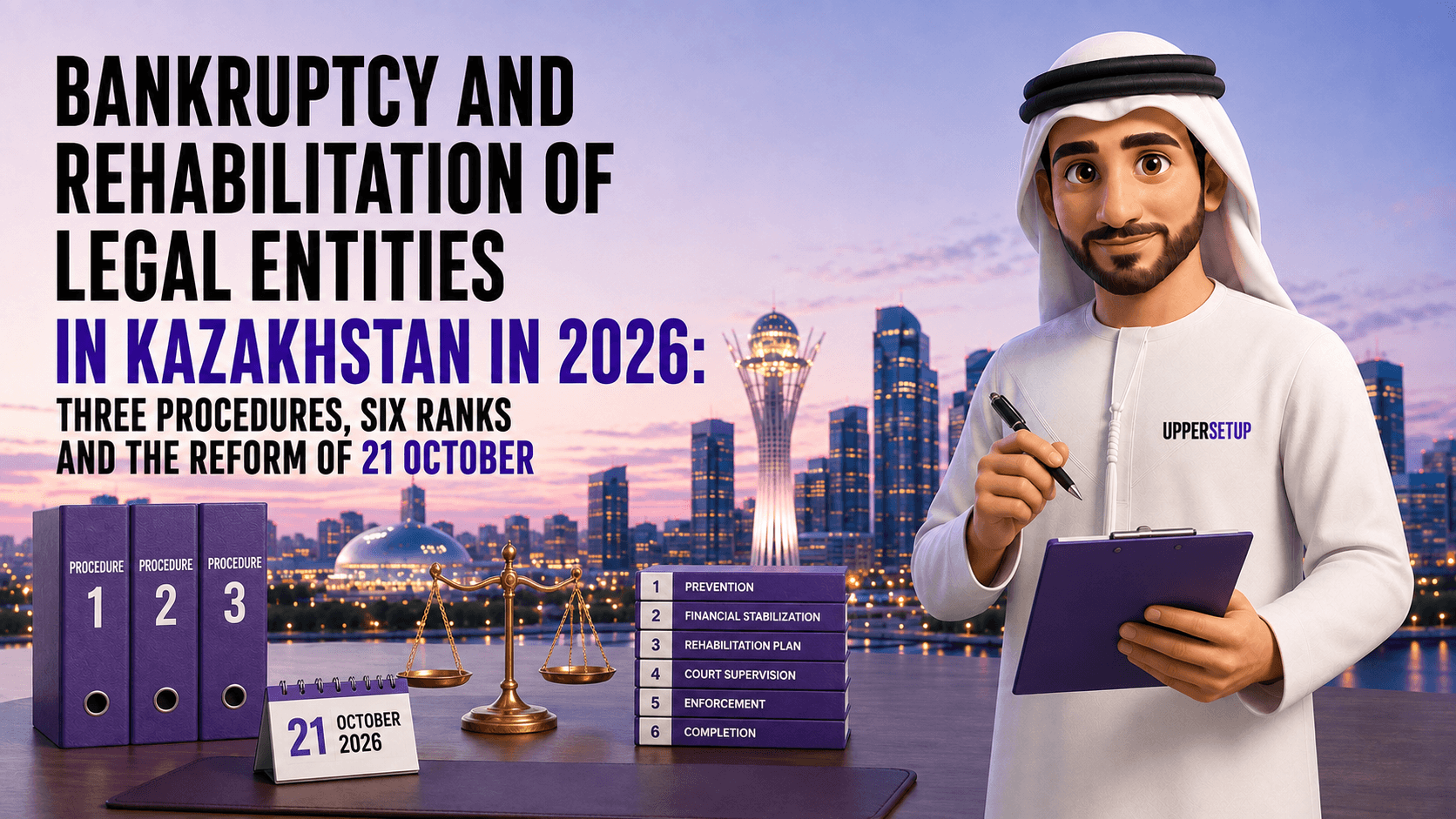
Bankruptcy and rehabilitation of legal entities in Kazakhstan in 2026: three procedures, six ranks and the reform of 21 October
KazakhstanLaws and RegulationsBankruptcy

Bankruptcy and rehabilitation of legal entities in Kazakhstan in 2026: three procedures, six ranks and the reform of 21 October

Insolvency and the restoration of solvency of a legal entity in Kazakhstan are governed by a single statute — the Law of the Republic of Kazakhstan of 7 March 2014 No. 176-V “On Rehabilitation and Bankruptcy” — which provides three court procedures: debt restructuring, rehabilitation and bankruptcy, plus a separate route for liquidating a debtor without opening a bankruptcy procedure. All cases are heard by the specialised inter-district economic courts, and the competent authority is the State Revenue Committee of the Ministry of Finance. None of the procedures is out of court: the accelerated rehabilitation procedure that many surveys still describe was removed from the statute in December 2019.

Currency Control in Kazakhstan 2026: Contract Registration Numbers, the Repatriation Requirement and Obligations of Foreign-Owned Companies
KazakhstanBankingTax

Currency Control in Kazakhstan 2026: Contract Registration Numbers, the Repatriation Requirement and Obligations of Foreign-Owned Companies

Kazakhstan's currency regime runs on three separate tracks. A contract registration number is assigned to an export or import currency contract above USD 50,000 — the track that enforces repatriation of proceeds. Registration of capital movement contracts applies above USD 500,000. Notification of foreign bank accounts is mandatory for resident legal entities before any transaction on the account. The statutory basis is Law of the Republic of Kazakhstan No. 167-VI of 2 July 2018 "On Currency Regulation and Currency Control".

Reciprocal Enforcement of Mainland Judgments in Hong Kong: Cap. 645 in 2026 — the 2019 Arrangement, Registration in the High Court, the Two-Year Rule, Grounds for Setting Aside and the First Cases
Hong KongCommercial ArbitrationLaws and Regulations

Reciprocal Enforcement of Mainland Judgments in Hong Kong: Cap. 645 in 2026 — the 2019 Arrangement, Registration in the High Court, the Two-Year Rule, Grounds for Setting Aside and the First Cases

The Mainland Judgments in Civil and Commercial Matters (Reciprocal Enforcement) Ordinance (Cap. 645) is the Hong Kong statute under which, since 29 January 2024, an effective judgment of a Mainland Chinese court in a civil or commercial matter can be registered in the Court of First Instance of the Hong Kong High Court and enforced as if it were a Hong Kong judgment, and under which the holder of a Hong Kong judgment can obtain from the Hong Kong court a certified copy of that judgment, and a certificate in respect of it, for recognition and enforcement in the Mainland. The Ordinance implements the Arrangement on Reciprocal Recognition and Enforcement of Judgments in Civil and Commercial Matters by the Courts of the Mainland and of the Hong Kong Special Administrative Region, signed by the Supreme People’s Court and the Government of the HKSAR on 18 January 2019 under Article 95 of the Basic Law. Compared with the earlier regime under Cap. 597, the new statute no longer requires an exclusive choice-of-court clause, covers non-monetary as well as monetary judgments, reaches judgments of courts at every level down to the Primary People’s Courts and extends to a defined range of intellectual property disputes. The registration application is made ex parte, the court fee is HK$1,045, the judgment debtor has 14 days after service of the notice of registration to apply to set the registration aside, and the gateway condition is a default in complying with the judgment that occurred within two years before the application.

Kazakhstan Residence Permits in 2026: The Permanent-Residence Pilot, the “Altyn Visa” and Digital Nomad Residency
KazakhstanVisasResidence Permit

Kazakhstan Residence Permits in 2026: The Permanent-Residence Pilot, the “Altyn Visa” and Digital Nomad Residency

A Kazakhstan permanent residence permit is issued by the internal affairs bodies for an indefinite term, but since February 2026 most applicants pass through a pilot project that scores immigration potential: the pass mark is 600 points and the sum to be shown in a bank account is 1,320 MCI. The “Altyn Visa” that has dominated coverage since the spring of 2026 does not exist in law as at the date of publication: it is a task set by Presidential decree, to be created by 31 December 2026. Digital Nomad Residency is not a visa at all — it is a separate pilot that issues the same permanent residence permit to IT specialists through Astana Hub. The real fork is not which visa looks best but what status you end up holding: a visa, a temporary residence permit, or a permanent residence permit.

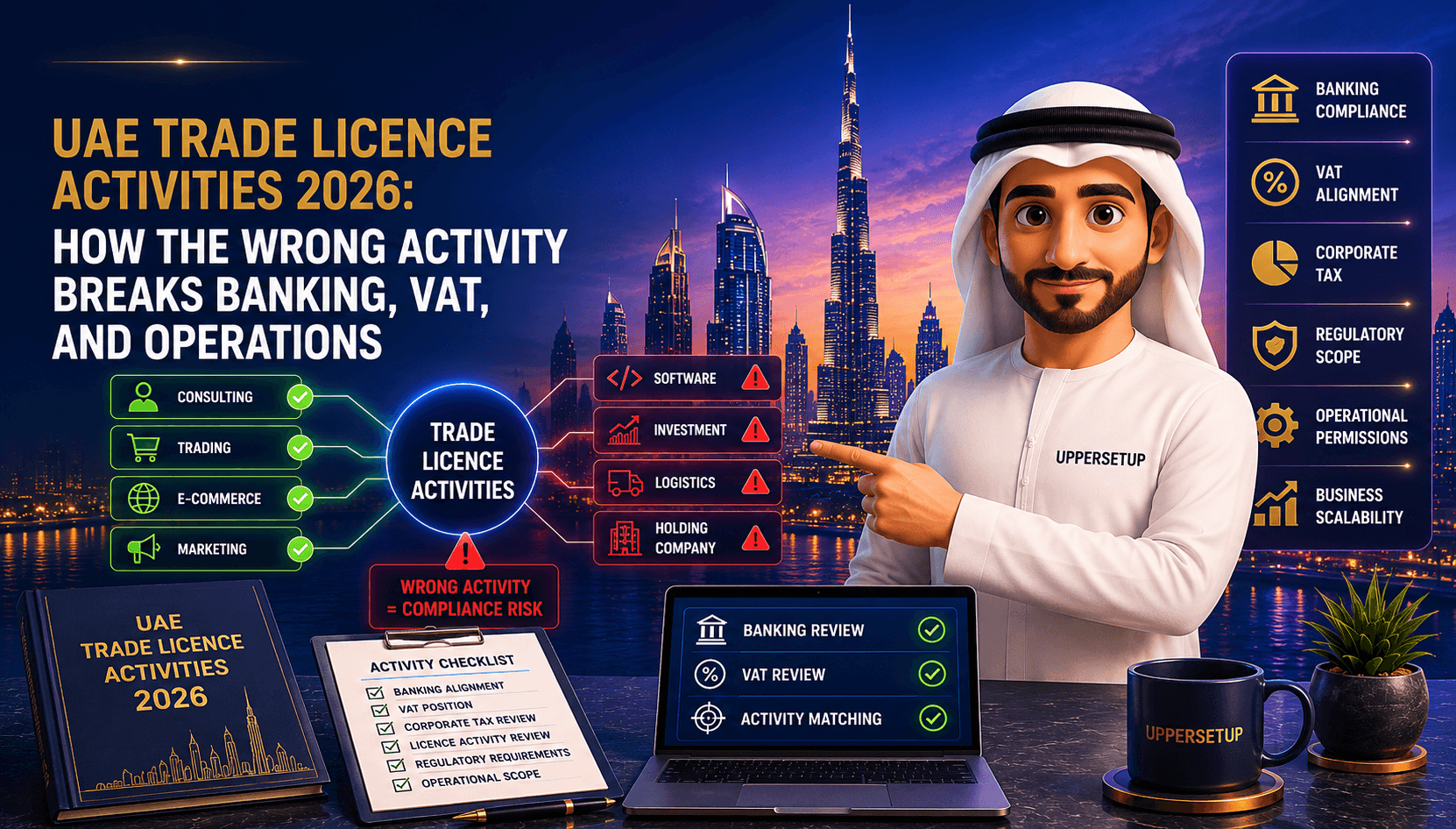
UAE Trade Licence Activities 2026: How the Wrong Activity Breaks Banking, VAT, and Operations
Company setupUAE

UAE Trade Licence Activities 2026: How the Wrong Activity Breaks Banking, VAT, and Operations

IMPORTANT: In the UAE, a trade licence activity is not a formality. It affects the licence type, banking, payment gateways, VAT, corporate tax, customs, visas, external approvals, and the ability to operate onshore or cross-border.

Kazakhstan’s Neo Nomad Visa 2026: Requirements for Digital Nomads, Income, and Length of Stay
KazakhstanVisas

Kazakhstan’s Neo Nomad Visa 2026: Requirements for Digital Nomads, Income, and Length of Stay

The Neo Nomad Visa (category B12-1) is a multiple-entry Kazakhstani visa for foreign nationals working remotely for foreign companies who wish to reside legally in Kazakhstan while combining work with travel, without the right to take up employment with a Kazakhstani employer.

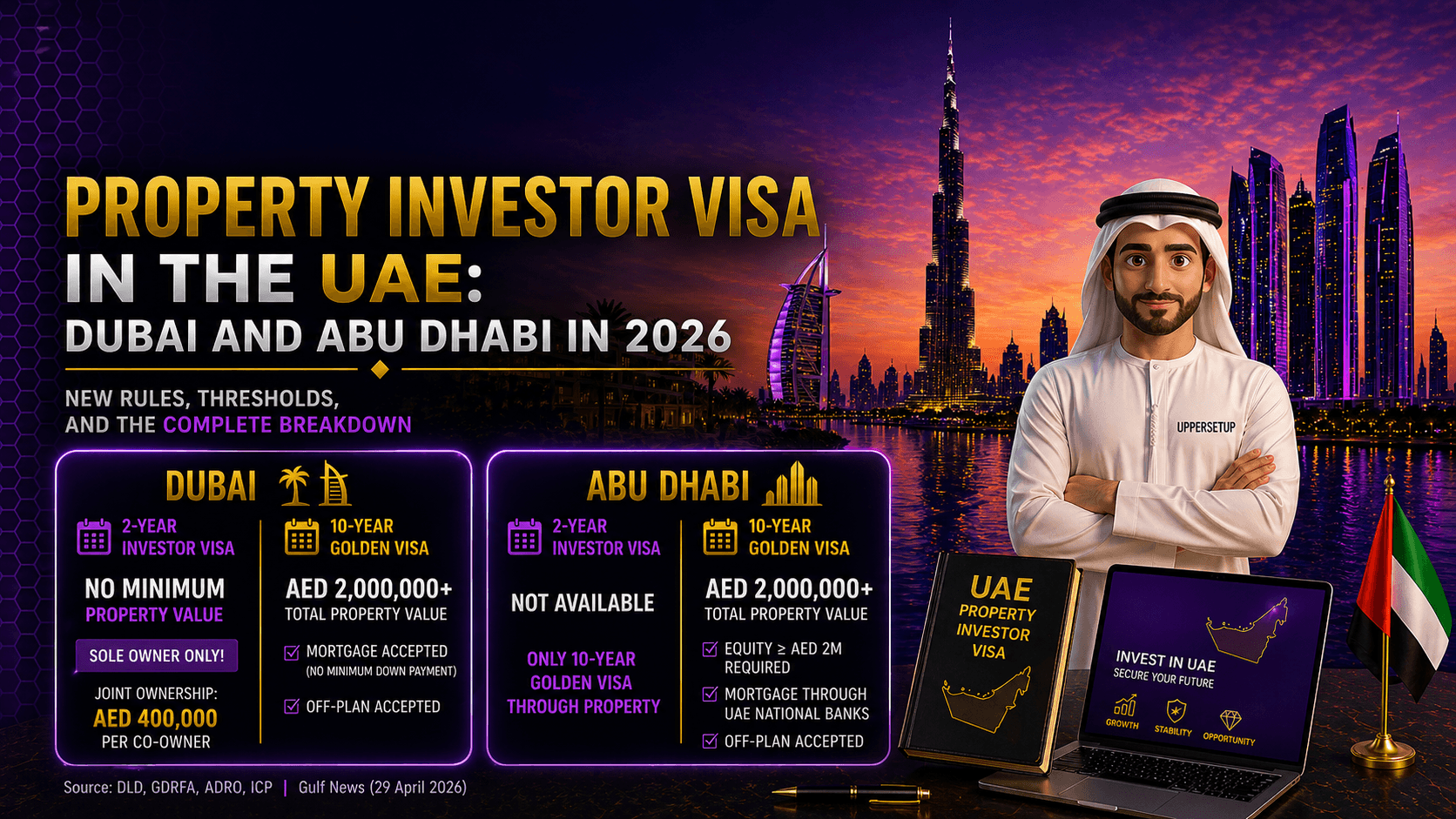
Property Investor Visa in the UAE: Dubai and Abu Dhabi in 2026 — New Rules, Thresholds, and the Complete Breakdown
VisasUAEProperty

Property Investor Visa in the UAE: Dubai and Abu Dhabi in 2026 — New Rules, Thresholds, and the Complete Breakdown

For several years, the UAE property investor visa system remained relatively stable: a two-year visa required at least AED 750,000; a ten-year Golden Visa required at least AED 2 million, of which a minimum of AED 1 million (or 50%) had to be paid upfront. Clear, predictable, but not accessible to everyone.

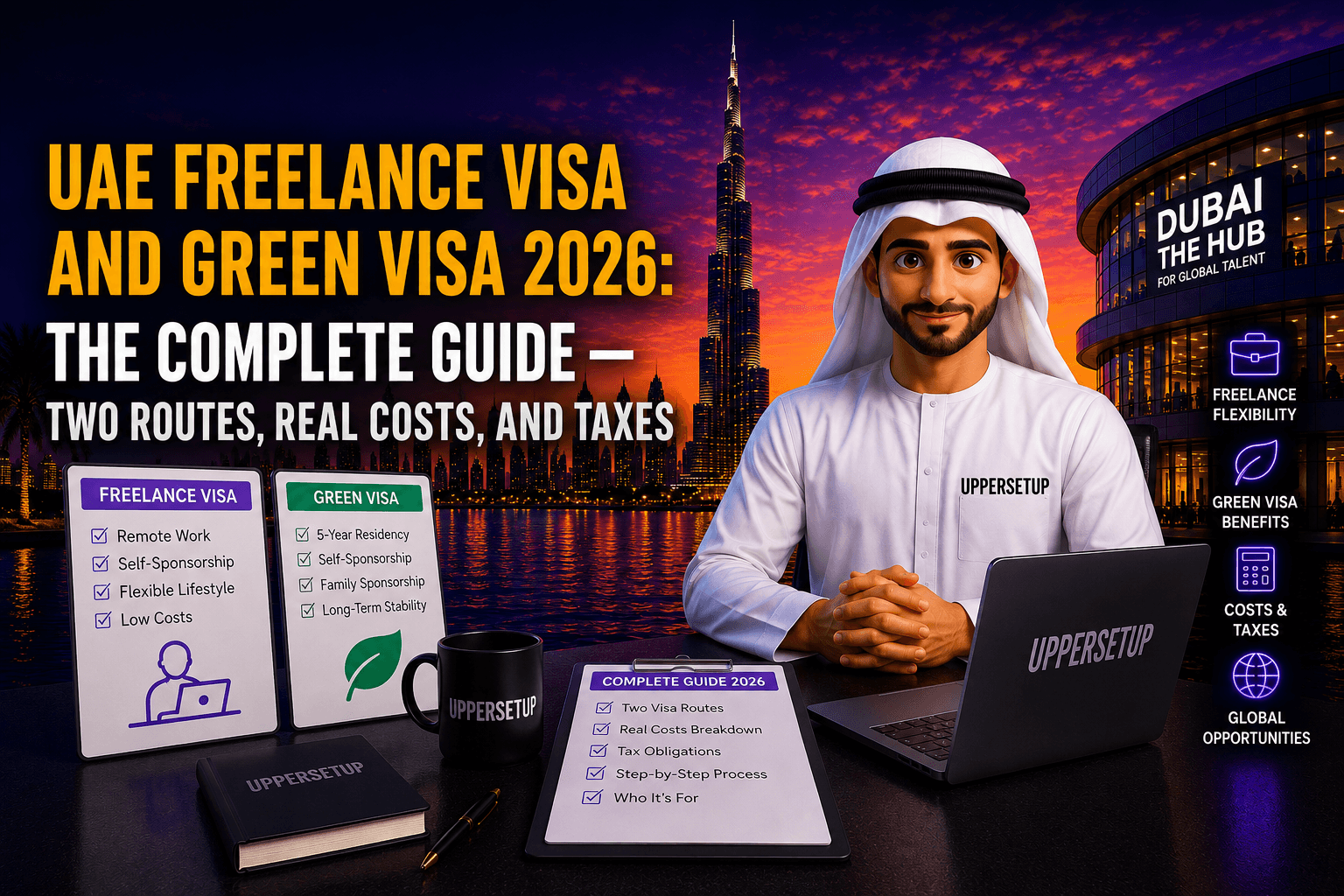
UAE Freelance Visa and Green Visa 2026: The Complete Guide — Two Routes, Real Costs, and Taxes
ServiceVisasUAE

UAE Freelance Visa and Green Visa 2026: The Complete Guide — Two Routes, Real Costs, and Taxes

There is no single concept of a "freelance visa" in the UAE. There are two fundamentally different routes. They differ in duration, cost, income requirements, and freedom of movement across the UAE.

UAE Remote Work Visa 2026: New Rules from 27 January
VisasUAE

UAE Remote Work Visa 2026: New Rules from 27 January

The Remote Work Visa (officially the Virtual Working Programme, also known as the digital nomad visa) is a one-year, self-sponsored UAE residence permit for individuals working remotely for a foreign employer or foreign clients, without needing to incorporate a company in the UAE or obtain a local sponsor. As of 27 January 2026, requirements have tightened: instead of 3 months of bank statements, applicants must now submit six consecutive months, demonstrating income of at least USD 3,500 per month. Applications for Dubai are processed by the General Directorate of Residency and Foreigners Affairs (GDRFA); applications for all other emirates go through the Federal Authority for Identity, Citizenship, Customs and Port Security (ICP), with different fees and procedures.

Hong Kong Work and Relocation Visas 2026: GEP, the Top Talent Pass, the Entrepreneur Route, Dependants and Permanent Residence After Seven Years
Hong KongDeadlines & РrocessVisas

Hong Kong Work and Relocation Visas 2026: GEP, the Top Talent Pass, the Entrepreneur Route, Dependants and Permanent Residence After Seven Years

Hong Kong's employment and talent visas are administered by the Immigration Department across several parallel schemes. The ones that matter to foreign nationals are the General Employment Policy (GEP) for employed professionals and for entrepreneurs, the Top Talent Pass Scheme (TTPS) for high earners and graduates of listed universities, and the Quality Migrant Admission Scheme (QMAS) for those without a job offer. All of them lead to the same destination: after seven years of continuous ordinary residence, the entrant and their dependants may apply for permanent resident status.

UAE VAT Refund for Businesses in 2026: Procedure, Deadlines, and the New 5-Year Rule
TaxLegal servicesUAE

UAE VAT Refund for Businesses in 2026: Procedure, Deadlines, and the New 5-Year Rule

A UAE VAT-registered business can claim a refund of excess input tax through the FTA EmaraTax portal using Form VAT311, after submitting the relevant VAT201 return. The FTA reviews the application within 20 working days; approved refunds are paid within 5 working days. The critical 2026 change: under Federal Decree-Law No. 16 of 2025, excess input VAT can no longer be carried forward indefinitely. The maximum carry-forward period is now 5 years. Transitional deadline: credits from 2018–2020 must be claimed by 31 December 2026 or they lapse permanently.

The Second UAE Corporate Tax Return: How to Complete the 2025 Return
TaxUAE

The Second UAE Corporate Tax Return: How to Complete the 2025 Return

The UAE corporate tax return is the Tax Return that every Taxable Person files through EmaraTax within 9 months of the end of its Tax Period (Article 53 of Federal Decree-Law No. 47 of 2022) and by the same deadline pays the tax due (Article 48). For companies whose financial year ended on 31 December 2025, the second return is due by 30 September 2026, and it is the first return in which the first-period elections can no longer be changed, in which losses and prior-year data must be carried forward correctly, in which the audit rules of Ministerial Decision No. 84 of 2025 and the new depreciation election for investment property under Ministerial Decision No. 173 of 2025 apply for the first time, and in which last year’s errors must be corrected under different rules depending on their amount. This article walks through the structure of the return as set out in the official FTA guide, all nine elections, the deadlines, the penalties and the typical second-cycle mistakes, as at September 2026.

Payments to Non-Residents from Hong Kong in 2026: When Royalties Cost 4.95%, When 16.5%, and Why the Hong Kong Payer Foots the Bill
Hong KongTaxLaws and Regulations

Payments to Non-Residents from Hong Kong in 2026: When Royalties Cost 4.95%, When 16.5%, and Why the Hong Kong Payer Foots the Bill

Tax on royalties in Hong Kong is profits tax charged not on the payment itself but on the non-resident’s “deemed” income: section 15(1) of the Inland Revenue Ordinance (Cap. 112) treats certain payments as receipts from a business carried on in Hong Kong, section 21A turns 30% or 100% of the sum into the tax base, and section 20B makes the Hong Kong payer the person in whose name the tax is charged and from whom it is recovered. The standard effective rate on a royalty paid to a non-resident corporation in 2026 is 4.95% of the gross amount (30% × 16.5%), rising to 16.5% where the recipient is an associate and the property was once owned by a person carrying on business in Hong Kong, and falling to 2.475% on the first tranche under the two-tiered rates. This article sets out which payments are caught, how the base is computed, what the payer must do, how double taxation agreements interact with the domestic charge, and where businesses lose money on procedure, as at September 2026.

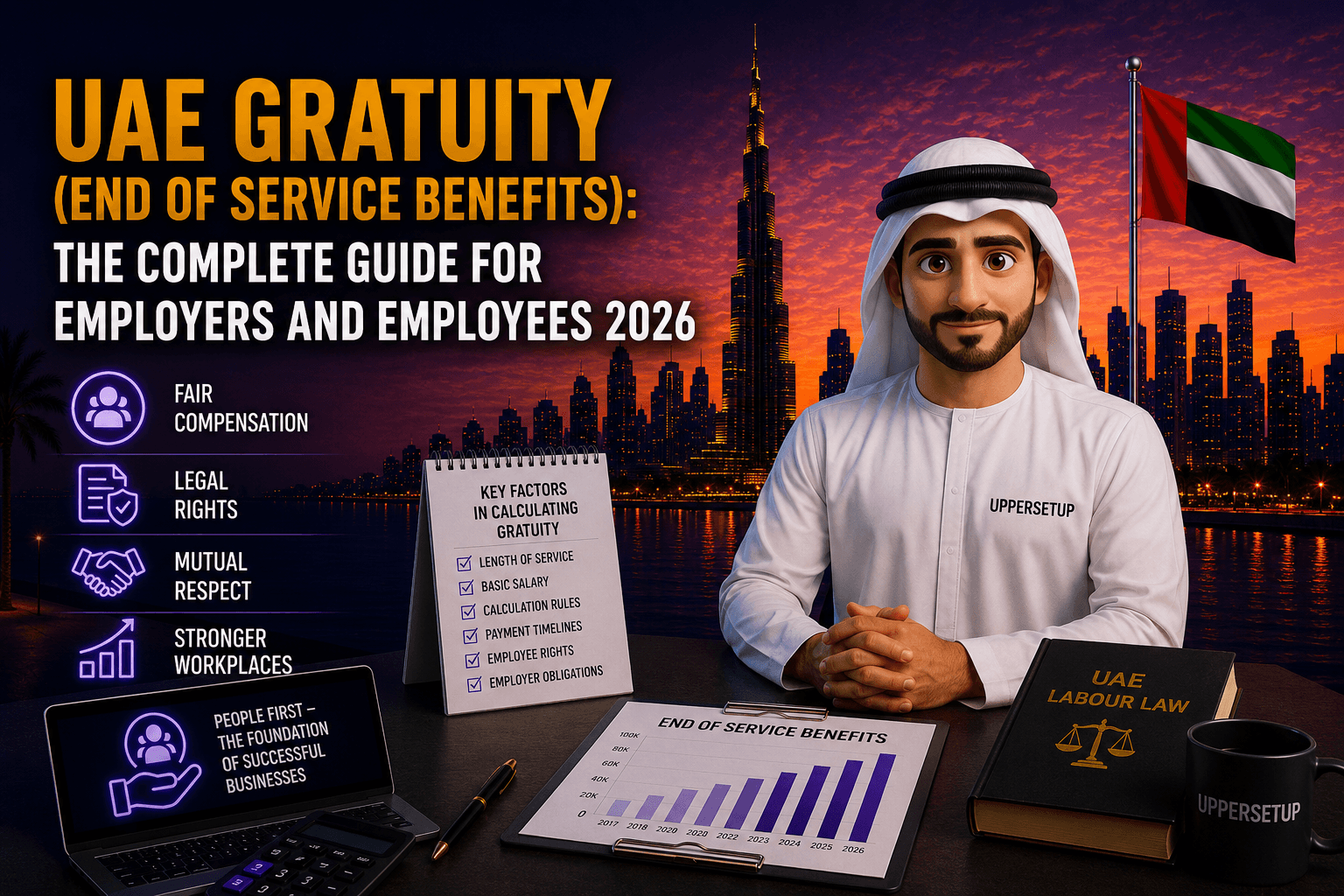
UAE Gratuity (End of Service Benefits): The Complete Guide for Employers and Employees 2026
HRUAE

UAE Gratuity (End of Service Benefits): The Complete Guide for Employers and Employees 2026

Gratuity (end of service benefit / end of service gratuity / EOSG) is a mandatory lump-sum payment that an employer is legally obligated to make to an employee upon termination of employment. This is not a discretionary bonus — it is a statutory right of every expatriate in the UAE private sector who has completed at least one year of continuous service.

Hong Kong Profits Tax Deductions and Incentives in 2026: R&D at 300%/200%, Sections 16E and 16EA, Environmental Installations
Hong KongTaxLaws and Regulations

Hong Kong Profits Tax Deductions and Incentives in 2026: R&D at 300%/200%, Sections 16E and 16EA, Environmental Installations

Hong Kong operates three separate capital-deduction mechanisms under profits tax: the enhanced deduction for research and development under section 16B and Schedule 45 (300% on the first HK$2,000,000 and 200% above it), the deduction for capital expenditure on acquiring intellectual property rights under sections 16E and 16EA (100% in one year for patent rights and know-how, five equal instalments over five years for six named rights), and the deduction for environmental facilities under section 16I (100% in the year the expenditure is incurred). These are three distinct regimes with different conditions, different prohibitions and different clawback rules on disposal.

Stamp Duty on Share Transfers in Hong Kong 2026: Rates, Net-Asset Valuation, Deadlines and Penalties
Hong KongDeadlines & РrocessTaxLaws and Regulations

Stamp Duty on Share Transfers in Hong Kong 2026: Rates, Net-Asset Valuation, Deadlines and Penalties

Stamp duty on the transfer of Hong Kong stock is charged at an aggregate of 0.2% — 0.1% on each of the two contract notes — plus a fixed HKD 5 on the instrument of transfer. The charge is computed on the consideration or the value of the stock, whichever is higher. The governing statute is the Stamp Duty Ordinance (Cap. 117), Head 2 of the First Schedule, administered by the Stamp Office of the Inland Revenue Department.

The Global Minimum Tax and HKMTT in Hong Kong in 2026: Scope, the IRD Portal and Form IR1485
Hong KongTax

The Global Minimum Tax and HKMTT in Hong Kong in 2026: Scope, the IRD Portal and Form IR1485

Hong Kong has introduced the 15% global minimum tax for multinational groups with consolidated revenue of EUR 750 million or more — through an income inclusion rule (IIR) and its own domestic top-up tax, the Hong Kong minimum top-up tax (HKMTT). Both apply to fiscal years beginning on or after 1 January 2025. The obligation bites not at the point of payment but at the point of administration: the notification is due six months after the end of the fiscal year and the return fifteen months after it, and both are filed exclusively online through the Inland Revenue Department’s Pillar Two Portal.

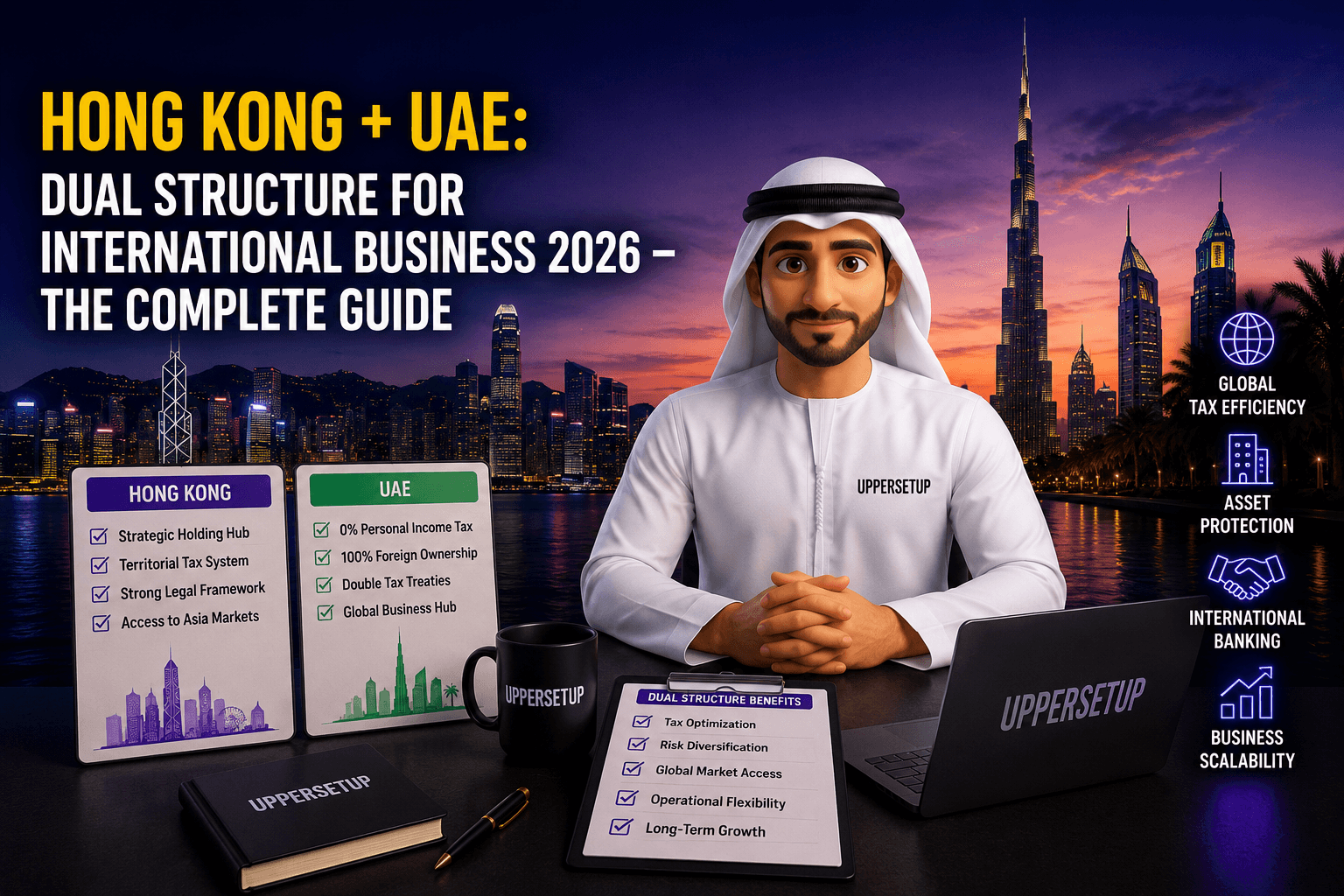
Hong Kong + UAE: Dual Structure for International Business 2026 — The Complete Guide
Company setupTaxUAEHong Kong

Hong Kong + UAE: Dual Structure for International Business 2026 — The Complete Guide

Most entrepreneurs thinking about "two jurisdictions" imagine two offshore entities for tax reduction. The Hong Kong + UAE dual structure operates on a fundamentally different logic. These are two complementary jurisdictions with different geographic reach, different legal systems, and different banking ecosystems — which together deliver more than either achieves alone.

Kazakhstan Public Procurement for Foreign Suppliers and Internal Value (Local Content) Requirements in 2026
KazakhstanLaws and Regulations

Kazakhstan Public Procurement for Foreign Suppliers and Internal Value (Local Content) Requirements in 2026

Kazakhstan’s own legal term for what English-language practice calls local content is internal value (vnutristranovaya tsennost); the older term mestnoe soderzhanie, literally local content, was displaced from the calculation instruments in 2018 and no longer appears in procurement legislation; it is used in this article only where the historical instruments are discussed.

The Hong Kong Profits Tax Return in 2026: BIR51, BIR52 and BIR54, Block Extension and Mandatory E-Filing
Hong KongTax

The Hong Kong Profits Tax Return in 2026: BIR51, BIR52 and BIR54, Block Extension and Mandatory E-Filing

A Hong Kong profits tax return is not a self-initiated annual filing — it is a response to an individual notice from the tax authority. The obligation arises the moment the Inland Revenue Department (IRD) issues a notice under section 51(1) of the Inland Revenue Ordinance (Cap. 112). BIR51 serves corporations, BIR52 serves persons other than corporations, and BIR54 is used in respect of non-resident persons. The bulk issue of 2025/26 returns took place on 1 and 2 April 2026; the default filing period is one month from the date of issue for BIR51 and BIR52, and two months for BIR54.

Dividends and Profit Repatriation from a Kazakh LLP in 2026: What Happened to the Three-Year Holding Relief
KazakhstanTaxLaws and Regulations

Dividends and Profit Repatriation from a Kazakh LLP in 2026: What Happened to the Three-Year Holding Relief

Kazakhstan no longer grants any dividend relief based on how long a participation has been held. The rule that exempted dividends where the shares or participation interest had been held for more than three years applied until 31 December 2022, survived for three more years in reduced form as a 10% rate, and disappeared altogether on 1 January 2026 with the repeal of the old Tax Code. The statute now looks at the size of the holding rather than its duration: a participant holding at least 25% of the capital of a Kazakh LLP pays 5% on dividends up to 230,000 times the monthly calculation index per calendar year and 15% above that ceiling. Every other non-resident pays 15%, and a recipient registered in a listed preferential-tax jurisdiction pays 20% regardless of holding size or duration.

Power of Attorney and Corporate Document Legalisation in the UAE 2026: The Full Chain from Notary to MOFAIC
Knowledge baseUAE

Power of Attorney and Corporate Document Legalisation in the UAE 2026: The Full Chain from Notary to MOFAIC

The UAE is not a party to the 1961 Hague Apostille Convention, so foreign corporate documents — powers of attorney, memoranda of association, board resolutions — cannot be legalised with a single apostille; a full consular legalisation chain is required.

DIFC, ADGM, and ADJD Wills: Inheritance Planning in the UAE for Non-Residents
DIFCADGMLegal servicesUAE

DIFC, ADGM, and ADJD Wills: Inheritance Planning in the UAE for Non-Residents

Without a registered will, the UAE-based assets of a non-Muslim non-resident (bank accounts, real estate, shares in a company) are distributed under Article 11 of Federal Decree-Law No. 41 of 2022 on Civil Personal Status: 50% to the spouse, 50% split equally among the children. Bank accounts are frozen immediately on notification of death until a court establishes the heirs — a process that can take anywhere from a few months to over a year. Three main registrars allow proactive registration: DIFC Wills Service (AED 10,000, English only), ADJD in Abu Dhabi (AED 950, bilingual), and ADGM (registration at ADGM, probate handled through ADJD). UAE residency is not required for any of the three.

UAE Personal Data Protection Law (PDPL): The Complete Business Guide for 2026
Legal servicesUAE

UAE Personal Data Protection Law (PDPL): The Complete Business Guide for 2026

On 20 September 2021, the UAE enacted its first comprehensive federal data privacy framework: Federal Decree-Law No. 45 of 2021 on the Protection of Personal Data — universally referred to as the PDPL. The law came into force on 2 January 2022.

UAE Commercial Agency Law 2026: Agent Protection, Registration, and the Risks for a Foreign Principal
UAELegal services

UAE Commercial Agency Law 2026: Agent Protection, Registration, and the Risks for a Foreign Principal

A commercial agency in the UAE is an agreement registered with the Ministry of Economy that grants a local agent statutory protections — including a restriction on unilateral termination and a right to compensation — that an ordinary, unregistered distributor does not have.

The UAE Family Business Law 2026: Federal Decree-Law No. 37 of 2022 — the Registry, Share Succession, and Dispute Resolution
UAELegal services

The UAE Family Business Law 2026: Federal Decree-Law No. 37 of 2022 — the Registry, Share Succession, and Dispute Resolution

Federal Decree-Law No. (37) of 2022 Concerning Family Businesses is the UAE’s first federal law regulating operating companies owned by a single family through voluntary registration in a family business registry, rather than through creating a separate asset-holding structure.

Closing a Hong Kong Company in 2026: Deregistration, Winding Up and the IRD Notice of No Objection
Hong KongLaws and Regulations

Closing a Hong Kong Company in 2026: Deregistration, Winding Up and the IRD Notice of No Objection

There are two fundamentally different ways to close a Hong Kong company. Deregistration is the simplified administrative route under section 750 of the Companies Ordinance (Cap. 622), available to a solvent company that has stopped trading and owes nothing. Winding up is a formal liquidation with an appointed liquidator under the Companies (Winding Up and Miscellaneous Provisions) Ordinance (Cap. 32), used where the company still holds assets, owes liabilities or is in dispute with creditors. The gate to the first route is a written Notice of No Objection from the Commissioner of Inland Revenue: without it the Companies Registry will not accept the application.

Freezing a Trade Licence in the UAE 2026: A Legal Alternative to Renewal and Liquidation
Knowledge baseUAE

Freezing a Trade Licence in the UAE 2026: A Legal Alternative to Renewal and Liquidation

Temporarily freezing (suspending) a trade licence in the UAE is an official and legal mechanism available in most major jurisdictions: DET (mainland Dubai), DMCC, JAFZA, and several other regulators. It is not a free loophole — freezing is a paid procedure with its own government fee, generally lower than the full annual renewal cost but never zero. Conditions and timelines vary sharply by regulator: DET only allows freezing a licence after it has already expired, for up to 3 years (1 year for a Sole Establishment); DMCC, by contrast, allows freezing a still-active licence for 12, 24, or 36 months. In all cases, Corporate Tax and VAT obligations to the Federal Tax Authority (FTA) remain in full force — freezing the licence does not exempt the company from filing returns.

Payroll and Employer Obligations in Hong Kong 2026: the Employment Ordinance, the Employer's Return (BIR56A/IR56B) and Salaries Tax
Hong KongTax

Payroll and Employer Obligations in Hong Kong 2026: the Employment Ordinance, the Employer's Return (BIR56A/IR56B) and Salaries Tax

A Hong Kong employer does not withhold income tax from an employee's pay. Its tax duty is a reporting duty: file the annual Employer's Return (Form BIR56A together with Forms IR56B) and notify the Inland Revenue Department during the year of every hire, cessation and departure using Forms IR56E, IR56F and IR56G. Running in parallel is the labour perimeter: the Employment Ordinance (Cap. 57), the Minimum Wage Ordinance (Cap. 608), the Mandatory Provident Fund Schemes Ordinance (Cap. 485) and the Employees' Compensation Ordinance (Cap. 282). The two perimeters are procedurally unconnected, but a breach of either is a criminal offence rather than an administrative one.

Employer Payroll Taxes and Contributions in Kazakhstan 2026: Income Tax, Pension, Social and Medical Insurance Charges
KazakhstanAccountingTaxLaws and Regulations

Employer Payroll Taxes and Contributions in Kazakhstan 2026: Income Tax, Pension, Social and Medical Insurance Charges

The 2026 payroll burden in Kazakhstan consists of three deductions from the employee's income — individual income tax (IIT), the mandatory pension contribution (OPV) and the medical insurance contribution (VOSMS) — and four charges borne by the employer: the employer pension contribution (OPVR) at 3.5%, social contributions at 5%, employer medical insurance deductions at 3% and social tax at 6%. Two statutory indicators run through every calculation: the monthly minimum wage (MZP) and the monthly calculation index (MCI).

AI Business in the UAE 2026: Unicorn 30, Stargate UAE, DIFC AI Native — and What It All Means for Entrepreneurs
IT-startupsGovernment programsUAE

AI Business in the UAE 2026: Unicorn 30, Stargate UAE, DIFC AI Native — and What It All Means for Entrepreneurs

Talk of an 'AI bubble' in the UAE is over. Not because it burst — but because real demand for AI solutions in energy, healthcare, finance, logistics, and government services has become so tangible that there is no room left for speculation.

Importing into Kazakhstan from Third Countries in 2026: Customs Value, EAEU Tariff Duties, 16% Import VAT and What Errors Actually Cost
KazakhstanTaxLaws and Regulations

Importing into Kazakhstan from Third Countries in 2026: Customs Value, EAEU Tariff Duties, 16% Import VAT and What Errors Actually Cost

Importing goods into Kazakhstan from a country outside the EAEU means the customs procedure of release for internal consumption, under which import duty, import VAT, excise and the customs fee are all paid before the goods are released — not after they are sold. The duty rate comes from the EAEU Common Customs Tariff as it stands on the day the declaration is registered, and import VAT is charged at 16% on the customs value increased by duty and excise. The declaration fee is a flat 6 MCI — KZT 25,950 in 2026 — whatever the consignment is worth.

Importing and exporting in Hong Kong in 2026: declarations, the free port regime and licensed goods
Hong KongTrade

Importing and exporting in Hong Kong in 2026: declarations, the free port regime and licensed goods

Hong Kong is a free port: no customs tariff is charged on the import or the export of goods. The Trade and Industry Department puts it directly: “Hong Kong is a free port. We pursue a free trade policy and do not maintain barriers on trade. No tariff is charged on import or export of goods.” The absence of a tariff is not the absence of obligation: almost every import and export requires a declaration within 14 days, four categories of goods bear excise duty, and dozens of categories require a licence.

UAE Import, Customs and Import VAT in 2026: the Customs Client Code, Mirsal 2, 5% on CIF, Designated Zones and Recovering Import VAT
Laws and RegulationsTaxCustomsUAE

UAE Import, Customs and Import VAT in 2026: the Customs Client Code, Mirsal 2, 5% on CIF, Designated Zones and Recovering Import VAT

Bringing goods into the UAE runs through two independent circuits: customs and tax. The customs circuit is run by the emirate — importer registration, the declaration, 5% duty on the CIF value. The tax circuit is run federally — 5% VAT on a base that includes the duty, with the option of not paying it at the border if the tax registration number is linked to the customs registration number. The two circuits meet at exactly one point, and that point is the one most often left unconfigured.

Investment Preferences and the Investment Contract in Kazakhstan in 2026: the New Architecture After the 1 January Reform
KazakhstanInvestmentsTaxLaws and Regulations

Investment Preferences and the Investment Contract in Kazakhstan in 2026: the New Architecture After the 1 January Reform

A completely rebuilt investment preference regime has applied in Kazakhstan since 1 January 2026. Law of the Republic of Kazakhstan No. 215-VIII of 18 July 2025 excluded articles 286, 287, 288, 289, 290, 295-1 and 295-3 from the Entrepreneurial Code and inserted a new block, articles 283-1 to 283-5, in their place. Investment preferences are now granted under one of three instruments only — an investment agreement, an investment obligations agreement or a simplified investment contract — and under one of them at a time. The tax side moved into chapter 81 of the new Tax Code No. 214-VIII, which took effect on the same day.

Investment Preferences and the Investment Contract in Kazakhstan in 2026: the New Architecture After the 1 January Reform
KazakhstanInvestmentsLaws and Regulations

Investment Preferences and the Investment Contract in Kazakhstan in 2026: the New Architecture After the 1 January Reform

A completely rebuilt investment preference regime has applied in Kazakhstan since 1 January 2026. Law of the Republic of Kazakhstan No. 215-VIII of 18 July 2025 excluded articles 286, 287, 288, 289, 290, 295-1 and 295-3 from the Entrepreneurial Code and inserted a new block, articles 283-1 to 283-5, in their place. Investment preferences are now granted under one of three instruments only — an investment agreement, an investment obligations agreement or a simplified investment contract — and under one of them at a time. The tax side moved into chapter 81 of the new Tax Code No. 214-VIII, which took effect on the same day.

All articles

The Hong Kong Money Lenders Licence in 2026: Who Needs One, What Changed on 1 August, and What the Reform Will Change Next
Hong KongLaws and RegulationsRegulatory environment

The Hong Kong Money Lenders Licence in 2026: Who Needs One, What Changed on 1 August, and What the Reform Will Change Next

Product Marking and Traceability in Kazakhstan: Motor Oils, Beer, Food Supplements and Light-Industry Goods, 2026–2029
KazakhstanTradeCertificationCustoms

Product Marking and Traceability in Kazakhstan: Motor Oils, Beer, Food Supplements and Light-Industry Goods, 2026–2029

The Russia–UAE Tax Treaty from 1 January 2026: 10% on Dividends, Interest and Royalties, Residence, and What Actually Changes for Company Owners
TaxLaws and RegulationsUAE

The Russia–UAE Tax Treaty from 1 January 2026: 10% on Dividends, Interest and Royalties, Residence, and What Actually Changes for Company Owners

Abu Dhabi Airport Free Zone (ADAFZ) in 2026: Legal Basis, Tax Status and What It Actually Costs
ADAFZ - Abu Dhabi Airport Free Zone

Abu Dhabi Airport Free Zone (ADAFZ) in 2026: Legal Basis, Tax Status and What It Actually Costs

ADGM 2026: The Complete Breakdown — Jurisdiction, Structures, Regulators, Taxes, and Who It Works For
ServiceADGMUAEFree ZoneCompany setup

ADGM 2026: The Complete Breakdown — Jurisdiction, Structures, Regulators, Taxes, and Who It Works For

AIFC 2026: A Complete Breakdown — Structures, Tax Incentives Until 2066, Registration, and Comparison With ADGM/DIFC
Company setupAIFCKazakhstanFree Zone

AIFC 2026: A Complete Breakdown — Structures, Tax Incentives Until 2066, Registration, and Comparison With ADGM/DIFC

Ajman Free Zone 2026: A Complete Breakdown of the UAE’s Oldest Budget Free Zone
Ajman Free ZoneUAEFree Zone

Ajman Free Zone 2026: A Complete Breakdown of the UAE’s Oldest Budget Free Zone

DNFBP AML Compliance in the UAE 2026: Who Is Covered, What’s Required, and Who Supervises
AMLUAELegal services

DNFBP AML Compliance in the UAE 2026: Who Is Covered, What’s Required, and Who Supervises

Astana Hub in 2026: New Participation Rules, the Auditor-Confirmed Report and the New Counter-Obligations
Astana HubCompany setupRegulatory environmentKazakhstan

Astana Hub in 2026: New Participation Rules, the Auditor-Confirmed Report and the New Counter-Obligations

The Business Registration Ordinance (Cap. 310) in 2026: fee, levy, exemptions and branches
Hong KongLaws and RegulationsCompany setup

The Business Registration Ordinance (Cap. 310) in 2026: fee, levy, exemptions and branches

Hong Kong’s Competition Ordinance (Cap. 619) in 2026: the First Conduct Rule, the Second Conduct Rule, the Merger Rule, Commission Investigations, Penalties of up to 10% of Turnover, Director Disqualification and Competition Tribunal Practice 2017–2026
Hong KongLaws and RegulationsRegulatory environment

Hong Kong’s Competition Ordinance (Cap. 619) in 2026: the First Conduct Rule, the Second Conduct Rule, the Merger Rule, Commission Investigations, Penalties of up to 10% of Turnover, Director Disqualification and Competition Tribunal Practice 2017–2026

CRS and Automatic Exchange of Information in 2026: Classifying the Entity and the Account, Getting the Self-Certification Right, and the Mistakes That Cost Most
CRSTaxUAE

CRS and Automatic Exchange of Information in 2026: Classifying the Entity and the Account, Getting the Self-Certification Right, and the Mistakes That Cost Most

DAFZA: the free zone at Dubai Airport — who it suits, how it is structured from the inside, and why Boeing, Airbus, and Chanel operate here
DAFZAUAEFree Zone

DAFZA: the free zone at Dubai Airport — who it suits, how it is structured from the inside, and why Boeing, Airbus, and Chanel operate here

DIFC 2026: The Complete Breakdown — Jurisdiction, Structures, Regulators, Taxes, and Who It Actually Works For
Company setupDIFCUAEFree Zone

DIFC 2026: The Complete Breakdown — Jurisdiction, Structures, Regulators, Taxes, and Who It Actually Works For

DIFC vs ADGM Employment Law in 2026: The Complete Comparison for Employers
ADGMUAEDIFCLaws and RegulationsEmployment Law

DIFC vs ADGM Employment Law in 2026: The Complete Comparison for Employers