Services

Company RegistrationVisa ServicesBanking ServicesAccounting ServicesLegal ServicesHR Services

Partners

Partner modelsReferral program

Resources

BlogNews

About the company

About UsContact us

Latest articles


UPPERSETUP logo

Online platform for business registration in the UAE

Email

support@uppersetup.com

Phone

+971 52 184 1181

© 2026 UPPERSETUP Technology Ltd.
All content on this website is protected by copyright

Terms of ServiceTerms of UsePrivacy Policy
Send WhatsApp message
  1. Home
  2. Blog
  3. Laws and Regulations

Laws and Regulations

All articles
RERA
Bankruptcy
Fujairah Free Zone
JAFZA
IT-startups
Hong Kong
RAKICC
Accounting
ADAFZ - Abu Dhabi Airport Free Zone
Personal Data
Laws and Regulations
Dubai International Academic City
Company Re-domiciliation
Dubai Maritime City
Meydan Free Zone
Fund
DWTC
Dubai South Free Zone
DIAC
Visas
Government programs
Healthcare
RAKEZ
Masdar City Free Zone
CRS
UAQ Free Trade Zone
Legal services
UAE
Digital Assets
Комплайнс
Knowledge base
UPPERSETUP
Work permit
Permits and Approvals
DIFC
Property
Finance
Deadlines & Рrocess
Offices & Infrastructure
Commercial Arbitration
Dubai Media City
Company setup
Dubai Knowledge Park
SAIF Zone
Investments
Banking
Dubai Silicon Oasis
KEZAD
Dubai Production City
Intellectual Property
HR
Dubai Design District (d3)
Innovation City
Free Zone
Dubai Industrial City
Dubai Studio City
Dubai Science Park
Virtual assets
arbitrateAD
Astana Hub
Dubai Healthcare City
Business
Hamriyah Free Zone
Customs
AML
Sharjah Media City
Trademark Registration
AIFC
Kazakhstan
DMCC
Tax
DAFZA
Hong Kong
Education Industry
Dubai CommerCity
Dubai Outsource City
Trade
twofour54
Industries
ADGM
Certification
Regulatory environment
Dubai Internet City
Residence Permit
Cybersecurity
Ajman Free Zone
Service

Recommended

Buying Property in Hong Kong in 2026: How Much Stamp Duty a Foreign Buyer Pays
Laws and RegulationsHong KongProperty

Buying Property in Hong Kong in 2026: How Much Stamp Duty a Foreign Buyer Pays

On 28 February 2024 Hong Kong did what the market had been waiting eleven years for: it scrapped every surcharge on residential stamp duty. A foreign individual, a BVI company and a local owner of five flats all became liable for exactly the same duty as a Hong Kong permanent resident buying a first home. A HK$10,000,000 flat cost a non-resident HK$3,000,000 in stamp duty before 25 October 2023, HK$1,500,000 between 25 October 2023 and 27 February 2024, and HK$370,000 from 28 February 2024. The bill fell eightfold.

The Business Registration Ordinance (Cap. 310) in 2026: fee, levy, exemptions and branches
Laws and RegulationsHong KongCompany setup

The Business Registration Ordinance (Cap. 310) in 2026: fee, levy, exemptions and branches

The Business Registration Ordinance (Cap. 310) requires every person carrying on business in Hong Kong to register that business with the Business Registration Office of the Inland Revenue Department (IRD) within one month of commencement and to pay two distinct amounts: the business registration fee and the levy that funds the Protection of Wages on Insolvency Fund. For certificates commencing on or after 1 April 2026 a one-year certificate costs HK$2,350(HK$2,200 fee plus HK$150 levy) and a three-year certificate HK$6,170 (HK$5,720 plus HK$450). Registration under Cap. 310 is not a licence to trade and says nothing about whether the business is lawful.

Hong Kong’s Competition Ordinance (Cap. 619) in 2026: the First Conduct Rule, the Second Conduct Rule, the Merger Rule, Commission Investigations, Penalties of up to 10% of Turnover, Director Disqualification and Competition Tribunal Practice 2017–2026
Laws and RegulationsHong KongRegulatory environment

Hong Kong’s Competition Ordinance (Cap. 619) in 2026: the First Conduct Rule, the Second Conduct Rule, the Merger Rule, Commission Investigations, Penalties of up to 10% of Turnover, Director Disqualification and Competition Tribunal Practice 2017–2026

The Competition Ordinance (Cap. 619) is Hong Kong’s principal competition statute: Ordinance No. 14 of 2012, passed by the Legislative Council (LegCo) on 14 June 2012, gazetted on 22 June 2012 and brought fully into operation on 14 December 2015.

The Employment Ordinance (Cap. 57) in 2026: the 417/468 Rule, the End of MPF Offsetting, and a HKD 43.1 Minimum Wage
Laws and RegulationsHong KongTax

The Employment Ordinance (Cap. 57) in 2026: the 417/468 Rule, the End of MPF Offsetting, and a HKD 43.1 Minimum Wage

Three things in Hong Kong employment law moved at once in 2026. The continuous contract threshold fell from 18 hours a week to 17, with an alternative of 68 hours across four weeks. Offsetting of an employer’s mandatory MPF contributions against severance and long service payments has been abolished for service after 1 May 2025. And the statutory minimum wage has stood at HKD 43.1 an hour since 1 May 2026 — the first rate produced by a formula rather than settled by negotiation.

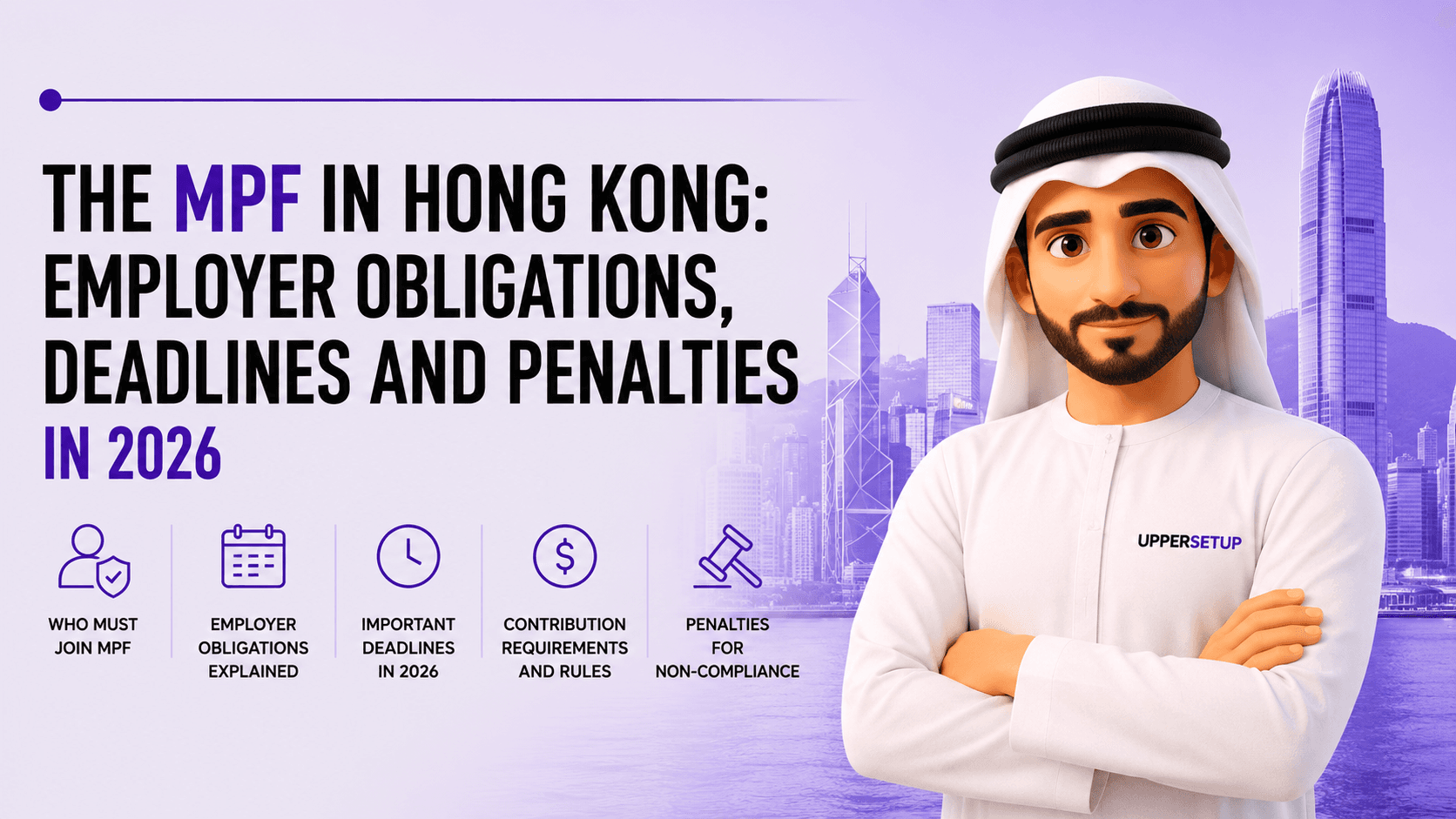
The MPF in Hong Kong: Employer Obligations, Deadlines and Penalties in 2026
Laws and RegulationsHong KongTaxVisas

The MPF in Hong Kong: Employer Obligations, Deadlines and Penalties in 2026

An employer in Hong Kong must enrol every employee aged 18 to 64 in a Mandatory Provident Fund scheme within the first 60 days of employment and remit monthly mandatory contributions of 5 per cent of relevant income from its own funds, plus 5 per cent deducted from the employee. The duty covers full-time and part-time employees alike. The regulator is the Mandatory Provident Fund Schemes Authority (MPFA).

PDPO Cap. 486 in 2026: The Reform That Never Came, and Governing AI Without a Statute
Laws and RegulationsHong Kong

PDPO Cap. 486 in 2026: The Reform That Never Came, and Governing AI Without a Statute

The Personal Data (Privacy) Ordinance (Cap. 486) stands in 2026 substantially as it stood before the reform announced in January 2020: one of six proposed directions has been enacted. The Privacy Commissioner for Personal Data still cannot impose an administrative fine — every monetary penalty requires a conviction in court. Hong Kong has no mandatory breach notification duty. Artificial intelligence is governed not by statute but by guidance, none of which carries the status of a code of practice.

The Significant Controllers Register in Hong Kong: Obligations, Deadlines and Penalties in 2026
Laws and RegulationsHong Kong

The Significant Controllers Register in Hong Kong: Obligations, Deadlines and Penalties in 2026

Every company incorporated in Hong Kong must keep a Significant Controllers Register (SCR) — an internal record of the individuals and legal entities that control the company. The register is neither published nor filed with the registry: it is held by the company and produced on demand to authorised officers. The requirement sits in the new Division 2A of Part 12 of the Companies Ordinance (Cap. 622) and has applied since 1 March 2018.

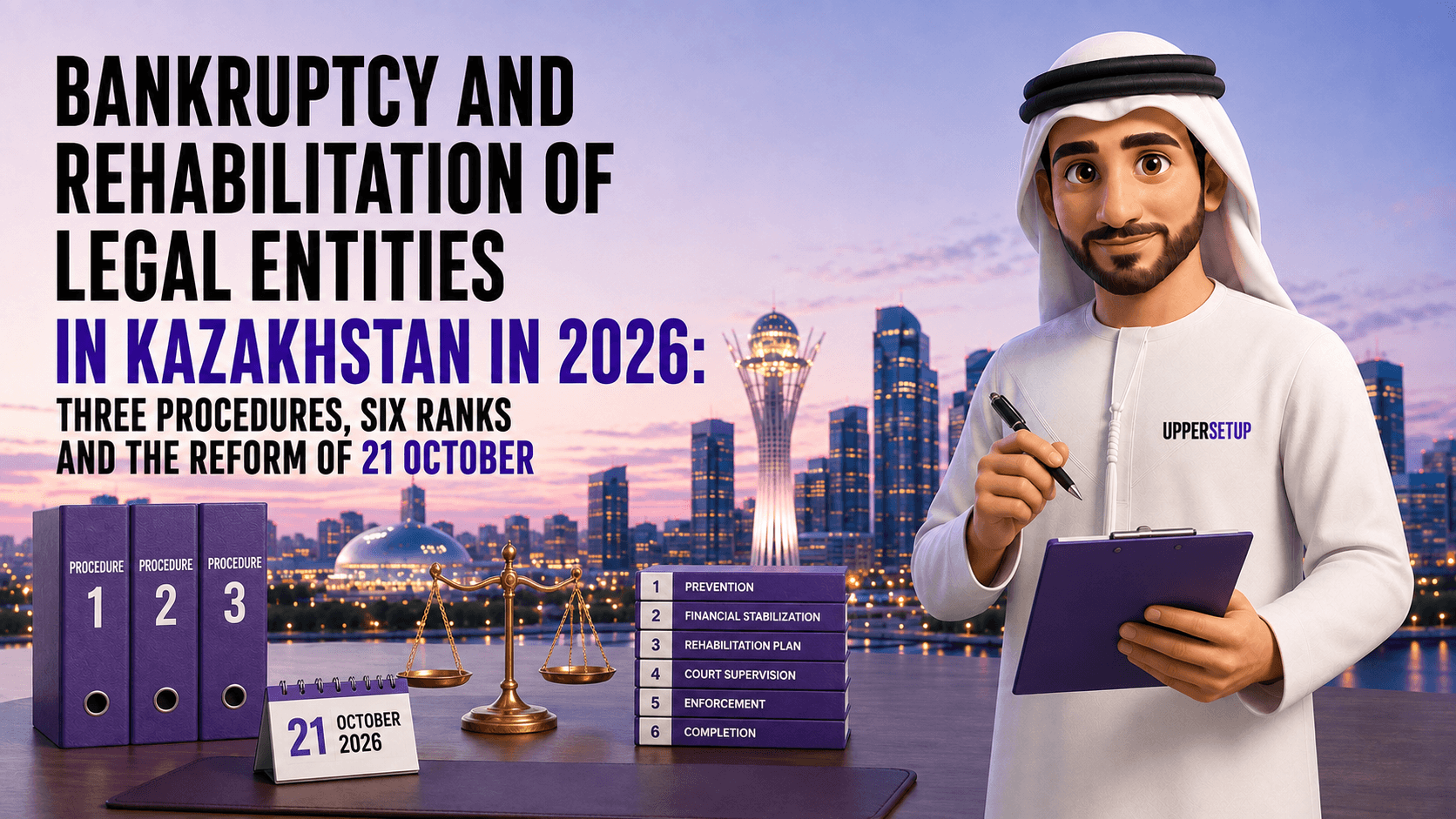
Bankruptcy and rehabilitation of legal entities in Kazakhstan in 2026: three procedures, six ranks and the reform of 21 October
Laws and RegulationsKazakhstanBankruptcy

Bankruptcy and rehabilitation of legal entities in Kazakhstan in 2026: three procedures, six ranks and the reform of 21 October

Insolvency and the restoration of solvency of a legal entity in Kazakhstan are governed by a single statute — the Law of the Republic of Kazakhstan of 7 March 2014 No. 176-V “On Rehabilitation and Bankruptcy” — which provides three court procedures: debt restructuring, rehabilitation and bankruptcy, plus a separate route for liquidating a debtor without opening a bankruptcy procedure. All cases are heard by the specialised inter-district economic courts, and the competent authority is the State Revenue Committee of the Ministry of Finance. None of the procedures is out of court: the accelerated rehabilitation procedure that many surveys still describe was removed from the statute in December 2019.

Reciprocal Enforcement of Mainland Judgments in Hong Kong: Cap. 645 in 2026 — the 2019 Arrangement, Registration in the High Court, the Two-Year Rule, Grounds for Setting Aside and the First Cases
Laws and RegulationsHong KongCommercial Arbitration

Reciprocal Enforcement of Mainland Judgments in Hong Kong: Cap. 645 in 2026 — the 2019 Arrangement, Registration in the High Court, the Two-Year Rule, Grounds for Setting Aside and the First Cases

The Mainland Judgments in Civil and Commercial Matters (Reciprocal Enforcement) Ordinance (Cap. 645) is the Hong Kong statute under which, since 29 January 2024, an effective judgment of a Mainland Chinese court in a civil or commercial matter can be registered in the Court of First Instance of the Hong Kong High Court and enforced as if it were a Hong Kong judgment, and under which the holder of a Hong Kong judgment can obtain from the Hong Kong court a certified copy of that judgment, and a certificate in respect of it, for recognition and enforcement in the Mainland. The Ordinance implements the Arrangement on Reciprocal Recognition and Enforcement of Judgments in Civil and Commercial Matters by the Courts of the Mainland and of the Hong Kong Special Administrative Region, signed by the Supreme People’s Court and the Government of the HKSAR on 18 January 2019 under Article 95 of the Basic Law. Compared with the earlier regime under Cap. 597, the new statute no longer requires an exclusive choice-of-court clause, covers non-monetary as well as monetary judgments, reaches judgments of courts at every level down to the Primary People’s Courts and extends to a defined range of intellectual property disputes. The registration application is made ex parte, the court fee is HK$1,045, the judgment debtor has 14 days after service of the notice of registration to apply to set the registration aside, and the gateway condition is a default in complying with the judgment that occurred within two years before the application.

Hong Kong Profits Tax Deductions and Incentives in 2026: R&D at 300%/200%, Sections 16E and 16EA, Environmental Installations
Laws and RegulationsHong KongTax

Hong Kong Profits Tax Deductions and Incentives in 2026: R&D at 300%/200%, Sections 16E and 16EA, Environmental Installations

Hong Kong operates three separate capital-deduction mechanisms under profits tax: the enhanced deduction for research and development under section 16B and Schedule 45 (300% on the first HK$2,000,000 and 200% above it), the deduction for capital expenditure on acquiring intellectual property rights under sections 16E and 16EA (100% in one year for patent rights and know-how, five equal instalments over five years for six named rights), and the deduction for environmental facilities under section 16I (100% in the year the expenditure is incurred). These are three distinct regimes with different conditions, different prohibitions and different clawback rules on disposal.

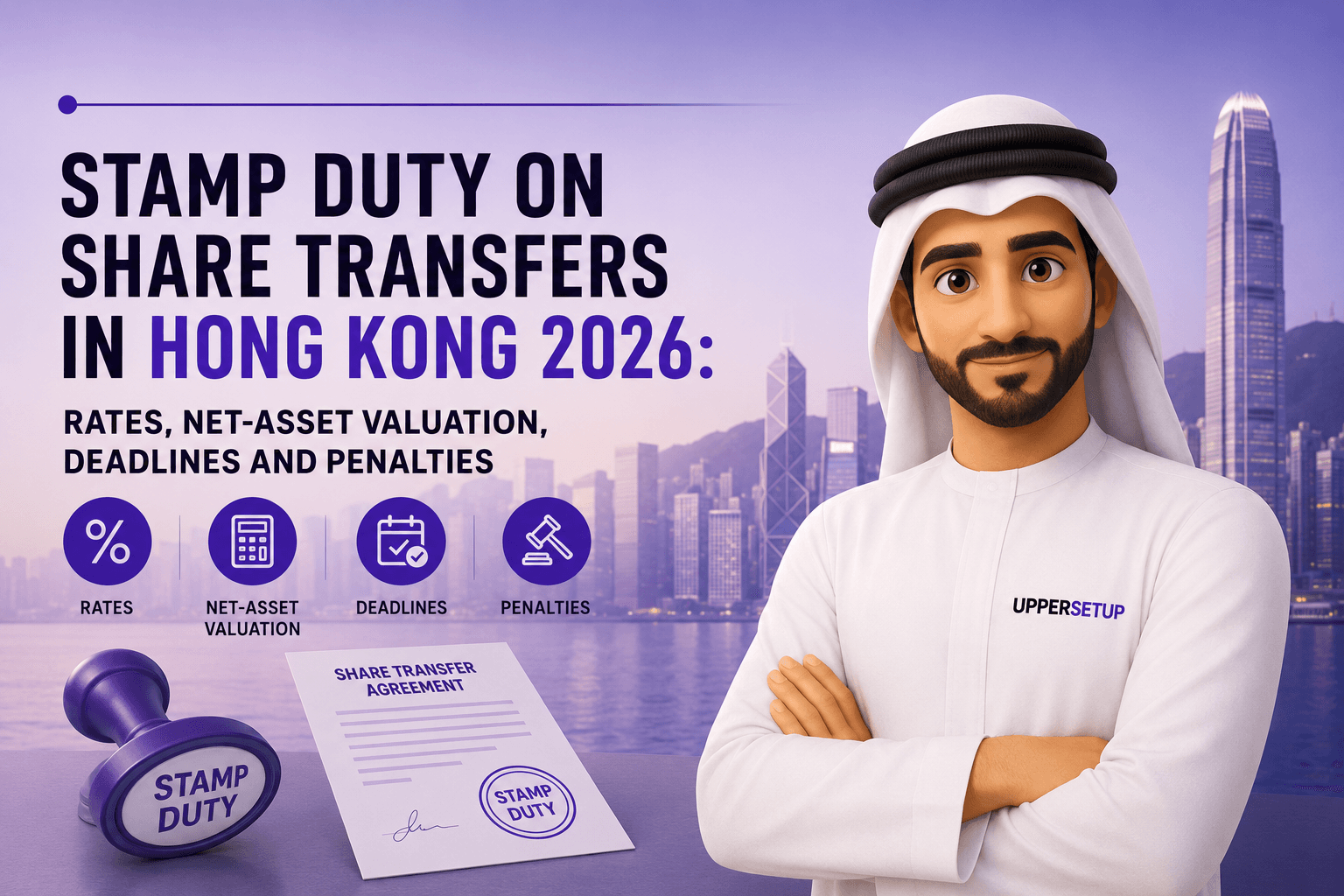
Stamp Duty on Share Transfers in Hong Kong 2026: Rates, Net-Asset Valuation, Deadlines and Penalties
Laws and RegulationsHong KongDeadlines & РrocessTax

Stamp Duty on Share Transfers in Hong Kong 2026: Rates, Net-Asset Valuation, Deadlines and Penalties

Stamp duty on the transfer of Hong Kong stock is charged at an aggregate of 0.2% — 0.1% on each of the two contract notes — plus a fixed HKD 5 on the instrument of transfer. The charge is computed on the consideration or the value of the stock, whichever is higher. The governing statute is the Stamp Duty Ordinance (Cap. 117), Head 2 of the First Schedule, administered by the Stamp Office of the Inland Revenue Department.

Kazakhstan Public Procurement for Foreign Suppliers and Internal Value (Local Content) Requirements in 2026
Laws and RegulationsKazakhstan

Kazakhstan Public Procurement for Foreign Suppliers and Internal Value (Local Content) Requirements in 2026

Kazakhstan’s own legal term for what English-language practice calls local content is internal value (vnutristranovaya tsennost); the older term mestnoe soderzhanie, literally local content, was displaced from the calculation instruments in 2018 and no longer appears in procurement legislation; it is used in this article only where the historical instruments are discussed.

Dividends and Profit Repatriation from a Kazakh LLP in 2026: What Happened to the Three-Year Holding Relief
Laws and RegulationsKazakhstanTax

Dividends and Profit Repatriation from a Kazakh LLP in 2026: What Happened to the Three-Year Holding Relief

Kazakhstan no longer grants any dividend relief based on how long a participation has been held. The rule that exempted dividends where the shares or participation interest had been held for more than three years applied until 31 December 2022, survived for three more years in reduced form as a 10% rate, and disappeared altogether on 1 January 2026 with the repeal of the old Tax Code. The statute now looks at the size of the holding rather than its duration: a participant holding at least 25% of the capital of a Kazakh LLP pays 5% on dividends up to 230,000 times the monthly calculation index per calendar year and 15% above that ceiling. Every other non-resident pays 15%, and a recipient registered in a listed preferential-tax jurisdiction pays 20% regardless of holding size or duration.

Closing a Hong Kong Company in 2026: Deregistration, Winding Up and the IRD Notice of No Objection
Laws and RegulationsHong Kong

Closing a Hong Kong Company in 2026: Deregistration, Winding Up and the IRD Notice of No Objection

There are two fundamentally different ways to close a Hong Kong company. Deregistration is the simplified administrative route under section 750 of the Companies Ordinance (Cap. 622), available to a solvent company that has stopped trading and owes nothing. Winding up is a formal liquidation with an appointed liquidator under the Companies (Winding Up and Miscellaneous Provisions) Ordinance (Cap. 32), used where the company still holds assets, owes liabilities or is in dispute with creditors. The gate to the first route is a written Notice of No Objection from the Commissioner of Inland Revenue: without it the Companies Registry will not accept the application.

Employer Payroll Taxes and Contributions in Kazakhstan 2026: Income Tax, Pension, Social and Medical Insurance Charges
Laws and RegulationsKazakhstanAccountingTax

Employer Payroll Taxes and Contributions in Kazakhstan 2026: Income Tax, Pension, Social and Medical Insurance Charges

The 2026 payroll burden in Kazakhstan consists of three deductions from the employee's income — individual income tax (IIT), the mandatory pension contribution (OPV) and the medical insurance contribution (VOSMS) — and four charges borne by the employer: the employer pension contribution (OPVR) at 3.5%, social contributions at 5%, employer medical insurance deductions at 3% and social tax at 6%. Two statutory indicators run through every calculation: the monthly minimum wage (MZP) and the monthly calculation index (MCI).

Importing into Kazakhstan from Third Countries in 2026: Customs Value, EAEU Tariff Duties, 16% Import VAT and What Errors Actually Cost
Laws and RegulationsKazakhstanTax

Importing into Kazakhstan from Third Countries in 2026: Customs Value, EAEU Tariff Duties, 16% Import VAT and What Errors Actually Cost

Importing goods into Kazakhstan from a country outside the EAEU means the customs procedure of release for internal consumption, under which import duty, import VAT, excise and the customs fee are all paid before the goods are released — not after they are sold. The duty rate comes from the EAEU Common Customs Tariff as it stands on the day the declaration is registered, and import VAT is charged at 16% on the customs value increased by duty and excise. The declaration fee is a flat 6 MCI — KZT 25,950 in 2026 — whatever the consignment is worth.

UAE Import, Customs and Import VAT in 2026: the Customs Client Code, Mirsal 2, 5% on CIF, Designated Zones and Recovering Import VAT
Laws and RegulationsTaxCustomsUAE

UAE Import, Customs and Import VAT in 2026: the Customs Client Code, Mirsal 2, 5% on CIF, Designated Zones and Recovering Import VAT

Bringing goods into the UAE runs through two independent circuits: customs and tax. The customs circuit is run by the emirate — importer registration, the declaration, 5% duty on the CIF value. The tax circuit is run federally — 5% VAT on a base that includes the duty, with the option of not paying it at the border if the tax registration number is linked to the customs registration number. The two circuits meet at exactly one point, and that point is the one most often left unconfigured.

Investment Preferences and the Investment Contract in Kazakhstan in 2026: the New Architecture After the 1 January Reform
Laws and RegulationsKazakhstanInvestments

Investment Preferences and the Investment Contract in Kazakhstan in 2026: the New Architecture After the 1 January Reform

A completely rebuilt investment preference regime has applied in Kazakhstan since 1 January 2026. Law of the Republic of Kazakhstan No. 215-VIII of 18 July 2025 excluded articles 286, 287, 288, 289, 290, 295-1 and 295-3 from the Entrepreneurial Code and inserted a new block, articles 283-1 to 283-5, in their place. Investment preferences are now granted under one of three instruments only — an investment agreement, an investment obligations agreement or a simplified investment contract — and under one of them at a time. The tax side moved into chapter 81 of the new Tax Code No. 214-VIII, which took effect on the same day.

Investment Preferences and the Investment Contract in Kazakhstan in 2026: the New Architecture After the 1 January Reform
Laws and RegulationsKazakhstanInvestmentsTax

Investment Preferences and the Investment Contract in Kazakhstan in 2026: the New Architecture After the 1 January Reform

A completely rebuilt investment preference regime has applied in Kazakhstan since 1 January 2026. Law of the Republic of Kazakhstan No. 215-VIII of 18 July 2025 excluded articles 286, 287, 288, 289, 290, 295-1 and 295-3 from the Entrepreneurial Code and inserted a new block, articles 283-1 to 283-5, in their place. Investment preferences are now granted under one of three instruments only — an investment agreement, an investment obligations agreement or a simplified investment contract — and under one of them at a time. The tax side moved into chapter 81 of the new Tax Code No. 214-VIII, which took effect on the same day.

Desk Control, Tax Audits and Appeals in Kazakhstan in 2026: Tax Code 214-VIII, the Administrative Procedure Code and Three Routes to a Dispute
Laws and RegulationsKazakhstanTax

Desk Control, Tax Audits and Appeals in Kazakhstan in 2026: Tax Code 214-VIII, the Administrative Procedure Code and Three Routes to a Dispute

Since 1 January 2026 tax control in Kazakhstan has been governed by a new Tax Code — Code of the Republic of Kazakhstan No. 214-VIII of 18 July 2025, which replaced Code No. 120-VI of 25 December 2017. More than the article numbering changed: desk control no longer issues a “notice to remedy breaches” but a notice of discrepancies; tax control has been narrowed to tax audits alone; and the limitation period has split into three and five years by taxpayer category. The appeal architecture remains double and asymmetric: one notification may go either to the Ministry of Finance or straight to court, while every other notification passes through the general pre-court procedure of the Administrative Procedure Code.

Controlled Foreign Company Rules in Kazakhstan: What Kazakhstan Residents Face in 2026
Laws and RegulationsKazakhstanTax

Controlled Foreign Company Rules in Kazakhstan: What Kazakhstan Residents Face in 2026

Controlled foreign company rules are addressed not to the foreign company but to its Kazakhstan owner. The mechanism is that, where defined conditions are met, the profit of a foreign company is included in the taxable income of a Kazakhstan resident and taxed in Kazakhstan — even where no dividend has been distributed and the money has stayed abroad. The regime sits in Chapter 33 of the Tax Code of the Republic of Kazakhstan (Law No. 214-VIII of 18 July 2025), in force from 1 January 2026.

UAE Corporate Tax for Natural Persons in 2026: the AED 1,000,000 Threshold, Registration and the Tax Return
Laws and RegulationsTaxUAE

UAE Corporate Tax for Natural Persons in 2026: the AED 1,000,000 Threshold, Registration and the Tax Return

A natural person in the UAE pays corporate tax only where that person conducts a business and the gross turnover from that business exceeds AED 1,000,000 in a Gregorian calendar year. The threshold sits in Article 2(1) of Cabinet Decision No. 49 of 2023. Below it, no registration is required at all. Above it, the natural person becomes a Taxable Person and must register, keep records, file a return and pay tax at 9% on taxable income above AED 375,000.

Withholding Tax in Kazakhstan 2026: Services, Royalties, Interest, Dividends, the Residency Certificate and Treaty Relief
Laws and RegulationsKazakhstanTax

Withholding Tax in Kazakhstan 2026: Services, Royalties, Interest, Dividends, the Residency Certificate and Treaty Relief

Kazakhstan withholding tax is deducted by the Kazakhstan payer from a foreign company's income sourced in the Republic of Kazakhstan, with no deductions allowed. The headline rate is 20 per cent; dividends, royalties and interest carry 15 per cent; interest on loans and debt securities carries 10 per cent; international transport services carry 5 per cent. The framework from 1 January 2026 is Division 15 of the new Tax Code (Code of the Republic of Kazakhstan No. 214-VIII of 18 July 2025), articles 679 to 687 and chapter 75.

Liquidating and Closing a UAE Company in 2026: Licence Cancellation, Corporate Tax and VAT Deregistration, Final Returns, Visas and Director Liability
Laws and RegulationsDeadlines & РrocessUAELegal services

Liquidating and Closing a UAE Company in 2026: Licence Cancellation, Corporate Tax and VAT Deregistration, Final Returns, Visas and Director Liability

Closing a UAE company is not one procedure but three running in parallel: the corporate track (liquidation and licence cancellation), the tax track (deregistration with the Federal Tax Authority for corporate tax and VAT) and the immigration track (cancelling visas and the establishment card). The framework is set by Federal Decree-Law No. 32 of 2021 on Commercial Companies as amended by Federal Decree-Law No. 20 of 2025, Federal Decree-Law No. 47 of 2022 on Corporate Tax, Federal Decree-Law No. 8 of 2017 on VAT and Federal Decree-Law No. 28 of 2022 on Tax Procedures.

Liquidating an LLP in Kazakhstan in 2026: the Rules in Force, the Deadlines and the "Clean Slate" Mechanism
Laws and RegulationsKazakhstanLegal services

Liquidating an LLP in Kazakhstan in 2026: the Rules in Force, the Deadlines and the "Clean Slate" Mechanism

Liquidating a limited liability partnership in Kazakhstan runs on two parallel tracks: a corporate one, handled by the justice authorities and ending with the removal of the entry from the National Register of Business Identification Numbers, and a tax one, handled by the state revenue authorities and determining how long the whole exercise actually takes. The second track was rewritten in full with effect from 1 January 2026.

The Money Service Operator (MSO) licence in Hong Kong in 2026: who needs one, what it costs, the Customs & Excise competence test and the AMLO sanctions
Laws and RegulationsFinanceHong KongRegulatory environment

The Money Service Operator (MSO) licence in Hong Kong in 2026: who needs one, what it costs, the Customs & Excise competence test and the AMLO sanctions

A Money Service Operator (MSO) is a person who, in Hong Kong and as a business, provides a money changing service or a remittance service and must therefore hold an MSO licence granted by the Commissioner of Customs and Excise under Part 5 of the Anti-Money Laundering and Counter-Terrorist Financing Ordinance (Cap. 615, AMLO). The licence runs for two years, an application for its grant has cost HK$3,810 plus HK$945 for each person subject to the fit-and-proper test since 15 May 2026, and operating without a licence carries a fine of up to HK$1,000,000 and up to two years’ imprisonment. The feature that sets the MSO apart from Hong Kong’s other AMLO licences is that an MSO is listed as a “financial institution”, so a breach of the customer due diligence duties in Schedule 2 is a criminal offence, not merely a disciplinary matter.

The Hong Kong TCSP Licence in 2026: Who Must Hold One, the Fit and Proper Test, the CDD Duties and What Enforcement Actually Costs
Laws and RegulationsHong KongRegulatory environment

The Hong Kong TCSP Licence in 2026: Who Must Hold One, the Fit and Proper Test, the CDD Duties and What Enforcement Actually Costs

A trust or company service provider (TCSP) licence is mandatory in Hong Kong for anyone who, by way of business, provides other persons with a registered office, director or secretary services, a nominee shareholder or a trustee. The regime sits in Part 5A of the Anti-Money Laundering and Counter-Terrorist Financing Ordinance (Cap. 615) and is administered by the Companies Registry. A licence runs for three years; at the end of June 2026 there were 7,412 licensees.

The Hong Kong Family Office Tax Concession 2026: the FIHV Regime, Schedule 16E and the 2026 Bill
Laws and RegulationsHong KongTax

The Hong Kong Family Office Tax Concession 2026: the FIHV Regime, Schedule 16E and the 2026 Bill

A family investment vehicle in Hong Kong is charged to profits tax at 0% where it is managed by an eligible single family office and the aggregate net asset value under that office’s management is at least HK$240,000,000. The legal basis is Schedule 16E to the Inland Revenue Ordinance (Cap. 112), inserted by Ord. No. 8 of 2023 and applying from the year of assessment commencing 1 April 2022. This is not an automatic exemption. It requires an irrevocable written election, annual satisfaction of quantitative thresholds, and at least two qualified full-time employees in Hong Kong.

Personal Tax Residency in Kazakhstan and the Universal Declaration 2026: 183 Days, Centre of Vital Interests, Foreign Accounts and Assets
Laws and RegulationsKazakhstanTax

Personal Tax Residency in Kazakhstan and the Universal Declaration 2026: 183 Days, Centre of Vital Interests, Foreign Accounts and Assets

An individual becomes a Kazakhstan tax resident on either of two independent grounds: permanent presence in the country of at least 183 calendar days in any consecutive 12-month period, or a centre of vital interests located in Kazakhstan. A resident pays Kazakhstan personal income tax on income from sources both inside and outside Kazakhstan. Declaration is a separate obligation: foreign accounts, foreign assets and digital assets go into forms 250.00 and 270.00 whether or not they produced any income.



Subsoil Use in Kazakhstan in 2026: Exploration and Production Licences for Solid Minerals
Laws and RegulationsKazakhstanRegulatory environment

Subsoil Use in Kazakhstan in 2026: Exploration and Production Licences for Solid Minerals

A subsoil use licence in Kazakhstan is a document issued by a state body on application, granting the holder the right to use a specific subsoil plot. Two licences matter for solid minerals: the exploration licence for solid minerals, issued for six years and extendable once by up to five, and the production licence for solid minerals, issued for up to twenty-five years with an unlimited number of extensions. Both are issued by the Ministry of Industry and Construction of the Republic of Kazakhstan and, since 2026, only through the Unified Subsoil Use Platform.

The New UAE Anti-Money Laundering Law: What Changed for Companies in 2026
Laws and RegulationsUAEAML

The New UAE Anti-Money Laundering Law: What Changed for Companies in 2026

The short answer. Since 14 October 2025 the United Arab Emirates has had a new primary statute on anti-money laundering, counter-terrorist financing and counter-proliferation financing — Federal Decree-Law No. 10 of 2025 — and since 14 December 2025 its executive regulations, Cabinet Resolution No. 134 of 2025. The previous statute, Federal Decree-Law No. 20 of 2018, and its regulations, Cabinet Resolution No. 10 of 2019, have been repealed in full. For an ordinary UAE company this translates into five practical changes: a new category of obliged person, a new AED 11,000 threshold, mandatory prior approval of the compliance officer by the supervisory authority, an express prohibition on bearer shares, and a new floor for administrative fines of AED 10,000 instead of AED 50,000.

DNFBP Obligations Under AMLO Cap. 615 Outside TCSP: Accountants, Lawyers, Estate Agents and Precious Metals Dealers in Hong Kong
Laws and RegulationsHong KongRegulatory environment

DNFBP Obligations Under AMLO Cap. 615 Outside TCSP: Accountants, Lawyers, Estate Agents and Precious Metals Dealers in Hong Kong

A DNFBP — a designated non-financial business or profession — is one of five categories of person to which the Anti-Money Laundering and Counter-Terrorist Financing Ordinance (Cap. 615) applies the customer due diligence and record-keeping requirements of Schedule 2. Four of those categories hold no TCSP licence: accounting professionals, legal professionals, estate agents and Category B precious metals and stones registrants. This article deals with those four.

Directors’ Duties and Liabilities under the Companies Ordinance (Cap. 622) in Hong Kong in 2026: the Statutory Duty of Care, Fiduciary Principles, Fines, Personal Liability and Disqualification
Laws and RegulationsHong Kong

Directors’ Duties and Liabilities under the Companies Ordinance (Cap. 622) in Hong Kong in 2026: the Statutory Duty of Care, Fiduciary Principles, Fines, Personal Liability and Disqualification

A director of a Hong Kong company is any person occupying the position of director “by whatever name called” (s. 2(1) of the Companies Ordinance (Cap. 622)), together with any shadow director in accordance with whose directions the company’s directors are accustomed to act. A director’s duties in Hong Kong in 2026 consist of three layers: the codified duty to exercise reasonable care, skill and diligence under s. 465 of Cap. 622; the fiduciary duties of the common law, summarised in the eleven principles of the Companies Registry’s “A Guide on Directors’ Duties”; and dozens of specific obligations on accounting records, registers and filings, for breach of which a director is personally liable as a responsible person under s. 3 of Cap. 622. A director’s liability arises on four independent fronts: civil liability to the company (s. 466); criminal liability for contraventions of Cap. 622 and related ordinances (fines from HK$10,000 to HK$700,000 and imprisonment of up to two years under Cap. 622 itself, and up to five years for fraudulent trading under s. 275 of Cap. 32); personal liability for the company’s debts in the event of fraudulent trading; and disqualification for between one and fifteen years under Part IVA of Cap. 32.

Obligations of Subjects of Financial Monitoring in Kazakhstan under Law No. 191-IV in 2026: Who Is on the List, Threshold and Suspicious Transactions, Customer Due Diligence, Reporting Deadlines to the AFM, Internal Control Rules and Fines
Laws and RegulationsKazakhstanRegulatory environment

Obligations of Subjects of Financial Monitoring in Kazakhstan under Law No. 191-IV in 2026: Who Is on the List, Threshold and Suspicious Transactions, Customer Due Diligence, Reporting Deadlines to the AFM, Internal Control Rules and Fines

A subject of financial monitoring (SFM) — the statutory term for a reporting entity — is an organisation or individual listed in paragraph 1 of Article 3 of Law of the Republic of Kazakhstan No. 191-IV of 28 August 2009 “On Counteracting the Legalisation (Laundering) of Proceeds of Crime, the Financing of Terrorism and the Financing of the Proliferation of Weapons of Mass Destruction” (Law No. 191-IV, the AML/CFT/CPF Law), on which the Law imposes duties to detect and report transactions in money and other property to the Agency of the Republic of Kazakhstan for Financial Monitoring (AFM), the authorised body for financial monitoring (Kazakhstan’s financial intelligence unit).

Hong Kong’s First Cybersecurity Statute: Cap. 653, the Eight Critical Infrastructure Sectors and the 12- and 48-Hour Reporting Clocks
Laws and RegulationsHong KongCybersecurity

Hong Kong’s First Cybersecurity Statute: Cap. 653, the Eight Critical Infrastructure Sectors and the 12- and 48-Hour Reporting Clocks

The Protection of Critical Infrastructures (Computer Systems) Ordinance — Cap. 653 — is the first statute in Hong Kong’s history to impose binding cybersecurity obligations. It was passed by the Legislative Council on 19 March 2025, assented to on 27 March 2025, and brought into operation in its entirety on 1 January 2026. It does not reach every company: it reaches a narrow population of designated critical infrastructure operators across eight sectors, and imposes on them three categories of duty — organisational, preventive, and incident reporting and response.

Personal Data and Localisation in Kazakhstan in 2026: Law No. 94-V After the Amendments, the Ban on Automated Decisions, Two State Registers and the Fines
Laws and RegulationsKazakhstanPersonal Data

Personal Data and Localisation in Kazakhstan in 2026: Law No. 94-V After the Amendments, the Ban on Automated Decisions, Two State Registers and the Fines

The Law of the Republic of Kazakhstan “On Personal Data and Their Protection” of 21 May 2013 No. 94-V remains in force after the Digital Code took effect on 12 July 2026. The Digital Code neither repealed nor replaced it: the only act it repealed is the 2003 law on electronic documents and electronic digital signatures, and on personal data it refers expressly back to Law No. 94-V. The operative text of Law No. 94-V is the version in force as at 25 August 2026 — the day the largest amendment package in the statute’s history took effect.

Permanent Establishment and Nexus for Non-Residents in the UAE 2026: When a Foreign Company Becomes a Taxpayer
Laws and RegulationsDeadlines & РrocessTaxUAE

Permanent Establishment and Nexus for Non-Residents in the UAE 2026: When a Foreign Company Becomes a Taxpayer

A foreign company falls within UAE corporate tax on three independent grounds, set out in Article 11(4) of Federal Decree-Law No. 47 of 2022: having a permanent establishment in the UAE, deriving State Sourced Income, or having a nexus in the UAE as determined by Cabinet decision. None of these requires incorporating in the UAE, and none depends on the company's own choice — they arise from facts.

Recognition and enforcement of foreign judgments in the UAE in 2026: article 222, the DIFC conduit and the ADGM double lock
Laws and RegulationsCommercial ArbitrationDIFCADGM

Recognition and enforcement of foreign judgments in the UAE in 2026: article 222, the DIFC conduit and the ADGM double lock

A foreign judgment is enforced in the UAE under article 222 of the Civil Procedure Code — by petition to the execution judge, who issues an order within five working days and verifies six conditions without reopening the merits. Two zone routes run alongside it: the DIFC Courts, historically used as a conduit jurisdiction, and the ADGM Courts, which are expressly barred from being used that way. The route you choose determines not how fast you recover, but whether you reach the assets at all.

Kazakhstan’s Permit to Attract Foreign Labour in 2026: The Quota, Categories 1–4, the Fee Scale and the Penalties
Laws and RegulationsWork permitKazakhstanVisas

Kazakhstan’s Permit to Attract Foreign Labour in 2026: The Quota, Categories 1–4, the Fee Scale and the Penalties

The permit to attract foreign labour is issued by the local executive body to the employer, not to the foreign worker, and without it an employment contract with a foreign national cannot be concluded. What governs entry is not an investment figure but the quota, the category of the position and the sector: in 2026 the fee for a single permit runs from 137 to 513 MRP — the monthly calculation index, the indexation unit used across Kazakhstani legislation — that is, from 592,525 to 2,218,725 tenge. A permit is valid only in the administrative-territorial units named in it and cannot be transferred to another employer.

The UAE UBO Register and goAML: Company Obligations, Deadlines and Penalties in 2026
Laws and RegulationsUAEAML

The UAE UBO Register and goAML: Company Obligations, Deadlines and Penalties in 2026

Every company registered on the UAE mainland or in a commercial free zone must maintain a register of beneficial owners and a register of partners or shareholders, and file their data with the Registrar — the licensing authority of its own jurisdiction. The requirement sits in Cabinet Decision No. 109 of 2023 on Regulating the Beneficial Owner Procedures. A separate obligation, covering a different population, is registration on the Financial Intelligence Unit’s goAML platform: it applies to financial institutions, designated non-financial businesses and professions (DNFBPs) and virtual asset service providers.

Disputing an IRD Assessment in 2026: Objections, the Board of Review and Holding Over the Tax in Dispute
Laws and RegulationsHong KongTax

Disputing an IRD Assessment in 2026: Objections, the Board of Review and Holding Over the Tax in Dispute

An objection to a Hong Kong tax assessment must reach the Commissioner of Inland Revenue within one month after the date of the notice of assessment, and an appeal against the Commissioner’s determination must reach the Clerk to the Board of Review within one month after that determination is transmitted to the taxpayer. Both periods are set by the Inland Revenue Ordinance (Cap. 112) and both are hard deadlines, extendable only on a narrow set of grounds. Lodging an objection does not suspend the obligation to pay: Hong Kong runs a pay-first, argue-later system. Payment can be held over, but holding over is a discretion of the Commissioner, not an entitlement of the taxpayer.

Transfer Pricing in Kazakhstan in 2026: the Local File, the Master File and Country-by-Country Reporting
Laws and RegulationsKazakhstanTax

Transfer Pricing in Kazakhstan in 2026: the Local File, the Master File and Country-by-Country Reporting

Transfer pricing in Kazakhstan is governed by a standalone statute — Law of the Republic of Kazakhstan No. 67-IV of 5 July 2008 “On Transfer Pricing” — and not by the Tax Code. Three-tier reporting consists of the local file (form 013 МО), the master file (form 014 ОО) and the country-by-country report (form 012 МО), alongside the notification of participation in a multinational group (form 011 ЗУ). From 1 January 2026 the Law contains a new Article 10-2 on the accurate delineation of the controlled transaction and functional analysis — the most substantive change to the regime in years.

Employment Contracts, Probation and Dismissal in Kazakhstan in 2026: Labour Code No. 414-V After Laws 277-VIII and 295-VIII
Laws and RegulationsKazakhstan

Employment Contracts, Probation and Dismissal in Kazakhstan in 2026: Labour Code No. 414-V After Laws 277-VIII and 295-VIII

The employment contract in Kazakhstan is governed by Code of the Republic of Kazakhstan No. 414-V ZRK of 23 November 2015, the Labour Code of the Republic of Kazakhstan, in force since 1 January 2016 and, as at September 2026, not replaced by any new code. Ten amending laws touching the Code were adopted in 2026, and two of them reshaped hiring and dismissal directly: Law of the RK No. 277-VIII of 7 April 2026 (effective 8 June 2026) and Law of the RK No. 295-VIII of 3 June 2026 (effective 4 August 2026). A probationary period may not exceed three months, rising to six months for heads of organisations and their deputies, chief accountants and their deputies, and heads of branches and representative offices. Dismissal at the employer’s initiative is lawful only on one of the twenty-seven grounds listed in article 52(1) of the Code and only if the procedure in article 53 is followed.

The UAE Federal Climate Law 2026: Mandatory Emissions Reporting, the Carbon Credit Registry, and Penalties
Laws and RegulationsUAEIndustries

The UAE Federal Climate Law 2026: Mandatory Emissions Reporting, the Carbon Credit Registry, and Penalties

Federal Decree-Law No. (11) of 2024 on the Reduction of Climate Change Effects requires all companies in the UAE, including those registered in free zones, to measure, report, and reduce Scope 1 and Scope 2 greenhouse gas emissions.

Branch and Representative Office of a Foreign Company vs an LLP in Kazakhstan in 2026: Record Registration, Taxation, Restrictions
Laws and RegulationsKazakhstanCompany setup

Branch and Representative Office of a Foreign Company vs an LLP in Kazakhstan in 2026: Record Registration, Taxation, Restrictions

A branch and a representative office of a foreign company are not legal entities and undergo record registration (учётная регистрация) rather than state registration; an LLP is created as a separate legal entity and answers for its own obligations. The difference between the three forms runs along four lines: legal personality, tax regime, sector restrictions and exit procedure. The decisive fork is not the choice of legal form but the question of whether a permanent establishment arises — that is what determines whether corporate income tax becomes payable at all.

All articles

Buying Property in Hong Kong in 2026: How Much Stamp Duty a Foreign Buyer Pays
Laws and RegulationsHong KongProperty

Buying Property in Hong Kong in 2026: How Much Stamp Duty a Foreign Buyer Pays

The Business Registration Ordinance (Cap. 310) in 2026: fee, levy, exemptions and branches
Laws and RegulationsHong KongCompany setup

The Business Registration Ordinance (Cap. 310) in 2026: fee, levy, exemptions and branches

Hong Kong’s Competition Ordinance (Cap. 619) in 2026: the First Conduct Rule, the Second Conduct Rule, the Merger Rule, Commission Investigations, Penalties of up to 10% of Turnover, Director Disqualification and Competition Tribunal Practice 2017–2026
Laws and RegulationsHong KongRegulatory environment

Hong Kong’s Competition Ordinance (Cap. 619) in 2026: the First Conduct Rule, the Second Conduct Rule, the Merger Rule, Commission Investigations, Penalties of up to 10% of Turnover, Director Disqualification and Competition Tribunal Practice 2017–2026

The Employment Ordinance (Cap. 57) in 2026: the 417/468 Rule, the End of MPF Offsetting, and a HKD 43.1 Minimum Wage
Laws and RegulationsHong KongTax

The Employment Ordinance (Cap. 57) in 2026: the 417/468 Rule, the End of MPF Offsetting, and a HKD 43.1 Minimum Wage

The MPF in Hong Kong: Employer Obligations, Deadlines and Penalties in 2026
Laws and RegulationsHong KongTaxVisas

The MPF in Hong Kong: Employer Obligations, Deadlines and Penalties in 2026

PDPO Cap. 486 in 2026: The Reform That Never Came, and Governing AI Without a Statute
Laws and RegulationsHong Kong

PDPO Cap. 486 in 2026: The Reform That Never Came, and Governing AI Without a Statute

The Significant Controllers Register in Hong Kong: Obligations, Deadlines and Penalties in 2026
Laws and RegulationsHong Kong

The Significant Controllers Register in Hong Kong: Obligations, Deadlines and Penalties in 2026

Bankruptcy and rehabilitation of legal entities in Kazakhstan in 2026: three procedures, six ranks and the reform of 21 October
Laws and RegulationsKazakhstanBankruptcy

Bankruptcy and rehabilitation of legal entities in Kazakhstan in 2026: three procedures, six ranks and the reform of 21 October

Reciprocal Enforcement of Mainland Judgments in Hong Kong: Cap. 645 in 2026 — the 2019 Arrangement, Registration in the High Court, the Two-Year Rule, Grounds for Setting Aside and the First Cases
Laws and RegulationsHong KongCommercial Arbitration

Reciprocal Enforcement of Mainland Judgments in Hong Kong: Cap. 645 in 2026 — the 2019 Arrangement, Registration in the High Court, the Two-Year Rule, Grounds for Setting Aside and the First Cases

Hong Kong Profits Tax Deductions and Incentives in 2026: R&D at 300%/200%, Sections 16E and 16EA, Environmental Installations
Laws and RegulationsHong KongTax

Hong Kong Profits Tax Deductions and Incentives in 2026: R&D at 300%/200%, Sections 16E and 16EA, Environmental Installations

Stamp Duty on Share Transfers in Hong Kong 2026: Rates, Net-Asset Valuation, Deadlines and Penalties
Laws and RegulationsHong KongDeadlines & РrocessTax

Stamp Duty on Share Transfers in Hong Kong 2026: Rates, Net-Asset Valuation, Deadlines and Penalties

Kazakhstan Public Procurement for Foreign Suppliers and Internal Value (Local Content) Requirements in 2026
Laws and RegulationsKazakhstan

Kazakhstan Public Procurement for Foreign Suppliers and Internal Value (Local Content) Requirements in 2026

Dividends and Profit Repatriation from a Kazakh LLP in 2026: What Happened to the Three-Year Holding Relief
Laws and RegulationsKazakhstanTax

Dividends and Profit Repatriation from a Kazakh LLP in 2026: What Happened to the Three-Year Holding Relief

Closing a Hong Kong Company in 2026: Deregistration, Winding Up and the IRD Notice of No Objection
Laws and RegulationsHong Kong

Closing a Hong Kong Company in 2026: Deregistration, Winding Up and the IRD Notice of No Objection

Employer Payroll Taxes and Contributions in Kazakhstan 2026: Income Tax, Pension, Social and Medical Insurance Charges
Laws and RegulationsKazakhstanAccountingTax

Employer Payroll Taxes and Contributions in Kazakhstan 2026: Income Tax, Pension, Social and Medical Insurance Charges