Hong Kong charges profits tax only on profits arising in or derived from Hong Kong. The residence of the taxpayer is irrelevant. A Hong Kong company may therefore lawfully pay no profits tax where the operations that produced the profits were carried out outside Hong Kong. That position is asserted through an offshore claim, which is neither a relief nor a permissive procedure: it is the application of section 14 of the Inland Revenue Ordinance (Cap. 112).
Abu Dhabi Global Market (ADGM) is an international financial centre established in 2015 under Abu Dhabi Law No. 4 of 2013. Physically located on Al Maryah and Al Reem Islands in Abu Dhabi, it constitutes a separate jurisdiction with its own law, regulators, and courts. UAE federal civil and commercial legislation does not apply within ADGM — the centre operates under its own independent legal framework.
The Astana International Financial Centre (AIFC) is a separate jurisdiction within the Republic of Kazakhstan with its own English common law system, an independent court, and a dedicated tax regime — not an ordinary free economic zone.
The Dubai International Financial Centre (DIFC) is a separate jurisdiction within Dubai with its own legal system based on English common law, its own judicial system, its own financial regulator, and its own corporate legislation.
DMCC (Dubai Multi Commodities Centre) is the UAE’s largest free zone by number of registered companies, located in Jumeirah Lakes Towers (JLT), Dubai, specialising in commodities trading, finance, and technology, including dedicated platforms for virtual assets and artificial intelligence.
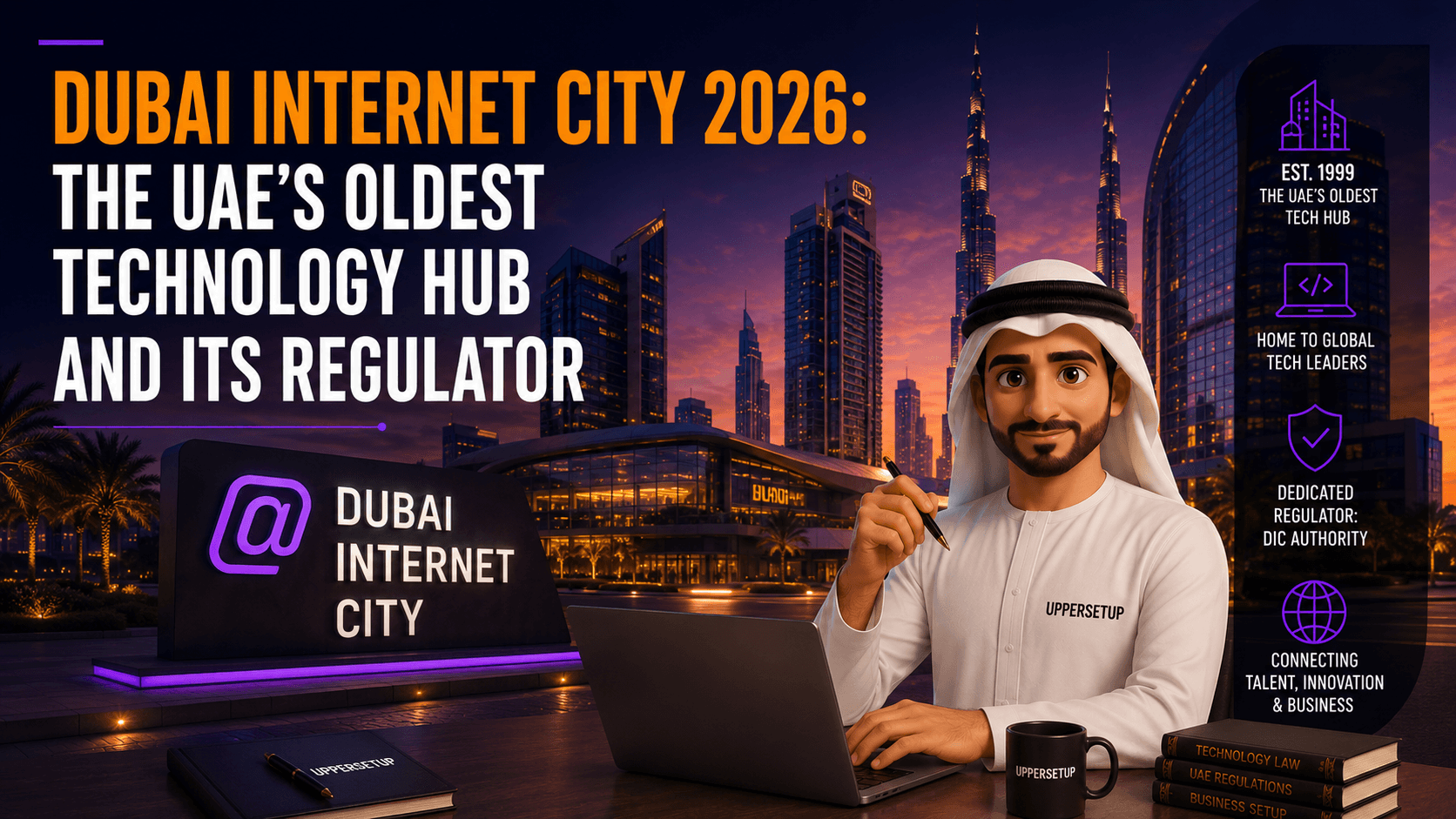
Dubai Internet City (DIC) is the UAE’s oldest and largest technology free zone, launched in October 2000 as the first zone in the MENA region created specifically for IT companies.
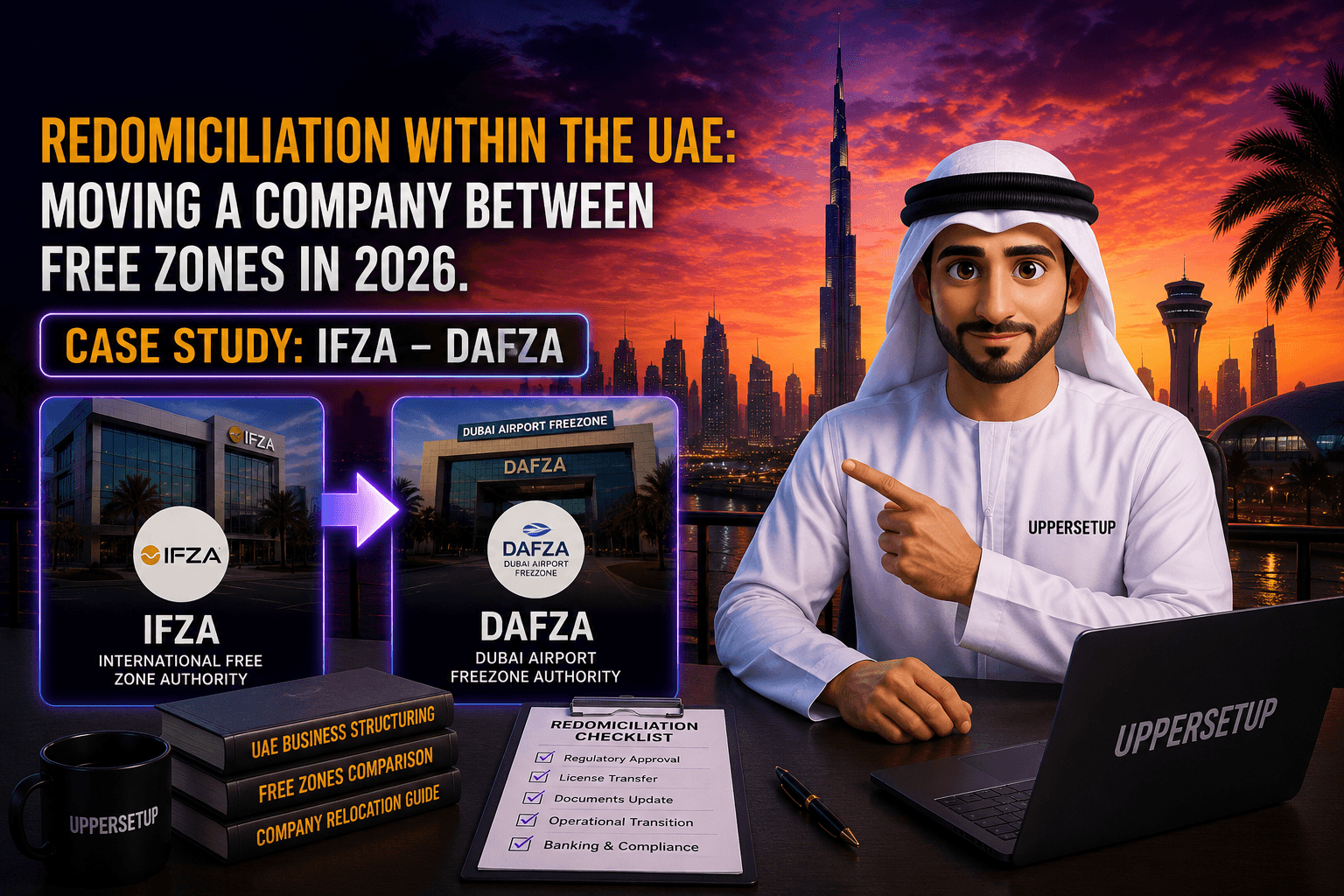
IFZA (International Free Zone Authority) is the UAE’s most popular free zone by number of registrations — an operator within Dubai Silicon Oasis (DSO), which since 1 January 2022 falls under the Dubai Integrated Economic Zones Authority (DIEZ) pursuant to Dubai Law No. 16 of 2021. Established in August 2018 in Fujairah, IFZA relocated to Dubai (Dubai Silicon Oasis) in August 2020. IFZA issues two base licence types — Commercial and Professional — with the ability to combine several business activities under a single licence. Base cost starts at approximately AED 12,900 per year, with no minimum capital requirement. The key practical difference from DAFZA/DMCC: IFZA is not a VAT Designated Zone, and it operates through a network of Professional Partners rather than dealing directly with applicants.
Among entrepreneurs first exploring the UAE free zone market, RAKEZ is often perceived as a 'budget alternative to Dubai'. That is accurate but fundamentally incomplete.
RAKICC (Ras Al Khaimah International Corporate Centre) is the sole offshore corporate registry in the emirate of Ras Al Khaimah, registering International Business Companies (IBCs) with no right to conduct commercial activity within the UAE.
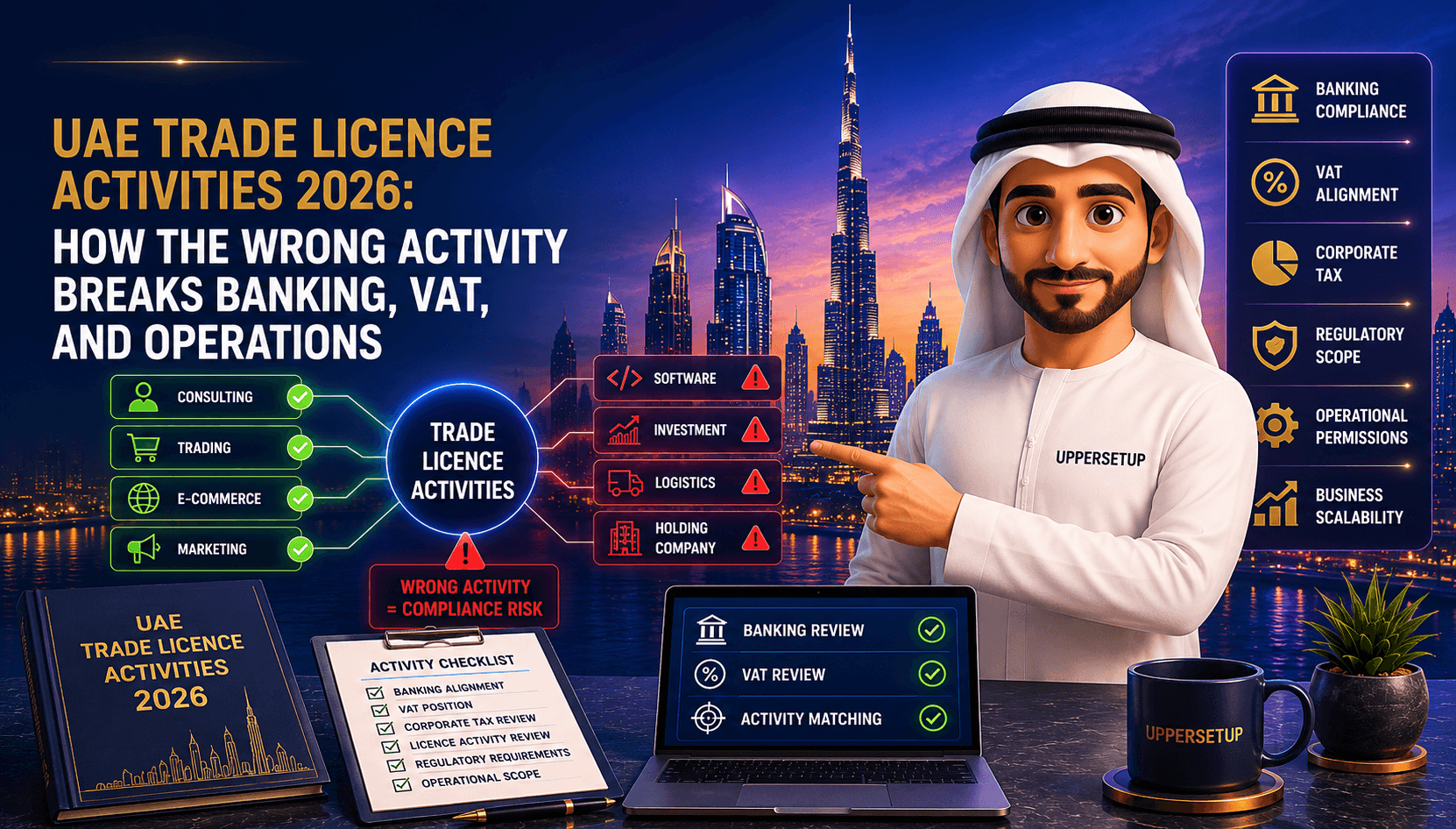
IMPORTANT: In the UAE, a trade licence activity is not a formality. It affects the licence type, banking, payment gateways, VAT, corporate tax, customs, visas, external approvals, and the ability to operate onshore or cross-border.
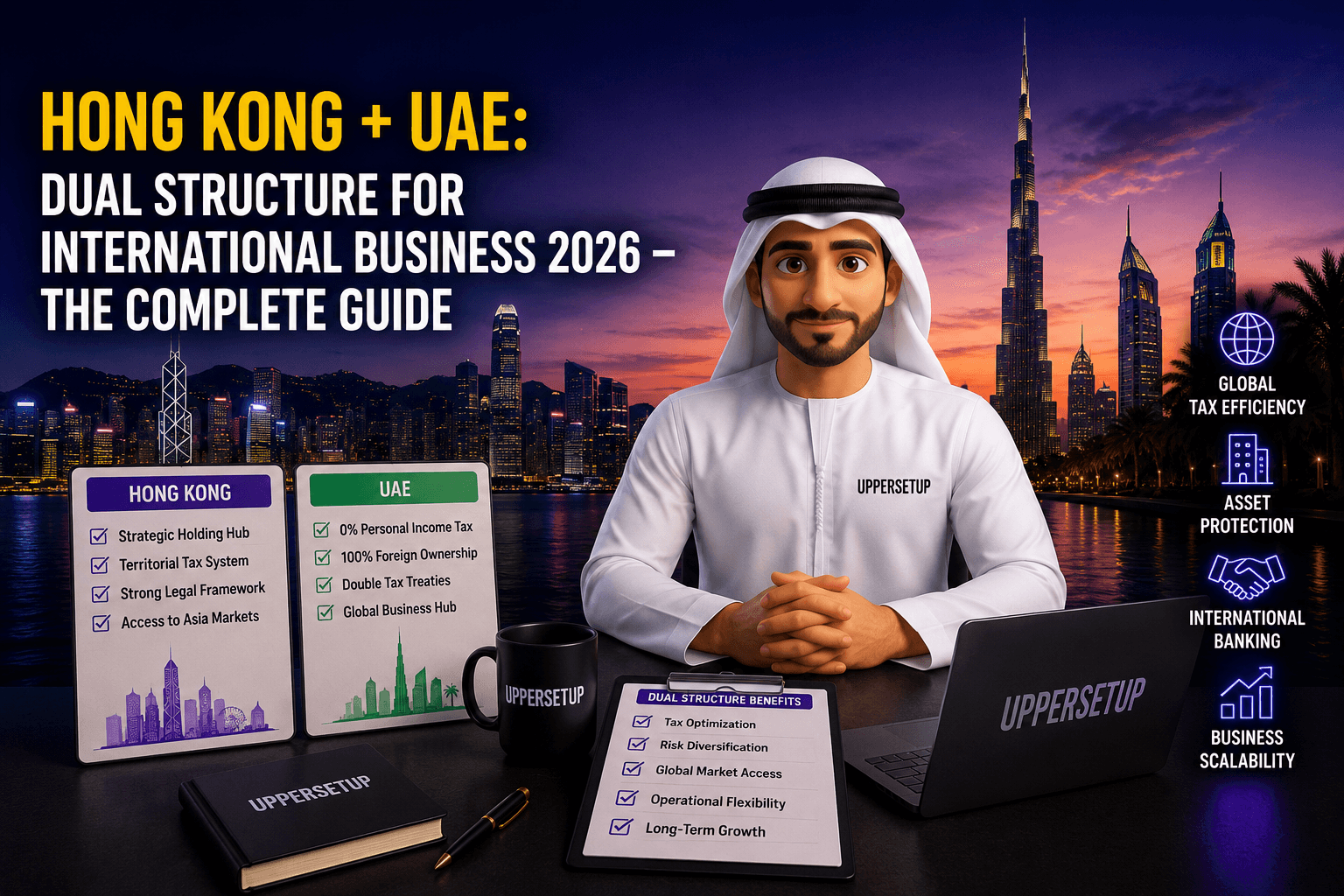
Most entrepreneurs thinking about "two jurisdictions" imagine two offshore entities for tax reduction. The Hong Kong + UAE dual structure operates on a fundamentally different logic. These are two complementary jurisdictions with different geographic reach, different legal systems, and different banking ecosystems — which together deliver more than either achieves alone.
The UAE has ranked first globally in the entrepreneurial context index (GEM NECI) for the fifth consecutive year (2025/2026). Zero personal income tax. Corporate tax at 9% — one of the lowest among global-tier jurisdictions. 137 active double taxation treaties. 100% foreign ownership — on the mainland and in free zones. A bank account can be opened within weeks; a company can be incorporated within days.
Opening a healthcare facility in Dubai requires two parallel, independent licensing tracks: a Facility License for the establishment itself, and a separate Professional License for every practising clinician, both issued by the Dubai Health Authority (DHA).
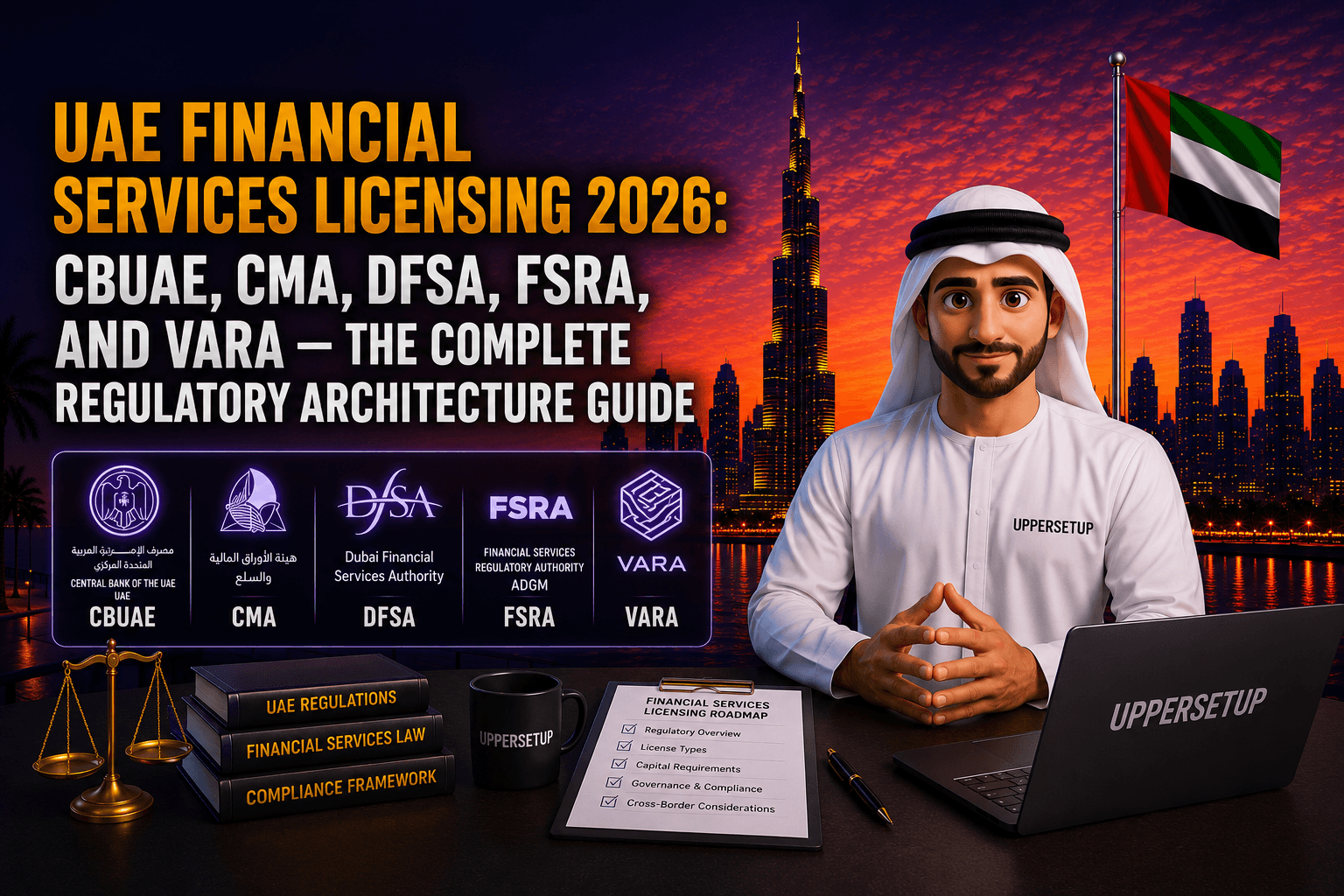
The UAE financial market is one of the most complex regulatory architectures in the world. Unlike most countries that have a single financial regulator, the UAE operates a multi-tier system: federal regulators, emirate-level regulators, and independent financial centre regulators. Selecting the wrong regulator means a licence that does not cover where you operate. A DFSA licence does not authorise dealing with UAE mainland clients. A VARA registration does not permit activities outside Dubai. CBUAE authorisation does not apply within DIFC or ADGM.
A Hong Kong stablecoin issuer licence is required of any person who, in the course of business, issues a specified stablecoin in Hong Kong, or issues outside Hong Kong a stablecoin referenced wholly or partly to the Hong Kong dollar. Licensing is administered by the Monetary Authority (HKMA). The regime has been in force since 1 August 2025.
When an entrepreneur first explores company registration options in the UAE, the mainland is often perceived as the more complex and expensive alternative to free zones. This is a persistent misconception that costs those who follow it both time and money.
Choosing between a limited liability partnership and a company in the Astana International Financial Centre is not a choice between two corporate forms but between two legal orders inside one country. An LLP sits under Kazakhstan law and the general tax regime. An AIFC company operates under Acts of the AIFC modelled on English common law, supervised by AFSA and served by its own courts, with a tax regime set by Article 6 of the Constitutional Statute of the Republic of Kazakhstan "On the Astana International Financial Centre" No. 438-V of 7 December 2015.
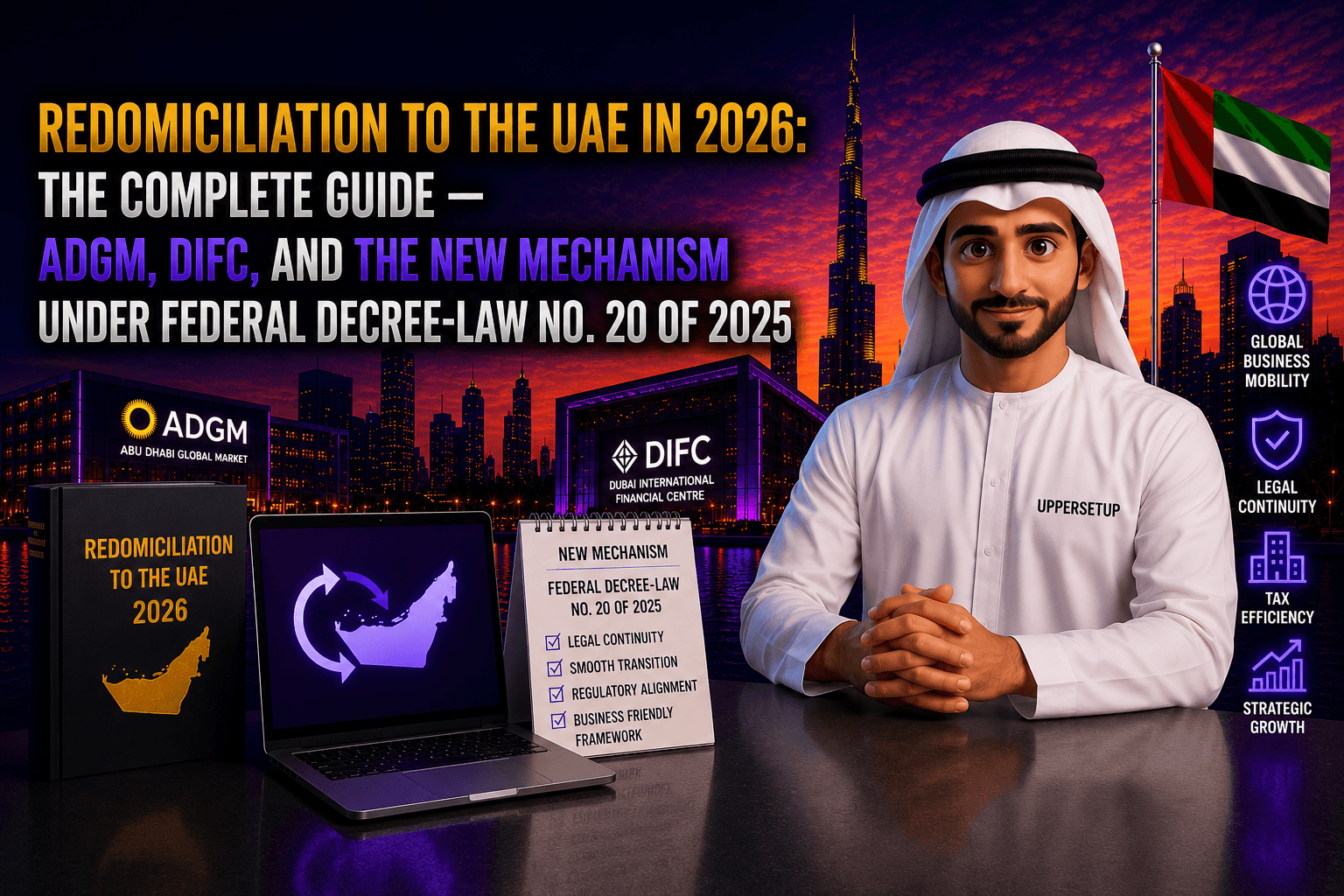
Federal Decree-Law No. 20 of 2025 took effect on 15 October 2025. It amended Federal Decree-Law No. 32 of 2021 on Commercial Companies — the UAE's primary corporate law. The main changes: companies can now transfer between jurisdictions without liquidation (re-domiciliation), LLCs can issue multiple share classes, drag-along and tag-along rights are now statutory, and free zone companies conducting mainland activities are expressly subject to the CCL.
A UAE offshore company is a legal entity registered with one of three specialised registries: RAK ICC, JAFZA Offshore, or Ajman Offshore. The fundamental distinction from a free zone company is that an offshore company may not conduct commercial activities within the UAE, may not rent office space or maintain a physical presence in the country under its own name, and may not sponsor work or residence visas.
IMPORTANT 2026: Since 2023, the Corporate Tax Registration Certificate (issued by the FTA via EmaraTax) has been a mandatory document for licence renewal. Without it, renewal will be rejected — on both mainland and in most free zones.
Registering a Private Company Limited by Shares in Hong Kong is done entirely online through e-Registry, takes 1–2 working days, and requires no physical presence from a non-resident founder or director.
Before 15 October 2025, changing a UAE free zone meant one thing: liquidate the old company, register a new one. Corporate history was erased, contracts had to be renegotiated, bank accounts closed and reopened, all visas reissued. For a company with three to five years of history, established banking relationships, and an active contract portfolio, this was a significant operational and financial undertaking.
Redomiciliation (also known as continuance or delocalisation) is the legal process by which a company transfers its jurisdiction of incorporation from one country to another while preserving its legal personality, corporate history, existing contracts, and all rights and obligations. The company does not cease to exist and is not re-incorporated: it continues to operate as the same legal entity — simply in a new jurisdiction.
Hong Kong charges Profits Tax only on profits arising in or derived from Hong Kong; profits from foreign sources are not taxed, but only if the company can document that the activity generating the profit genuinely took place outside Hong Kong.
An LLP (Limited Liability Partnership, “TOO” in Kazakh law) is the only business form available to foreign nationals without a Kazakhstan residence permit, allowing 100% foreign ownership without a local co-founder requirement.