Services

Company RegistrationVisa ServicesBanking ServicesAccounting ServicesLegal ServicesHR Services

Partners

Partner modelsReferral program

Resources

BlogNews

About the company

About UsContact us

Latest articles


UPPERSETUP logo

Online platform for business registration in the UAE

Email

support@uppersetup.com

Phone

+971 52 184 1181

© 2026 UPPERSETUP Technology Ltd.
All content on this website is protected by copyright

Terms of ServiceTerms of UsePrivacy Policy
Send WhatsApp message
  1. Home
  2. Blog
  3. Kazakhstan

Kazakhstan

All articles
RERA
Bankruptcy
Fujairah Free Zone
JAFZA
IT-startups
Hong Kong
RAKICC
Accounting
ADAFZ - Abu Dhabi Airport Free Zone
Personal Data
Laws and Regulations
Dubai International Academic City
Company Re-domiciliation
Dubai Maritime City
Meydan Free Zone
Fund
DWTC
Dubai South Free Zone
DIAC
Visas
Government programs
Healthcare
RAKEZ
Masdar City Free Zone
CRS
UAQ Free Trade Zone
Legal services
UAE
Digital Assets
Комплайнс
Knowledge base
UPPERSETUP
Work permit
Permits and Approvals
DIFC
Property
Finance
Deadlines & Рrocess
Offices & Infrastructure
Commercial Arbitration
Dubai Media City
Company setup
Dubai Knowledge Park
SAIF Zone
Investments
Banking
Dubai Silicon Oasis
KEZAD
Dubai Production City
Intellectual Property
HR
Dubai Design District (d3)
Innovation City
Free Zone
Dubai Industrial City
Dubai Studio City
Dubai Science Park
Virtual assets
arbitrateAD
Astana Hub
Dubai Healthcare City
Business
Hamriyah Free Zone
Customs
AML
Sharjah Media City
Trademark Registration
AIFC
Kazakhstan
DMCC
Tax
DAFZA
Hong Kong
Education Industry
Dubai CommerCity
Dubai Outsource City
Trade
twofour54
Industries
ADGM
Certification
Regulatory environment
Dubai Internet City
Residence Permit
Cybersecurity
Ajman Free Zone
Service

Recommended

Product Certification for Kazakhstan in 2026: When You Need a Declaration of Conformity, the EAC Mark and What a Mistake Costs
KazakhstanCertification

Product Certification for Kazakhstan in 2026: When You Need a Declaration of Conformity, the EAC Mark and What a Mistake Costs

To sell goods lawfully in Kazakhstan you usually need a registered declaration of conformity rather than a certificate — and only a company registered in Kazakhstan or another EAEU member state can obtain one. A foreign manufacturer cannot be the applicant in its own name: it needs either a person authorised by the manufacturer or a resident importer. Whether conformity is confirmed by declaration or by certification is decided not by the seller but by the particular technical regulation that covers the goods.

AIFC 2026: A Complete Breakdown — Structures, Tax Incentives Until 2066, Registration, and Comparison With ADGM/DIFC
KazakhstanCompany setupAIFCFree Zone

AIFC 2026: A Complete Breakdown — Structures, Tax Incentives Until 2066, Registration, and Comparison With ADGM/DIFC

The Astana International Financial Centre (AIFC) is a separate jurisdiction within the Republic of Kazakhstan with its own English common law system, an independent court, and a dedicated tax regime — not an ordinary free economic zone.

Astana Hub in 2026: New Participation Rules, the Auditor-Confirmed Report and the New Counter-Obligations
KazakhstanAstana HubCompany setupRegulatory environment

Astana Hub in 2026: New Participation Rules, the Auditor-Confirmed Report and the New Counter-Obligations

From 23 January 2026 the activity of Astana Hub participants is governed by new Rules approved by Order No. 703/НҚ of 31 December 2025, and since July 2026 by an amended version of those Rules. The Rules replaced a 2018 order that had stood for seven years and introduced two genuinely new duties: an annual report on the structure of income, the data in which is confirmed by an auditor, and counter-obligations to develop the IT ecosystem. At the same time the tax reliefs moved into a new Tax Code — Code No. 214-VIII of 18 July 2025, in force from 1 January 2026.

Opening a Bank Account in Kazakhstan for a Foreign Company and a Non-Resident: The 2026 Guide
KazakhstanBanking

Opening a Bank Account in Kazakhstan for a Foreign Company and a Non-Resident: The 2026 Guide

A foreign company can open an account with a Kazakhstan bank without establishing a local legal entity, branch or representative office. To do so, the foreign legal entity must be placed on tax registration with the state revenue authorities and obtain a Business Identification Number (BIN), while its director or authorised representative must obtain an Individual Identification Number (IIN).

Bankruptcy and rehabilitation of legal entities in Kazakhstan in 2026: three procedures, six ranks and the reform of 21 October
KazakhstanLaws and RegulationsBankruptcy

Bankruptcy and rehabilitation of legal entities in Kazakhstan in 2026: three procedures, six ranks and the reform of 21 October

Insolvency and the restoration of solvency of a legal entity in Kazakhstan are governed by a single statute — the Law of the Republic of Kazakhstan of 7 March 2014 No. 176-V “On Rehabilitation and Bankruptcy” — which provides three court procedures: debt restructuring, rehabilitation and bankruptcy, plus a separate route for liquidating a debtor without opening a bankruptcy procedure. All cases are heard by the specialised inter-district economic courts, and the competent authority is the State Revenue Committee of the Ministry of Finance. None of the procedures is out of court: the accelerated rehabilitation procedure that many surveys still describe was removed from the statute in December 2019.

Currency Control in Kazakhstan 2026: Contract Registration Numbers, the Repatriation Requirement and Obligations of Foreign-Owned Companies
KazakhstanBankingTax

Currency Control in Kazakhstan 2026: Contract Registration Numbers, the Repatriation Requirement and Obligations of Foreign-Owned Companies

Kazakhstan's currency regime runs on three separate tracks. A contract registration number is assigned to an export or import currency contract above USD 50,000 — the track that enforces repatriation of proceeds. Registration of capital movement contracts applies above USD 500,000. Notification of foreign bank accounts is mandatory for resident legal entities before any transaction on the account. The statutory basis is Law of the Republic of Kazakhstan No. 167-VI of 2 July 2018 "On Currency Regulation and Currency Control".

Kazakhstan Residence Permits in 2026: The Permanent-Residence Pilot, the “Altyn Visa” and Digital Nomad Residency
KazakhstanVisasResidence Permit

Kazakhstan Residence Permits in 2026: The Permanent-Residence Pilot, the “Altyn Visa” and Digital Nomad Residency

A Kazakhstan permanent residence permit is issued by the internal affairs bodies for an indefinite term, but since February 2026 most applicants pass through a pilot project that scores immigration potential: the pass mark is 600 points and the sum to be shown in a bank account is 1,320 MCI. The “Altyn Visa” that has dominated coverage since the spring of 2026 does not exist in law as at the date of publication: it is a task set by Presidential decree, to be created by 31 December 2026. Digital Nomad Residency is not a visa at all — it is a separate pilot that issues the same permanent residence permit to IT specialists through Astana Hub. The real fork is not which visa looks best but what status you end up holding: a visa, a temporary residence permit, or a permanent residence permit.

Kazakhstan’s Neo Nomad Visa 2026: Requirements for Digital Nomads, Income, and Length of Stay
KazakhstanVisas

Kazakhstan’s Neo Nomad Visa 2026: Requirements for Digital Nomads, Income, and Length of Stay

The Neo Nomad Visa (category B12-1) is a multiple-entry Kazakhstani visa for foreign nationals working remotely for foreign companies who wish to reside legally in Kazakhstan while combining work with travel, without the right to take up employment with a Kazakhstani employer.

Kazakhstan Public Procurement for Foreign Suppliers and Internal Value (Local Content) Requirements in 2026
KazakhstanLaws and Regulations

Kazakhstan Public Procurement for Foreign Suppliers and Internal Value (Local Content) Requirements in 2026

Kazakhstan’s own legal term for what English-language practice calls local content is internal value (vnutristranovaya tsennost); the older term mestnoe soderzhanie, literally local content, was displaced from the calculation instruments in 2018 and no longer appears in procurement legislation; it is used in this article only where the historical instruments are discussed.

Dividends and Profit Repatriation from a Kazakh LLP in 2026: What Happened to the Three-Year Holding Relief
KazakhstanTaxLaws and Regulations

Dividends and Profit Repatriation from a Kazakh LLP in 2026: What Happened to the Three-Year Holding Relief

Kazakhstan no longer grants any dividend relief based on how long a participation has been held. The rule that exempted dividends where the shares or participation interest had been held for more than three years applied until 31 December 2022, survived for three more years in reduced form as a 10% rate, and disappeared altogether on 1 January 2026 with the repeal of the old Tax Code. The statute now looks at the size of the holding rather than its duration: a participant holding at least 25% of the capital of a Kazakh LLP pays 5% on dividends up to 230,000 times the monthly calculation index per calendar year and 15% above that ceiling. Every other non-resident pays 15%, and a recipient registered in a listed preferential-tax jurisdiction pays 20% regardless of holding size or duration.

Employer Payroll Taxes and Contributions in Kazakhstan 2026: Income Tax, Pension, Social and Medical Insurance Charges
KazakhstanAccountingTaxLaws and Regulations

Employer Payroll Taxes and Contributions in Kazakhstan 2026: Income Tax, Pension, Social and Medical Insurance Charges

The 2026 payroll burden in Kazakhstan consists of three deductions from the employee's income — individual income tax (IIT), the mandatory pension contribution (OPV) and the medical insurance contribution (VOSMS) — and four charges borne by the employer: the employer pension contribution (OPVR) at 3.5%, social contributions at 5%, employer medical insurance deductions at 3% and social tax at 6%. Two statutory indicators run through every calculation: the monthly minimum wage (MZP) and the monthly calculation index (MCI).

Importing into Kazakhstan from Third Countries in 2026: Customs Value, EAEU Tariff Duties, 16% Import VAT and What Errors Actually Cost
KazakhstanTaxLaws and Regulations

Importing into Kazakhstan from Third Countries in 2026: Customs Value, EAEU Tariff Duties, 16% Import VAT and What Errors Actually Cost

Importing goods into Kazakhstan from a country outside the EAEU means the customs procedure of release for internal consumption, under which import duty, import VAT, excise and the customs fee are all paid before the goods are released — not after they are sold. The duty rate comes from the EAEU Common Customs Tariff as it stands on the day the declaration is registered, and import VAT is charged at 16% on the customs value increased by duty and excise. The declaration fee is a flat 6 MCI — KZT 25,950 in 2026 — whatever the consignment is worth.

Investment Preferences and the Investment Contract in Kazakhstan in 2026: the New Architecture After the 1 January Reform
KazakhstanInvestmentsLaws and Regulations

Investment Preferences and the Investment Contract in Kazakhstan in 2026: the New Architecture After the 1 January Reform

A completely rebuilt investment preference regime has applied in Kazakhstan since 1 January 2026. Law of the Republic of Kazakhstan No. 215-VIII of 18 July 2025 excluded articles 286, 287, 288, 289, 290, 295-1 and 295-3 from the Entrepreneurial Code and inserted a new block, articles 283-1 to 283-5, in their place. Investment preferences are now granted under one of three instruments only — an investment agreement, an investment obligations agreement or a simplified investment contract — and under one of them at a time. The tax side moved into chapter 81 of the new Tax Code No. 214-VIII, which took effect on the same day.

Investment Preferences and the Investment Contract in Kazakhstan in 2026: the New Architecture After the 1 January Reform
KazakhstanInvestmentsTaxLaws and Regulations

Investment Preferences and the Investment Contract in Kazakhstan in 2026: the New Architecture After the 1 January Reform

A completely rebuilt investment preference regime has applied in Kazakhstan since 1 January 2026. Law of the Republic of Kazakhstan No. 215-VIII of 18 July 2025 excluded articles 286, 287, 288, 289, 290, 295-1 and 295-3 from the Entrepreneurial Code and inserted a new block, articles 283-1 to 283-5, in their place. Investment preferences are now granted under one of three instruments only — an investment agreement, an investment obligations agreement or a simplified investment contract — and under one of them at a time. The tax side moved into chapter 81 of the new Tax Code No. 214-VIII, which took effect on the same day.

Kazakhstan + UAE: The Dual Structure in 2026 — Tax, Treaty, Permanent Establishment and the Currency Perimeter
KazakhstanTaxUAE

Kazakhstan + UAE: The Dual Structure in 2026 — Tax, Treaty, Permanent Establishment and the Currency Perimeter

A Kazakhstan + UAE dual structure pairs an operating company in Kazakhstan — handling the local market, staff and counterparties — with a UAE company holding the international perimeter: intellectual property, export contracts, shareholdings or financing. It rests on three pillars: a double tax convention in force, the absence of the UAE from Kazakhstan’s list of states with preferential taxation, and the gap between 20% corporate income tax in Kazakhstan and 9% corporate tax in the UAE.

Desk Control, Tax Audits and Appeals in Kazakhstan in 2026: Tax Code 214-VIII, the Administrative Procedure Code and Three Routes to a Dispute
KazakhstanTaxLaws and Regulations

Desk Control, Tax Audits and Appeals in Kazakhstan in 2026: Tax Code 214-VIII, the Administrative Procedure Code and Three Routes to a Dispute

Since 1 January 2026 tax control in Kazakhstan has been governed by a new Tax Code — Code of the Republic of Kazakhstan No. 214-VIII of 18 July 2025, which replaced Code No. 120-VI of 25 December 2017. More than the article numbering changed: desk control no longer issues a “notice to remedy breaches” but a notice of discrepancies; tax control has been narrowed to tax audits alone; and the limitation period has split into three and five years by taxpayer category. The appeal architecture remains double and asymmetric: one notification may go either to the Ministry of Finance or straight to court, while every other notification passes through the general pre-court procedure of the Administrative Procedure Code.

Controlled Foreign Company Rules in Kazakhstan: What Kazakhstan Residents Face in 2026
KazakhstanTaxLaws and Regulations

Controlled Foreign Company Rules in Kazakhstan: What Kazakhstan Residents Face in 2026

Controlled foreign company rules are addressed not to the foreign company but to its Kazakhstan owner. The mechanism is that, where defined conditions are met, the profit of a foreign company is included in the taxable income of a Kazakhstan resident and taxed in Kazakhstan — even where no dividend has been distributed and the money has stayed abroad. The regime sits in Chapter 33 of the Tax Code of the Republic of Kazakhstan (Law No. 214-VIII of 18 July 2025), in force from 1 January 2026.

Withholding Tax in Kazakhstan 2026: Services, Royalties, Interest, Dividends, the Residency Certificate and Treaty Relief
KazakhstanTaxLaws and Regulations

Withholding Tax in Kazakhstan 2026: Services, Royalties, Interest, Dividends, the Residency Certificate and Treaty Relief

Kazakhstan withholding tax is deducted by the Kazakhstan payer from a foreign company's income sourced in the Republic of Kazakhstan, with no deductions allowed. The headline rate is 20 per cent; dividends, royalties and interest carry 15 per cent; interest on loans and debt securities carries 10 per cent; international transport services carry 5 per cent. The framework from 1 January 2026 is Division 15 of the new Tax Code (Code of the Republic of Kazakhstan No. 214-VIII of 18 July 2025), articles 679 to 687 and chapter 75.

Liquidating an LLP in Kazakhstan in 2026: the Rules in Force, the Deadlines and the "Clean Slate" Mechanism
KazakhstanLaws and RegulationsLegal services

Liquidating an LLP in Kazakhstan in 2026: the Rules in Force, the Deadlines and the "Clean Slate" Mechanism

Liquidating a limited liability partnership in Kazakhstan runs on two parallel tracks: a corporate one, handled by the justice authorities and ending with the removal of the entry from the National Register of Business Identification Numbers, and a tax one, handled by the state revenue authorities and determining how long the whole exercise actually takes. The second track was rewritten in full with effect from 1 January 2026.

AIFC or LLP: Choosing a Jurisdiction Inside Kazakhstan in 2026
KazakhstanCompany setupAIFC

AIFC or LLP: Choosing a Jurisdiction Inside Kazakhstan in 2026

Choosing between a limited liability partnership and a company in the Astana International Financial Centre is not a choice between two corporate forms but between two legal orders inside one country. An LLP sits under Kazakhstan law and the general tax regime. An AIFC company operates under Acts of the AIFC modelled on English common law, supervised by AFSA and served by its own courts, with a tax regime set by Article 6 of the Constitutional Statute of the Republic of Kazakhstan "On the Astana International Financial Centre" No. 438-V of 7 December 2015.

Kazakhstan’s Tax System 2026: A Complete Breakdown — the New Tax Code, CIT, VAT, PIT, and AIFC Incentives
KazakhstanAIFCTax

Kazakhstan’s Tax System 2026: A Complete Breakdown — the New Tax Code, CIT, VAT, PIT, and AIFC Incentives

Since 1 January 2026, Kazakhstan has operated under a new Tax Code, replacing the code of 25 December 2017: VAT has risen from 12% to 16%, a progressive PIT rate (10%/15%) has been introduced, and AIFC companies retain a 0% rate on financial services until 2066.

Personal Tax Residency in Kazakhstan and the Universal Declaration 2026: 183 Days, Centre of Vital Interests, Foreign Accounts and Assets
KazakhstanTaxLaws and Regulations

Personal Tax Residency in Kazakhstan and the Universal Declaration 2026: 183 Days, Centre of Vital Interests, Foreign Accounts and Assets

An individual becomes a Kazakhstan tax resident on either of two independent grounds: permanent presence in the country of at least 183 calendar days in any consecutive 12-month period, or a centre of vital interests located in Kazakhstan. A resident pays Kazakhstan personal income tax on income from sources both inside and outside Kazakhstan. Declaration is a separate obligation: foreign accounts, foreign assets and digital assets go into forms 250.00 and 270.00 whether or not they produced any income.

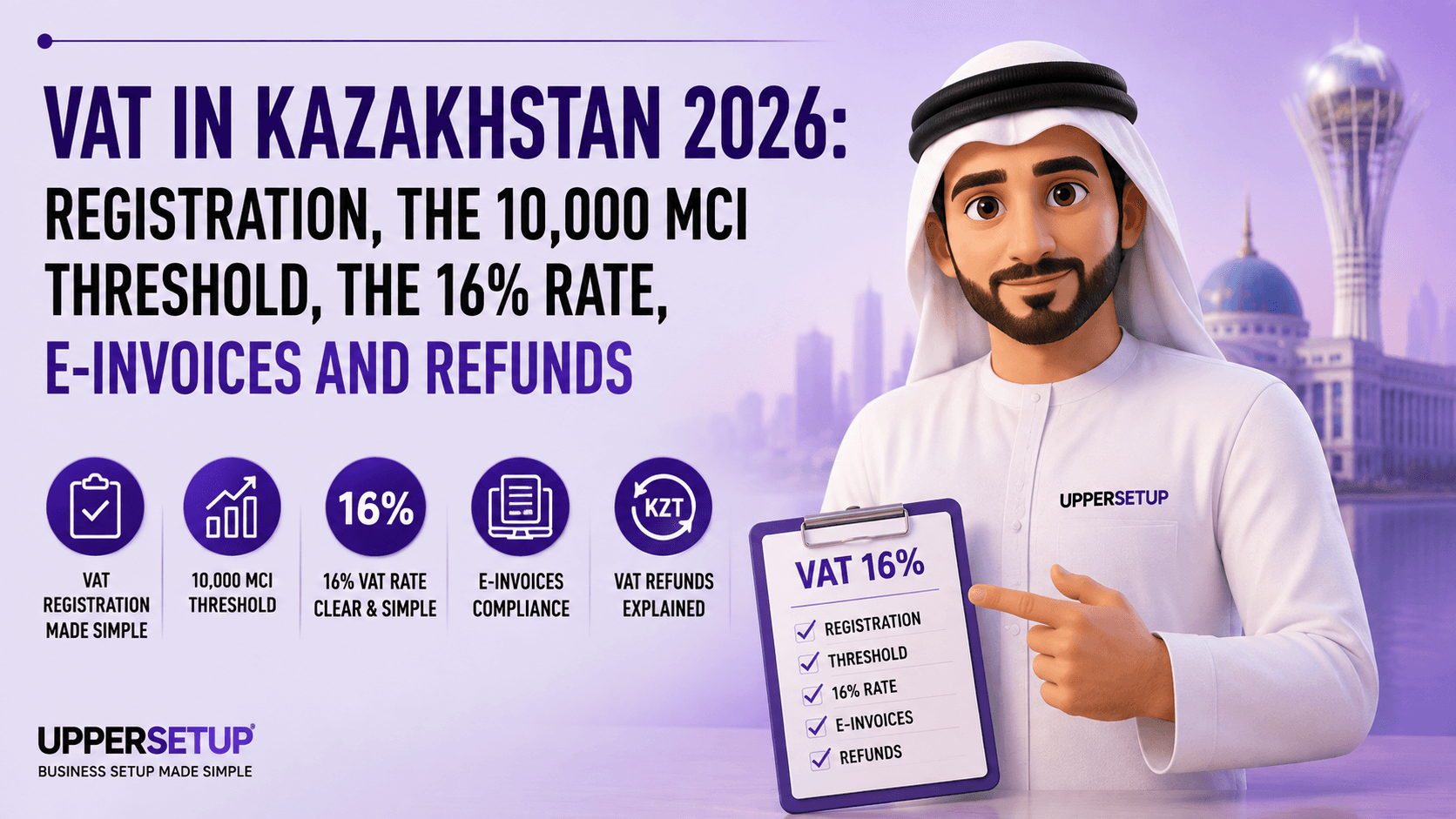
VAT in Kazakhstan 2026: Registration, the 10,000 MCI Threshold, the 16% Rate, e-Invoices and Refunds
KazakhstanAccountingTax

VAT in Kazakhstan 2026: Registration, the 10,000 MCI Threshold, the 16% Rate, e-Invoices and Refunds

A new Tax Code took effect in Kazakhstan on 1 January 2026 — Code of the Republic of Kazakhstan No. 214-VIII of 18 July 2025. The standard VAT rate rose from 12% to 16%, and the turnover threshold for compulsory VAT registration was halved from 20,000 MCI to 10,000 MCI. With the monthly calculation index (MCI) set at KZT 4,325 for 2026, that threshold is KZT 43,250,000. The filing window for the registration application has been cut to five working days from the date the threshold is exceeded.

VAT on Imports from the EAEU into Kazakhstan in 2026: Form 328.00, the 16% Rate and the New Rules
KazakhstanTax

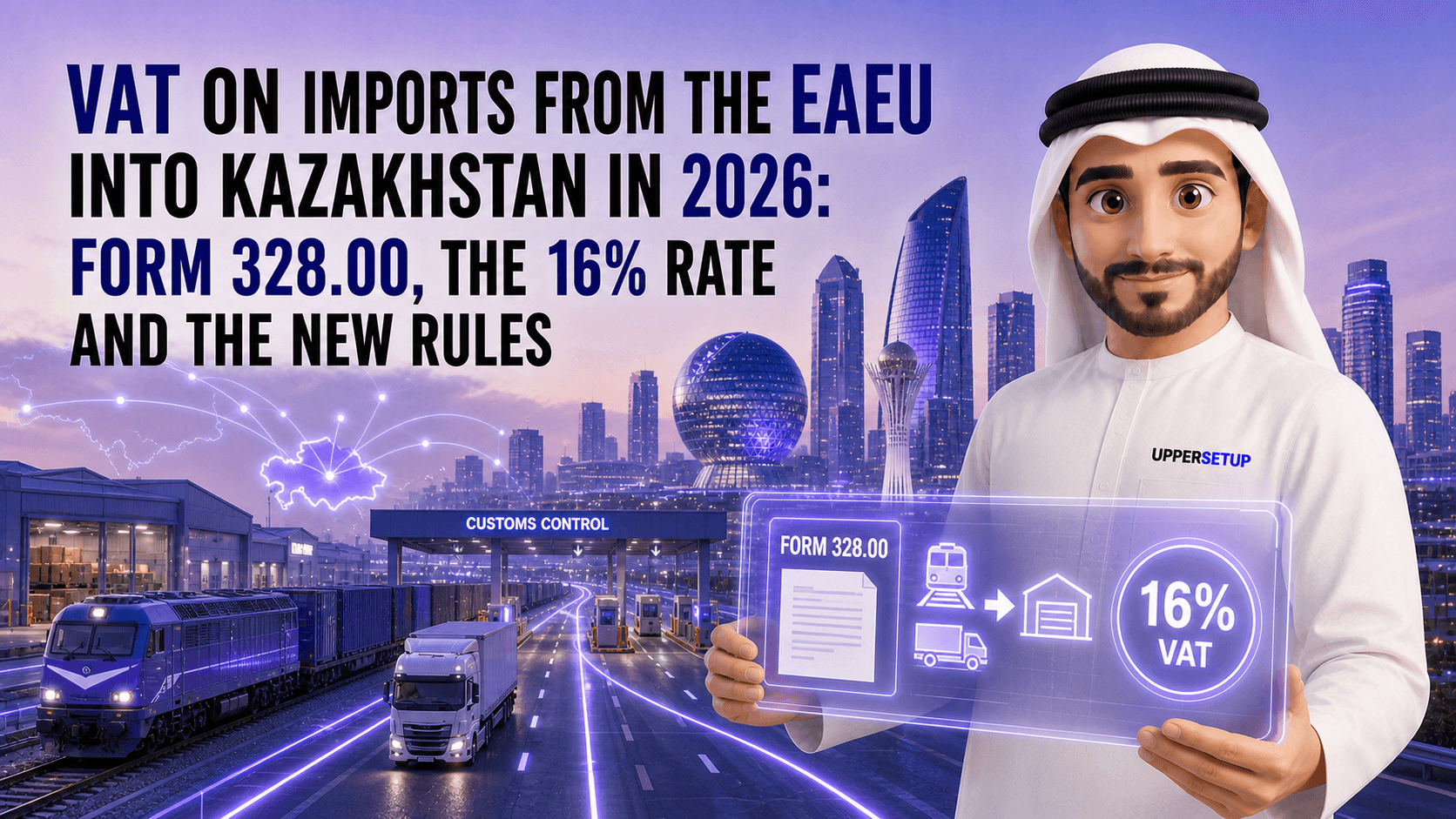
VAT on Imports from the EAEU into Kazakhstan in 2026: Form 328.00, the 16% Rate and the New Rules

VAT on goods brought into Kazakhstan from an EAEU member state is paid by the importer, not the supplier, and it is paid whether or not the importer is registered for VAT. The standard rate from 1 January 2026 is 16%. The only tax form the importer files is the application on the importation of goods and the payment of indirect taxes — form 328.00. Both the form and the payment fall due on the same date: no later than the 20th of the month following the month in which the goods were taken onto the books.

Subsoil Use in Kazakhstan in 2026: Exploration and Production Licences for Solid Minerals
KazakhstanLaws and RegulationsRegulatory environment

Subsoil Use in Kazakhstan in 2026: Exploration and Production Licences for Solid Minerals

A subsoil use licence in Kazakhstan is a document issued by a state body on application, granting the holder the right to use a specific subsoil plot. Two licences matter for solid minerals: the exploration licence for solid minerals, issued for six years and extendable once by up to five, and the production licence for solid minerals, issued for up to twenty-five years with an unlimited number of extensions. Both are issued by the Ministry of Industry and Construction of the Republic of Kazakhstan and, since 2026, only through the Unified Subsoil Use Platform.

Obligations of Subjects of Financial Monitoring in Kazakhstan under Law No. 191-IV in 2026: Who Is on the List, Threshold and Suspicious Transactions, Customer Due Diligence, Reporting Deadlines to the AFM, Internal Control Rules and Fines
KazakhstanLaws and RegulationsRegulatory environment

Obligations of Subjects of Financial Monitoring in Kazakhstan under Law No. 191-IV in 2026: Who Is on the List, Threshold and Suspicious Transactions, Customer Due Diligence, Reporting Deadlines to the AFM, Internal Control Rules and Fines

A subject of financial monitoring (SFM) — the statutory term for a reporting entity — is an organisation or individual listed in paragraph 1 of Article 3 of Law of the Republic of Kazakhstan No. 191-IV of 28 August 2009 “On Counteracting the Legalisation (Laundering) of Proceeds of Crime, the Financing of Terrorism and the Financing of the Proliferation of Weapons of Mass Destruction” (Law No. 191-IV, the AML/CFT/CPF Law), on which the Law imposes duties to detect and report transactions in money and other property to the Agency of the Republic of Kazakhstan for Financial Monitoring (AFM), the authorised body for financial monitoring (Kazakhstan’s financial intelligence unit).

Mandatory audit and financial reporting in Kazakhstan in 2026: who, what and by when
KazakhstanAccountingTax

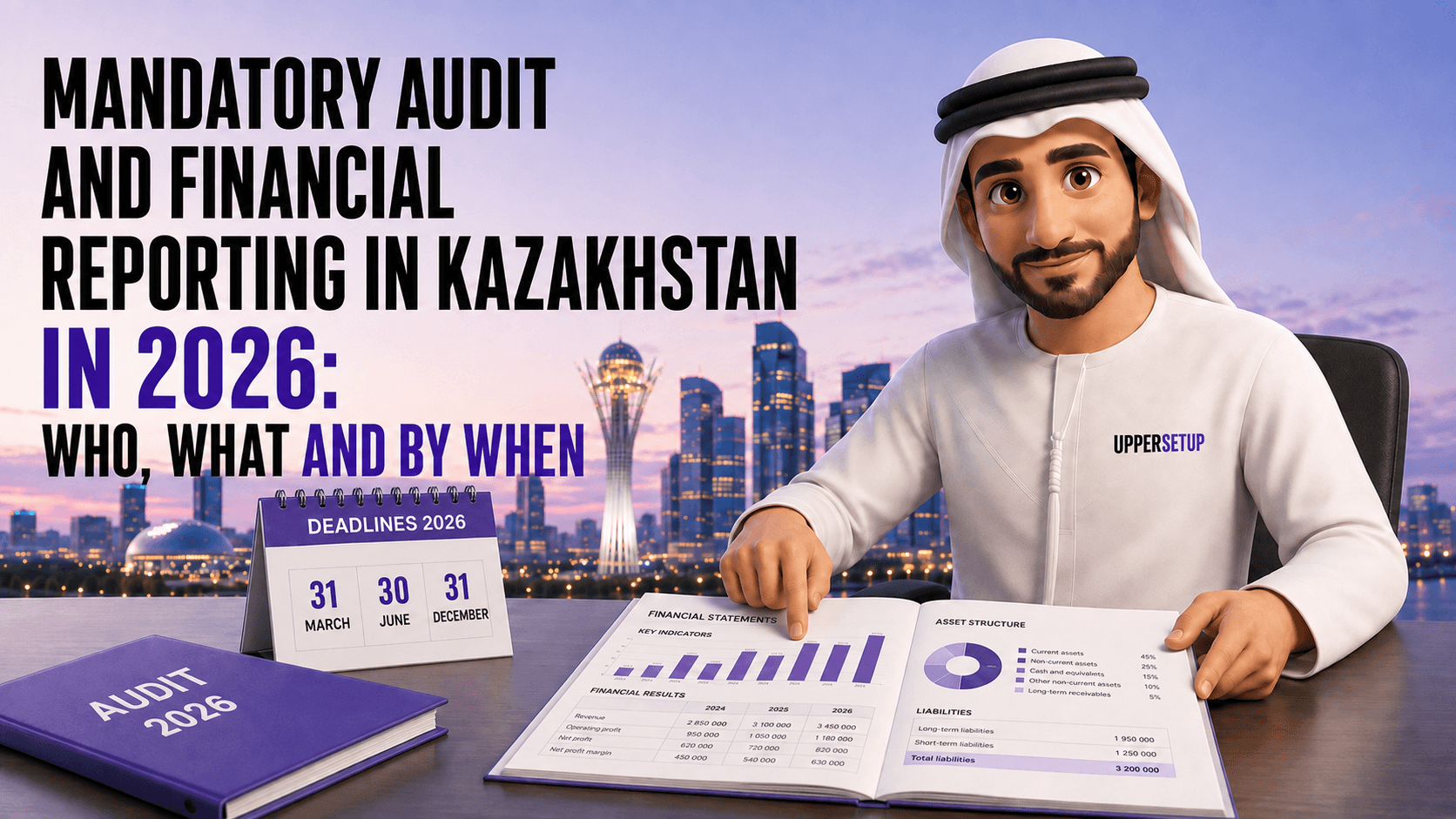
Mandatory audit and financial reporting in Kazakhstan in 2026: who, what and by when

The duty to keep accounts and the duty to be audited come from different Kazakh statutes and turn on different tests. Accounting and reporting sit in Law № 234-III of 28 February 2007 “On accounting and financial reporting”; audit sits in Law № 304-I of 20 November 1998 “On auditing activity”. A company can be obliged to file with the depository and still not be subject to mandatory audit — and the reverse is equally possible.

Personal Data and Localisation in Kazakhstan in 2026: Law No. 94-V After the Amendments, the Ban on Automated Decisions, Two State Registers and the Fines
KazakhstanPersonal DataLaws and Regulations

Personal Data and Localisation in Kazakhstan in 2026: Law No. 94-V After the Amendments, the Ban on Automated Decisions, Two State Registers and the Fines

The Law of the Republic of Kazakhstan “On Personal Data and Their Protection” of 21 May 2013 No. 94-V remains in force after the Digital Code took effect on 12 July 2026. The Digital Code neither repealed nor replaced it: the only act it repealed is the 2003 law on electronic documents and electronic digital signatures, and on personal data it refers expressly back to Law No. 94-V. The operative text of Law No. 94-V is the version in force as at 25 August 2026 — the day the largest amendment package in the statute’s history took effect.

Buying Real Estate in Kazakhstan as a Foreigner 2026: Housing, Land, and the Risks of Structuring Through a Legal Entity
KazakhstanPropertyLegal services

Buying Real Estate in Kazakhstan as a Foreigner 2026: Housing, Land, and the Risks of Structuring Through a Legal Entity

A foreigner may acquire residential property in Kazakhstan only with permanently residing status (a residence permit holder); without that status, the right to housing under Article 9 of the Law of the RK “On the Legal Status of Foreigners” does not extend to a foreign national.

Permanent Establishment of a Non-Resident in Kazakhstan 2026: When a Foreign Company Becomes a Taxpayer in Its Own Right
KazakhstanTax

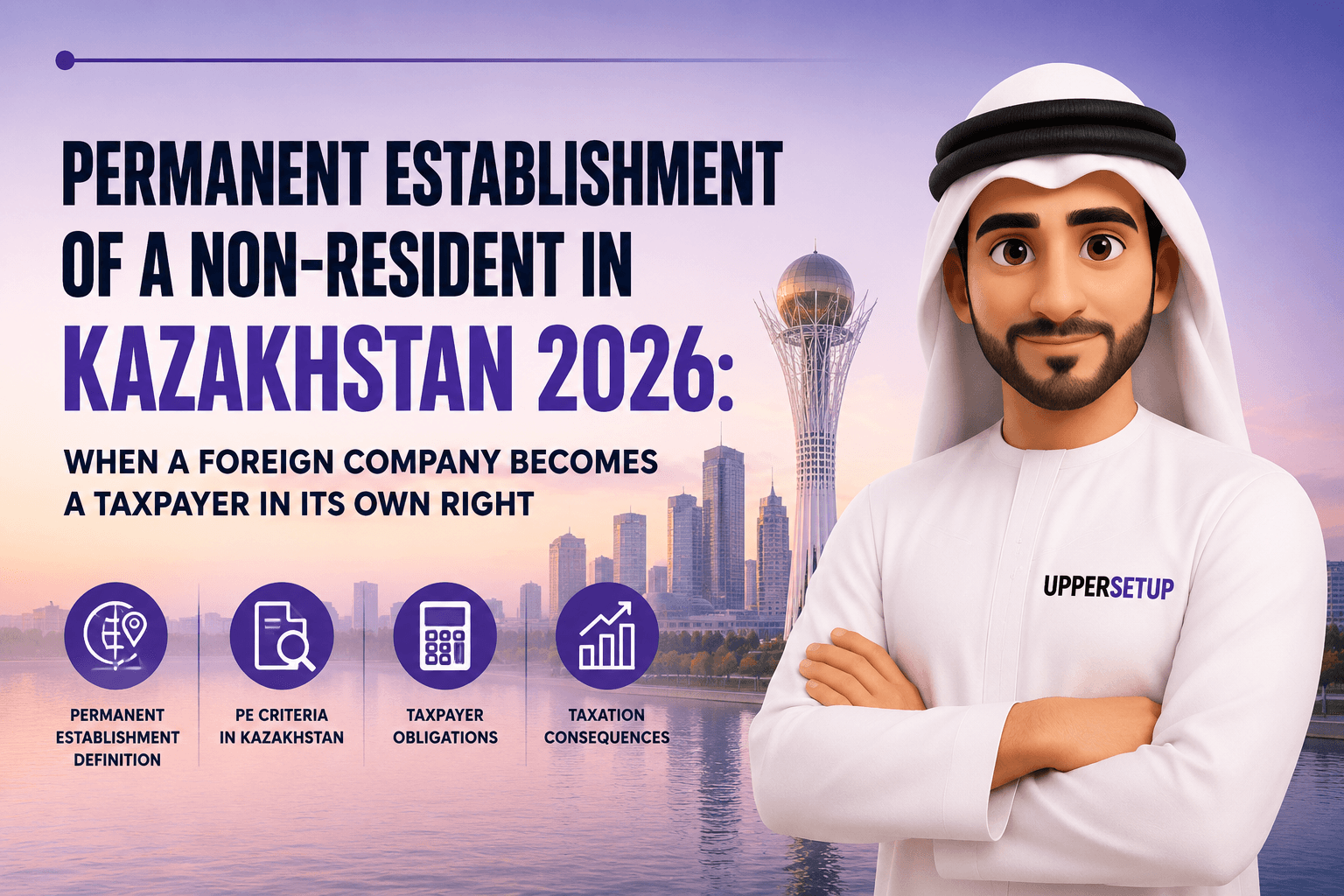
Permanent Establishment of a Non-Resident in Kazakhstan 2026: When a Foreign Company Becomes a Taxpayer in Its Own Right

A permanent establishment turns a foreign company from a recipient of income taxed at source into a taxpayer in its own right in Kazakhstan: it computes its own taxable income, files its own return and pays its own corporate income tax. Under Article 226 of the new Tax Code — Code of the Republic of Kazakhstan No. 214-VIII of 18 July 2025, in force from 1 January 2026 — a permanent establishment arises in four cases: a permanent place of activity, the supply of services through hired personnel, activity through a dependent agent, and joint activity.

Kazakhstan’s Permit to Attract Foreign Labour in 2026: The Quota, Categories 1–4, the Fee Scale and the Penalties
KazakhstanWork permitLaws and RegulationsVisas

Kazakhstan’s Permit to Attract Foreign Labour in 2026: The Quota, Categories 1–4, the Fee Scale and the Penalties

The permit to attract foreign labour is issued by the local executive body to the employer, not to the foreign worker, and without it an employment contract with a foreign national cannot be concluded. What governs entry is not an investment figure but the quota, the category of the position and the sector: in 2026 the fee for a single permit runs from 137 to 513 MRP — the monthly calculation index, the indexation unit used across Kazakhstani legislation — that is, from 592,525 to 2,218,725 tenge. A permit is valid only in the administrative-territorial units named in it and cannot be transferred to another employer.

Permits and Notifications in Kazakhstan in 2026: What Is Licensed and What Is Notified under Law No. 202-V — Three Danger Levels, 81 Licences, 226 Second-Category Permits and 65 Notifications
KazakhstanPermits and Approvals

Permits and Notifications in Kazakhstan in 2026: What Is Licensed and What Is Notified under Law No. 202-V — Three Danger Levels, 81 Licences, 226 Second-Category Permits and 65 Notifications

The Law of the Republic of Kazakhstan No. 202-V of 16 May 2014 “On Permits and Notifications” is the single statute that sorts every kind of business activity in Kazakhstan into three groups by level of danger: high-danger activities require a licence (a first-category permit), medium-danger activities a second-category permit, and low-danger activities a notification of commencement or termination. Exhaustive lists of all three groups are contained in three annexes to the Law: on the consolidated text as at 9 September 2026, Annex 1 holds 81 licence entries in force, Annex 2 226 second-category permit entries and Annex 3 65 notifications. If an activity appears in none of the annexes, no permit of any kind is needed: Article 17(6) of the Law and Article 109(1) of the Entrepreneurial Code expressly prohibit introducing a permit or notification requirement other than by inclusion in these lists. A licence is, as a rule, issued no later than 15 working days and without a time limit, a licence fee is payable at the rates set by Article 616 of Tax Code No. 214-VIII (from 3 to 3,845 MRP, that is from 12,975 to 16,629,625 tenge at the 2026 MRP of 4,325 tenge), and a notification allows the business to start immediately after it is sent.

Employer Permits to Attract Foreign Labour in Kazakhstan 2026: Rules, Quotas, and Intra-Company Transfer
KazakhstanWork permit

Employer Permits to Attract Foreign Labour in Kazakhstan 2026: Rules, Quotas, and Intra-Company Transfer

An employer wishing to hire a foreign worker in Kazakhstan must obtain a permit from the local executive body under the Rules approved by Order No. 279 of 30 June 2023, except in cases of intra-company transfer, for which a simplified, quota-free regime applies.

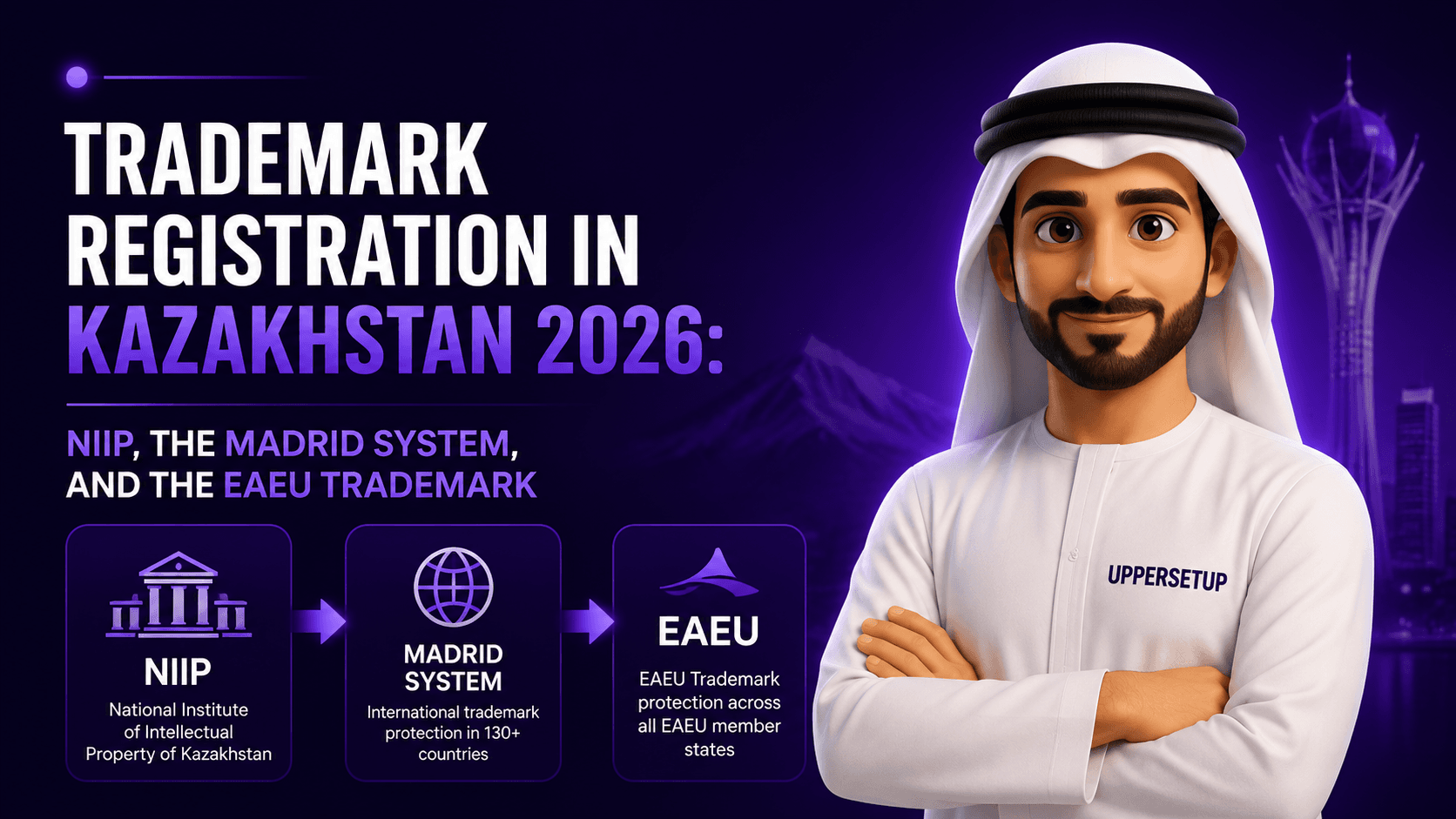
Trademark Registration in Kazakhstan 2026: NIIP, the Madrid System, and the EAEU Trademark
KazakhstanTrademark Registration

Trademark Registration in Kazakhstan 2026: NIIP, the Madrid System, and the EAEU Trademark

Trademark registration in Kazakhstan is carried out by the Republican State Enterprise “National Institute of Intellectual Property” (NIIP, also known as Kazpatent) under the Law of the Republic of Kazakhstan of 26 July 1999 No. 456-I “On Trademarks, Service Marks, Geographical Indications and Appellations of Origin of Goods.”

Kazakhstan's Special Tax Regimes 2026: Three Regimes Instead of Six, the Simplified Declaration, the Self-Employed Regime and the End of Retail Tax
KazakhstanTax

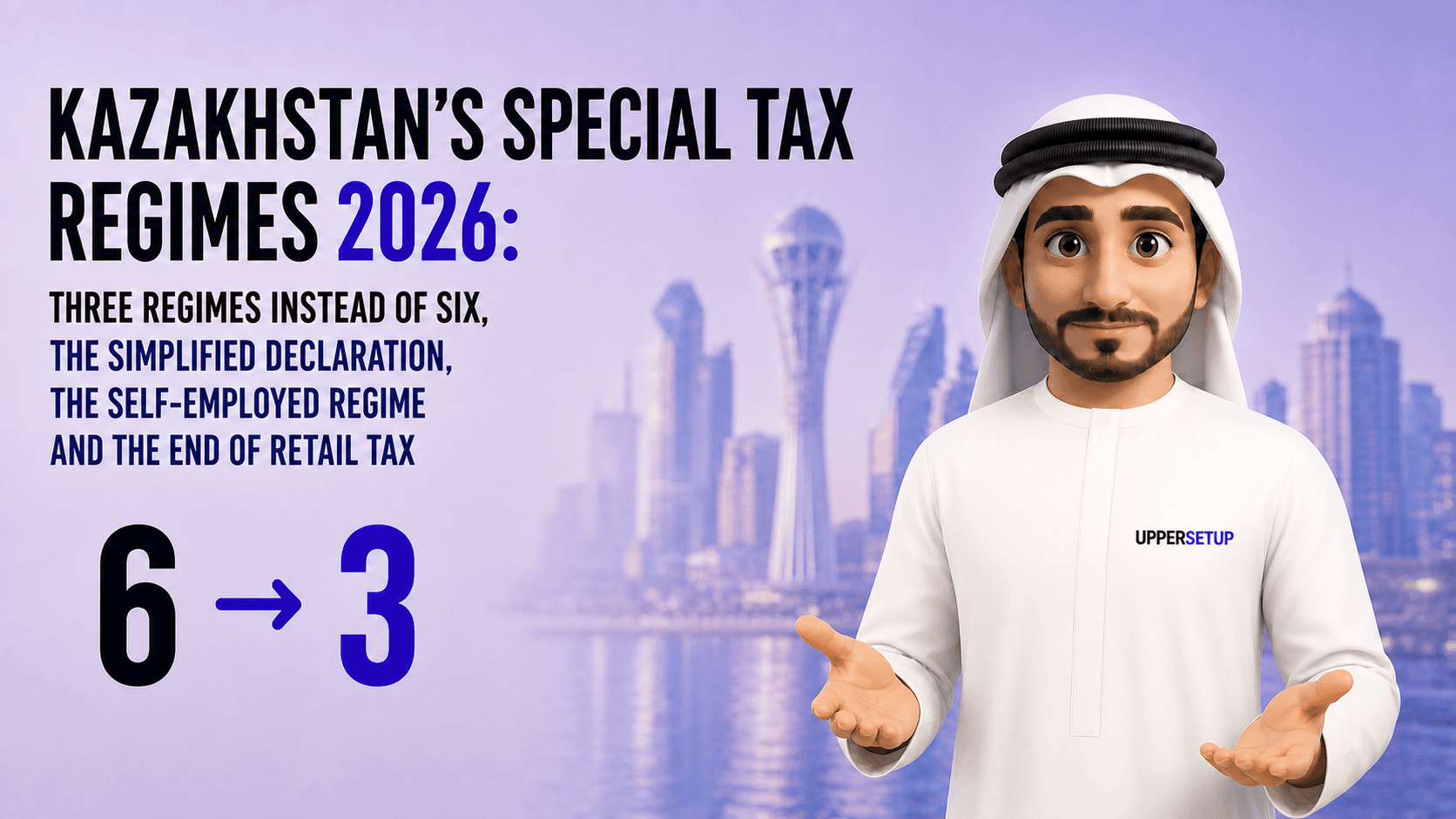
Kazakhstan's Special Tax Regimes 2026: Three Regimes Instead of Six, the Simplified Declaration, the Self-Employed Regime and the End of Retail Tax

Kazakhstan's special tax regimes were cut to three with effect from 1 January 2026: the regime for the self-employed, the regime based on the simplified declaration, and the regime for peasant and farm enterprises. The framework is Division 16 of the new Tax Code (Code of the Republic of Kazakhstan No. 214-VIII of 18 July 2025), articles 715 to 733. The patent regime, the special mobile application regime and the retail tax regime no longer exist.

Kazakhstan’s special economic zones and industrial zones in 2026: benefits, participation and the risk of losing the status
KazakhstanCompany setupFree Zone

Kazakhstan’s special economic zones and industrial zones in 2026: benefits, participation and the risk of losing the status

A special economic zone (SEZ) in Kazakhstan is a precisely delimited part of the national territory on which legal entities entered in the unified register of participants enjoy a special legal regime: a 100 per cent reduction of corporate income tax, a zero coefficient on land tax and the land-use fee, a zero rate of property tax, the free customs zone procedure and land granted free of charge. The regime rests on the Law of the Republic of Kazakhstan No. 242-VI of 3 April 2019 “On Special Economic and Industrial Zones”, chapter 80 of the Tax Code No. 214-VIII of 18 July 2025 and chapter 29 of the Code “On Customs Regulation”. An industrial zone is a different instrument: a territory with ready engineering infrastructure where a participant receives land and utilities but no tax preferences. As at September 2026 Kazakhstan has 18 SEZs and 67 industrial zones on the unified register.

LLP (TOO) in Kazakhstan for Foreigners 2026: Registration, Visa, Taxes, and AIFC Comparison
KazakhstanCompany setupAIFCFree Zone

LLP (TOO) in Kazakhstan for Foreigners 2026: Registration, Visa, Taxes, and AIFC Comparison

An LLP (Limited Liability Partnership, “TOO” in Kazakh law) is the only business form available to foreign nationals without a Kazakhstan residence permit, allowing 100% foreign ownership without a local co-founder requirement.

Transfer Pricing in Kazakhstan in 2026: the Local File, the Master File and Country-by-Country Reporting
KazakhstanTaxLaws and Regulations

Transfer Pricing in Kazakhstan in 2026: the Local File, the Master File and Country-by-Country Reporting

Transfer pricing in Kazakhstan is governed by a standalone statute — Law of the Republic of Kazakhstan No. 67-IV of 5 July 2008 “On Transfer Pricing” — and not by the Tax Code. Three-tier reporting consists of the local file (form 013 МО), the master file (form 014 ОО) and the country-by-country report (form 012 МО), alongside the notification of participation in a multinational group (form 011 ЗУ). From 1 January 2026 the Law contains a new Article 10-2 on the accurate delineation of the controlled transaction and functional analysis — the most substantive change to the regime in years.
Employment Contracts, Probation and Dismissal in Kazakhstan in 2026: Labour Code No. 414-V After Laws 277-VIII and 295-VIII
KazakhstanLaws and Regulations

Employment Contracts, Probation and Dismissal in Kazakhstan in 2026: Labour Code No. 414-V After Laws 277-VIII and 295-VIII

The employment contract in Kazakhstan is governed by Code of the Republic of Kazakhstan No. 414-V ZRK of 23 November 2015, the Labour Code of the Republic of Kazakhstan, in force since 1 January 2016 and, as at September 2026, not replaced by any new code. Ten amending laws touching the Code were adopted in 2026, and two of them reshaped hiring and dismissal directly: Law of the RK No. 277-VIII of 7 April 2026 (effective 8 June 2026) and Law of the RK No. 295-VIII of 3 June 2026 (effective 4 August 2026). A probationary period may not exceed three months, rising to six months for heads of organisations and their deputies, chief accountants and their deputies, and heads of branches and representative offices. Dismissal at the employer’s initiative is lawful only on one of the twenty-seven grounds listed in article 52(1) of the Code and only if the procedure in article 53 is followed.

Branch and Representative Office of a Foreign Company vs an LLP in Kazakhstan in 2026: Record Registration, Taxation, Restrictions
KazakhstanLaws and RegulationsCompany setup

Branch and Representative Office of a Foreign Company vs an LLP in Kazakhstan in 2026: Record Registration, Taxation, Restrictions

A branch and a representative office of a foreign company are not legal entities and undergo record registration (учётная регистрация) rather than state registration; an LLP is created as a separate legal entity and answers for its own obligations. The difference between the three forms runs along four lines: legal personality, tax regime, sector restrictions and exit procedure. The decisive fork is not the choice of legal form but the question of whether a permanent establishment arises — that is what determines whether corporate income tax becomes payable at all.

Digital Assets and Mining in Kazakhstan 2026: National Bank and AIFC Licences, Crypto Exchange and Taxation
KazakhstanAIFCIndustries

Digital Assets and Mining in Kazakhstan 2026: National Bank and AIFC Licences, Crypto Exchange and Taxation

Kazakhstan's digital asset regime was rewritten with effect from 1 May 2026. Law No. 259-VIII of 16 January 2026 inserted a dedicated chapter on unsecured digital assets into the Law "On Digital Assets in the Republic of Kazakhstan" and opened crypto circulation beyond the AIFC — through unsecured digital asset exchange operators licensed by the National Bank and digital asset trading platform operators entered on the National Bank's register. Digital mining remains a licensed activity, with a licence granted for three years.

E-Invoices and the Virtual Warehouse in Kazakhstan in 2026: Order No. 629, Biometrics on Issuance and the New Deadlines
KazakhstanAccountingTax

E-Invoices and the Virtual Warehouse in Kazakhstan in 2026: Order No. 629, Biometrics on Issuance and the New Deadlines

From 1 January 2026 the issuance of invoices in Kazakhstan is governed by the new Tax Code No. 214-VIII and by Order No. 629 of the Minister of Finance of 28 October 2025. The previous e-invoice rules — Order No. 370 of 22 April 2019 — have been repealed in full. The headline change: where a tax risk is identified, an electronic invoice must additionally be certified with the biometric data of the individual issuing it, and without passing biometric identification the invoice cannot be issued at all.

All articles

Product Certification for Kazakhstan in 2026: When You Need a Declaration of Conformity, the EAC Mark and What a Mistake Costs
KazakhstanCertification

Product Certification for Kazakhstan in 2026: When You Need a Declaration of Conformity, the EAC Mark and What a Mistake Costs

AIFC 2026: A Complete Breakdown — Structures, Tax Incentives Until 2066, Registration, and Comparison With ADGM/DIFC
KazakhstanCompany setupAIFCFree Zone

AIFC 2026: A Complete Breakdown — Structures, Tax Incentives Until 2066, Registration, and Comparison With ADGM/DIFC

Astana Hub in 2026: New Participation Rules, the Auditor-Confirmed Report and the New Counter-Obligations
KazakhstanAstana HubCompany setupRegulatory environment

Astana Hub in 2026: New Participation Rules, the Auditor-Confirmed Report and the New Counter-Obligations

Opening a Bank Account in Kazakhstan for a Foreign Company and a Non-Resident: The 2026 Guide
KazakhstanBanking

Opening a Bank Account in Kazakhstan for a Foreign Company and a Non-Resident: The 2026 Guide

Bankruptcy and rehabilitation of legal entities in Kazakhstan in 2026: three procedures, six ranks and the reform of 21 October
KazakhstanLaws and RegulationsBankruptcy

Bankruptcy and rehabilitation of legal entities in Kazakhstan in 2026: three procedures, six ranks and the reform of 21 October

Currency Control in Kazakhstan 2026: Contract Registration Numbers, the Repatriation Requirement and Obligations of Foreign-Owned Companies
KazakhstanBankingTax

Currency Control in Kazakhstan 2026: Contract Registration Numbers, the Repatriation Requirement and Obligations of Foreign-Owned Companies

Kazakhstan Residence Permits in 2026: The Permanent-Residence Pilot, the “Altyn Visa” and Digital Nomad Residency
KazakhstanVisasResidence Permit

Kazakhstan Residence Permits in 2026: The Permanent-Residence Pilot, the “Altyn Visa” and Digital Nomad Residency

Kazakhstan’s Neo Nomad Visa 2026: Requirements for Digital Nomads, Income, and Length of Stay
KazakhstanVisas

Kazakhstan’s Neo Nomad Visa 2026: Requirements for Digital Nomads, Income, and Length of Stay

Kazakhstan Public Procurement for Foreign Suppliers and Internal Value (Local Content) Requirements in 2026
KazakhstanLaws and Regulations

Kazakhstan Public Procurement for Foreign Suppliers and Internal Value (Local Content) Requirements in 2026

Dividends and Profit Repatriation from a Kazakh LLP in 2026: What Happened to the Three-Year Holding Relief
KazakhstanTaxLaws and Regulations

Dividends and Profit Repatriation from a Kazakh LLP in 2026: What Happened to the Three-Year Holding Relief

Employer Payroll Taxes and Contributions in Kazakhstan 2026: Income Tax, Pension, Social and Medical Insurance Charges
KazakhstanAccountingTaxLaws and Regulations

Employer Payroll Taxes and Contributions in Kazakhstan 2026: Income Tax, Pension, Social and Medical Insurance Charges

Importing into Kazakhstan from Third Countries in 2026: Customs Value, EAEU Tariff Duties, 16% Import VAT and What Errors Actually Cost
KazakhstanTaxLaws and Regulations

Importing into Kazakhstan from Third Countries in 2026: Customs Value, EAEU Tariff Duties, 16% Import VAT and What Errors Actually Cost

Investment Preferences and the Investment Contract in Kazakhstan in 2026: the New Architecture After the 1 January Reform
KazakhstanInvestmentsLaws and Regulations

Investment Preferences and the Investment Contract in Kazakhstan in 2026: the New Architecture After the 1 January Reform

Investment Preferences and the Investment Contract in Kazakhstan in 2026: the New Architecture After the 1 January Reform
KazakhstanInvestmentsTaxLaws and Regulations

Investment Preferences and the Investment Contract in Kazakhstan in 2026: the New Architecture After the 1 January Reform

Kazakhstan + UAE: The Dual Structure in 2026 — Tax, Treaty, Permanent Establishment and the Currency Perimeter
KazakhstanTaxUAE

Kazakhstan + UAE: The Dual Structure in 2026 — Tax, Treaty, Permanent Establishment and the Currency Perimeter