






































































































 International Free Zone Authority
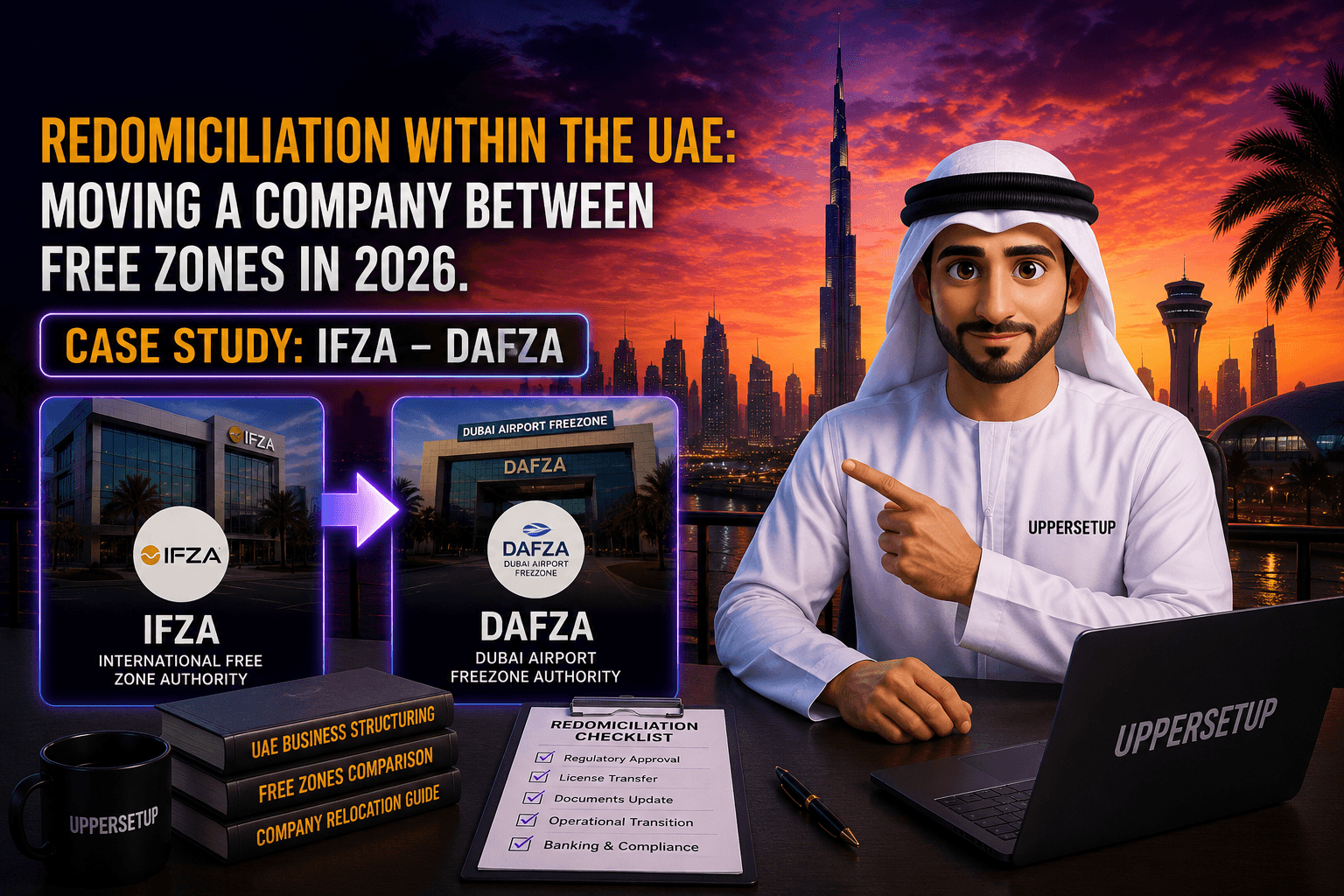
Redomiciliation Within the UAE: Moving a Company Between Free Zones in 2026. Case Study: IFZA - DAFZA
1. The New Reality: Corporate Mobility Within the UAE After FDL No. 20/2025
Before 15 October 2025, changing a UAE free zone meant one thing: liquidate the old company, register a new one. Corporate history was erased, contracts had to be renegotiated, bank accounts closed and reopened, all visas reissued. For a company with three to five years of history, established banking relationships, and an active contract portfolio, this was a significant operational and financial undertaking.
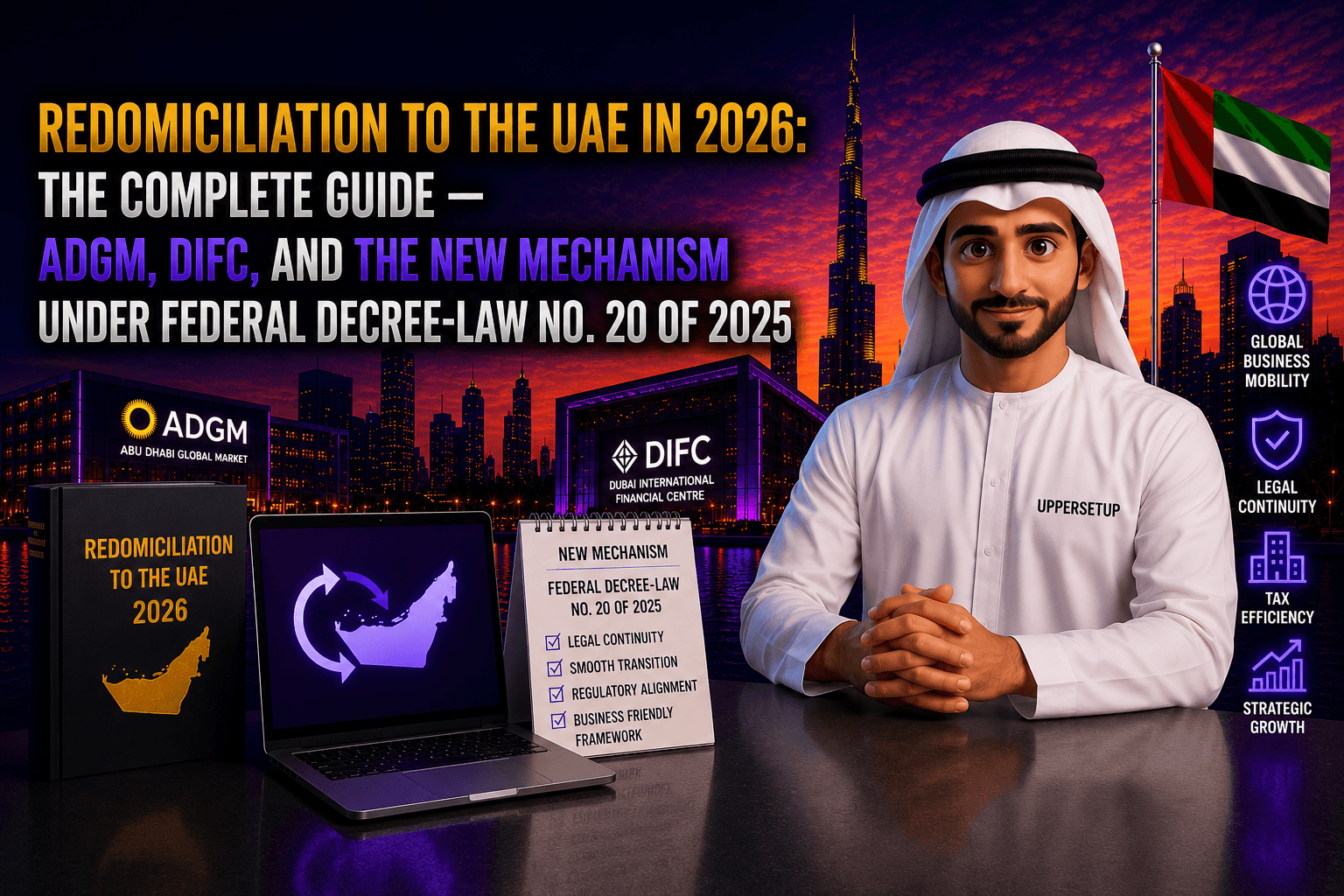
On 15 October 2025, Federal Decree-Law No. 20 of 2025 (issued 1 October 2025, published in the Official Gazette on 14 October 2025) came into force, introducing a new Article 15bis into the Commercial Companies Law (Federal Decree-Law No. 32 of 2021). For the first time in UAE federal legislation, a statutory redomiciliation mechanism was codified: a company may transfer its registration from one jurisdiction to another within the UAE, preserving its legal personality, corporate history, all contracts, rights and obligations.
What Article 15bis covers: transfer between mainland authorities of different Emirates; transfer from mainland to a free zone and vice versa; transfer between free zones, including the financial free zones ADGM and DIFC. This last category — inter-free zone transfer — opens an entirely new toolkit for corporate planning.
⚠ Important caveat: Article 15bis establishes the legal framework for transfers within the UAE. Cabinet-level implementing regulations detailing specific procedures for each scenario have not yet been fully published. However, the IFZA → DAFZA case is simplified by the fact that both free zones fall under the same regulator — DIEZ.
2. DIEZ: The Shared Regulator for Both IFZA and DAFZA
Understanding the governance structure is key to understanding why the IFZA → DAFZA case is fundamentally different from a transfer between independent free zones (for example, DMCC → RAKEZ).
Dubai Integrated Economic Zones Authority (DIEZ) is a Dubai government authority established under Law No. 16 of 2021 Regarding Establishing Dubai Integrated Economic Zones Authority. DIEZ encompasses:
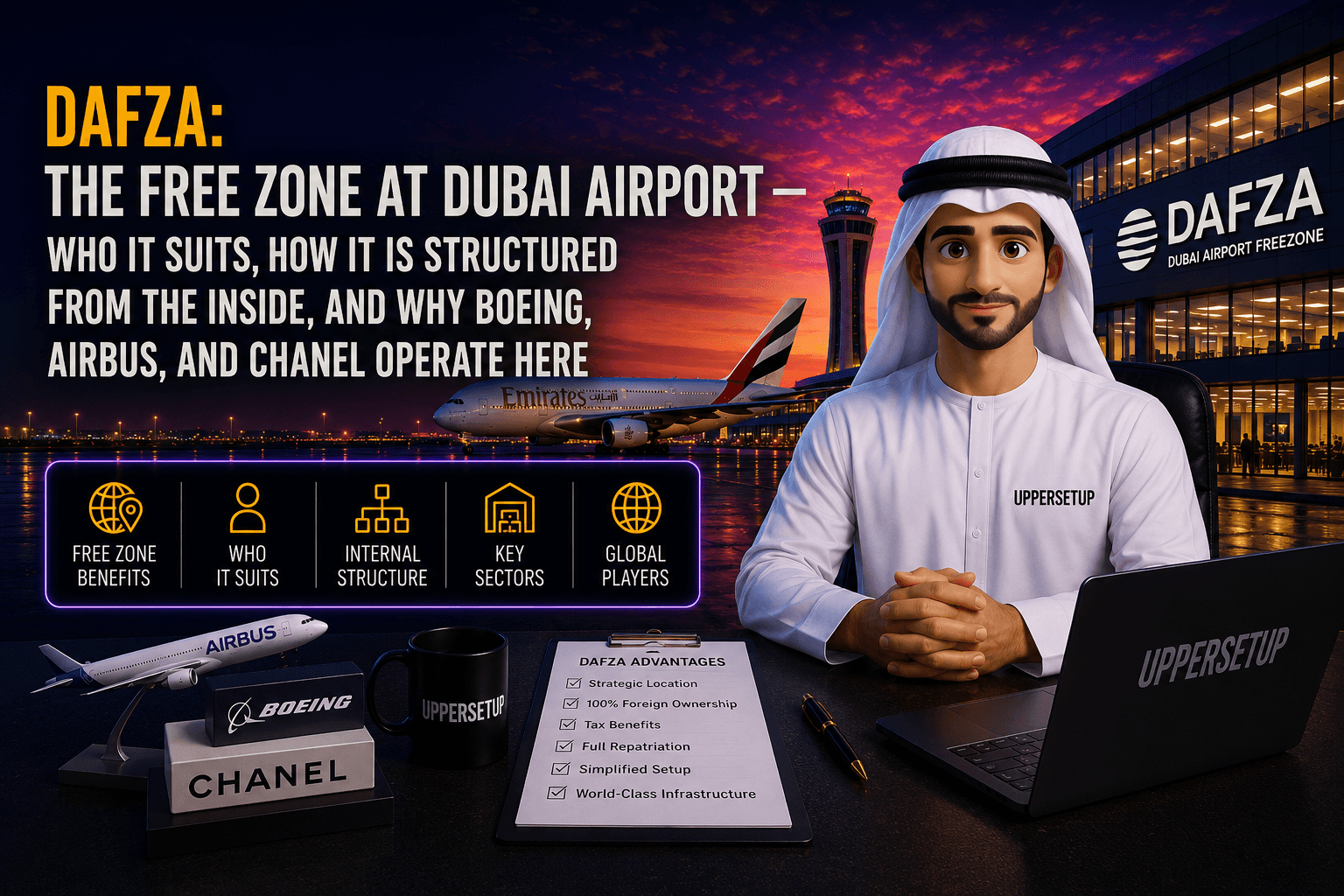
• Dubai Airport Free Zone Authority (DAFZA) — one of the oldest Dubai free zones, established in 1996.
• Dubai Silicon Oasis (DSO) — a technology park within which IFZA is physically located.
• Dubai CommerCity (DCC) — the UAE's first e-commerce dedicated free zone.
IFZA has been operating within Dubai Silicon Oasis since 2020, falling under DIEZ governance through the DSO Authority. This means that in an IFZA → DAFZA transfer, the company remains within the perimeter of a single regulator — DIEZ maintains a unified corporate register across all its zones (DIEZ Implementing Regulations 2023). This significantly reduces the administrative burden compared to a transfer between zones with different regulators.
⚠ Despite the shared DIEZ regulator, the legal regimes of IFZA and DAFZA are separate. Each zone is governed by its own section of the DIEZ Implementing Regulations 2023. These are not a single company registry, but two distinct registries under one administrative umbrella.
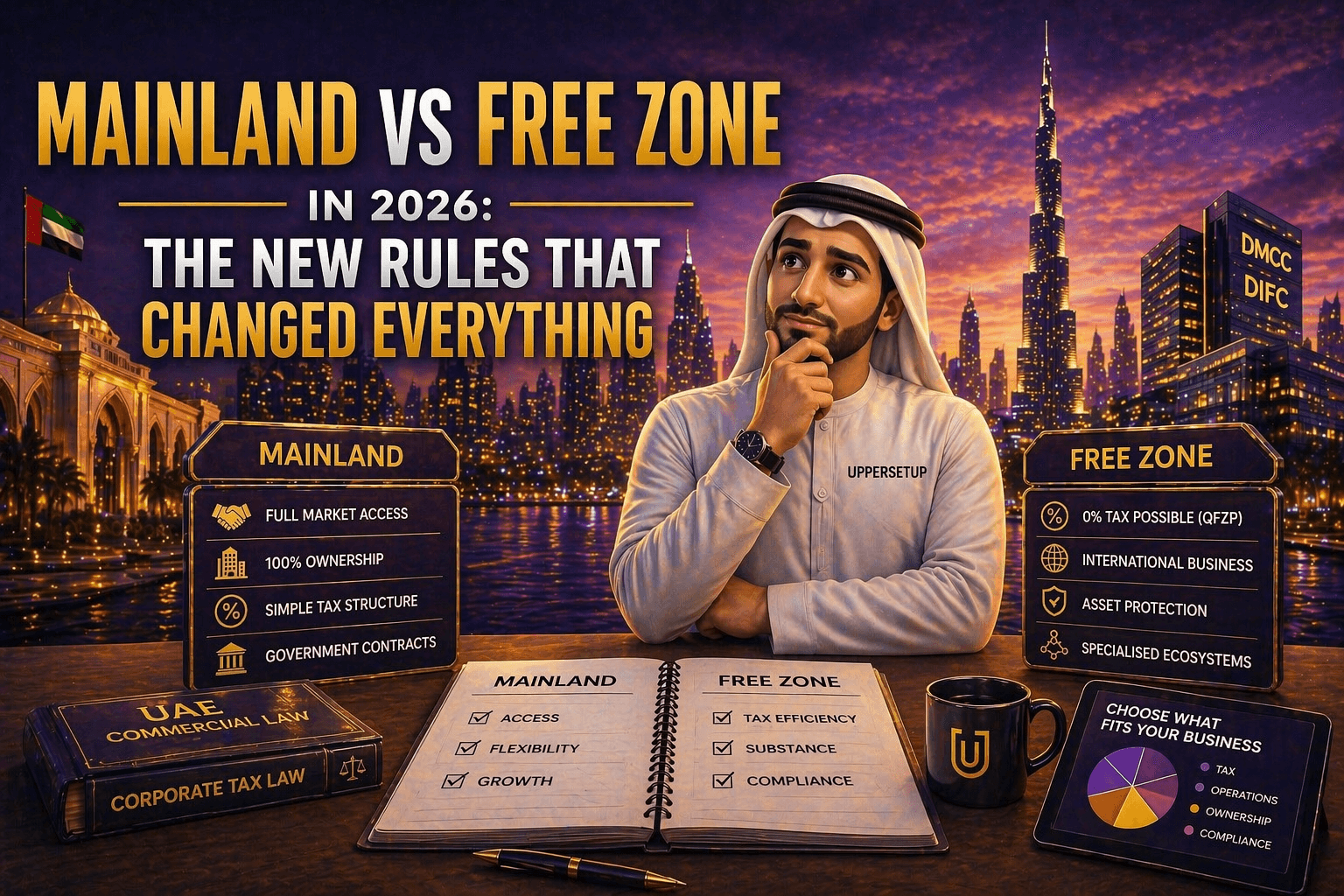
3. IFZA vs DAFZA: The Key Differences
|
Parameter |
IFZA (Dubai Silicon Oasis) |
DAFZA (Dubai Airport Free Zone) |
|
Governing authority |
Dubai Integrated Economic Zones Authority (DIEZ) — Law No. 16 of 2021 |
Dubai Integrated Economic Zones Authority (DIEZ) — Law No. 16 of 2021 |
|
Regulator |
DIEZ / DSO Authority |
DIEZ / DAFZA |
|
Physical location |
Dubai Silicon Oasis (DSO), Dubai Digital Park |
Dubai Airport, Terminal 1 / Free Zone Complex |
|
Founded |
2018 (Fujairah) → 2020 (relocated to DSO) |
1996 — one of the oldest UAE free zones |
|
VAT status |
NOT a Designated Zone (non-designated) |
DESIGNATED ZONE under Cabinet Decision No. 59/2017 (as amended) |
|
Corporate tax 0% (QFZP) |
Available subject to QFZP conditions |
Available subject to QFZP conditions |
|
Minimum capital |
No requirement |
No requirement |
|
Licence cost |
AED 10,000–30,000/year |
AED 15,000–50,000+/year |
|
Office requirement |
Flexi-desk accepted |
Physical office; flexi-desk for certain activities |
|
Target audience |
Startups, SMEs, consulting, IT, digital |
Aviation logistics, trading, manufacturing, international trade |
|
Visa allocation |
Up to 6 per licence (package-dependent) |
Up to 15 and above |
The critical tax difference that cannot be ignored: DAFZA is a Designated Zone under Cabinet Decision No. 59 of 2017 (as amended) for VAT purposes. IFZA/DSO is not. This means that when a company moves from IFZA to DAFZA, the VAT treatment of transactions with UAE counterparties changes. For companies dealing in goods (not services) within a Designated Zone, this opens access to the "outside UAE territory" preferential treatment. For companies providing services, there is no difference, as services are always subject to standard UAE VAT rules regardless of zone status.
Need help selecting the right free zone? Compare registration options at uppersetup.com →
4. Why Companies Move From IFZA to DAFZA: The Real Drivers
Driver 1: Operational expansion — aviation logistics and international trade
DAFZA provides direct access to the cargo terminals of Dubai International Airport. For companies engaged in import/export, distribution, and aviation logistics, a physical presence in DAFZA means fundamentally different customs clearance speeds and warehousing logistics. A company that started as a consulting startup in IFZA and has grown into a trade-logistics operator will naturally consider DAFZA its next address.
Driver 2: Tax planning — Designated Zone status
Moving from non-designated IFZA to designated DAFZA unlocks the VAT preferential regime for goods transactions within the designated zone and between designated zones. At high trading volumes, this delivers real financial savings. However, this driver is only relevant for goods-based businesses; for service companies, the VAT regime is unchanged.
Driver 3: Reputation and client profile
DAFZA is one of the most established and respected UAE free zones, founded in 1996. For companies working with major international corporations, government entities, or the aviation sector, a Dubai Airport Free Zone address carries a different reputational signal than a Dubai Silicon Oasis address. As a company grows, this can become a meaningful differentiating factor.
Driver 4: Visa quotas and workforce requirements
DAFZA generally provides higher work visa allocations per licence — up to 15 and above. For companies with a growing headcount, this is significant, as IFZA base packages typically limit visa allocations to 6.
Driver 5: Preserving corporate history (the case for redomiciliation vs liquidation)
A company with three to five years of operating history, established banking relationships, and an active international client contract portfolio is a fundamentally different asset from a clean new company. Redomiciliation transfers all of that capital to the new jurisdiction. This is precisely why Article 15bis is a significant development for mature companies, not just startups.
5. Step-by-Step Procedure: IFZA → DAFZA in 2026
Important preliminary note: this is the first historical period in which the Article 15bis mechanism is being applied in practice. As of May 2026, complete Cabinet-level implementing regulations for inter-free zone transfers have not been published in full. The procedure described below is based on the current provisions of DIEZ Implementing Regulations 2023, Article 15bis FDL No. 20/2025, and established DIEZ internal administrative transfer practice. Specific requirements should be confirmed directly with DIEZ/DAFZA.
|
Stage |
Timeline (est.) |
Content |
Critical condition |
|
1. Preliminary analysis |
1–2 weeks |
Review of articles of association for redomiciliation permission. Assessment of tax consequences (especially VAT — zone status change). Selection of target DAFZA licence type. |
DIEZ Implementing Regulations 2023 govern each zone separately — verify compatibility of licensed activities |
|
2. Shareholder approval |
1 week |
Special resolution of shareholders (or approval by absolute majority) — per Article 15bis FDL No. 20/2025 and the articles |
All shareholders must sign; notarisation may be required |
|
3. DAFZA application |
2–4 weeks |
Company name reservation, submission of DAFZA licence application, KYC package, copies of constitutional documents |
Exact match of company name and activities; DAFZA verifies Physical Presence requirements |
|
4. DAFZA approval and in-principle confirmation |
2–3 weeks |
DAFZA issues in-principle approval; company confirms address (office or flexi-desk in Free Zone Complex) |
Office lease in DAFZA is mandatory; Physical Presence requirements are stricter than IFZA |
|
5. IFZA/DSO and creditor notification |
2–4 weeks |
Filing notification with IFZA of redomiciliation initiation; notification of creditors and counterparties. Notice periods are defined by DIEZ Implementing Regulations 2023 |
No creditor objections required. Banks must be notified before, not after, the transfer |
|
6. Registration transfer and new licence issuance |
2–3 weeks |
DIEZ (as the shared regulator) transfers the corporate register. DAFZA issues the new commercial licence; IFZA cancels the old one |
DIEZ maintains a unified corporate register across all its zones, simplifying the procedure vs. transfer between independent free zones |
|
7. Update registrations |
2–4 weeks |
FTA: update TRN, VAT status, corporate tax. Banks: KYC, account details update. Visas: new Establishment Card |
VAT status changes: IFZA → non-designated; DAFZA → designated zone. This affects invoicing to local counterparties |
|
TOTAL |
~10–18 weeks |
—— |
If creditor objections arise — timeline extends |
6. What Changes, What Stays: Full Matrix
|
Aspect |
IFZA (before transfer) |
DAFZA (after transfer) |
Action required |
|
Jurisdiction |
IFZA (DSO) |
DAFZA |
Re-register in DIEZ corporate registry |
|
VAT zone status |
Non-designated |
Designated zone |
Update VAT registration with FTA; review counterparty contracts |
|
Zone-to-zone transactions |
Standard VAT to counterparties |
Preferential goods treatment within designated zone (conditions apply) |
Legal analysis of existing supply contracts |
|
Company address |
Dubai Silicon Oasis |
Dubai Airport Free Zone |
Update in all documents, website, invoices |
|
Trade licence |
IFZA licence |
DAFZA licence |
Obtain new DAFZA commercial licence |
|
Corporate history |
Preserved (Art. 15bis) |
Preserved |
Confirm in constitutional documents |
|
Bank details |
IBAN unchanged |
IBAN unchanged |
Notify bank; complete repeat KYC |
|
Employee visas |
Issued by IFZA/DSO |
Reissue under DAFZA |
New Establishment Card + work permits |
|
Corporate tax |
QFZP if conditions met |
QFZP if conditions met |
Re-assess compliance after zone change |
Detailed Analysis: VAT on Transition From Non-Designated to Designated Zone
This is the most complex aspect of the IFZA → DAFZA case. The change in zone status from non-designated to designated affects the VAT treatment of the following transactions:
• Supplies of goods within DAFZA or between two Designated Zones: treated as "outside UAE territory"; no VAT charged where the conditions of Cabinet Decision No. 59/2017 are met (strict control of physical goods movement, proper customs clearance).
• Movement of goods from DAFZA to the UAE mainland: treated as an import and subject to 5% VAT.
• Services: for service supplies, Designated/Non-Designated status is irrelevant. Services are always subject to standard UAE VAT rules.
• VAT registration: the company's TRN must be updated with the FTA to reflect the new address and new zone status. Previously accumulated input VAT credits are preserved.
⚠ Before the transfer, it is strongly recommended to audit all existing contracts with UAE counterparties for VAT-related provisions. Contracts concluded from IFZA with mainland counterparties may require updating as a result of the supplier's changed VAT zone status.
7. Corporate Tax: QFZP Status After Redomiciliation
Following the transfer from IFZA to DAFZA, the company remains within the UAE free zone perimeter, potentially retaining eligibility for Qualifying Free Zone Person (QFZP) status and a 0% corporate tax rate on qualifying income. However, QFZP status does not transfer automatically — it is reassessed from the first tax period in the new zone.
The four QFZP conditions that must be satisfied afresh:
• Qualifying Income from Qualifying Activities (Ministerial Decision No. 229 of 2025 — expanded list retroactive from 1 June 2023).
• Adequate Economic Substance in DAFZA: real office, personnel, core management decisions taken on DAFZA territory.
• De minimis rule: Non-Qualifying Income does not exceed the lower of 5% of total income or AED 5 million.
• Audited financial statements — mandatory from the 2025 financial year for all QFZPs without exception.
Practical note on Economic Substance: DAFZA typically enforces stricter physical presence requirements than IFZA. A flexi-desk arrangement may be insufficient to support Adequate Economic Substance for QFZP purposes. A company claiming QFZP in DAFZA must honestly assess the reality of its operational activity on DAFZA territory.
8. Banks: The Most Complex Part of the Procedure
The banking dimension of redomiciliation is the most sensitive and time-unpredictable aspect. A change in the company's registered address is an AML trigger event for most UAE banks. This means:
• Mandatory repeat KYC — even for a company that has been a customer for several years.
• Temporary account restrictions or transaction freezes during the review period (from days to months).
• Possible revision of service terms (limits, fees, trade finance availability).
Recommended approach: notify the bank of the planned redomiciliation before commencing the procedure. Most banks prefer to be informed in advance rather than receive an updated certificate of incorporation as a fait accompli. Prepare a complete KYC package in advance: new licence, new certificate of incorporation, updated UBO information.
Need banking compliance support during a free zone change? Banking services and KYC support at uppersetup.com →
9. Common Mistakes in Inter-Free Zone Redomiciliation
• Proceeding with IFZA → DAFZA without a business activity compatibility check. Activities licensed in IFZA may not match the DAFZA activity list. Verify compatibility under DIEZ Implementing Regulations 2023 before commencing.
• Ignoring the VAT zone status change. Transferring from a non-designated to a designated zone changes the VAT treatment of goods transactions with UAE counterparties. This is not an automatic benefit — it requires legal analysis of existing contracts.
• Trying to "save" on office space in DAFZA. DAFZA historically enforces stricter physical presence requirements. A flexi-desk arrangement adequate for IFZA may not satisfy DAFZA's Physical Presence requirements — particularly for QFZP purposes.
• Notifying the bank after the transfer, not before. Banks discovering a change of jurisdiction through updated documents typically freeze the account for verification immediately. Advance notification is essential.
• No transition plan for employees. Work permits and visas issued under IFZA/DSO must be reissued under DAFZA. Until the new Establishment Card is in place, employees are technically sponsored by the "old" zone.
• Failing to reassess QFZP after the zone change. Some companies incorrectly assume their QFZP status "travels" with them. It does not: the FTA assesses compliance from the first day in the new zone under the new tax period.
10. Pre-Decision Checklist
• Confirm the company's articles of association permit redomiciliation (or contain no prohibition).
• Verify compatibility of licensed activities between IFZA and DAFZA under DIEZ Implementing Regulations 2023.
• Conduct a VAT analysis: how will the VAT regime change for UAE counterparty transactions on transition to a Designated Zone.
• Assess DAFZA's physical presence requirements and Economic Substance adequacy for QFZP.
• Notify banking partners before commencing and prepare the KYC package.
• Conduct a legal audit of existing contracts for jurisdiction-dependent provisions.
• Prepare a transition plan for employees (Establishment Card, work permits).
• After the transfer: update TRN with FTA, re-register for VAT, reassess QFZP compliance.
• Confirm the current procedure with DIEZ directly — taking into account implementing regulations that may be issued during 2026.
Sources
• DIEZ Implementing Regulations 2023 — Administrative Resolution No. ADM LEGAL 001 2023 (dso.ae)
• DIEZ — official portal (diez.ae)
• DAFZA — official portal (dafza.gov.ae)
• IFZA — official portal (ifza.com)
• Federal Tax Authority — Designated Zones VAT Guide (tax.gov.ae)
• FTA — Designated Zones list, Cabinet Decision No. 59 of 2017 as amended (tax.gov.ae)
• Federal Decree-Law No. 47 of 2022 on Corporate Tax (tax.gov.ae)
• Chambers & Partners — Modernising UAE Company Law: Key Amendments 2025 (chambers.com)
• Gowling WLG — Redomiciliation: a UAE Perspective (February 2026, gowlingwlg.com)
• Khaleej Times — UAE free zones guide 2026 (khaleejtimes.com)
Disclaimer
This article is provided for informational purposes only and does not constitute legal, tax, or professional advice. Information is current as of May 2026. The procedure for redomiciliation between UAE free zones is still developing in terms of regulatory practice — implementing regulations under Article 15bis of Federal Decree-Law No. 20 of 2025 have not yet been issued for all scenarios. Specific DAFZA and IFZA requirements may change. Before making any structural decisions, readers are advised to obtain professional legal advice. UPPERSETUP accepts no liability for actions taken solely in reliance on this material.
All services on the platform
Everything you need to start and run a business - in one place
- 3–5 days
Company Setup
Mainland or Free Zone company with a complete set of incorporation documents
Start - Monthly
Accounting Services
Financial accounting and reporting in accordance with UAE requirements
Start - 1–2 weeks
Visa Services
Residence visas for shareholders, employees and family members
Start - 7–30 days
Banking Services
Corporate Bank Accounts in the UAE and Payment Services
Start - Custom timeline
Legal Services
Contracts, corporate amendments and legal support
Start


