





































































































































 International Free Zone Authority
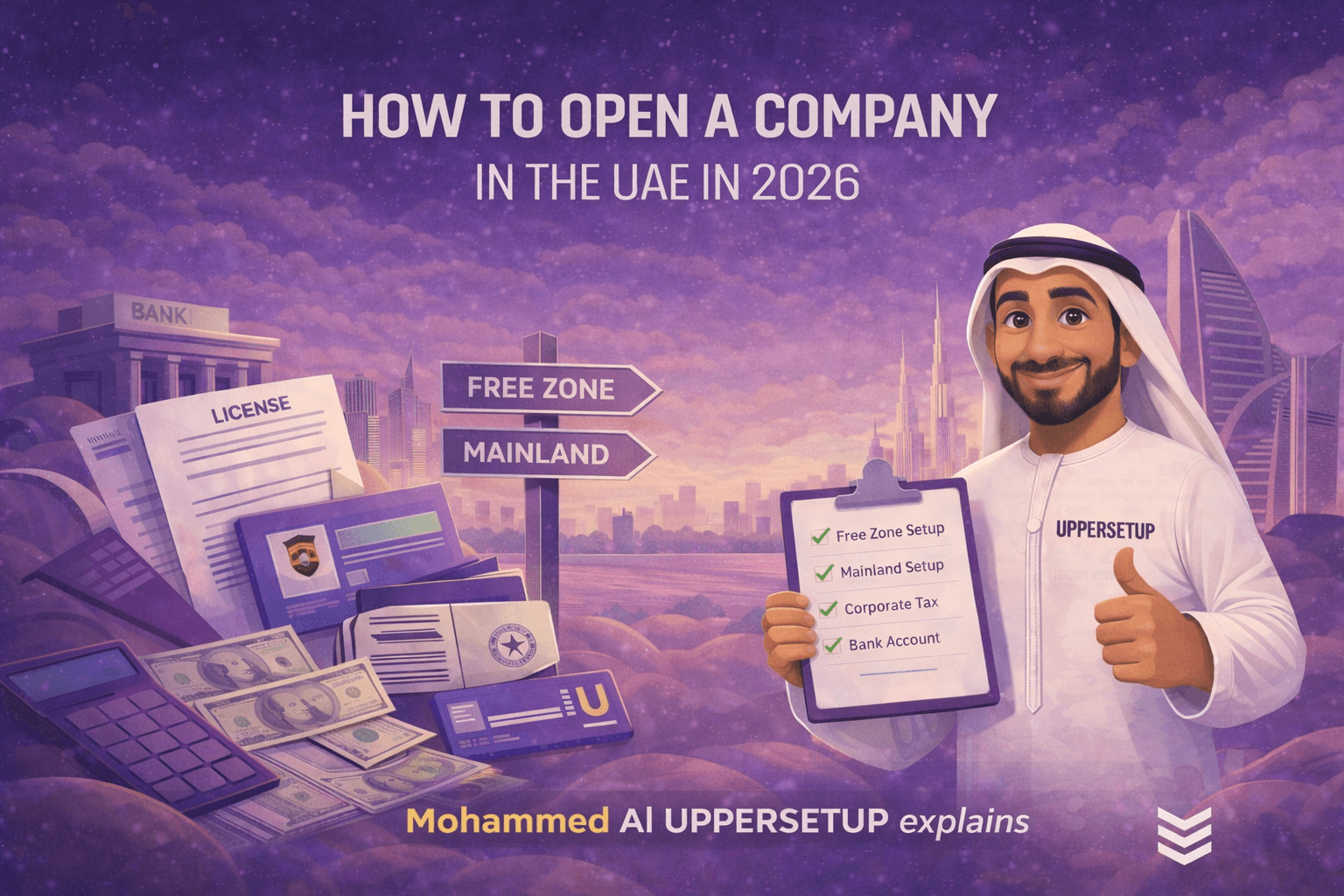
How to Open a Company in the UAE in 2026
Introduction
Opening a company in the UAE remains one of the most efficient ways to access international markets, structure cross-border operations, and operate within a relatively moderate corporate tax environment. However, the regulatory landscape has evolved. Corporate tax, economic substance requirements, enhanced banking compliance, and increased transparency standards mean that company formation must now be approached strategically.
This guide explains how to properly establish a company in the UAE in 2026, with a focus on legal structure, taxation, licensing, and banking reality.
1. Choosing the Right Jurisdiction: Mainland vs Free Zone
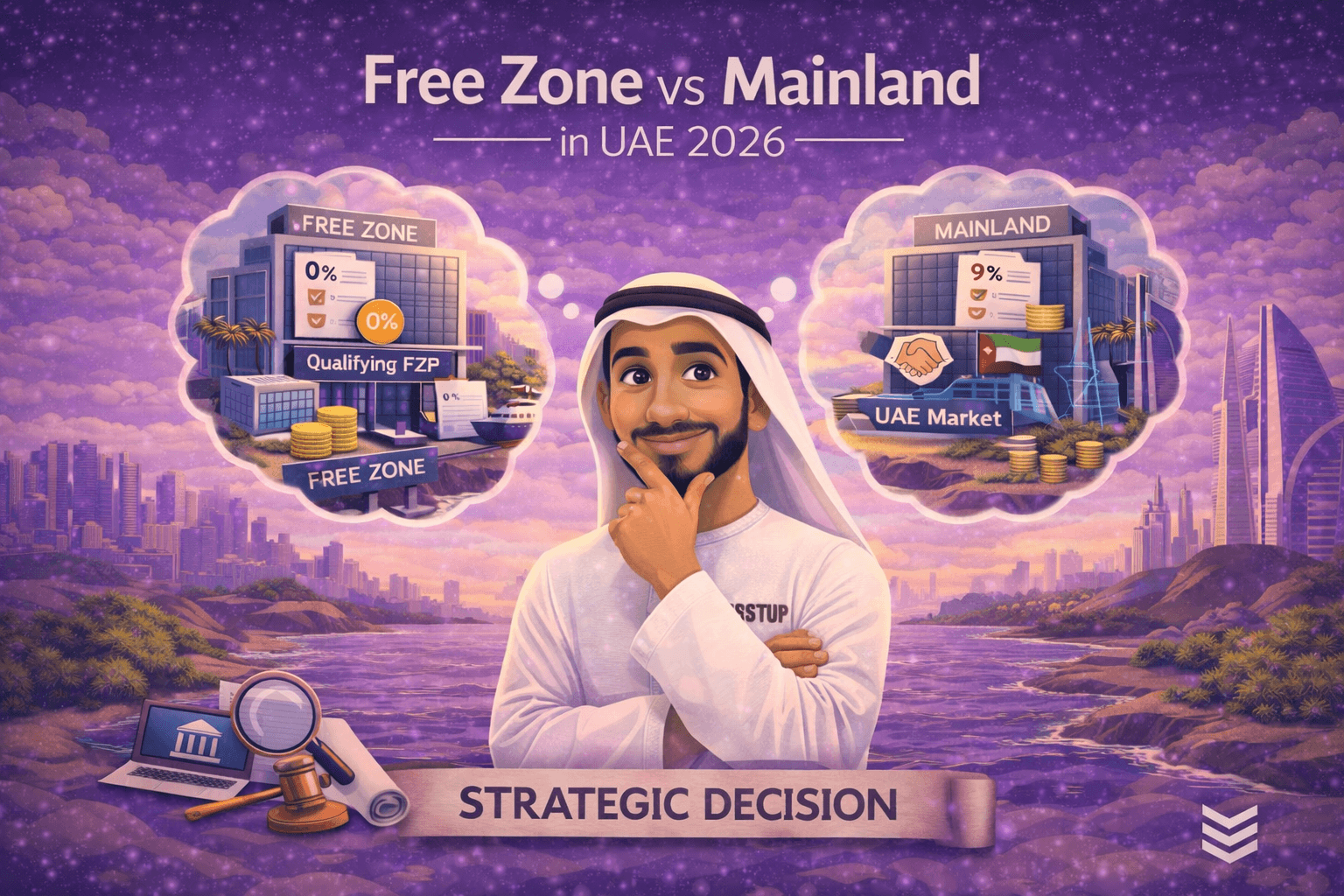
The first and most important decision concerns jurisdiction. The UAE offers two primary options: Mainland and Free Zone.
Mainland Companies
Mainland companies are licensed by the relevant Department of Economy (for example, Dubai Department of Economy and Tourism).
Key characteristics:
-
Full access to the UAE local market
-
Ability to work directly with government entities
-
No geographic trade limitations within the UAE
-
Physical office lease required
Since legislative reforms allowing 100% foreign ownership in most activities, the historical need for a local sponsor has largely been removed. However, certain regulated sectors may still require local participation.
Mainland structures are generally appropriate for:
-
Trading within the UAE
-
Real estate development
-
Construction
-
Hospitality
-
Government contracting
Free Zone Companies
Free Zones are special economic areas with independent regulatory authorities. Examples include DMCC, ADGM, RAKEZ and others.
Key characteristics:
-
100% foreign ownership
-
Simplified registration process
-
International business focus
-
Potential 0% corporate tax on qualifying income
Free Zone entities cannot directly conduct business in the UAE mainland without appointing a local distributor or establishing a mainland branch.
Free Zone structures are typically suitable for:
-
International trading
-
Holding companies
-
Consulting services
-
E-commerce
-
Investment vehicles
The decision between Mainland and Free Zone should be based on revenue source, client geography, regulatory exposure, and banking considerations.
2. Corporate Tax Framework (2026)
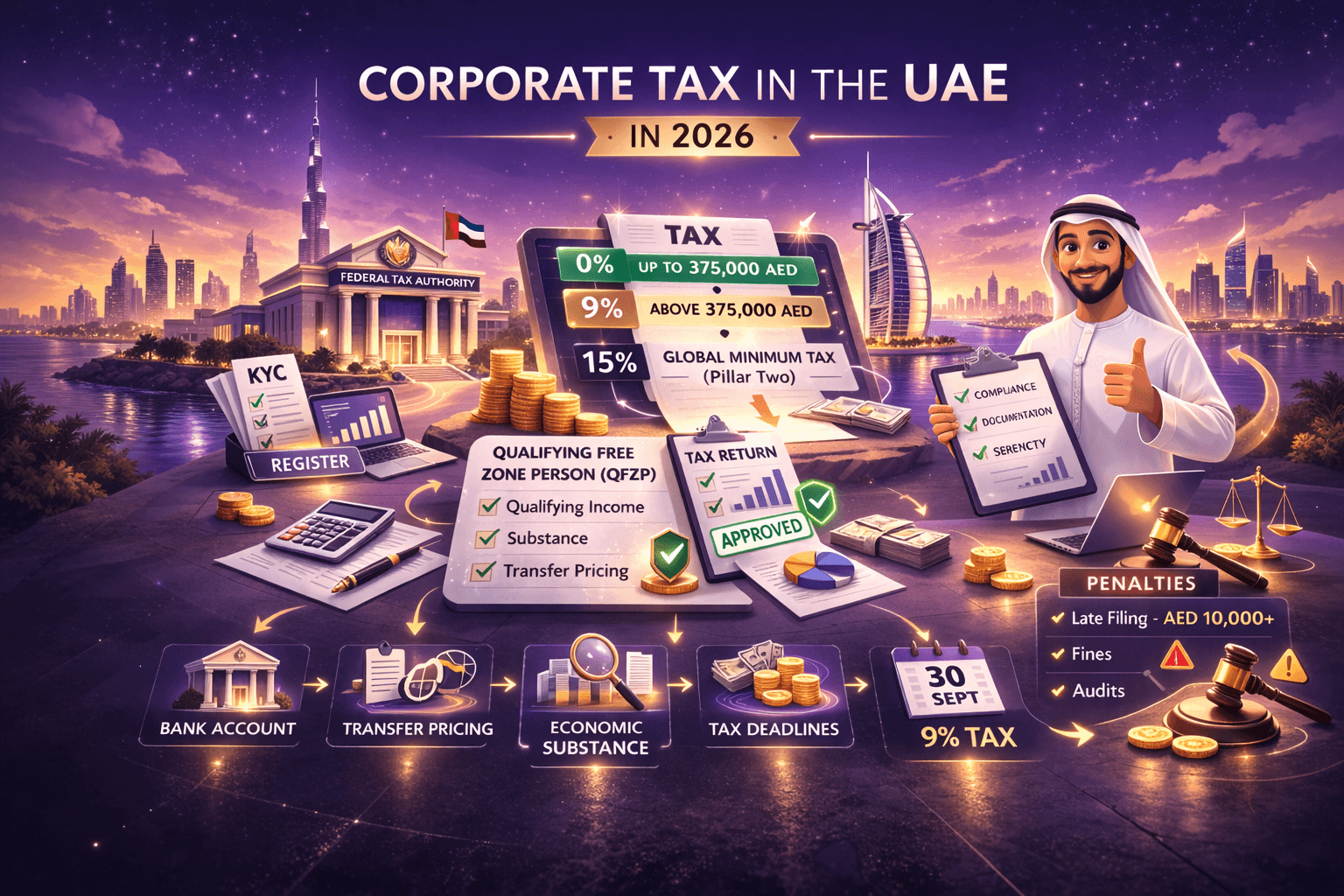
Corporate Tax in the UAE is governed by Federal Decree-Law No. 47 of 2022.
Key points:
-
9% corporate tax applies to taxable profits exceeding AED 375,000
-
0% applies to taxable income below that threshold
-
Free Zone companies may qualify for 0% on qualifying income, subject to strict conditions
Free Zone entities must meet the definition of a “Qualifying Free Zone Person.” This includes:
-
Maintaining adequate economic substance
-
Deriving qualifying income
-
Complying with transfer pricing rules
-
Avoiding disqualifying mainland activities
Failure to meet these criteria may result in loss of the preferential tax rate.
Tax planning must be integrated at the structuring stage, not after incorporation.
3. Step-by-Step Incorporation Process
Step 1: Define Business Activity
The selected activity determines:
-
Type of license
-
Regulatory approvals
-
Office requirements
-
Visa quota
-
Banking risk profile
Incorrect activity selection is one of the most common structural errors.
Activities generally fall into:
-
Commercial
-
Professional
-
Industrial
-
Holding
-
Development
-
Financial or regulated sectors
Step 2: Select Jurisdiction and Legal Form
Common legal forms include:
-
Limited Liability Company (LLC)
-
Free Zone Company (FZ-LLC / FZE)
-
Branch of foreign company
-
Holding company
The structure should align with long-term objectives, not only immediate setup cost.
Step 3: Trade Name Reservation and Initial Approval
Authorities review the proposed name and activity. Certain words (e.g., “International,” “Group,” “Capital”) may require additional approvals.
Timeline: typically 1–5 working days.
Step 4: Lease Agreement
In 2026, physical presence carries greater importance.
Mainland companies require Ejari-registered leases.Free Zones require facility agreements (flexi-desk, office, warehouse).
Banks increasingly request evidence of genuine operational presence.
Step 5: License Issuance
Upon submission of required documentation and payment of government fees, the license is issued.
Documents typically include:
-
Passport copies of shareholders
-
Entry stamp or visa page
-
Application forms
-
Memorandum of Association
-
Business plan (in many cases)
Timeline: 5–15 working days depending on complexity.
Step 6: Immigration and Residency
If visas are required:
-
Establishment card
-
Entry permit
-
Medical fitness test
-
Emirates ID
-
Visa stamping
Processing time: approximately 2–3 weeks.
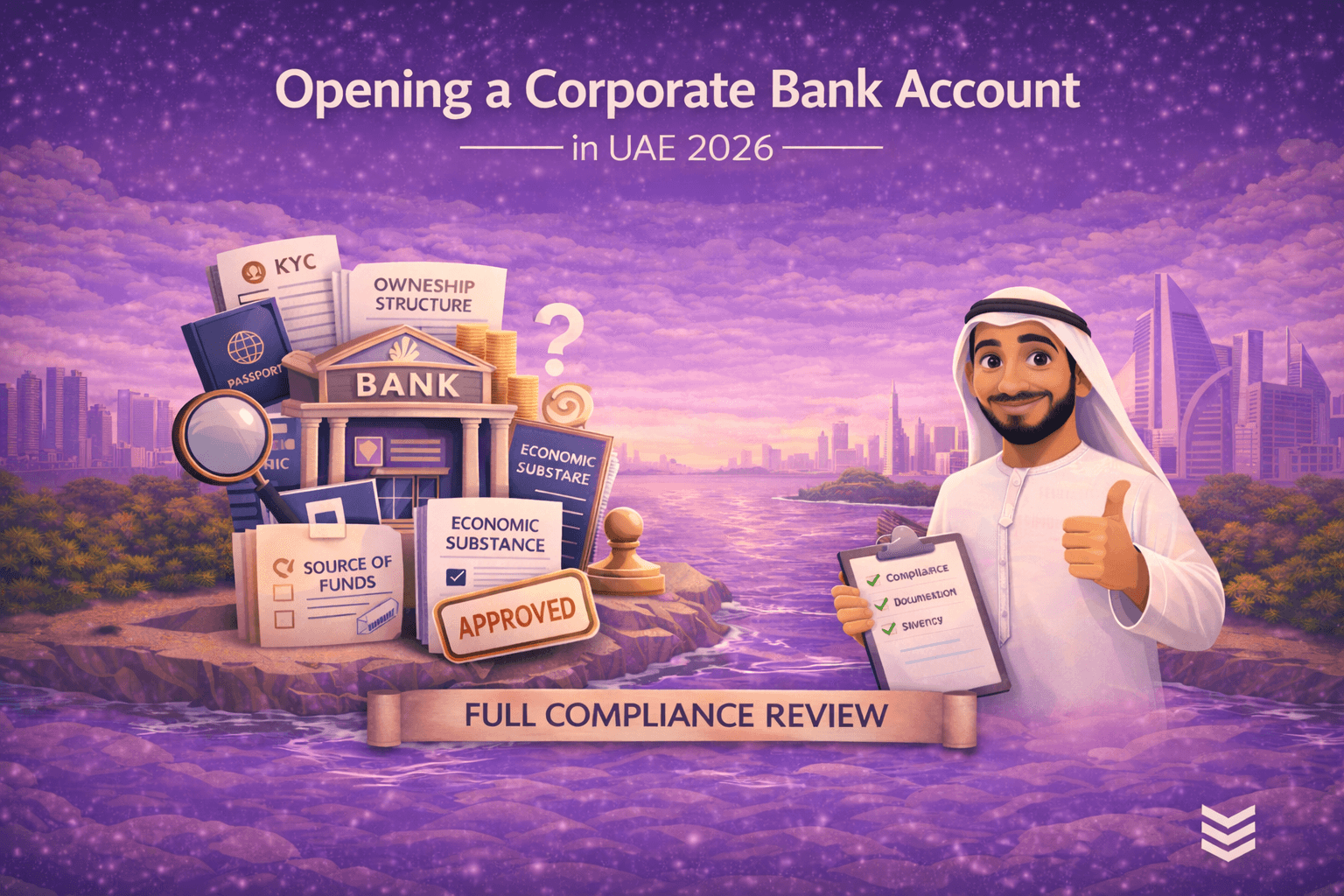
Step 7: Corporate Bank Account
Banking remains the most sensitive stage.
Banks conduct detailed due diligence covering:
-
Source of funds
-
Source of wealth
-
Ultimate Beneficial Ownership
-
Business model viability
-
Contractual counterparties
-
Jurisdiction exposure
-
Expected transaction volume
Approval is not automatic. Timeline varies from 3 to 8 weeks or longer depending on risk classification.
Proper documentation and coherent structuring significantly increase approval probability.
4. Realistic Cost Overview (Indicative Ranges)
Free Zone company:
USD 4,000 – 12,000 (license + basic facility)
Mainland company:
USD 7,000 – 18,000 (license + office)
Additional costs:
-
Visa processing
-
Medical and Emirates ID
-
Accounting and audit
-
Corporate tax registration
-
VAT registration (if applicable)
-
Compliance advisory
Low-cost packages often exclude essential components such as office upgrades, compliance services, or license amendments.
5. Holding and International Structuring
UAE entities are frequently used within international structures.
Common configurations include:
UAE Holding Company↓Operating subsidiaries in the US, EU or Asia
Or
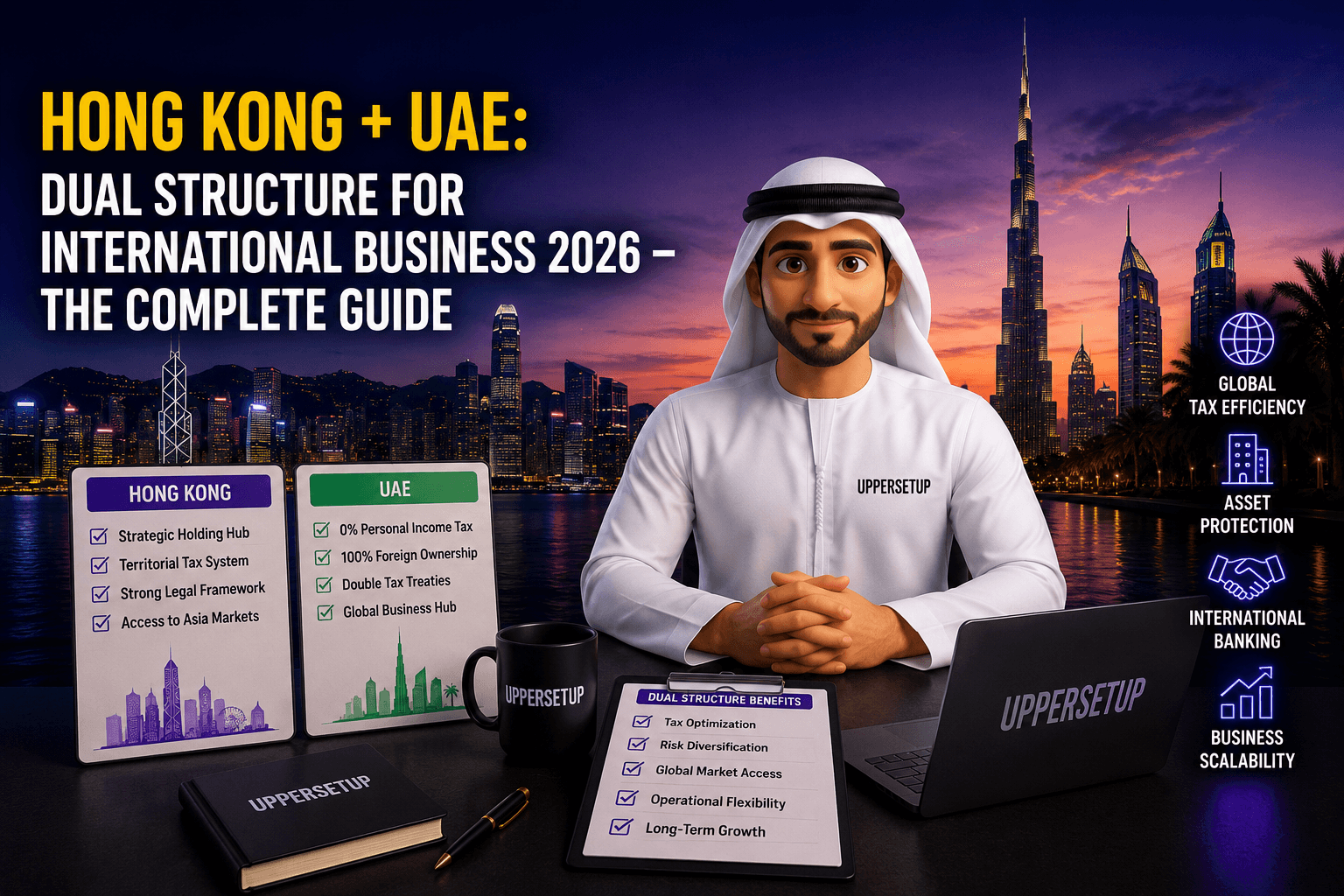
UAE + AIFC + Hong Kong multi-jurisdictional structure
Each structure must evaluate:
-
Double taxation treaties
-
Withholding taxes
-
Transfer pricing
-
Substance requirements
-
Banking compatibility
Cross-border structuring should be designed in coordination with tax advisors in all relevant jurisdictions.
6. Typical Mistakes
-
Selecting jurisdiction based solely on cost
-
Ignoring banking requirements at early stage
-
Underestimating corporate tax impact
-
Using nominee arrangements without legal clarity
-
Operating without real substance
-
Declaring incorrect or overly broad activities
Regulatory authorities and banks increasingly assess commercial logic and operational reality.
7. Expected Timeline
Company incorporation: 1–2 weeksVisa processing: 2–3 weeksBank account opening: 3–6 weeks
Total realistic timeframe: 4–8 weeks.
8. Conclusion
Opening a company in the UAE in 2026 requires more than filing an application. It requires structured planning, tax awareness, regulatory alignment, and banking preparation.
The UAE remains a competitive jurisdiction for international business, but compliance expectations have increased. Entrepreneurs who approach structuring seriously benefit from stability, tax efficiency, and global credibility.
UPPERSETUP advises clients on licensing, holding structures, banking preparation, and cross-border strategy, ensuring that incorporation aligns with long-term operational and financial objectives.
If required, this guide can be expanded into a fully referenced legal memorandum version suitable for institutional distribution.
Read more on the topic
Emiratisation 2026: The Complete Employer Guide — Quotas, Penalties, Nafis, and the 30 June Deadline
Stamp Duty on Share Transfers in Hong Kong 2026: Rates, Net-Asset Valuation, Deadlines and Penalties
All services on the platform
Everything you need to start and run a business - in one place
- 3–5 days
Company Setup
Mainland or Free Zone company with a complete set of incorporation documents
Start - Monthly
Accounting Services
Financial accounting and reporting in accordance with UAE requirements
Start - 1–2 weeks
Visa Services
Residence visas for shareholders, employees and family members
Start - 7–30 days
Banking Services
Corporate Bank Accounts in the UAE and Payment Services
Start - Custom timeline
Legal Services
Contracts, corporate amendments and legal support
Start


