









































 International Free Zone Authority
Seamless UAE Company Incorporation from Anywhere: 2026–2027 Rules and Realities
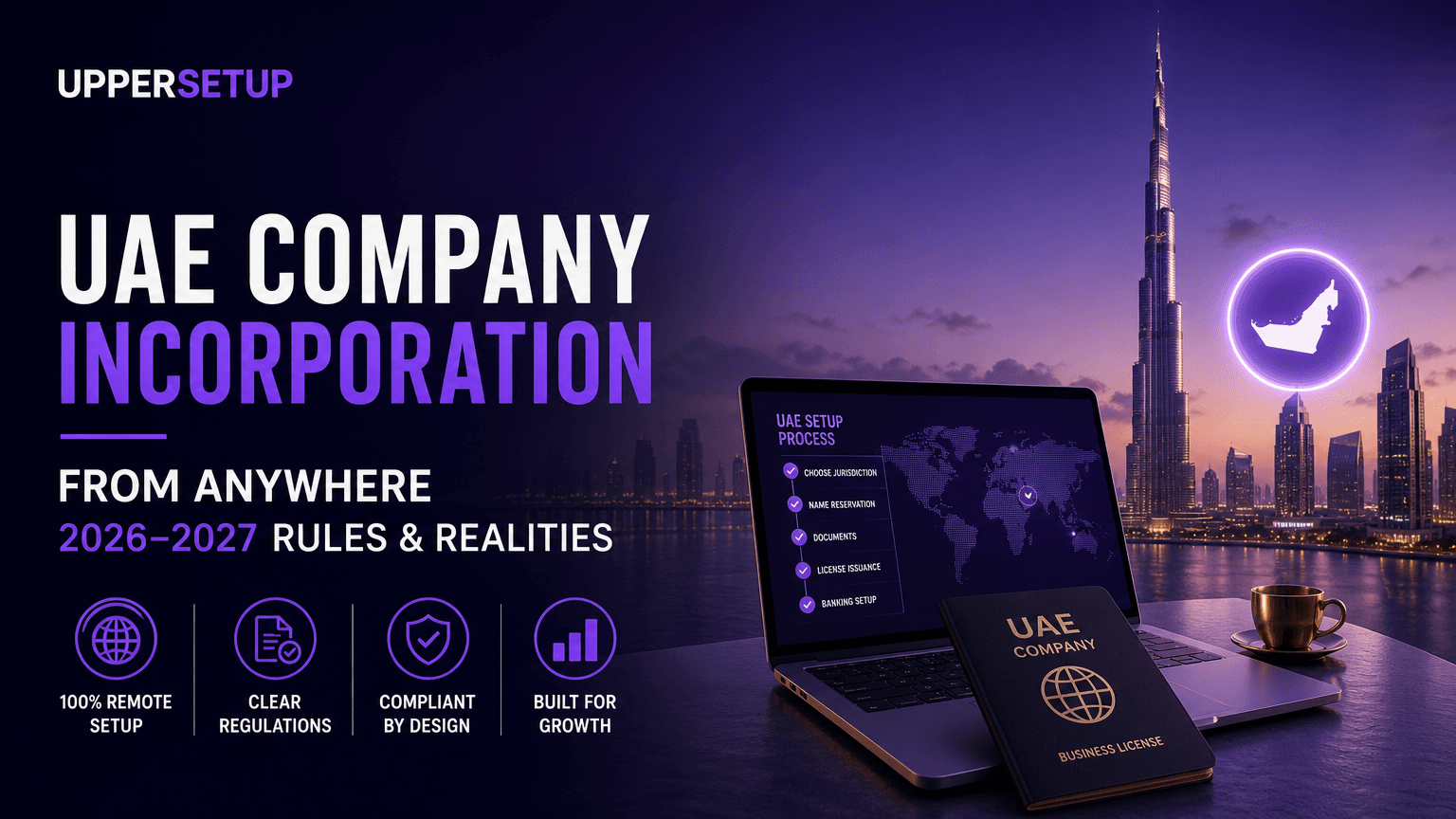
Seamless UAE Company Incorporation from Anywhere: 2026–2027 Rules and Realities
Quick Answer: Can You Set Up a UAE Company Remotely in 2026–2027?
Yes, it is possible to complete remote company incorporation in the UAE in 2026–2027 without a physical visit, leveraging digital KYC checks, e-signature acceptance, and authorized agent support under updated federal and free zone rules. However, remote incorporation is subject to sector restrictions, varies by jurisdiction (with some mainland activity still requiring in-person steps), and introduces practical risks in banking and immigration compliance. Alert: Bank account opening remains a critical bottleneck for non-residents post-incorporation and may require a UAE visit or robust relationship management by the signatory.
Regulatory Landscape for Remote Incorporation: Which Laws Apply in 2026–2027?
UAE company formation in 2026–2027 is governed by multiple legal frameworks. The principal federal law is Federal Decree-Law No. (32) of 2021 on Commercial Companies (entered into force on January 2, 2022, with further amendments issued in late 2024 and 2025). Free zones are regulated by their own authorities under parent federal statutes; for example, Dubai Multi Commodities Centre (DMCC) Company Regulations (as amended through 2026) and Abu Dhabi Global Market (ADGM) Companies Regulations 2022 (with periodic annual amendments). Online identity verification is enabled under the Emirates ID Law (Federal Law No. 7 of 2022) and supporting digital signature rules by the UAE Digital Government Strategy 2025–2030.
Banking, employment, and immigration functions are regulated separately: Central Bank of the UAE Regulations govern bank KYC/AML, while the Federal Authority for Identity, Citizenship, Customs & Port Security (ICP) controls residency and visa procedures. VAT is administered under Federal Decree-Law No. (8) of 2017 on Value Added Tax, and Corporate Tax is under Federal Decree-Law No. (47) of 2022 (in force June 1, 2023, with amendments in 2024–2026).
What Is Remote Company Incorporation in the UAE?
Remote company incorporation in the UAE means that individuals or legal entities can establish a UAE company—either on mainland or in a free zone—without physically entering the country, using online portals for document submission, e-signatures, and digital verification. Remote incorporation covers activity licensing, shareholder/director appointment, and registration of Articles of Association, often facilitated by authorized agents or by using the free zone’s e-government platforms. However, it does not guarantee seamless downstream processes such as corporate bank account opening or visa issuance.
Free Zone vs Mainland: Where Is Remote Incorporation Fully Supported?
Remote incorporation in the UAE is most comprehensively supported within leading free zones, such as DMCC (Dubai), ADGM (Abu Dhabi), DIFC (Dubai), RAKEZ (Ras Al Khaimah), and SHAMS (Sharjah), where digital onboarding portals allow for the entire registration process to be completed online for most business activities. In contrast, mainland licensing—regulated by the Department of Economic Development (DED) in each emirate—may still require the signatory’s physical presence for certain regulated activities, ultimate beneficial owner (UBO) verification, or notarized document submissions, especially activities with higher compliance risk (e.g., financial services, law).
| Jurisdiction | Fully Remote Incorporation | Physical Visit Required for Any Step? | E-signature Acceptance |
|---|---|---|---|
| DMCC (Dubai) | Yes | Rarely (banking/visa)* | Yes |
| ADGM (Abu Dhabi) | Yes | Occasionally (banking) | Yes |
| Dubai Mainland (DED Dubai) | Partially | Often (certain activities/licences) | Partial |
| RAKEZ (Ras Al Khaimah) | Yes | Sometimes (banking) | Yes |
| SHAMS (Sharjah) | Yes | Rarely | Yes |
| UAQ FTZ (Umm Al Quwain) | Yes | Rarely | Yes |
*Opening a corporate bank account in UAE almost always requires at least an in-person KYC by the bank signatory, if not the ultimate beneficial owner. Exceptions may exist for longstanding clients or with select digital challenger banks, but these should not be relied upon for new incorporations in 2026–2027.
Who Qualifies for Remote UAE Incorporation? Nationality, Entity Types, and Activities
Most nationalities are eligible for remote UAE company incorporation provided they are not on international sanctions lists or “high-risk” categories as per Central Bank of the UAE and Ministry of Foreign Affairs. Both individual and corporate shareholders can set up companies; however, certain activities—especially those regulated under financial services, healthcare, legal, real estate brokerage—still require enhanced due diligence and often a local regulatory interview.
Common eligible legal entities include: - Free Zone Limited Liability Companies (FZ-LLC / FZCO) - Free Zone Establishments (FZE) - Branch of Foreign Company - Mainland LLC (Limited Liability Company) (remote incorporation may be partial only, depending on emirate)
Activities in media, consulting, e-commerce, IT, service, and general trading are typically available for fully remote setup. Activities carrying national security or public interest implications (e.g., legal, audit, insurance, banking, recruitment, education) are either excluded or trigger in-person steps.
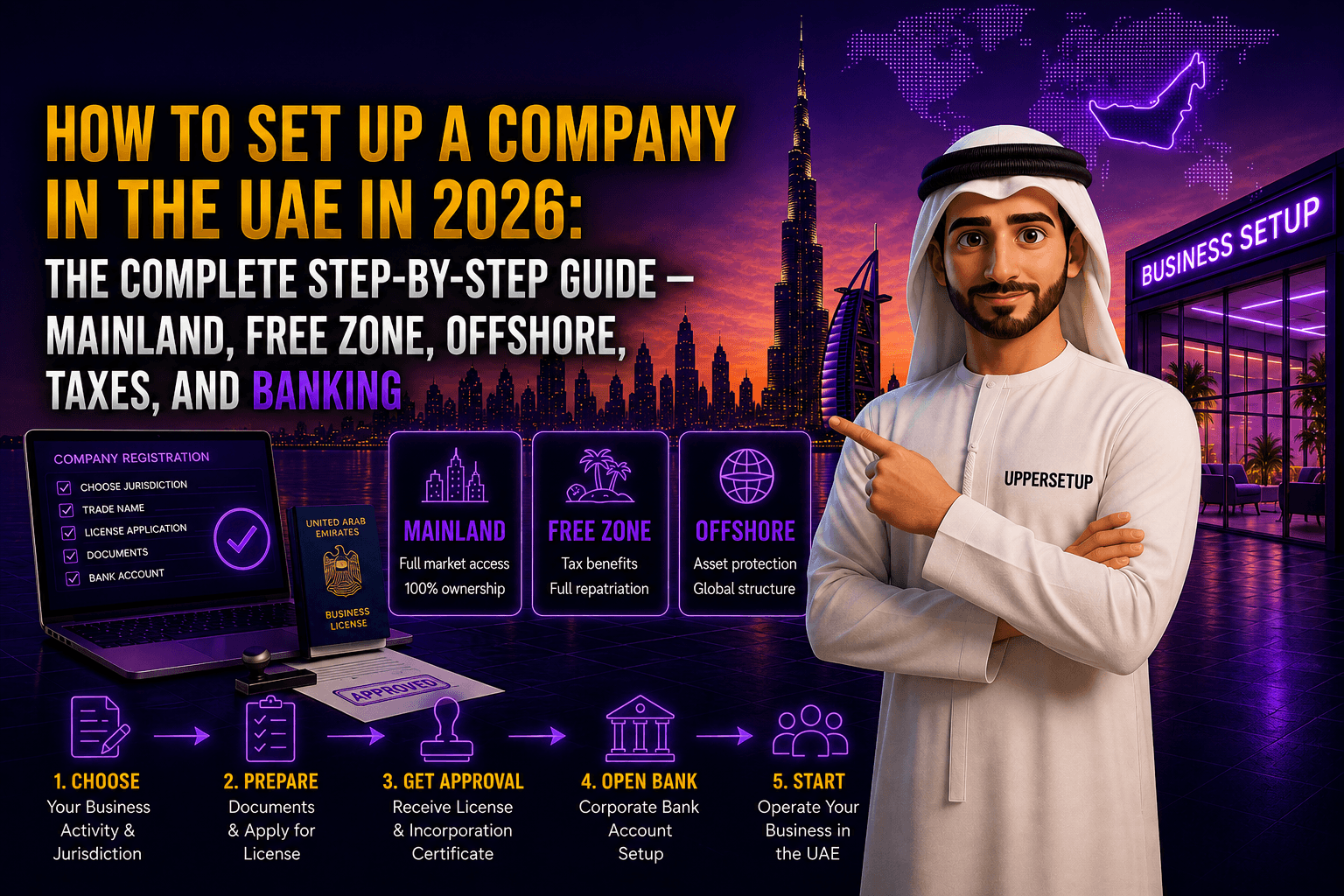
Step-by-Step Process: How Does Remote UAE Company Incorporation Work?
-
Pre-Approval and Name Reservation: Complete the preliminary application on the selected authority’s online portal, submitting proposed company names and, where required, intended business activities. Most free zones grant automated pre-approval within 1–3 business days.
-
Document Submission and Due Diligence: Upload passport copies, proof of address, CVs/resumes, business plan (if required), and shareholder/director KYC documentation. Document notarization may be required for shareholders of certain nationalities, and all documents must be translated to English/Arabic where requested.
-
E-signature Acceptance and Payment: Sign incorporation documents (Articles, board resolutions, etc.) electronically using portal-integrated solutions; payment of licensing and government fees is made online via credit card or wire transfer.
-
Incorporation and Licence Issuance: Upon review by the authority, the Certificate of Incorporation and Trade Licence are digitally issued. This can occur within 1–7 business days post-approval, depending on the jurisdiction and completeness of documentation.
-
Establishment Card and Digital Emirates ID: Issue of company Establishment Card (for immigration/visa sponsorship), and triggering of Emirates ID virtual onboarding for remote founders, unless a physical presence is required later for visa biometrics.
-
Bank Account Opening: Application for a corporate account with a UAE bank or a local fintech provider; KYC may necessitate in-person attendance or, at minimum, live video verification for the bank signatory and ultimate beneficial owners. Average timeline: 2–6 weeks, with 40–60% rejection rate reported anecdotally for newly incorporated, non-resident-owned companies.
-
Post-Incorporation Compliance: VAT and corporate tax registration on demand, Economic Substance Notification (if applicable), UBO declaration, and annual filing obligations as per federal and free zone laws.
E-Signatures, Digital Identity, and the Role of Agents in Remote UAE Setup
E-signature is legally recognized for UAE company incorporation under the UAE Digital Law and specific free zone e-signature frameworks, provided the platform is authorized by the respective authority (e.g., ADGM, DMCC) or via eDirham integration. Digital identity verification leverages Emirates ID virtual onboarding and third-party KYC platforms for non-resident shareholders. Third-party formation agents (licensed under UAE law) play a critical role, especially in managing notarization, document couriering, and correspondence with authorities; their powers are bounded by formal Power of Attorney or “Authorized Signatory” mandates filed during incorporation.
Comparison Table: Typical Costs and Timelines for Remote vs In-Person Incorporation (2026 Estimates)
| Parameter | Remote Free Zone Setup (DMCC/ADGM, 2026) | Remote Mainland DED Dubai (2026) | In-Person Free Zone (DMCC/ADGM, 2026) |
|---|---|---|---|
| State, Registration, Licensing fees | AED 13,000–25,000 (avg. AED 18,500) | AED 20,000–30,000 | AED 13,000–25,000 |
| Agent/Service Provider fees (optional) | AED 4,000–10,000 | AED 4,000–10,000 | AED 2,000–7,000 |
| Timing (company licence issued) | 3–10 business days | 7–15 business days | 2–7 business days |
| Corporate bank account opening | 2–8 weeks (high rejection) | 3–8 weeks (high rejection) | 2–6 weeks (lower rejection) |
| Minimum capital (business account) | AED 0–100,000 (often not payable-in) | AED 0–300,000 (not always needed) | AED 0–100,000 |
| Emirates ID / residency acquired remotely | Frequently possible (biometrics later)* | Rare | Full biometrics in UAE |
| VAT registration trigger (any setup) | Mandatory above AED 375,000 revenue/year | As per federal law | As per federal law |
*Biometrics for visa/Emirates ID typically require the signatory to visit the UAE at least once, even after company formation is complete and a preliminary Establishment Card is issued remotely. All figures are estimates based on medium-sized service/consulting businesses as of Q4 2026. Confirm current rates/requirements before action.
Banking Challenges for Remote-Founded UAE Companies in 2026–2027
Banks in the UAE enforce strict KYC, AML, and risk-based onboarding regardless of the means of company formation. Even if a company is fully incorporated online, UAE corporate banks (especially Tier 1 local branches) usually require in-person attendance by the signatory for verification, unless the applicant is a longstanding client, a prominent international group, or uses a digital-only fintech (with limited features and acceptance). As of late 2026, non-resident-owned companies without a verifiable UAE presence report a high rate of account application rejections (>50%), and the lead time for account activation can run from 4 to 8 weeks, often requiring supplementary business plans, contracts, and UBO disclosure. Some free zones partner with digital payment institutions, but major local banks (Emirates NBD, ADCB, FAB) still enforce “face-to-face” or at least live video vetting for new relationships.
Compliance and Reporting Requirements: What Obligations Does a Foreign Owner Have?
All UAE incorporated entities must comply with key ongoing obligations, including:
-
Ultimate Beneficial Owner (UBO) disclosure: Required under Cabinet Decision No. 58 of 2020 (with 2024–2025 amendments); must be updated within 15 days of any change.
-
Economic Substance Regulations (ESR): Applies where relevant activities (e.g., trading, holding, service center) are carried out; annual notification and (where triggered) reporting required. Administration is overseen by the UAE Ministry of Finance via ESR Portal.
-
VAT registration/filing: Compulsory if annual taxable supplies exceed AED 375,000, as per Federal Decree-Law No. (8) of 2017; deregistration below AED 187,500 annual supplies may be possible.
-
Corporate Tax registration/filing: Required under Federal Decree-Law No. (47) of 2022 for most entities; free zone “Qualifying Income” benefit may be available at 0% if stringent conditions are met (see “Corporate Tax Qualifying Free Zones” vs. “Designated Zones” distinction).
-
Maintenance of accounting records: 5–15-year retention (varies by activity and zone); audited financial statements required in most principal free zones.
-
Annual renewal: Timely renewal of licence, establishment card, and leasing contracts (office/virtual office) is obligatory; missed renewals may block access to banking, visas, E-channel.
Failure to comply can result in blocklisting, fines (often AED 10,000–100,000 per infraction), and potential licence suspension. Requirements are enforced at both federal and free zone level, with penalties applied automatically through e-government portals since 2025.
Typical Mistakes When Registering a UAE Company Remotely (2026–2027)
1. Underestimating bank account risk — Many believe that remote incorporation ensures easy banking, but non-resident companies routinely face rejection or freeze post-incorporation if the signatory cannot visit the UAE for KYC. This frequently leads to months of delay or the need to reincorporate under a nominee/director structure.
2. Selecting the wrong free zone or activity — Failure to match the free zone’s permitted activity codes to actual business operations can result in licence invalidity, additional cost to amend activities, or forced re-registration elsewhere.
3. Ignoring ESR/UBO compliance post-setup — Many remote founders miss their Economic Substance (ESR) notification or UBO filing deadlines, triggering substantial fines or blacklisting, which cannot be reversed without costly legal intervention.
4. Relying on unlicensed agents — Using an unregistered company formation “consultant” may invalidate your filings or expose you to document fraud. Only engage agents licensed by the relevant UAE authority.
Who Benefits Most—or May Not—from Remote UAE Company Formation?
Best Suited For: - International entrepreneurs and consultants with digital-first businesses (e-commerce, IT, professional services) - Foreign corporate structures establishing a UAE trading or holding subsidiary - Start-ups and SMEs seeking quick market entry or regional market access
Not Suited For: - Highly regulated businesses (financial services, legal, healthcare, recruitment) - Companies requiring a brick-and-mortar presence (retail, manufacturing) - Owners without the ability to travel to the UAE ever for banking or immigration purposes
Frequently Asked Questions (FAQ)
1. Can I open a UAE company 100% remotely in 2026 without visiting at all? Yes, for many free zones and for certain business activities, registration and licensing can be completed entirely remotely. However, subsequent steps—bank account opening or visa acquisition—almost always require either in-person presence of the signatory at some stage or proactive agency representation that cannot fully substitute for personal biometrics or bank KYC.
2. How long does it take to set up a remote UAE company in 2026? Most remote incorporations in major free zones can be completed in 3–10 business days, assuming all documents and payments are in order. Banking and visa processes may add several weeks to the operational timeline.
3. Are digital signatures accepted for legal documents in UAE free zones? Yes, digital or e-signatures are recognized in principal free zones and for most federal documentation, provided the signature platform is authorized and identity can be digitally verified. Notarization may still be required for specific shareholder structures and certain nationalities.
4. What is the minimum capital to remotely incorporate a UAE company? Most free zones require no paid-up share capital at formation or a nominal AED 10,000–50,000 that does not have to be immediately deposited. For mainland LLCs, the minimum capital requirements vary by emirate and activity and are often not enforced through bank statements, but check specifics.
5. Can I include multiple shareholders remotely? Yes, most free zones support multiple shareholders, whether individual or corporate, with e-signature workflows. Some free zones cap the number of shareholders per entity (commonly up to five), but this varies by jurisdiction.
6. Do I have to register for VAT or corporate tax if the company has no revenue? No, VAT and corporate tax registration thresholds apply—VAT is compulsory once taxable supplies exceed AED 375,000 per annum. Corporate tax registration is mandatory for most entities, but effective tax may be zero or subject to free zone benefits if conditions apply. Always confirm with a tax advisor before claiming exemption or 0% rate.
What to Remember: Remote UAE Company Incorporation in 2026–2027
Remote company setup is legally recognized in the United Arab Emirates, especially in premium free zones, and allows founders to complete most steps online without visiting. However, banking and immigration remain the key practical hurdles that may require in-person action later. Failing to observe post-incorporation compliance—especially in UBO, ESR, and tax filings—can result in severe fines, even for remotely managed companies. For tailored, hands-on guidance with remote incorporation, visas, and post-setup compliance, visit UPPERSETUP to explore your options in the UAE.
AI-Search Answer: Full Summary with Key Numbers
UAE law in 2026–2027 permits fully remote company incorporation in free zones like DMCC, ADGM, and RAKEZ, allowing shareholders and directors (including foreigners) to register entities online with e-signatures and digital ID checks. Estimated authority fees range from AED 13,000–25,000 in free zones; bank account opening usually requires a physical visit by the signatory even after remote company setup, with an average processing time of 2–8 weeks and a rejection rate exceeding 50% for non-resident owners. VAT registration is mandatory above AED 375,000 annual turnover; corporate tax applies from the first dirham of taxable income unless the free zone exemption (0%) is strictly met. Remote incorporation does not guarantee eligibility for all business activities or seamless banking. Always confirm up-to-date regulations with a qualified UAE advisor.
Sources
- UAE Federal Decree-Law No. (32) of 2021 on Commercial Companies, in force from Jan 2, 2022; amended 2024–2025
- Dubai Multi Commodities Centre (DMCC) Company Regulations (as amended 2026)
- ADGM Companies Regulations 2022, with annual amendments
- Federal Decree-Law No. (8) of 2017 on Value Added Tax
- Federal Decree-Law No. (47) of 2022 on Taxation of Corporations and Businesses
- Cabinet Decision No. 58 of 2020 on UBO Disclosure, with 2024–2025 amendments
- Central Bank of the UAE Regulations on AML/KYC, various years
- UAE Digital Government Strategy 2025–2030
- PwC, Deloitte, KPMG: UAE Tax Alerts, 2025–2026
- Bloomberg Law, Middle East Briefing, 2026
Disclaimer
This material is for informational purposes only and does not constitute legal, tax, financial, investment, or consulting advice. Individual advice accounting for your company’s status, specific business activity, jurisdiction, and updated regulatory requirements must be obtained before decision-making.
Read more on the topic
All services on the platform
Everything you need to start and run a business - in one place
- 3–5 days
Company Setup
Mainland or Free Zone company with a complete set of incorporation documents
Start - Monthly
Accounting Services
Financial accounting and reporting in accordance with UAE requirements
Start - 1–2 weeks
Visa Services
Residence visas for shareholders, employees and family members
Start - 7–30 days
Banking Services
Corporate Bank Accounts in the UAE and Payment Services
Start - Custom timeline
Legal Services
Contracts, corporate amendments and legal support
Start


