





















 International Free Zone Authority
UAE 2027: Unlocking Onshore Markets for Free Zone Companies – Practical Guide to the Dual Licensing Regime
UAE 2027: Unlocking Onshore Markets for Free Zone Companies – Practical Guide to the Dual Licensing Regime
Short Answer: What is the New UAE Dual Licensing Regime and Why Does It Matter in 2027?
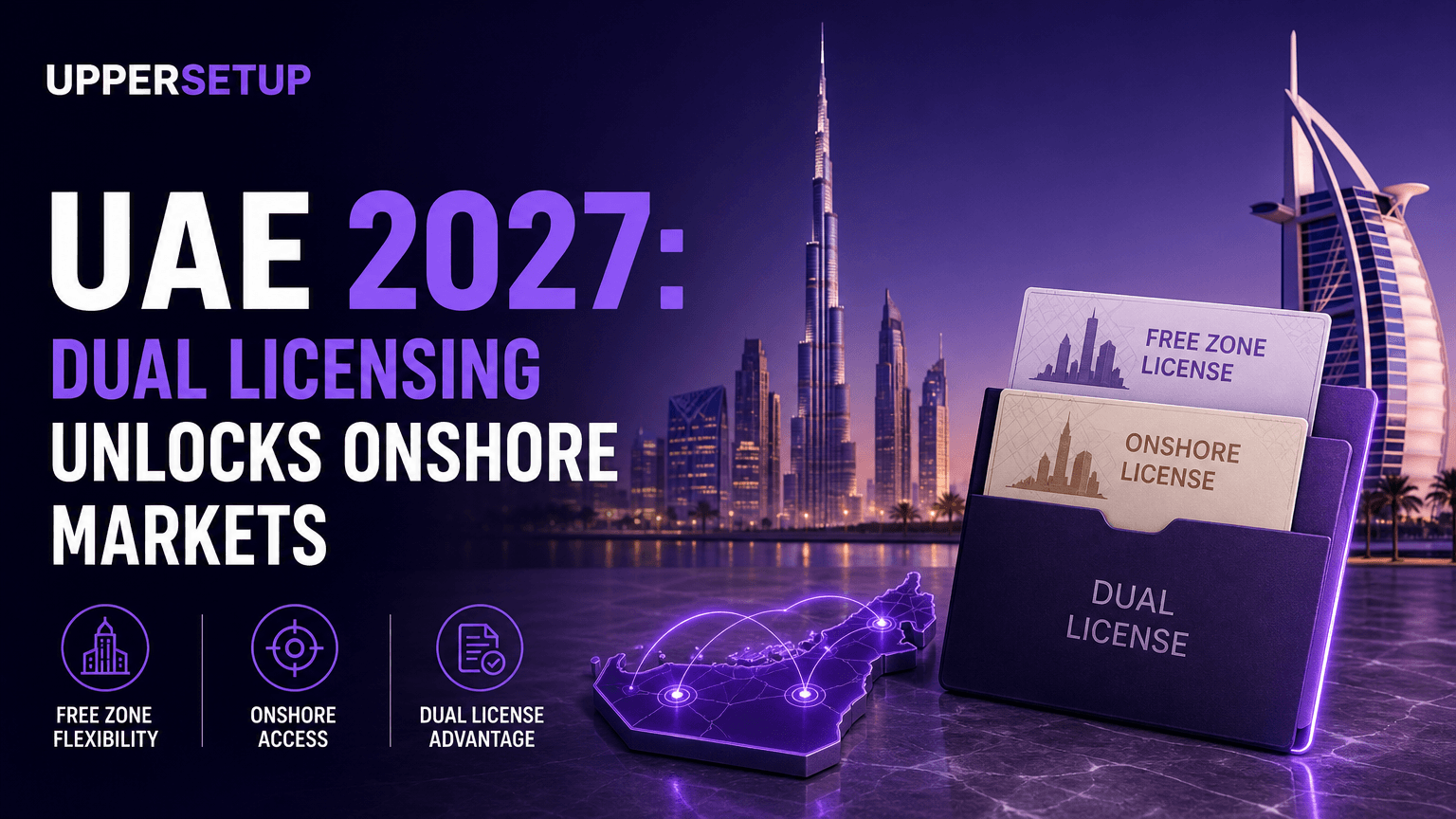
Free zones in the UAE have historically offered distinct regulatory, tax, and operational advantages; however, their legal separation from the UAE onshore market has limited business reach and flexibility. The dual licensing regime enables eligible free zone companies to obtain supplementary “onshore” business licences, allowing them to legally operate and generate revenue within the UAE mainland, subject to specific eligibility, compliance, and regulatory controls.
ALERT: The right to onshore activities under a dual licence depends on both federal regulations and the specific free zone and emirate in question. Businesses must verify requirements and restrictions for each emirate and licence type—misinterpretation or overreach may lead to heavy penalties or automatic licence cancellation.
Legislative Framework: Key Laws and Regulatory Milestones
The legal basis for UAE dual licensing is built on a matrix of federal and emirate-level laws, with significant evolution in recent years. As of 12 November 2026, the main legislative acts and authorities include:
- Federal Decree-Law No. (32) of 2021 on Commercial Companies (issued on 20 September 2021, effective from 2 January 2022), as amended.
- Federal Decree-Law No. (8) of 2017 on Value Added Tax (issued on 23 August 2017, effective from 1 January 2018).
- Federal Decree-Law No. (47) of 2022 on the Taxation of Corporations and Businesses (UAE Corporate Tax Law) (issued on 3 October 2022, effective from 1 June 2023).
- Cabinet Resolution No. (58) of 2020 Regarding the Regulation of Real Beneficiary Procedures (introducing Ultimate Beneficial Owner (UBO) register requirements for companies, applicable to all legal entities).
- Various emirate-level Economic Department resolutions on dual licensing (notably in Abu Dhabi, Dubai, Sharjah), each detailing which free zones are eligible and procedures for dual licence application.
Free zone authorities and mainland Economic Departments collaborate to supervise, restrict, or facilitate dual licensing based on sector, activity, and national policy goals. Regulations change frequently; always consult the relevant official portals before proceeding.
What is a Dual Licence for Free Zone Companies?
A dual licence is an additional business licence issued by a mainland Department of Economic Development (DED) to a company primarily incorporated in a UAE Free Zone, permitting certain onshore commercial activities while maintaining the entity’s free zone legal status and benefits.
Dual licences do not convert the company’s legal form into a mainland entity; they provide a controlled bridge to the onshore market, typically for specific activities and under defined limitations, such as prohibition from owning physical retail shops or certain regulated sectors.
Which Free Zones and Emirates Support Dual Licensing in the UAE?
Not all free zones or emirates permit dual licensing. As of November 2026, the most prominent practical implementations include:
- Dubai: Supported in leading zones (e.g., DMCC, Dubai Silicon Oasis (DSO), Dubai Airport Freezone (DAFZA), Dubai South), subject to approval and activity eligibility.
- Abu Dhabi: Abu Dhabi Global Market (ADGM) and Khalifa Industrial Zone Abu Dhabi (KIZAD) support dual licensing under Abu Dhabi DED protocols.
- Sharjah: Sharjah Airport International Free Zone (SAIF Zone) and Hamriyah Free Zone with Sharjah DED oversight.
Each free zone and emirate may restrict which activities qualify for dual licensing, and processes vary.
How Does a Dual License Change Corporate Tax and VAT Obligations?
A dual-licensed free zone entity remains a free zone person under the UAE Corporate Tax Law, but some revenues may be reclassified as mainland income.
- Corporate Tax: As per Federal Decree-Law No. (47) of 2022, “Qualifying Free Zone Persons” can access a preferential 0% CIT rate, but only on “Qualifying Income.” Revenue derived from onshore UAE clients generally falls under the standard 9% Corporate Tax rate. The company must assess the proportion of mainland-sourced revenue annually.
- VAT: Supplies of goods and services from free zones into the mainland are VATable under Federal Decree-Law No. (8) of 2017. Designated Zones have their own VAT rules, but most dual-licensed activities will create a UAE VAT registration obligation (threshold AED 375,000), with 5% VAT charged on mainland sales.
All dual-licensed entities must maintain meticulous records differentiating free zone versus mainland activities for tax filings and compliance.
Dual Licensing vs. Traditional Mainland Company Incorporation: Core Differences
A dual licence does not grant the same scope or permanence as direct mainland company incorporation. Dual-licensed entities retain their free zone legal form, office location, and reporting lines, but can access certain mainland business opportunities without needing a full LLC conversion or new mainland entity setup.
Physical presence (e.g., retail shops, warehouses outside the zone) and some regulated sectors remain exclusive to mainland companies unless explicit waivers are issued.
Table 1: Dual Licensing vs. Other UAE Market Access Structures
| Criteria | Free Zone Company Only | Dual-Licensed Free Zone Company | Direct Mainland LLC |
|---|---|---|---|
| Mainland Revenue Allowed | No | Yes (with restrictions) | Yes |
| Office in Mainland | No | Subject to approval/specific cases | Yes (required) |
| Import/Export Rights | Yes (in zone) | Yes (zone + mainland, activity-based) | Yes |
| 100% Foreign Ownership | Yes | Yes | Yes (since 2021 reforms, most sectors) |
| Corporate Tax on Mainland Income | N/A | Yes (9% on mainland revenues) | Yes (9%) |
| VAT Obligations (Mainland Sales) | No | Yes | Yes |
| Regulatory Supervision | Free Zone Authority | Both Authorities | DED/Mainland Authority |
Step-By-Step: How to Obtain a Dual Licence for a Free Zone Company
1. Verify Eligibility: Confirm your free zone and chosen business activities qualify for dual licensing within the relevant emirate. Not all activities or sectors are permitted.
2. Obtain Consent from Free Zone Authority: Secure a No-Objection Certificate (NOC) from your free zone authority, outlining the intention to apply for a dual licence and the specific activity codes to be included.
3. Apply to the Mainland Department of Economic Development (DED): Submit a full application including the NOC, company documents, activity list, existing trade licence, UBO register update, and any supporting regulatory approvals (e.g. for healthcare, education, or professional activities).
4. Pay Government Fees: Pay required DED fees for licence issuance—usually between AED 5,000 and AED 25,000 per year depending on emirate, activity and company size. These fees are distinct from free zone renewal costs.
5. Comply with Ongoing Reporting: Maintain and update UBO requirements, file corporate tax and VAT returns, and renew both free zone and dual licences punctually.
6. Monitor Regulatory Changes: Dual licensing rules are subject to revision; ensure dedicated compliance oversight or professional counsel.
Key Regulatory Nuances When Structuring Dual Licence Operations
- Physical Presence Restrictions: A dual licence generally does not grant the right to lease independent office or retail space in the mainland; the “onshore” activity may need to be performed remotely, or by temporary arrangement with a mainland service provider/facility.
- Regulated Sectors: Activities involving banking, insurance, education, and healthcare may require extra approvals or may be entirely excluded from dual licensing.
- Employment and Visa Sponsorship: Employees under a dual-licensed entity remain under the free zone company and cannot be sponsored directly through a DED dual licence.
- Public Procurement: Some government tenders remain inaccessible unless operated through a full mainland legal presence, regardless of dual licence status.
Table 2: Illustrative Fees and Processing Timelines by Emirate (as of Nov 2026)
| Emirate | Dual Licence Initial Fee (AED) | Annual Renewal (AED) | Avg Processing Time | Common Excluded Activities |
|---|---|---|---|---|
| Dubai | AED 8,000–25,000 | AED 7,000–20,000 | 14–21 days | Retail trade; regulated healthcare; certain engineering/architectural |
| Abu Dhabi | AED 5,000–15,000 | AED 5,000–12,000 | 10–18 days | Social work; oil & gas; banking/finance |
| Sharjah | AED 7,000–14,000 | AED 6,000–10,000 | 12–20 days | Specific construction; medical; media with content licensing |
These figures are for illustration based on known ranges as of late 2026. Actual numbers and eligibility should be confirmed directly with relevant authorities before application.
How Does Dual Licensing Impact Reporting, Auditing, and Compliance?
Free zone entities with dual licences face hybrid supervisory obligations:
- DED/Emirate reporting: The dual licence triggers reporting and renewal requirements with the DED, including annual renewal, fee payment, and potential audit submission.
- Federal tax filing: Dual-licensed free zone companies must file corporate tax and VAT returns, accurately allocating revenues between free zone (potentially 0% CIT) and mainland (9% CIT) activities.
- Ultimate Beneficial Owner (UBO) disclosure: Dual licensing entails compliance with UBO and anti-money laundering requirements under Cabinet Resolution No. (58) of 2020.
- Free zone reporting: Original compliance with the free zone authority, including economic substance and financial reporting, remains compulsory. Non-compliance on either side risks licence suspension or cancellation.
Top Mistakes When Structuring Dual Licensing (and Their Costs)
-
Assuming Universal Activity Access: Believing a dual licence allows all mainland business activities. This misstep can lead to transaction invalidation and potential fines if unlicensed onshore activities are detected.
-
Overlooking VAT/CIT Implications: Failing to register for VAT or incorrectly attributing all income to the 0% CIT regime. Incorrect filings may result in heavy FTA (Federal Tax Authority) penalties, back taxes, and audit triggers.
-
Physical Office Breaches: Leasing or occupying mainland premises under a dual licence where not legally authorized. Such arrangements may be deemed invalid leases and result in eviction, fines, or licence revocation.
-
Missed Renewals and UBO Lapses: Neglecting to renew either the dual or free zone licence, or failing to update UBO status. This can lead to immediate suspension, loss of good standing, and bank account lockouts.
Who Should Consider Dual Licensing—and When Might It Not Fit?
Best suited for: - Free zone companies seeking B2B contracts with onshore UAE clients but without the need for full mainland infrastructure. - Entities with primarily online/service delivery models that can be managed remotely from the free zone. - Early-stage businesses testing the onshore market before long-term mainland establishment.
Not well suited for: - Companies needing large physical retail, warehouse, or laboratory space in the mainland. - Heavily regulated sectors (financial services, healthcare, government contracts) where full DED licensing is required. - Businesses with complex supply chains headquartered outside of recognized dual licensing programmes.
Frequently Asked Questions (FAQ)
Q1. Can a free zone company service private mainland customers directly with a dual licence?
Yes, provided the activity is authorised on the dual licence. However, there remain sector and activity-based exclusions in each emirate. Confirm which activities are permitted with both your free zone and the relevant DED before contracting.
Q2. How does dual licensing affect my ability to hire or sponsor employees on the mainland?
Employees remain under free zone sponsorship and visa schemes. Dual licences do not permit direct mainland visa sponsorship through the DED without separate approval.
Q3. Do I need to pay UAE Corporate Tax on all revenues with a dual licence?
No, only revenues generated from onshore (mainland) activities are subject to standard 9% Corporate Tax. Qualifying Free Zone income may still enjoy the 0% rate under the UAE Corporate Tax Law—careful revenue segregation is required.
Q4. Will I have to register for VAT if I obtain a dual licence?
If the company’s taxable supplies (including onshore revenues) exceed AED 375,000 in the previous 12 months, then VAT registration is mandatory.
Q5. Can my dual-licensed free zone entity participate in government tenders?
Some government procurement processes require a dedicated mainland company, even if you hold a dual licence. Confirm eligibility per tender documentation—dual licence access may not always suffice.
Q6. What is the processing time for obtaining a dual licence?
Processing time ranges from roughly 10 to 21 business days after submission of a full application with proper documentation. Delays are common if compliance steps are missed.
Key Points to Remember
- Dual licensing is an increasingly vital solution for UAE free zone companies seeking controlled, legal access to the competitive onshore market without sacrificing free zone benefits.
- The regime is built on a blend of federal and emirate-level laws, frequently amended—compliance requires active monitoring.
- Dual licences do not grant all rights of mainland incorporation.
- There are significant tax, regulatory, and operational differences requiring case-by-case structuring, accurate revenue segregation, and multi-authority reporting.
In Summary: Numbers and Regulatory Highlights
As of late 2026, dual licensing is available in most leading UAE emirates for a growing range of free zones and activities. Initial government fees typically range from AED 5,000 to AED 25,000 per year, with annual renewals required by both the free zone authority and DED. VAT registration becomes mandatory above AED 375,000 in taxable mainland supplies, and Saudi-style corporate tax at 9% applies to eligible onshore income. Physical presence and regulated activities remain tightly controlled—always confirm with both your free zone and DED before implementation.
For tailored support with UAE company formation, residency visas, corporate tax, and banking, contact UPPERSETUP—trusted assistance for complex UAE structuring.
Legislative References
- uaelegislation.gov.ae: Federal Decree-Law No. (32) of 2021 on Commercial Companies; Federal Decree-Law No. (47) of 2022 on Corporate Tax; Federal Decree-Law No. (8) of 2017 (VAT).
- dlp.dubai.gov.ae: Dubai Economic Department circulars and dual licensing guidance.
- Official websites of major UAE free zone authorities (DMCC, ADGM, KIZAD, DAFZA).
- UNCTAD, WIPO – UAE investment guides and international business climate reports.
Disclaimer
This material is for informational purposes only and does not constitute legal, tax, financial, investment, or consulting advice. Before making decisions, obtain bespoke professional counsel considering your specific situation, jurisdiction, company status, and current regulatory requirements.
Read more on the topic
All services on the platform
Everything you need to start and run a business - in one place
- 3–5 days
Company Setup
Mainland or Free Zone company with a complete set of incorporation documents
Start - Monthly
Accounting Services
Financial accounting and reporting in accordance with UAE requirements
Start - 1–2 weeks
Visa Services
Residence visas for shareholders, employees and family members
Start - 7–30 days
Banking Services
Corporate Bank Accounts in the UAE and Payment Services
Start - Custom timeline
Legal Services
Contracts, corporate amendments and legal support
Start


