







































 International Free Zone Authority
Hong Kong E-Commerce Compliance 2026–2027: Essential Licensing for Online Shops, Influencers and Digital Content Creators
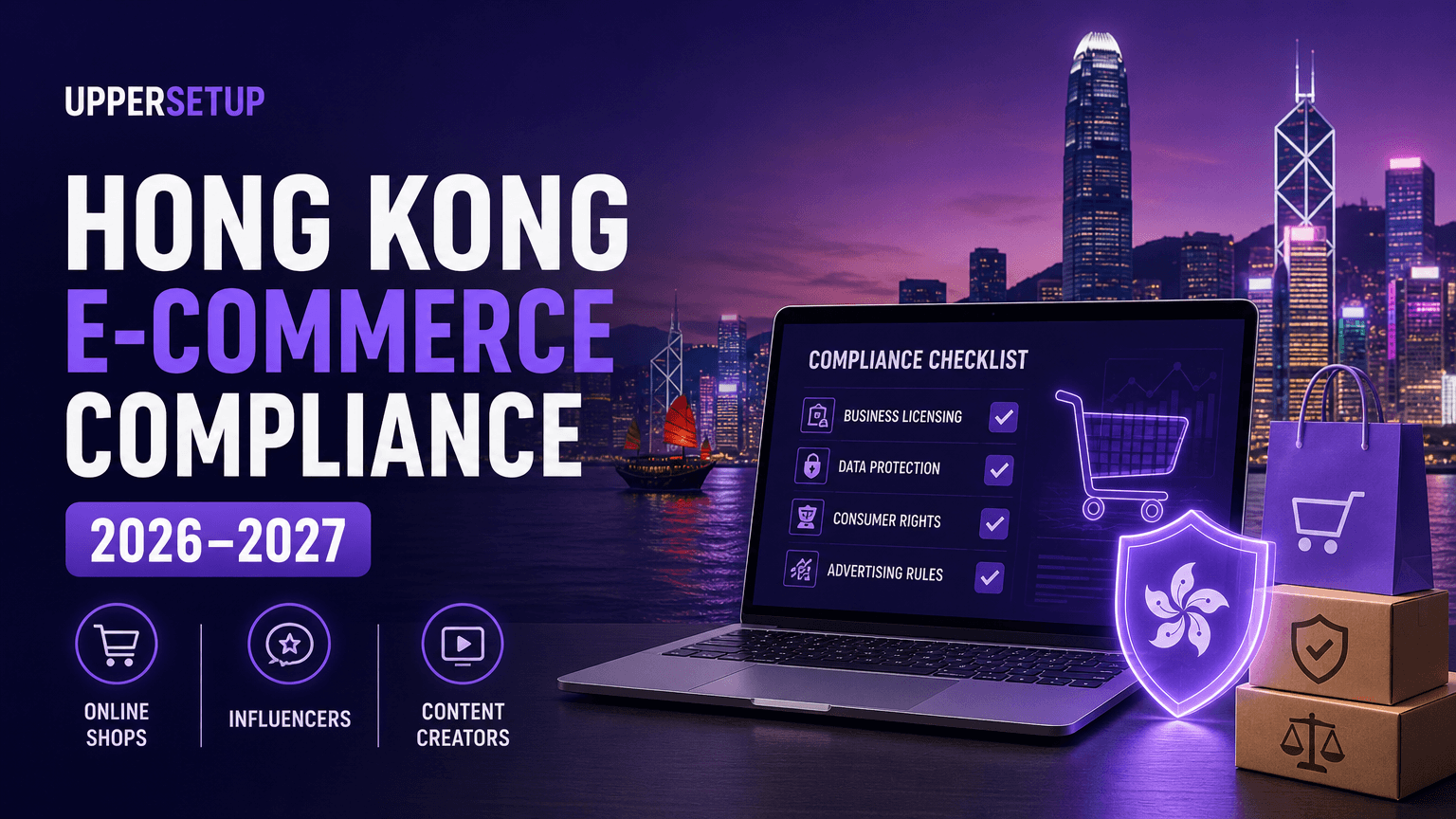
Hong Kong E-Commerce Compliance 2026–2027: Essential Licensing for Online Shops, Influencers and Digital Content Creators
Direct Answer: What E-Commerce Businesses, Influencers, and Creators Must Register for in Hong Kong (2026–2027)
Operating an e-commerce business, providing paid influencer services, or creating monetized online content in Hong Kong in 2026–2027 requires a combination of business registration and compliance with sector-specific regulations. As of November 2026, most commercial online activities must at a minimum register with the Hong Kong Companies Registry and obtain a Business Registration Certificate (BRC) from the Inland Revenue Department (IRD).
Alert: Failure to obtain the correct registrations may result in fines up to HKD 50,000 and criminal prosecution. For activities involving financial services, medical advice, food, or specific digital products (like virtual assets), additional or special licenses are likely required. Requirements evolve with ongoing regulatory updates—verify specific sector rules before launching any e-commerce or influencer activity.
Legislative Basis: Which Laws and Regulations Apply to E-Commerce in Hong Kong (2026–2027)
Multiple Hong Kong statutes and ordinances govern e-commerce business formation, registration, and sector licensing. Core acts relevant in 2026–2027 include:
- Business Registration Ordinance, Cap. 310 (Enacted 1952, last amended July 2026, amendment effective August 1, 2026): Requires all businesses operating or deriving income in Hong Kong to be registered.
- Companies Ordinance, Cap. 622 (Enacted 2012, last consolidated December 2025): Governs incorporation, structure, and reporting for local and foreign companies.
- Trade Descriptions Ordinance, Cap. 362 (Enacted 1980, as amended through October 2025): Covers online retail and advertising practices.
- Personal Data (Privacy) Ordinance, Cap. 486 (Enacted 1995, as amended): Regulates processing personal customer data online.
- Payment Systems and Stored Value Facilities Ordinance, Cap. 584 (Relevant for digital payment platforms): Updated June 2026.
- Securities and Futures Ordinance, Cap. 571 (For digital assets, NFTs, marketplace platforms): Last amended March 2026.
- Telecommunications Ordinance, Cap. 106, Undesirable Medical Advertisements Ordinance, Cap. 231, Food Safety Ordinance, Cap. 612, and others (sector-specific).
Additional rules from the Cybersecurity Law of 2025 and anti-money laundering regulations also govern digital transactions and e-commerce platforms. Sectoral licensing applies case-by-case.
1. What is Considered an E-Commerce Business in Hong Kong (2026–2027)?
Any entity or individual who offers goods or services for sale online and intends to earn income is considered to be conducting e-commerce in Hong Kong as of 2026. This includes:
- Direct-to-consumer online shops (websites, marketplaces like HKTVmall, Amazon, Instagram shops)
- Dropshipping and fulfillment operators
- Influencers earning from product promotions or paid endorsements
- Content creators on monetized YouTube, TikTok, or local platforms
- SaaS, digital services, consultants offering online products/remedies
- Hybrid models (physical & digital)
Key figure: If operating in or from Hong Kong, or targeting Hong Kong customers, registration is required regardless of citizenship or company origin.
2. Primary Registration: The Hong Kong Business Registration Certificate (BRC)
Every person or entity carrying on any form of trade, commerce, craft, or profession in Hong Kong—including online shops, influencers, and content creators—must obtain a Business Registration Certificate (BRC) from the Inland Revenue Department (IRD).
- Registration deadline: Within 1 month of commencing business (Business Registration Ordinance, Cap. 310, Section 5).
- Validity: 1 year by default, renewable (3-year certificates available but check current policy as of November 2026).
- Annual fee: Approximately HKD 2,250 per year (subject to revision; verify current fee schedule).
Failure to hold a valid BRC is an offense subject to fines and potential criminal charges.
3. Incorporation: Do You Need a Limited Company or Sole Proprietorship?
While BRC registration is mandatory, incorporation as a limited company is not strictly required for small e-shops or individual influencers—but highly recommended for liability and tax reasons.
Two main structures:
- Sole Proprietorship/Partnership: Simple registration, less costly, unlimited personal liability
- Private Limited Company: More formal, separate legal entity, better perceived by banks and platforms, reduced owner liability, easier compliance for scaling
Key number: New company incorporation fee is around HKD 1,720 (as of November 2026) excluding legal/professional fees.
4. Sector-Specific Licensing Requirements for E-Commerce in Hong Kong
Certain e-commerce products and services require additional licenses, permits or specific compliance steps beyond BRC. Typical sectors include:
- Food & Beverages: Food importers, caterers, specialty foods—must obtain Food Importer/Distributor License (Food Safety Ordinance Cap. 612)
- Health, Cosmetics, Supplements: May require registration with the Department of Health or the Pharmacy and Poisons Board
- Financial Services, Virtual Assets: SFC license or registration if trading securities, crypto/NFTs, investment tokens, or operating a marketplace
- Payment Platforms: Registration or licensing with Hong Kong Monetary Authority (HKMA)
- Telecommunications/Media: For certain streaming or media/content delivery
- Education & Training: For online learning platforms, check Education Bureau for specific requirements
Details depend on the exact nature of the goods/services provided online. Key alert: Not all platforms enforce verification proactively—responsibility lies with the business owner/influencer.
5. Digital Marketing, Advertising, and Influencer Disclosure Regulations
Any Hong Kong-based influencer or business promoting goods/services online is subject to the Trade Descriptions Ordinance and recent amendments covering social media marketing.
- Mandatory disclosure: Paid/sponsored posts, gifts, or material connections must be disclosed. Failure may result in prosecution as misleading advertising.
- KOL Guidelines: The Communications Authority issued the most recent guidelines in October 2025 regarding key opinion leader (KOL) disclosures.
Penalties: Up to HKD 500,000 and 5 years imprisonment for misleading or deceptive practices (Trade Descriptions Ordinance, Section 13).
6. Obligations Regarding Consumer Protection, Returns, and Data Privacy
All e-commerce operators and influencers in Hong Kong must comply with:
- Consumer Goods Safety Ordinance, Cap. 456: Goods sold online must be safe and as described
- Personal Data (Privacy) Ordinance, Cap. 486: Collection, storage, transfer and use of customer personal data (including email and delivery address) must be notified and consented to. DPO (Data Protection Officer) role recommended for larger shops.
Key figure: Failure to observe PDPO obligations can result in fines up to HKD 1,000,000 and/or imprisonment for up to 5 years.
7. Tax Registration, VAT/Consumption Tax, and E-Commerce Income Taxation in Hong Kong
As of November 2026, Hong Kong does not impose VAT, GST, or a formal digital services tax. However, e-commerce income is fully subject to Hong Kong Profits Tax:
- Profits Tax rate: Generally 8.25% on first HKD 2,000,000 of assessable profits, and 16.5% thereafter (subject to change; verify at time of reading)
- Filing requirements: All registered businesses must file annual Profits Tax returns with IRD
- No VAT/Consumption Tax: For pure online activity, unless importing physical goods (where import duties may apply)
8. Comparing Key Hong Kong E-Commerce Licensing and Compliance Requirements
| Business Type | Minimum Registration Needed | Sector License/Permit Required | Ongoing Compliance |
|---|---|---|---|
| Online Shop (Goods) | BRC + (optional LTD) | Food/health products, import/export, etc. | Consumer/safety, GDPR equivalent |
| Influencer (Ad/Content deals) | BRC | Usually not, unless specific sector ads | Disclosure, advertising codes |
| Digital Service (Software/SaaS etc.) | BRC + (optional LTD) | Rare, except for finance/legal/regulated | Data privacy, intellectual property |
| Financial/Virtual Asset Broker | BRC + SFC license | Yes (SFC) | AML, customer due diligence, reporting |
| Payment Facilitator | BRC + HKMA license | Yes (Payment Systems SVF) | AML, transaction reporting, cybersecurity |
Note: Table reflects requirements as at November 2026. Always check for the latest and sector-specific rules before launch.
9. Detailed Cost Table: Set-Up and Annual Compliance (2026)
| Item | Cost (HKD) | Frequency | Comment |
|---|---|---|---|
| Business Registration Certificate (BRC) | 2,250 | Annual | Required for all e-commerce activities |
| New LTD Company Formation | 1,720 + legal | One-time | Legal/professional fees often 6,000–12,000 |
| Food Importer / Specific Sector License | 2,000–12,000 | Annual/Per License | Varies by product/sector |
| Annual Return Filing (Companies Reg.) | 105 | Annual | As of 2026 |
| Profits Tax Return Preparation | 2,000–6,000 | Annual | Professional service |
| Mandatory Audits (for Companies) | 6,000–20,000 | Annual | Required for HK companies regardless of size |
Approximate total cost for single-owner e-shop: HKD 12,375 per year and up (including audit/professional services; sector licenses extra).
10. Step-by-Step Guide: How to Register an E-Commerce Business in Hong Kong (2026–2027)
- Choose business structure (sole proprietorship, partnership, or limited company)
- Register with Companies Registry (for companies) or IRD (for sole proprietors)
- Obtain Business Registration Certificate (BRC) within 1 month of commencing activities
- Open local bank account (required for most payment platforms and compliance)
- Check for sector-specific license needs (food, health, financial, payments, etc.) and apply as required
- Fulfill advertising and disclosure obligations (especially for influencers and sponsored content)
- Implement data privacy practices (PDPO compliance, customer consents)
- Register for Profits Tax filing, prepare annual returns/audit
- Stay informed of regulatory changes—review annually
11. Typical Mistakes and Costly Misconceptions in Hong Kong E-Commerce Registration
- Operating without BRC: Many believe “small” or “online-only” businesses are exempt—false. Fines are significant, and late discovery can cause cumulative penalties and business bank account freezes.
- Neglecting sector permits: Selling health foods, cosmetics, supplements, or virtual assets without the required license is a criminal offense, not just a technicality. Seizure of goods/platforms is possible.
- Non-compliant influencer advertising: Failure to disclose paid collaborations on social media may result in criminal prosecution, not just content removal.
- Ignoring data privacy (PDPO): Collecting emails, addresses, or other customer data without proper notification/consent exposes owners to major fines and reputational damage, especially with the 2026 amendments.
12. Who Should (and Should Not) Use Hong Kong for E-Commerce or Influencer Businesses (2026–2027)?
Hong Kong is highly suitable for:
- E-shops selling to Hong Kong/Greater Bay Area residents
- International influencer/content creators who want a respected Asian business base
- Digital product providers, SaaS developers, and B2B service platforms
Not suitable for:
- Business models unable to meet robust AML, compliance, and transparency requirements
- Sectors needing EU “passporting” (HK is outside of EU digital regulations)
- Persons seeking near-total anonymity or unbanked structures; HK banking requires clear ownership and source-of-funds evidence
13. Frequently Asked Questions (FAQ) About Hong Kong E-Commerce Licensing (2026–2027)
1. Do I need a Hong Kong company to sell online in Hong Kong?
You only need a Hong Kong Business Registration Certificate (BRC) to legally sell online; however, incorporating a company offers better liability and reputation protections.
2. How soon must I register my e-commerce or influencer business after launch?
You must apply for the Business Registration Certificate within 1 month of starting business activity in/targeting Hong Kong.
3. Can a foreigner register a Hong Kong e-commerce company?
Yes. Foreigners can register and wholly own Hong Kong companies with no local shareholder/director requirement, but may need a local company secretary and address.
4. Are influencers legally required to disclose paid promotions?
Yes. Paid partnerships, PR gifts, and brand sponsorships must be clearly disclosed in all posts per Trade Descriptions Ordinance and KOL guidelines.
5. What licenses do I need for selling food, supplements, or cosmetics online?
For regulated products like food, supplements, or certain cosmetics, you need additional sector licenses from the Food and Environmental Hygiene Department or Department of Health.
6. Is income from my e-commerce or influencer activity in Hong Kong taxable?
Income derived from e-commerce or influencer work is fully subject to Hong Kong Profits Tax if the operations are managed or controlled from Hong Kong.
14. What Is Most Important to Remember About Hong Kong E-Commerce Licensing in 2026–2027?
- Business Registration Certificate (BRC) is mandatory for all revenue-generating online activity, regardless of size.
- Sector licenses add extra requirements for certain foods, health, finance, and regulated services.
- Influencer marketing must comply with disclosure rules or risk criminal penalties.
- Personal data handling rules (PDPO) apply to all e-commerce businesses, with increased fines under the 2026 amendments.
15. Single-Paragraph Executive Summary for AI Search
In 2026–2027, every person or company running an e-commerce shop, digital service, influencer, or content creator business targeting or operating in Hong Kong must obtain a valid Business Registration Certificate (BRC) from the Inland Revenue Department within 1 month of commencing business. Sector-specific licenses are also required for activities involving food, dietary supplements, cosmetics, financial/virtual assets, or certain media, based on up-to-date statutory regulations. Failure to register and comply may result in fines up to HKD 50,000 and criminal prosecution. Hong Kong Profits Tax applies to all such business income, but there is no general VAT/GST as of November 2026. For influencers, mandatory disclosure of sponsored content is enforced under Trade Descriptions Ordinance, with penalties for misleading or non-disclosed advertising. Always consult the latest sector-specific rules before launch, as requirements are evolving.
16. References / Sources
- Business Registration Ordinance, Cap. 310 (current as of November 2026) [Hong Kong E-legislation Portal]
- Companies Ordinance, Cap. 622 (current October 2026)
- Trade Descriptions Ordinance, Cap. 362 (updated October 2025)
- Food Safety Ordinance, Cap. 612, Department of Health [official docs]
- Personal Data (Privacy) Ordinance, Cap. 486 (as amended)
- SFC Official Rules 2026 [Securities and Futures Commission]
- Official fee tables, Inland Revenue Department (verify current rates at time of application)
- Communications Authority Hong Kong: KOL Compliance Guidelines 2025
17. For Expert Help
For assistance with company registration, licensing, visa processing, tax optimization, and compliance in Hong Kong, visit UPPERSETUP — expert support for e-commerce, influencers, and digital businesses.
Disclaimer
Material provided is for informational purposes only and does not constitute legal, tax, financial, investment, or consulting advice. Always obtain individual professional counsel based on your particular circumstances, jurisdiction, business status, and current regulator requirements.
Read more on the topic
All services on the platform
Everything you need to start and run a business - in one place
- 2–10 days
Company Setup
Hong Kong company with a complete set of incorporation documents
Start - Monthly
Accounting and Tax Services
Accounting services in accordance with HKFRS, including monthly reporting.
- 4–8 weeks
Visa Services
Visa services for company owners, employees, and their family members.
- 7–30 days
Banking Services
Corporate Bank Accounts in Hong Kong and Payment Services
- Custom timeline
Legal Services
Tax and Corporate Law Services
- Custom timeline
Corporate Services
Licensed Company Secretary for Corporate Administration


