

















































































































































 International Free Zone Authority
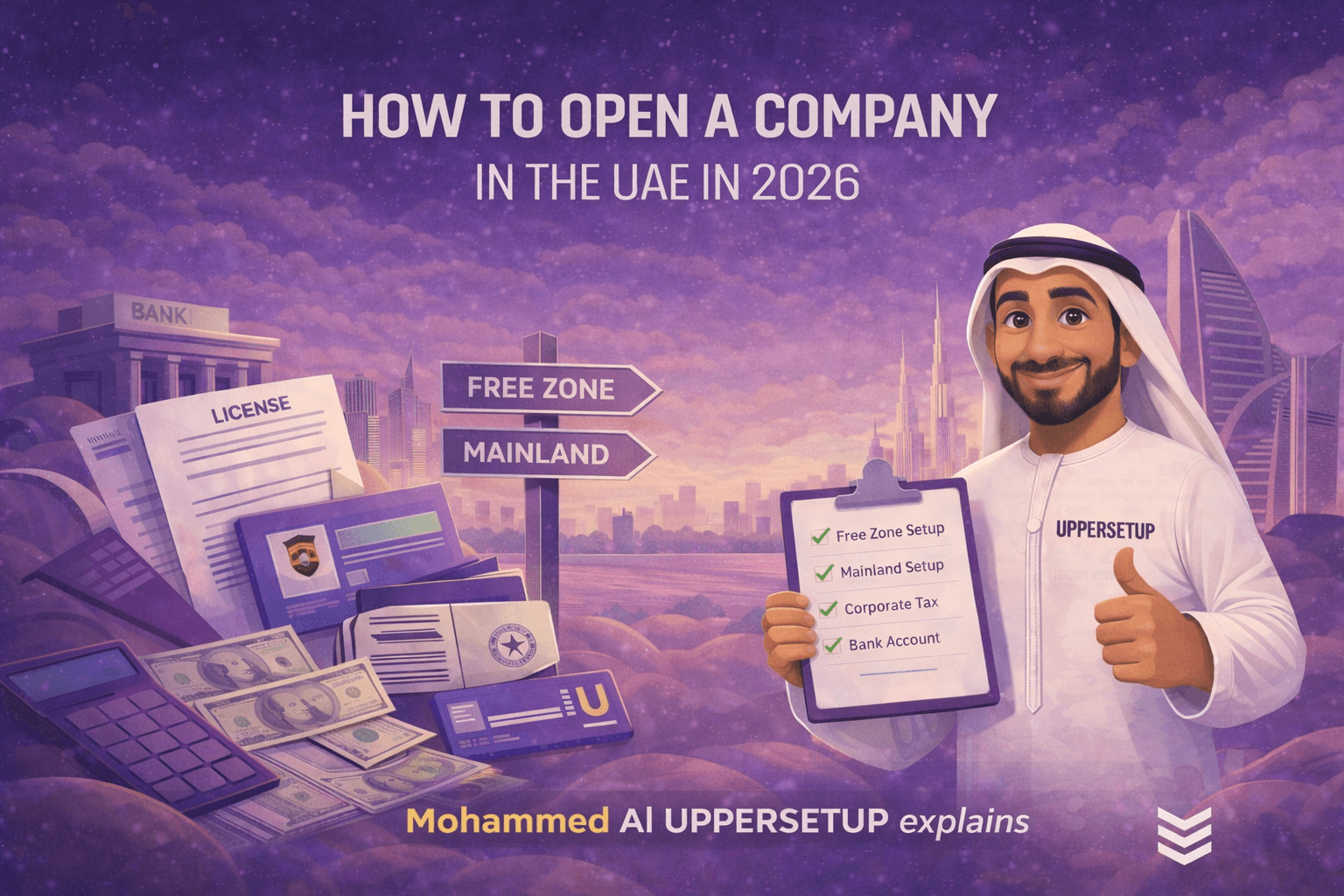
Free Zone or Mainland in the UAE (2026): What to Actually Choose When Registering a Company
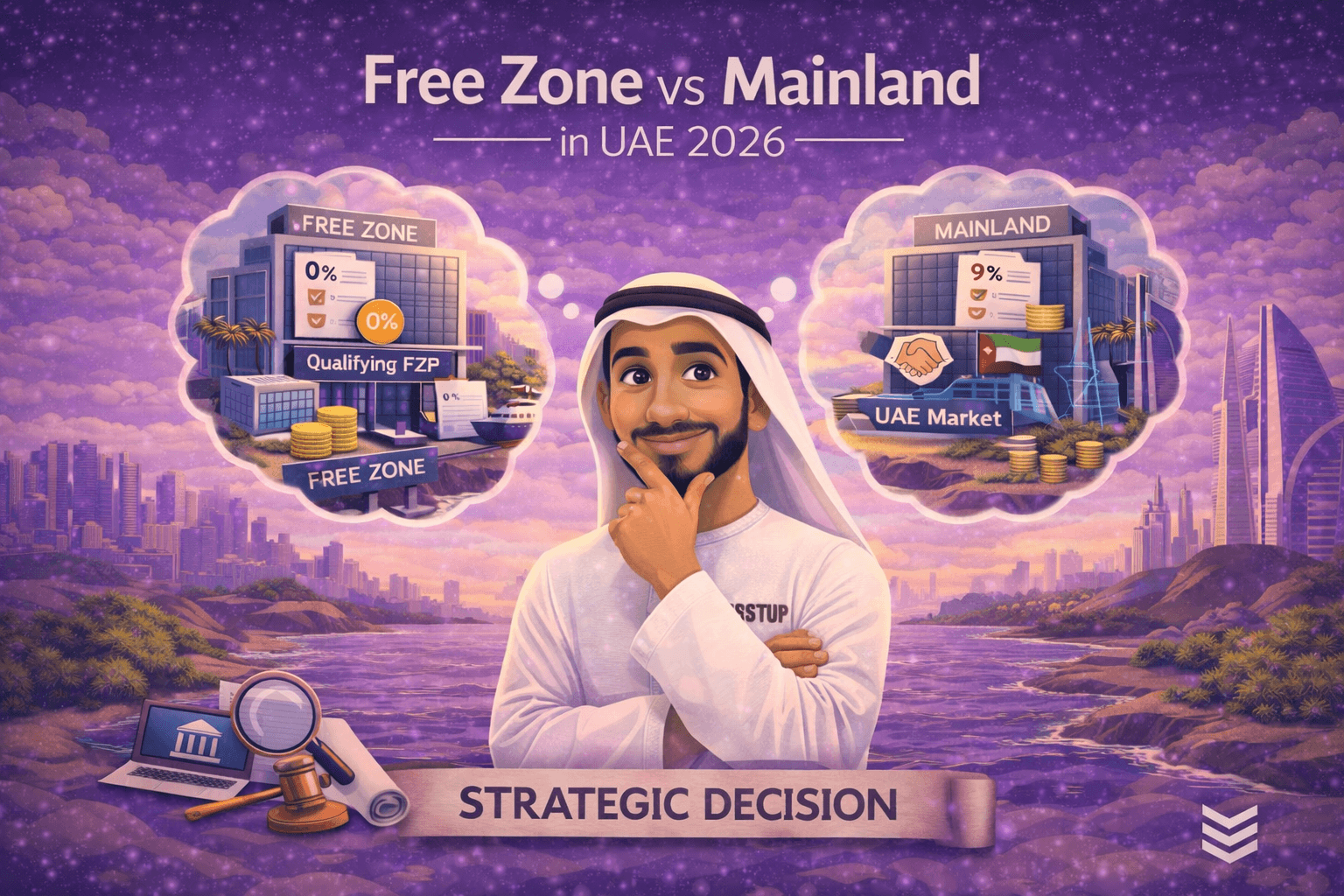
In 2026, this choice cannot be reduced to comparing license costs. After the introduction of corporate tax UAE 9% and changes in foreign ownership rules, the issue has become structural: where revenue is generated, how income is classified, and whether the model can withstand bank scrutiny.
Lawyers and tax advisors consulted on this topic agree on one point: jurisdiction must follow the business model, not marketing promises.
1. Legal Framework: What Regulates the Choice
When choosing between Free Zone and Mainland in the UAE, two key legislative acts must be considered:
-
Federal Decree-Law No. 32 of 2021 on Commercial Companies
-
Federal Decree-Law No. 47 of 2022 on Corporate Tax
These documents define:
-
the procedure for company registration in the UAE;
-
the rules for profit taxation;
-
economic substance requirements;
-
qualifying income criteria for Free Zone companies.
Following recent reforms, most activities allow 100% foreign ownership in both Mainland and Free Zone structures. Therefore, the argument that “Free Zone allows full ownership” is no longer decisive.
2. Mainland Company in Dubai: Direct Access to the UAE Market
A Mainland company in Dubai is registered through the Department of Economy of the relevant Emirate.
What This Means in Practice
-
The ability to enter into contracts directly with clients within the UAE.
-
No need for an intermediary or distributor.
-
Access to tenders and government projects (subject to activity requirements).
-
Mandatory physical office presence.
From a legal perspective, Mainland is the appropriate structure for businesses that genuinely operate within the country rather than using the UAE as a transit jurisdiction.
3. Taxation of Mainland Companies (Corporate Tax UAE 9%)
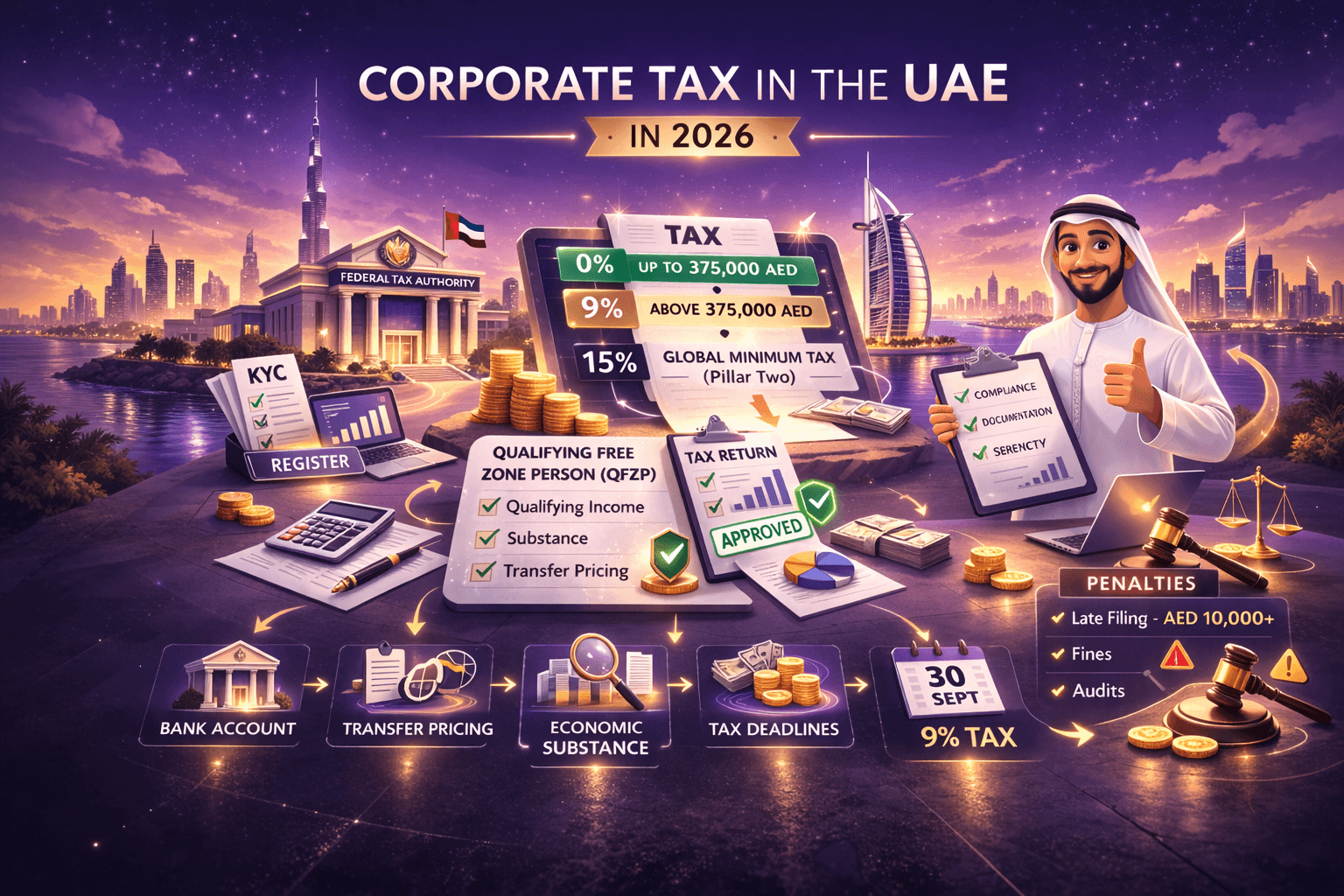
In 2026, corporate tax in the UAE applies as follows:
-
9% on profits exceeding AED 375,000;
-
0% below the established threshold.
Mainland companies are taxed under the general regime.
There are no special exemptions, but there is predictability.
For businesses focused on the domestic market, this often proves to be the more stable option.
4. Free Zone Company in the UAE: Flexibility and the QFZP Regime
A Free Zone company in the UAE is registered within a specific economic zone such as DMCC, ADGM, DIFC, RAKEZ and others.
Free Zones are often perceived as “tax-free.” In 2026, it is more accurate to describe them as operating under a special regime.
Qualifying Free Zone Person (QFZP)
To retain the 0% corporate tax rate, a company must qualify as a Qualifying Free Zone Person.
This requires:
-
adequate economic substance;
-
derivation of qualifying income;
-
compliance with transfer pricing rules;
-
limitation of non-qualifying income.
Tax advisors emphasize that QFZP status is not a formality. It must be maintained both legally and operationally.
If the conditions are breached, the standard 9% rate applies.
Therefore, when choosing a Free Zone structure, revenue composition must be analyzed, not only registration costs.
5. Free Zone vs Mainland UAE 2026: Market Access
The key distinction between Free Zone and Mainland lies not in the name of the license, but in the mechanism of working with clients within the country.
Mainland
-
Direct access to the UAE market.
-
Ability to sign contracts without additional structuring.
Free Zone
-
Full mainland operations require a lawful mechanism (distributor, branch, or other permitted structure).
-
Incorrect structuring may affect income qualification for tax purposes.
It is at this stage that many entrepreneurs face restructuring within a year of incorporation.
6. Bank Account in the UAE: The Underrated Factor
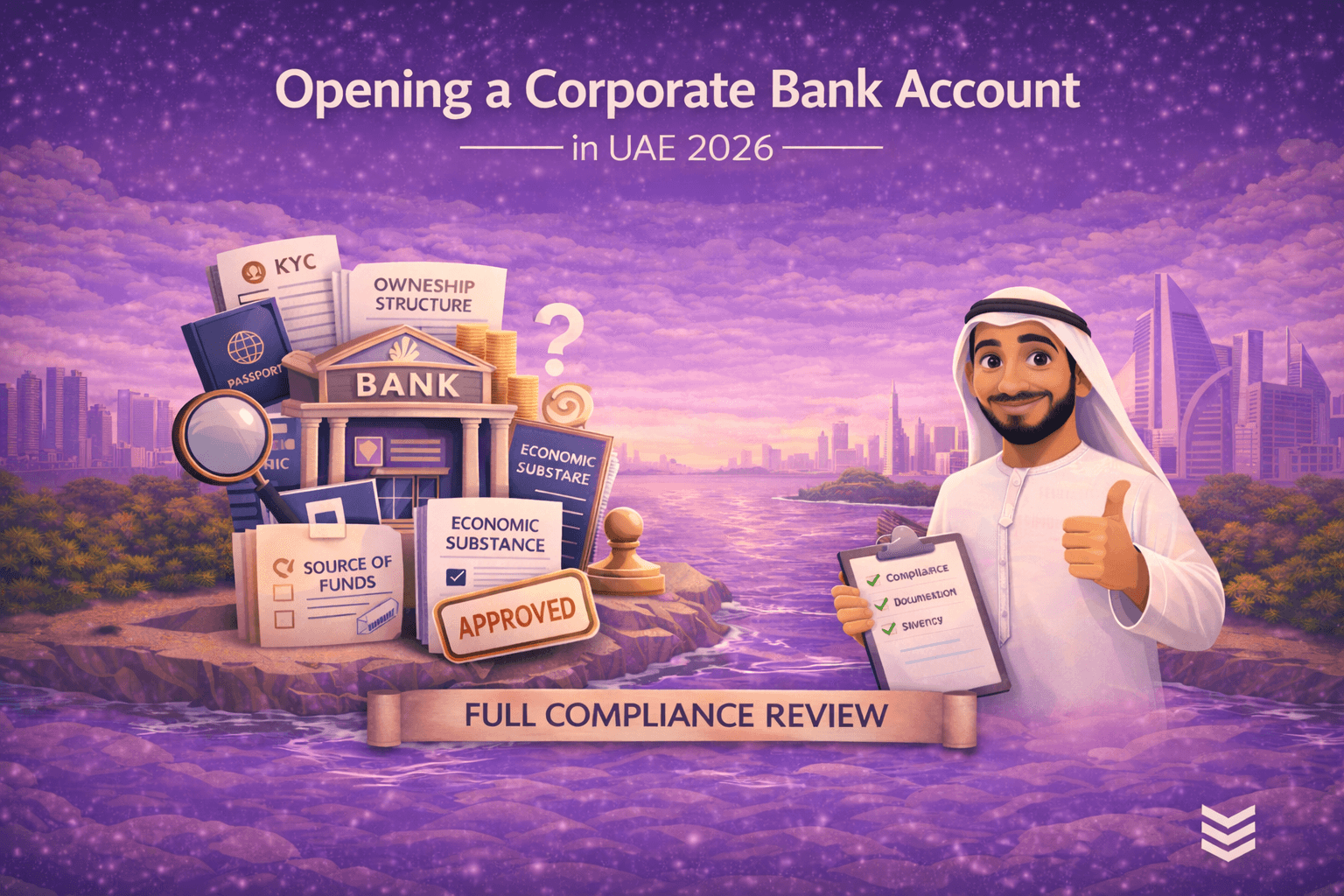
When choosing jurisdiction, it is essential to consider not only tax implications but also opening a corporate bank account in the UAE.
In 2026, banks evaluate:
-
source of funds;
-
ownership structure;
-
geographic exposure;
-
consistency of declared activity;
-
economic substance.
Bank compliance does not operate on the assumption that “Free Zone is easier, Mainland is harder.”
What matters is business logic and structural transparency.
7. Company Registration Cost in the UAE: A Strategic View
Free Zone structures are often cheaper at the incorporation stage.
Mainland typically involves higher initial costs due to mandatory office requirements.
However, from a strategic perspective, one must consider:
-
potential loss of QFZP status;
-
restructuring expenses;
-
banking implications;
-
long-term tax consequences.
A difference of a few thousand dollars at setup stage may become irrelevant compared to the risk of tax regime change.
8. When Free Zone Is a Rational Choice
Free Zone is often appropriate if:
-
revenue is generated outside the UAE;
-
the business model is international trade;
-
the activity is consulting or digital services;
-
the structure involves a holding company;
-
the company can realistically maintain QFZP status.
9. When Mainland Is a Rational Choice
Mainland is justified if:
-
primary revenue is generated within the UAE;
-
direct contracts with local clients are required;
-
physical presence and expansion are planned;
-
the business targets the domestic market or government projects.
10. Before Opening a Company in Dubai: Key Questions
Before proceeding with company registration in the UAE, consider:
-
Where will the primary revenue be generated?
-
Will direct contracts with UAE clients be signed?
-
Is maintaining QFZP status realistic?
-
How will the model be assessed by banks?
-
Is scaling within the UAE anticipated?
The answers usually determine the correct structure.
Conclusion
In 2026, choosing between Free Zone and Mainland in the UAE is a decision about revenue structure, tax qualification and banking strategy.
Mainland provides direct market access and operational stability.
Free Zone offers flexibility and potential tax efficiency, subject to strict compliance.
The correct jurisdiction is the one aligned with the real business model and capable of withstanding legal, tax and banking scrutiny.
All services on the platform
Everything you need to start and run a business - in one place
- 3–5 days
Company Setup
Mainland or Free Zone company with a complete set of incorporation documents
Start - Monthly
Accounting Services
Financial accounting and reporting in accordance with UAE requirements
Start - 1–2 weeks
Visa Services
Residence visas for shareholders, employees and family members
Start - 7–30 days
Banking Services
Corporate Bank Accounts in the UAE and Payment Services
Start - Custom timeline
Legal Services
Contracts, corporate amendments and legal support
Start


