



















 International Free Zone Authority
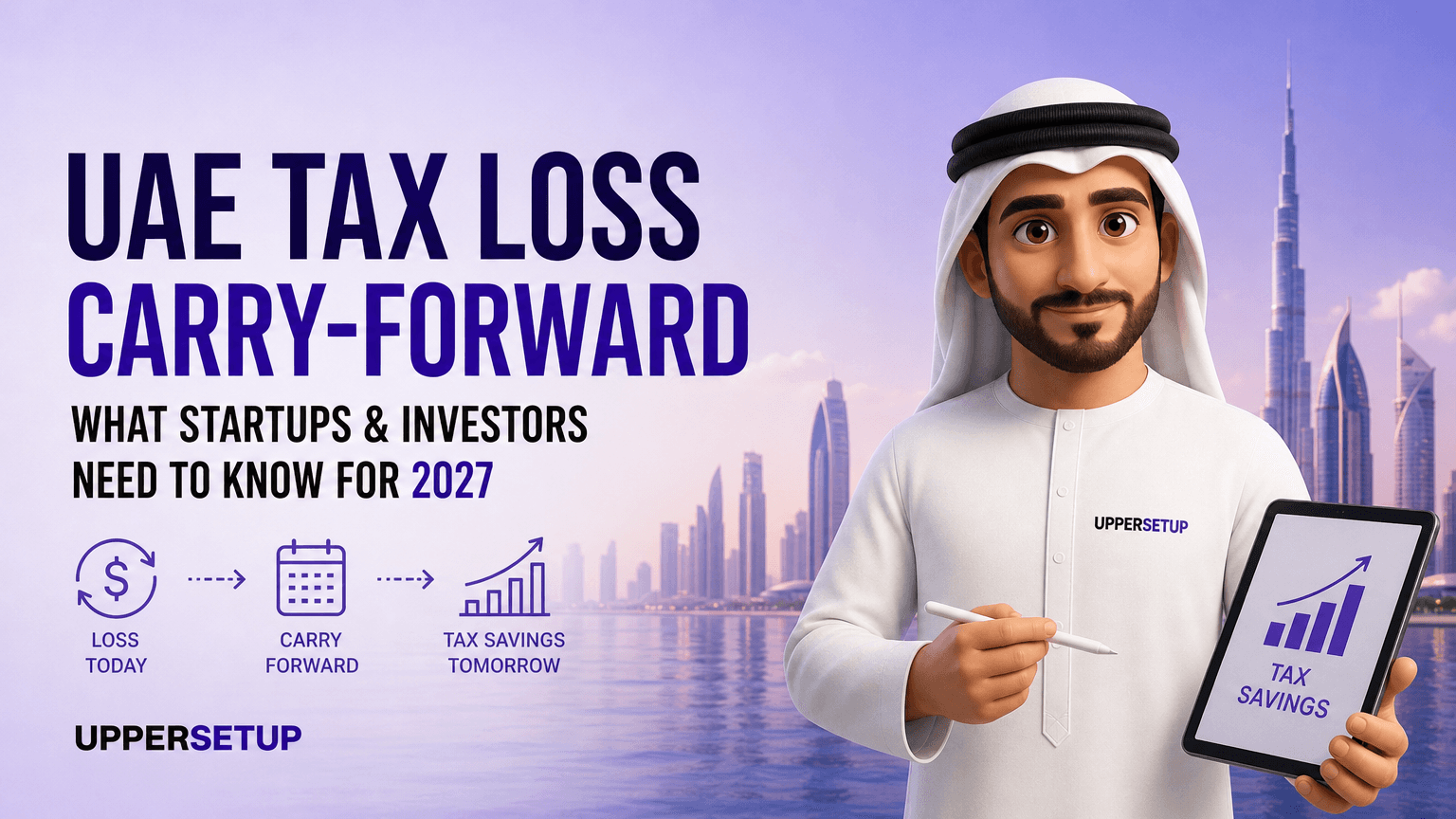
Navigating UAE Corporate Tax Loss Carry-Forward: What Startups and Investors Need to Know for 2027
UAE Corporate Tax in 2027: Immediate Takeaways for Startups and Investors
The introduction of Corporate Tax (CT) in the UAE (Federal Decree-Law No. 47 of 2022 on the Taxation of Corporations and Businesses, issued December 2022, effective from financial years beginning June 1, 2023) brings profound changes for startups and their backers. Loss carry-forward provisions—allowing taxable losses to be utilized against future profits—are central to long-term planning. For startups, leveraging these provisions means potentially lower tax liabilities in early growth years; for investors, this impacts exit valuations and deal structuring.
Alert: Loss carry-forward is capped (current cap: 75% utilization per year; check for future amendments). Not all losses or all companies qualify—compliance failures or restructurings may jeopardize deductibility.
Key Legislative Framework for Corporate Taxation and Loss Carry-Forward in UAE
The current regime is anchored in Federal Decree-Law No. 47 of 2022. The law introduced: - A federal-level 9% Corporate Tax rate above a profit threshold (AED 375,000—verify for updates). - Article 37 outlines the carry-forward rules for tax losses, with restrictions around ownership changes and qualifying activities.
Certain Free Zones are eligible for preferential rates or exemptions, but only for "Qualifying Income" (as defined by Ministerial Decision Nos. (139) of 2023 and subsequent amendments).
What Is Loss Carry-Forward and Why Is It Important for Startups?
Loss carry-forward is the practice of allowing companies to deduct taxable losses incurred in one period from profits in subsequent periods. Startups, with typically volatile initial earnings, stand to benefit most.
A loss carried forward reduces the tax base in profitable years: e.g., a startup with a taxable loss of AED 600,000 in Year 1 and profits of AED 1,000,000 in Year 2 could potentially offset part of the Year 2 profit with the carried forward loss, cutting its tax bill dramatically, subject to limits.
The Detailed Mechanics: How Does Loss Carry-Forward Work in UAE Corporate Tax?
Under Article 37 of Federal Decree-Law No. 47 of 2022: - Tax losses can be carried forward without time limit (as of November 2026). - Each year, up to 75% of taxable income can be reduced by carried forward losses from previous years. - Losses cannot be carried back; only carried forward. - Specific anti-abuse rules apply regarding change in shareholding of over 50% (see Ownership Change, below).
When Can UAE Startups and Investors Use Loss Carry-Forward Provisions?
Startups can use the carry-forward mechanism in their first profitable year after incurring taxable losses. Use is subject to: - Filing a CT return through the Federal Tax Authority portal. - Acceptance of the losses as "tax losses" (not all accounting losses qualify). - Compliance with anti-abuse and continuity-of-ownership requirements (see next sections).
Which Tax Losses Qualify for Carry-Forward Under UAE Law?
Only losses recognized for Corporate Tax purposes qualify—i.e., losses reported in a properly prepared and filed CT return and not disallowed by FTA adjustments. Non-deductible expenses or disallowed losses (e.g., fines, capital losses not eligible under law) are excluded.
Capping and Limitations: How Much Loss Can You Offset?
The UAE caps the carry-forward offset at 75% of taxable income per year. For example, if a company has AED 1,000,000 in taxable profits post-deductions and AED 2,000,000 in brought-forward losses, it may offset up to AED 750,000 for that year, carrying forward the remainder. This is a rolling cap—each year, unused loss is further carried forward.
There is currently no expiry period for carried-forward losses (as of November 2026)—but this may be subject to future change.
Impact of Ownership Changes on Loss Carry-Forward
If a company undergoes a direct or indirect ownership change of more than 50% (change in shareholding), loss carry-forward is generally disallowed unless the company continues conducting the same or a similar business. The "same business test" is critical—acquisitions and venture rounds must be structured with CT loss carry-forward impacts in mind.
Special Considerations for Free Zones and Qualifying Activities
Free Zone Persons may access softer CT rates but are NOT automatically entitled to use loss carry-forward for non-qualifying income. Only taxable/profitable activities subject to CT can have losses recognized (e.g., certain mainland-sourced income). ‘Designated Zones’ for VAT are distinct from CT 'Qualifying Free Zones'—rules must not be conflated.
Table 1: Comparison—Loss Carry-Forward Regimes (UAE CT vs Key Benchmarks)
| Jurisdiction | Loss Carry-Forward Duration | Annual Utilization Cap | Ownership Change Impact | Loss Carry-Back |
|---|---|---|---|---|
| UAE (post-2023) | Unlimited (as of 2026) | 75% of taxable income | Yes, business continuity req. | No |
| UK | Unlimited | None (since April 2017) | Yes (substantial change limits) | 1 year |
| Singapore | Unlimited | None | Yes (shareholding test) | 1 year |
| Germany | Unlimited; some restrictions | EUR 1m + 60% excess | Yes (change of control) | 1 year |
| USA (post-2017) | Unlimited | 80% of taxable income | Yes (IRC §382) | No |
Table 2: Example—How Loss Carry-Forward Impacts Tax Liability
| Year | Taxable Profit/(Loss) (AED) | Cumulative Tax Loss Carried Forward (AED) | Taxable Profit After Offset (AED) | CT Payable (9%) (AED) |
|---|---|---|---|---|
| 2024 | (600,000) | 600,000 | 0 | 0 |
| 2025 | (200,000) | 800,000 | 0 | 0 |
| 2026 | 1,000,000 | 800,000 | 250,000 (75% capped) | 22,500 |
| 2027 | 700,000 | 550,000 | 175,000 (75% capped) | 15,750 |
The remaining loss continues to carry forward each year, reducing the effective tax liability.
Step-by-Step: Applying Loss Carry-Forward in Practice
- Accurately prepare annual accounts—ensure losses are properly classified for tax, not just accounting, purposes.
- File timely Corporate Tax returns via the FTA portal, specifically disclosing the loss carry-forward.
- Retain detailed records—substantiation is key if requested by the Federal Tax Authority.
- Monitor shareholding changes—before major fundraising or restructuring, simulate the loss carry-forward impact.
- Check“continuity of business” post any change-in-control to avoid accidental forfeiture.
- Consult an advisor regarding Free Zone status or group relief opportunities (if applicable).
Typical Mistakes Startups Make With UAE Corporate Tax Losses
- Confusing accounting and tax losses: Not all expenses reducing net profit are deductible for CT; non-deductibles (e.g., fines, unapproved reserves) don’t increase the carried-forward amount. This overstates loss and leads to FTA challenges.
- Ignoring shareholding continuity rules: A >50% ownership change without maintaining “same or similar business” may nullify prior years’ losses—potentially costing millions in deferred tax savings.
- Delayed or non-compliant filing: Carry-forward is only possible for declared and accepted losses; late or incorrect returns can lock out utilization.
- Assuming unlimited usage per year: The law’s 75% cap on annual utilization means cash flow projections and tax planning must account for phased loss absorption, not full offset at once.
Who Benefits Most from Carry-Forward—And Who Does Not?
Most Benefited: - Fast-growing startups making initial losses, but with a clear path to profitability - High-capex firms (tech, pharma, infrastructure) burning capital - Investors aiming for higher post-tax exit value based on future profits - Companies with stable, long-term equity base
Least Benefited: - Entities anticipating frequent M&A, spinouts, or >50% equity flips - Free Zone businesses with only “qualifying income” (non-taxable)—their losses may be less valuable or not recognized - Firms relying on “creative accounting” (non-tax deductible costs)
Frequently Asked Questions (FAQ) about UAE Corporate Tax Loss Carry-Forward
1. Is UAE’s loss carry-forward really unlimited in time?
As of November 2026, there is no statutory limit on how many years losses can be carried forward—but this could change with future law amendments.
2. Can I carry losses back to reduce past years’ taxes?
No. UAE Corporate Tax law does not allow carry-back of losses—losses can only be applied to offset future profits.
3. Does a change in investors or founders kill the carry-forward?
If more than 50% of ownership changes and the business is not “substantially similar,” prior losses may not be carried over—review every transaction carefully for these rules.
4. Do Free Zone Companies automatically get to use loss carry-forward?
Only for taxable (non-qualifying) income—losses relating to "qualifying income" (which may be tax-exempt) do not accrue, and laws differ across zones.
5. What documentation does the FTA require to support carried-forward losses?
Full financial statements, supporting ledgers, and tax returns for each relevant year—these must be preserved for minimum FTA retention periods (typically 5–7 years, but confirm at filing).
6. How does group relief interact with loss carry-forward? Can group companies offset profits and losses?
As of current legislation, qualifying UAE group entities (75%+ owned, same tax period) may transfer losses between group companies—but strict conditions apply, and compliance is essential.
Key Things to Remember
- UAE Corporate Tax loss carry-forward allows startups to reduce future tax liabilities by offsetting prior-year taxable losses, but with a 75% per year cap and strict compliance.
- Ownership changes above 50% risk nullifying losses unless the same business is maintained—every equity round or M&A must be carefully reviewed.
- Free Zone company loss provisions depend on their qualifying/non-qualifying income structure; not all Free Zone losses are usable.
- Record keeping, accounting discipline, and timely filing are essential for preserving rights to claim loss carry-forward.
In Summary
The UAE's Corporate Tax regime, effective for financial years starting June 1, 2023, introduces a modern, internationally aligned loss carry-forward regime. Taxable losses may be carried forward indefinitely (as of November 2026), with annual utilization capped at 75% of taxable income and subject to complex rules on ownership changes and business continuity. Startups and their investors must proactively manage compliance and structuring—from early funding through to exit—to maximize the value of these provisions.
For hands-on support with UAE company registration, visas, tax setup, or banking, consult UPPERSETUP—experts in end-to-end corporate setup in the UAE.
Sources and Reference Material
- Federal Decree-Law No. 47 of 2022 (Taxation of Corporations and Businesses), issued December 2022, entered into force June 1, 2023 financial years
- UAE Ministry of Finance (mof.gov.ae) CT law portal
- Federal Tax Authority official CT guides (tax.gov.ae)
- Ministerial Decision No. (139) of 2023 and related Free Zone clarifications
- Secondary commentary: Big4 UAE tax alerts; international comparators for CT regimes (UK, Singapore, USA, Germany)
Disclaimer
This material is for informational purposes only and does not constitute legal, tax, financial, investment, or consulting advice. Individual professional consultation based on your specific situation, business status, and regulator requirements is essential before making decisions.
All services on the platform
Everything you need to start and run a business - in one place
- 3–5 days
Company Setup
Mainland or Free Zone company with a complete set of incorporation documents
Start - Monthly
Accounting Services
Financial accounting and reporting in accordance with UAE requirements
Start - 1–2 weeks
Visa Services
Residence visas for shareholders, employees and family members
Start - 7–30 days
Banking Services
Corporate Bank Accounts in the UAE and Payment Services
Start - Custom timeline
Legal Services
Contracts, corporate amendments and legal support
Start


