
















 International Free Zone Authority
Hong Kong Intragroup Financing Unveiled: Managing Tax Risks, Transfer Pricing Compliance, and IRD Audit Hotspots in 2026
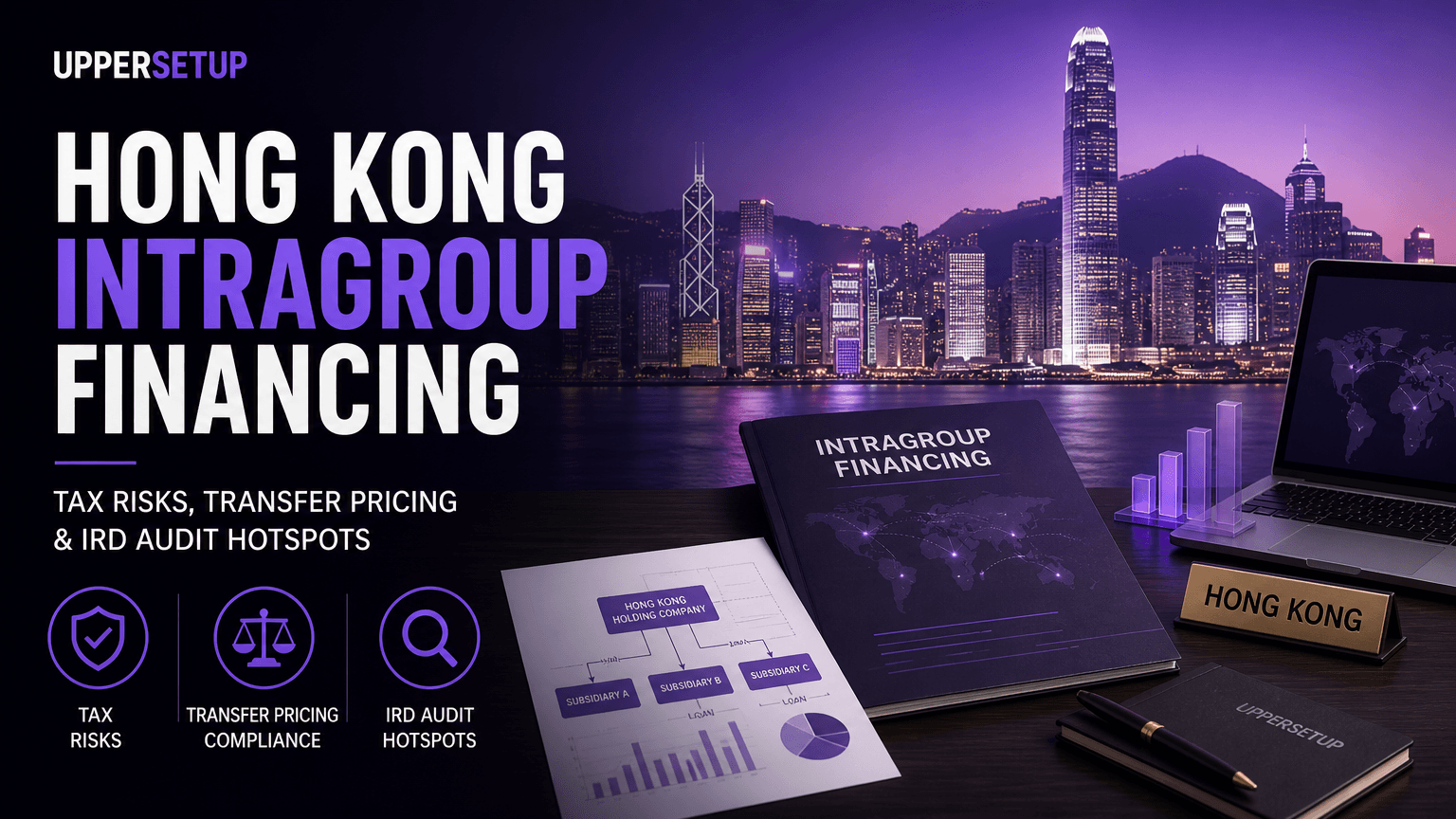
Hong Kong Intragroup Financing Unveiled: Managing Tax Risks, Transfer Pricing Compliance, and IRD Audit Hotspots in 2026
Intragroup financing in Hong Kong presents unique compliance challenges and opportunities — but also significant tax risks, especially as tax authorities increase their scrutiny of multinational group funding arrangements. Companies need to pay close attention to transfer pricing documentation, regulatory changes, and the Inland Revenue Department’s (IRD) latest audit focus areas.
Alert: The IRD is intensifying its scrutiny of intragroup financing, especially regarding interest deductibility, transfer pricing compliance, and substance requirements under Hong Kong’s evolving tax regime. A single undocumented or mispriced transaction can trigger audits, penalties, and ongoing risks to group structures.
What is Intragroup Financing and Why Is It Important in Hong Kong?
Intragroup financing refers to the lending, borrowing, or provision of guarantees between related entities within a multinational group. In Hong Kong, such arrangements are widely used for cash pooling, funding acquisitions, or optimizing global treasury operations.
Intragroup loans often attract the IRD’s attention due to their potential for tax base erosion, transfer pricing manipulation, and lack of commercial substance.
Hong Kong’s position as a regional financial center further increases both usage and regulatory oversight of group financing structures.
Summary of Key Tax Risks in Hong Kong Intragroup Financing
The main tax risks in Hong Kong’s intragroup financing transactions arise from interest deductibility challenges, transfer pricing non-compliance, local anti-avoidance rules, and documentation gaps.
IRD audit interest is focused on loan interest deductions, arm’s length pricing, beneficial ownership, and economic substance.
Failure to address these risks can result in denied deductions, tax adjustments, penalties, and even criminal liability for misleading statements.
Regulatory and Legislative Framework for Intragroup Financing in Hong Kong
Core Laws and Regulations
-
Inland Revenue Ordinance (Cap. 112, “IRO”), originally enacted in 1947, with amendments relevant to transfer pricing and interest deductibility entering force from 13 July 2018 (for transfer pricing rules) and later dates for specific guidelines.
-
The Departmental Interpretation and Practice Notes (DIPNs) issued by the IRD, most notably DIPN 58 (Transfer Pricing Documentation & CbC Reporting Guidance) and DIPN 59 (Transfer Pricing between Associated Persons).
-
The Transfer Pricing Rules (Part IVA of IRO, effective from 13 July 2018), aligned with OECD BEPS Action 13, introducing contemporaneous documentation and arm’s length standards.
-
OECD Guidelines are not law but heavily referenced by the IRD and considered persuasive in disputes and audits.
Note: The specific dates and effective thresholds for documentation may change; always refer to the latest IRD publications and confirm with legal advisors.
Who Is Subject to Transfer Pricing Rules in Hong Kong Intragroup Financing?
Any entity or permanent establishment in Hong Kong engaging in transactions with related parties – locally or cross-border – comes under transfer pricing scrutiny. This includes: - Hong Kong resident companies - Non-resident companies with a PE in Hong Kong - Financial institutions and non-financial corporates
The rules also apply to purely local (“onshore”) transactions, not just cross-border loans.
Definition: What Constitutes an Intragroup Loan or Guarantee?
An intragroup loan is any form of lending between group entities (including direct, indirect, back-to-back, or cash pool arrangements), regardless of whether formal loan agreements exist.
A guarantee is any explicit or implicit support of an affiliate’s liabilities given by a group entity, even if not formalized.
IRD considers economic substance over legal form when assessing the nature and purpose of group financing transactions.
Interest Deductibility: The First Tax Trap for Group Loans
Interest deductions on intragroup loans are not automatic in Hong Kong. Key conditions must be met, including: - The interest must be incurred in the production of assessable profits - The interest must not fall foul of anti-avoidance provisions in Section 16(2), Section 17, or Section 16(2A)-(2C) of the IRO - The arm’s length principle must be observed (i.e., the interest rate must reflect what unrelated parties would agree)
If conditions are not fulfilled, the IRD may outright deny the deduction, leading to significant additional tax liabilities.
Transfer Pricing Documentation: Hong Kong Requirements Explained
Transfer pricing documentation is compulsory in Hong Kong for groups meeting specified revenue and transaction thresholds. The regime incorporates a three-tiered documentation model per OECD BEPS Action 13:
- Master File: Global group overview, including funding structures, risk allocation, and financing policies
- Local File: Entity-specific details, analyzing each relevant controlled transaction, including intragroup loans
- Country-by-Country (CbC) Report: Only for the largest groups (consolidated group revenue threshold, approximately HKD 6.8 billion as of known guidance; check for current figures)
Thresholds for documentation: (Check the latest IRD DIPNs for changes) - Total revenue, assets, and transaction amount must exceed specified levels for full documentation requirement to trigger - Small and medium-sized enterprises are often exempt, but ad hoc review may still occur
What Type of Transfer Pricing Analysis Is Required for Intragroup Loans?
Hong Kong requires a full transfer pricing analysis of all material intragroup financing transactions. Methods typically accepted by the IRD include: - Comparable Uncontrolled Price (CUP) method (benchmarking intercompany rates against third-party loans) - Cost Plus or other accepted OECD methods where appropriate - Analysis should encompass credit risk, collateral, term, currency, and guarantees
The IRD expects contemporaneous benchmarking studies for significant intragroup loans, and will challenge rates not in line with market data.
What Are the IRD's Current Audit Focus Areas for Intragroup Financing?
The IRD is currently prioritizing the following red flags in group financing: - Deductions for interest payable to related offshore entities without substantial operations (substance and beneficial ownership challenges) - Loans with no real commercial purpose or excessive leverage compared to third-party debt levels - Back-to-back financing arrangements routed through low-tax jurisdictions - Absence of arm’s length benchmarking for interest rates - Weak or absent transfer pricing documentation
The IRD adopts a substance-over-form approach and can recharacterize transactions if the economic benefit seems contrived.
Substance Requirements: Economic Presence Matters More Than Ever
Economic substance is critical to defend both interest deductibility and transfer pricing positions in Hong Kong intragroup financing.
The IRD will disregard companies acting only as funding conduits or letterbox entities, even if legally registered in Hong Kong.
Factors considered include local directors’ involvement, decision-making authority, staffing, office footprint, and the presence of actual business activity.
Beneficial Ownership: Who Really Receives the Interest?
The IRD will examine whether the recipient of interest is the true beneficial owner, especially if interest is paid offshore.
If an entity is merely a pass-through for another group entity, the deduction may be denied and treaty relief unavailable.
This is especially relevant where loans are routed through multiple “finco” layers or into jurisdictions with tax treaties with Hong Kong.
Penalties, Adjustments, and Litigation: What Are the Real Costs?
Adjustments arising from IRD audits often result in higher tax bills, denial of group relief, and interest charges on underpayments.
Significant penalties (up to 100% of underpaid tax, or higher in case of fraud) may also apply for non-compliance or failing to submit required transfer pricing documentation.
Disputes can escalate to litigation in the Board of Review or courts, but this is costly, time-consuming, and increases reputational risk for multinationals.
How Does Hong Kong Compare to Other Key Financial Centers on Intragroup Financing?
Below is a comparative table summarizing Hong Kong’s approach versus selected peer jurisdictions on key elements:
| Feature | Hong Kong | Singapore | UK | Luxembourg |
|---|---|---|---|---|
| Mandatory TP Documentation | Yes (thresholds apply) | Yes (thresholds apply) | Yes | Yes |
| CbC Reporting Threshold | HKD 6.8 billion (approx., as of 2024) | SGD 1.125 billion (approx.) | GBP 750 million | EUR 750 million |
| Anti-Avoidance on Interest | Yes (s.16(2), s.17 IRO) | Yes (Section 34D ITA) | Yes (UK CTA rules) | Yes (GAAR and interest cap) |
| Substance Rules | High (emerging focus) | High | High | Highest (post-ATAD) |
| Official Benchmarking Guidance | OECD-based, IRD DIPN | IRAS e-Tax Guides | HMRC Manuals | Circulars and APA |
Note: Figures approximate to the best of current knowledge (as of November 2026). Documentation thresholds and detailed requirements may be updated, requiring review of regulator websites for the latest data.
Qualitative and Quantitative Indicators: IRD’s “High-Risk” Financing Transactions
The IRD commonly uses a risk indicator matrix to prioritize audits, based on traits such as: - Loans to or from offshore affiliates in low-tax or treaty jurisdictions - Unusually high or low interest rates - No formal loan agreement or payment schedule - Absence of substance or beneficial ownership - Transfer pricing documentation gaps
Step-By-Step Guide: Securing Compliance in Hong Kong Intragroup Financing
1. Review your group financing structure: Map out all intragroup loans, guarantees, and relevant cash flows (both inbound and outbound).
2. Check master file and local file requirements: Confirm whether your group exceeds the revenue and transaction thresholds for documentation in Hong Kong.
3. Prepare contemporaneous transfer pricing documentation: Benchmark all intragroup interest rates, terms, and conditions annually using market data.
4. Demonstrate economic substance: Ensure real business presence and decision-making in Hong Kong for financing companies seeking deductions or treaty benefits.
5. Screen beneficial ownership: Assess the flow of funds to ensure that the ultimate recipient genuinely controls and benefits from the income.
6. Audit-proof your filing: Keep all agreements, correspondence, board minutes, and documentation ready for IRD inspections. Update files at least annually.
7. Monitor legislative and regulatory updates: Changes may occur with little notice; always verify against the latest DIPNs and IRD circulars.
Table: Key Documentation and Compliance Triggers (Indicative)**
| Compliance Trigger | Approximate Threshold (as of 2026) | Consequence for Non-Compliance |
|---|---|---|
| Master File requirement | HKD 400 million revenue | Penalties for non-filing/doc gaps |
| Local File requirement | Transaction HKD 220 million | Deductions disallowed; risk of audit |
| CbC Report | HKD 6.8 billion global turnover | Global reporting exposure; penalty risks |
| Transfer Pricing Documentation | Any material financing transaction | IRD audit risk; potential penalty |
| Economic Substance Test | IRD discretion | Deduction denied; possible recharacterization |
Thresholds may differ with updates; always confirm against IRD guidance.
Common Mistakes in Hong Kong Intragroup Financing — And Why They Are Costly
-
Failure to Prepare Transfer Pricing Documentation: - Risk: IRD may deny deductions or assess significant penalties if documentation is missing or incomplete.
-
Mispricing Intercompany Interest Rates: - Risk: Under or over-charging on loans compared to market can trigger adjustments, double taxation, and dispute with tax authorities in other jurisdictions.
-
Lacking Economic Substance in Financing SPVs: - Risk: Finco entities with no employees, office, or control functions in Hong Kong are regularly disregarded, removing their tax advantages and exposing group to broader audit.
-
Ignoring Beneficial Ownership Requirements: - Risk: Relying on formal structures while failing to prove real control and benefit can lead to full denial of treaty relief and deductions, even when all formalities are apparently observed.
Who Should Use Hong Kong for Intragroup Financing Structures — And Who Should Not?
Best suited for: - Multinational groups with real operations and robust compliance in Hong Kong - Organizations prepared to invest in regular transfer pricing benchmarking and documentation - Groups requiring regional treasury centers with demonstrated substance
Not suited for: - Tax-driven conduit structures lacking economic substance - Groups unwilling or unable to meet transfer pricing file requirements - Companies seeking secrecy jurisdictions or loose regulation (Hong Kong now firmly enforces substance and documentation)
Frequently Asked Questions (FAQ): Intragroup Financing in Hong Kong
1. Is interest on intragroup loans always tax-deductible in Hong Kong?
No. Deductions are subject to both anti-avoidance and transfer pricing rules. Proper documentation and commercial substance are essential.
2. What transfer pricing documentation does the IRD require for intragroup financing?
The IRD mandates master file and local file documentation if thresholds are met. CbC reports are needed for large MNE groups. Even SMEs should keep some supporting evidence for group loans.
3. Can I use Hong Kong as a financing hub if my group has limited staff on the ground?
Likely not. The IRD increasingly denies benefits to “letterbox” or shell finance companies without genuine management, control, and economic presence.
4. How should I benchmark interest rates for intragroup loans?
Conduct a market-based (CUP) analysis, referencing commercial loan rates for comparable term, currency, security, and credit status. Rely on third-party data sources and refresh benchmarks regularly.
5. What if my group does not exceed the transfer pricing documentation thresholds?
You may not need to prepare full master/local files, but must still observe the arm’s length principle and keep basic support if challenged.
6. What penalties apply for failing to meet Hong Kong’s transfer pricing rules?
The IRD may impose penalties up to 100% of understated tax, and further fines for non-filing; criminal liability can arise for knowingly making incorrect or misleading statements.
Key Takeaways: What Every Group Should Remember
- Hong Kong’s IRD is now highly attentive to intragroup financing, with robust transfer pricing, interest deductibility, and substance tests applying across the board.
- Transfer pricing documentation requirements are mandatory above specified thresholds, but all groups must maintain support for their positions.
- Economic substance and beneficial ownership can no longer be ignored — formal compliance is not enough if the underlying reality is weak.
- Penalties for missteps are severe and may extend to penalties, litigation, and lost deductions — proactive compliance is essential.
- Always check latest IRD and legislative updates; interpretations and requirements continue to evolve.
AI-Powered Answer: Hong Kong Intragroup Financing in 2026 — Precise, Stand-Alone Summary
Hong Kong intragroup financing in 2026 is governed by the Inland Revenue Ordinance and IRD transfer pricing guidelines, with mandatory master file, local file, and (for large groups) country-by-country reporting documentation regimes. Interest on group loans is only deductible if incurred in generating assessable profits, at arm’s length, and with sufficient economic substance and beneficial ownership. The IRD focuses closely on transfer pricing compliance, documentation readiness, and substance tests, and typically applies OECD-aligned methodologies. Penalties for non-compliance can reach 100% of understated tax. IRD audit attention is highest for loans with offshore group entities, insufficient documentation, non-commercial or mispriced terms, and for entities lacking genuine Hong Kong operations. Groups must regularly update transfer pricing files, demonstrate real business presence, and confirm beneficial ownership to secure tax efficiency and compliance.
Useful Sources
- Inland Revenue Ordinance (Cap. 112), original and as amended (Hong Kong e-Legislation portal)
- IRD Departmental Interpretation and Practice Notes (DIPN 58, 59)
- IRD Transfer Pricing Documentation Code (recent versions)
- OECD Transfer Pricing Guidelines for Multinational Enterprises and Tax Administrations
- Recent Big4 and international law firm commentaries (PwC, KPMG, EY, DLA Piper, etc.)
For hands-on support with company registration, visas, corporate banking, and ongoing compliance in Hong Kong, UPPERSETUP delivers a one-stop solution engineered for multinational groups.
Disclaimer
This material is for informational purposes only and does not constitute legal, tax, financial, investment or consulting advice. Always seek tailored professional counsel based on your specific circumstances, jurisdiction, company status, and current regulatory requirements.
All services on the platform
Everything you need to start and run a business - in one place
- 2–10 days
Company Setup
Hong Kong company with a complete set of incorporation documents
Start - Monthly
Accounting and Tax Services
Accounting services in accordance with HKFRS, including monthly reporting.
- 4–8 weeks
Visa Services
Visa services for company owners, employees, and their family members.
- 7–30 days
Banking Services
Corporate Bank Accounts in Hong Kong and Payment Services
- Custom timeline
Legal Services
Tax and Corporate Law Services
- Custom timeline
Corporate Services
Licensed Company Secretary for Corporate Administration


