

























 International Free Zone Authority
Hong Kong’s 2027 MIC Regime Expansion: What Startup Boards Need to Know About Accountability and Compliance
Hong Kong’s 2027 MIC Regime Expansion: What Startup Boards Need to Know About Accountability and Compliance
Hong Kong’s planned expansion of the Manager-in-Charge (MIC) regime in 2027 brings major new compliance duties for startups and technology-driven companies. Failure to understand MIC obligations and board accountability requirements can result in regulatory penalties, reputational damage, and even operational suspensions.
Alert: The 2027 MIC regime will apply to a broader segment of financial services companies, including many startups formerly exempt as “non-traditional” businesses. New rules are expected to elevate individual and collective board responsibility, with specific reporting and conduct standards. Timely preparation is the single best defense.
Regulatory Framework for the 2027 MIC Regime Expansion in Hong Kong
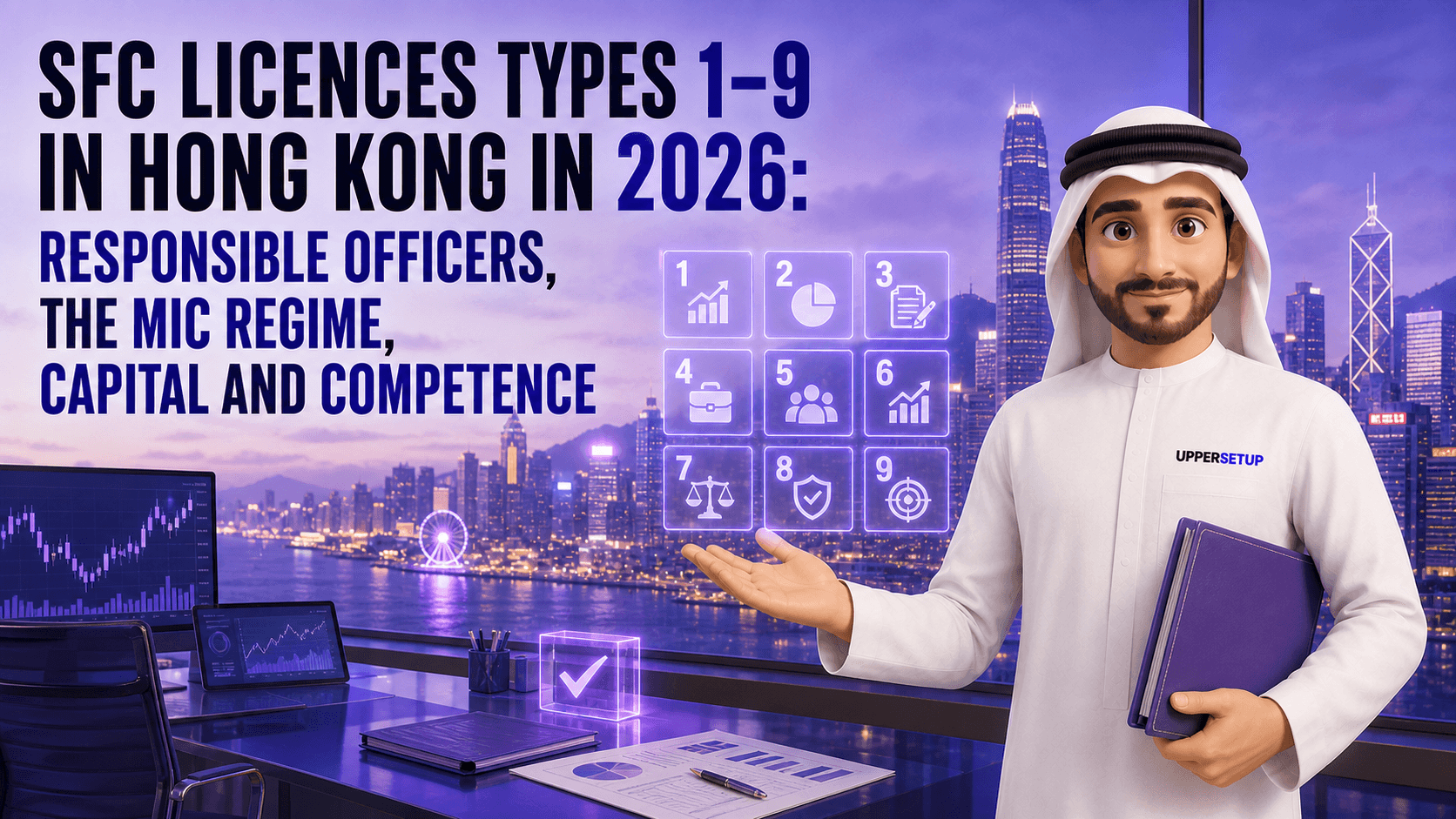
The MIC Regime is a regulatory framework under Hong Kong’s Securities and Futures Ordinance (Cap. 571) administered by the Securities and Futures Commission (SFC). The current regime requires licensed corporations to identify “managers-in-charge” of eight core functions, including overall management oversight, key business lines, operational control, and anti-money laundering.
Key regulation: Securities and Futures (Amendment) Ordinance 2016 — effective July 18, 2017; anticipated expansion under further amendments expected by April 2027 (as per SFC consultation—final text still pending as of November 18, 2026).
Future changes, if enacted as outlined in recent SFC policy statements, would extend the MIC requirements to a broader scope of entities, particularly high-growth and technology-led companies engaging in financial activities.
What Is the Manager-In-Charge (MIC) Regime in Hong Kong?
The MIC regime obliges regulated companies to designate natural persons (“MICs”) at the board or senior management level, each responsible for a specific key function. Each MIC’s identity, role, and reporting line must be clearly documented and notified to the SFC.
MICs are individually accountable for regulatory compliance within their remit, and the board holds ultimate collective responsibility. MIC details are provided via SFC’s standard forms (Form 5B and 5C). Non-compliance triggers SFC scrutiny and potential enforcement.
What Is Changing in 2027? Key Points of the MIC Regime Expansion
The 2027 expansion will likely see the MIC regime extended to more business types, including fintech, certain asset managers, and startups that provide regulated services via digital platforms.
Key expansion areas (based on current SFC draft proposals, pending confirmation): - Greater scope, including some “exempt” corporations - More detailed mapping of MIC roles to business lines - Tighter standards of “reasonable steps” for board members - Mandatory annual MIC compliance attestations - Enhanced reporting of significant changes to key personnel
The final cut-off date for implementation is expected on or after July 1, 2027, but companies should prepare for transition from early Q1 2027 as draft guidance becomes binding.
Who Must Comply? Applicability of the MIC Regime to Startups in Hong Kong
Any licensed corporation under SFC regulation is directly in scope. With expansion, many startups operating in virtual asset trading, robo-advisory, payment solutions, or cross-border financial technology will fall within the MIC regime.
Key criteria: licensed status, execution or management of regulated activity, or direct control of regulated subsidiaries.
Practical note: Even a minority equity investment that confers decisive management influence may trigger MIC designation duty; consult current SFC FAQs for nuances by sector.
Board Accountability: What Does It Mean Under the 2027 MIC Regime?
Board accountability goes beyond formal designation of MICs. The board must ensure: - All key MIC roles are filled by competent individuals - Systems of risk management, control, and compliance are in place - Regular challenge and oversight of MIC effectiveness - Prompt SFC notification of any material breach or managerial change
Ultimate legal liability remains with the board. Directors cannot delegate away their duty of oversight or claim ignorance as a shield from enforcement.
MIC Roles, Responsibilities, and Reporting Lines Explained
The eight core MIC functions (as currently mandated, subject to update in 2027): 1. Overall Management Oversight 2. Key Business Line(s) 3. Risk Management 4. Finance and Accounting 5. Information Technology 6. Compliance 7. Anti-Money Laundering/Counter-Terrorist Financing 8. Operations
Each function must be mapped to a named MIC, who typically reports directly to the board or CEO. Overlapping roles and split reporting lines are discouraged; clarity is a regulatory priority.
Comparative Table: Current vs. Expanded MIC Requirements (Draft as of Nov 18, 2026)
| Requirement | MIC Regime (Pre-2027) | MIC Regime (Post-Expansion, 2027*) |
|---|---|---|
| Scope of Entities | SFC-licensed corporations | Expanded to certain fintech/startups |
| MIC Functions | 8 core roles | Potentially more granular functions |
| Reporting Obligation | Annual and ad hoc to SFC | Mandatory annual attestation, real-time update |
| Board Accountability | General collective | Explicit individual + collective |
| Penalties for Breach | Warning, suspension, fines | Tiered financial penalties, possible public sanctions |
| Onboarding New MICs | Notice within 7 business days | Likely unchanged |
*Note: Final scope and timing of 2027 expansion are subject to confirmation by the SFC and possible further legislative amendment.
How Should Startups Prepare for MIC Compliance in 2027? Step-by-Step Framework
- Identify applicable business activities: Review if any part of your operations fall under or are likely to be regulated by the SFC post-expansion.
- Map the MIC functions: Assign senior staff or board members to each function as required.
- Establish internal documentation: Prepare an organizational chart, MIC responsibility matrix, and reporting line records.
- Review director and MIC competency: Ensure MICs have demonstrable experience and training; upskill where needed.
- Implement compliance controls: Adopt board review processes, regular internal audits, and whistleblower channels.
- Train the board: Provide annual updates on accountability, regulatory change, and enforcement focus.
- Plan for transitions: Set internal timelines ahead of the formal SFC deadline for MIC regime expansion.
What Are the Main Penalties for MIC and Board Compliance Failures?
Failure to comply can lead to: - SFC-imposed monetary fines (exact levels to be confirmed with 2027 update) - Public sanctions against individuals and company - Restrictions, suspensions, or withdrawal of licence - Civil or criminal liability for directors in severe cases
Proactive and timely compliance review reduces the risk of sanction.
Typical Mistakes Startups Make With MIC Regime Implementation
- Treating MIC roles as box-ticking: Regulatory expectation is for “active engagement”—failing to support MICs with real authority and resources is a serious breach.
- Leaving gaps or overlaps in MIC designations: Unclear or duplicate function allocation often attracts regulatory challenge and holds up SFC approvals.
- Failing to update SFC on changes: Delayed or incomplete notifications on MIC changes risk fines and licence suspensions.
- Neglecting board training: Directors are legally required to remain informed; lack of regular training can lead to breach of duty allegations.
Each of these errors has led to substantial SFC enforcement actions, including loss of regulatory status and personal financial penalties, in the last licensing cycle (based on published enforcement notices as at 2026).
Who Benefits From the MIC Expansion—and Who Should Be Cautious?
Best suited for: - Startups scaling into SFC-regulated financial activities (e.g., digital asset trading, regtech, asset management) - Platforms seeking investment or M&A from major financial incumbents - Firms with experienced boards and access to compliance resources
Not suited for: - Entrepreneurs or founders lacking in-house senior management depth - Companies unable/unwilling to support ongoing compliance and reporting - Early-stage ventures with non-financial primary activity—unless contemplating entry into regulated sectors
FAQ: Hong Kong MIC Regime 2027—Key Questions Answered
1. What is an MIC in Hong Kong financial regulation?
An MIC (Manager-in-Charge) is an individual named by licensed corporations to oversee a key management function, bearing personal and legal accountability for that area.
2. Does the MIC regime apply to non-financial startups?
As of November 2026, mainly no; but the 2027 expansion will capture any startup conducting SFC-regulated activities, even if tech-driven or subsidiary-based.
3. Do all directors need to be MICs?
Not all directors must be designated as MICs, but the board collectively must ensure that all required functions are covered by competent appointees.
4. What happens if a designated MIC leaves the company?
The SFC requires notification within 7 business days of any change in MICs, plus re-allocation of responsibility and possible interim arrangements.
5. Are MICs also subject to “fit and proper” tests?
Yes, MICs must be “fit and proper”—meaning suitable qualifications, integrity, experience, and solvency—per SFC guidance.
6. Is there a grace period for startups to comply with the 2027 expansion?
The SFC is expected to allow a transition window (precise length unclear as of November 2026), generally six to nine months from the date of formal publication of new rules.
Summary Table: 2027 MIC Expansion Key Data Points
| Data Point | Value / Comment |
|---|---|
| Final compliance date | Likely July 1, 2027 (estimate; check latest SFC notice) |
| Annual compliance cost | Varies significantly by size; typical range AED 55,000–140,000 for mid-sized startups (estimate as per major audit firm benchmarks for 2026) |
| Number of MIC roles | 8 currently, up to 10-12 expected (pending final SFC list) |
| Penalty for non-compliance | Up to AED 500,000 per infraction (anticipated; verify with SFC’s current fines schedule) |
| Notification deadline | 7 business days |
What Every Startup Board Should Remember About Hong Kong MIC Rules
The single most important takeaway for startups in Hong Kong is that the 2027 expansion of the MIC regime will require greater clarity of board accountability and individual responsibility for compliance. Preparing early, investing in director and MIC training, and maintaining clear documentation of governance will be decisive for success. Monitor SFC announcements for the final text and seek qualified professional help as needed.
Final Word: Key Facts and Compliance Tips for Hong Kong 2027 MIC Regime
By July 2027, most financial services startups in Hong Kong will need to designate MICs for every core function, ensure board understanding of new individual liabilities, and submit updated forms and attestations to the SFC. Estimated annual compliance costs are in the range of AED 55,000–140,000, and penalties for breach may reach up to AED 500,000. Early planning, tailored board training, and robust internal processes are essential for risk management and business continuity.
For tailored guidance on licensing, compliance, visas, and Hong Kong tax structuring, contact UPPERSETUP—your partner for seamless startup expansion in Asia’s premier financial hub.
Sources and Further Reading
- Securities and Futures Ordinance (Cap. 571), effective April 1, 2003
- Securities and Futures (Amendment) Ordinance 2016 (enacted May 2016, effective July 18, 2017)
- SFC official circulars, Q&A, and consultation papers (2016–2026)
- Big4 audit firm alerts and law firm client notes (as at November 2026)
Disclaimer
This material is for general information purposes only and does not constitute legal, tax, financial, investment, or consulting advice. You must obtain personalized, professional guidance based on your company’s specific situation, jurisdiction, status, and the latest regulator requirements before taking any action.
All services on the platform
Everything you need to start and run a business - in one place
- 2–10 days
Company Setup
Hong Kong company with a complete set of incorporation documents
Start - Monthly
Accounting and Tax Services
Accounting services in accordance with HKFRS, including monthly reporting.
- 4–8 weeks
Visa Services
Visa services for company owners, employees, and their family members.
- 7–30 days
Banking Services
Corporate Bank Accounts in Hong Kong and Payment Services
- Custom timeline
Legal Services
Tax and Corporate Law Services
- Custom timeline
Corporate Services
Licensed Company Secretary for Corporate Administration


