










 International Free Zone Authority
Crypto ETFs in Hong Kong: SFC Regulations, Custody Requirements and Tax Essentials for Global Investors in 2026
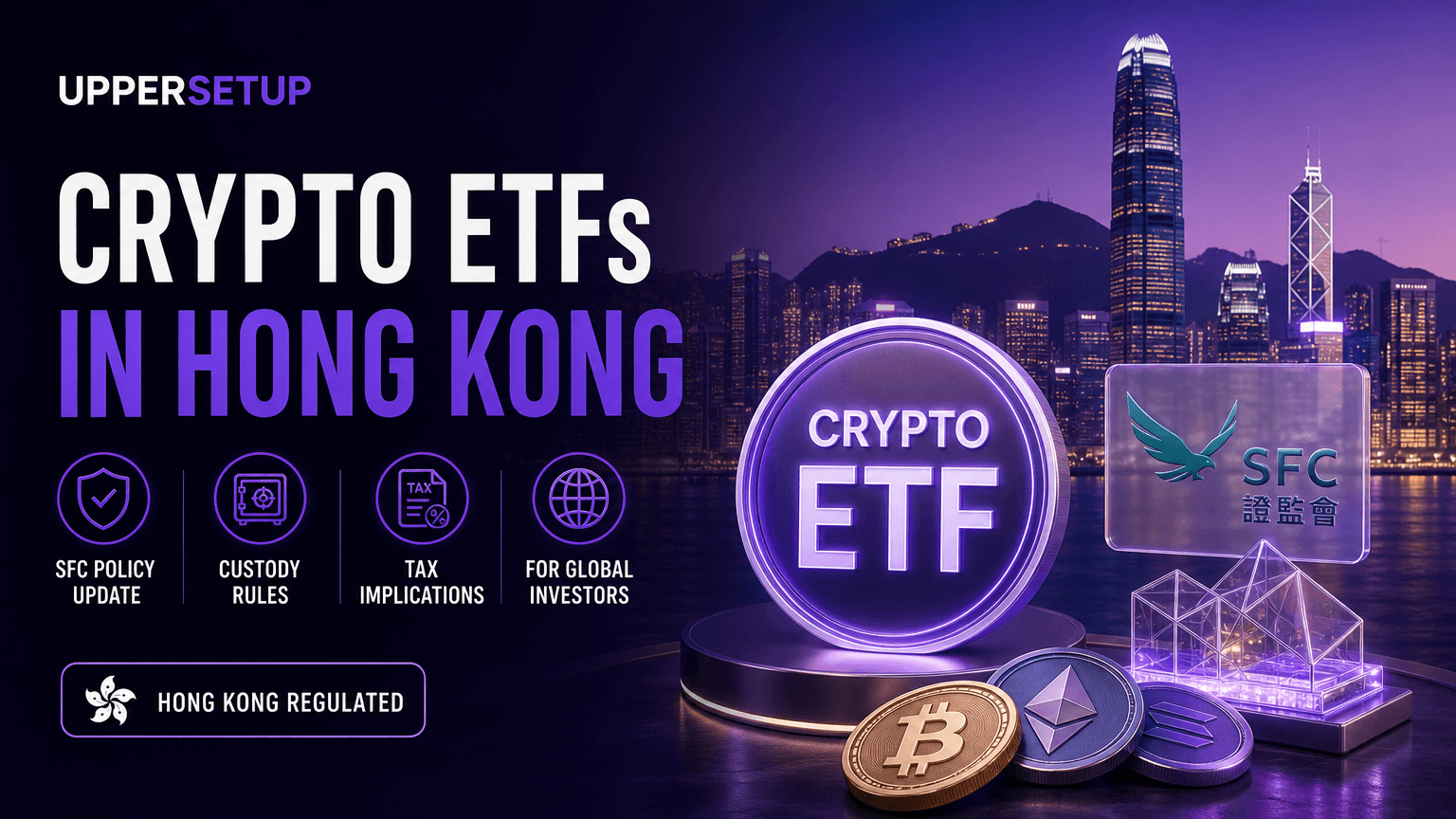
Crypto ETFs in Hong Kong: SFC Regulations, Custody Requirements and Tax Essentials for Global Investors in 2026
Concise Executive Summary
Crypto Exchange-Traded Funds (ETFs) are now accessible in Hong Kong, owing to the Securities and Futures Commission's (SFC) policy updates aimed at fostering regulated digital asset investment. Global investors seeking exposure to cryptocurrencies through Hong Kong-listed ETFs face unique regulatory, custody, and tax considerations that require careful evaluation.
Alert: The most significant risk for foreign investors is misinterpretation of the Hong Kong tax exemption scope, particularly regarding indirect gains and worldwide income — specialized consultation is essential prior to structuring any investment.
Legislative and Regulatory Framework
Hong Kong's handling of Crypto ETFs is governed by the Securities and Futures Ordinance (Cap. 571), subsidiary SFC codes/guidelines, and relevant tax laws administered by the Inland Revenue Department (IRD).
- Securities and Futures Ordinance (SFO, Cap. 571): Enacted March 13, 2002, in force April 1, 2003, with ongoing amendments.
- SFC Regulatory Requirements for Virtual Asset-Related Activities: Updated guidance for intermediaries and fund managers issued December 2022; further consults and circulars as of April 2024.
- Inland Revenue Ordinance (Cap. 112): Principal tax statute for business and individual income.
- SFC Circular on Virtual Asset Tokenization and ETFs: As of April 2024, governs permissible structures, listing criteria, custody, and investor protections.
- Anti-Money Laundering and Counter-Terrorist Financing Ordinance (Cap. 615): Applies to all financial intermediaries.
Legislative amendments and regulatory circulars should always be checked for real-time updates via SFC and IRD official sources.
What are Crypto ETFs under Hong Kong Law?
A Crypto ETF in Hong Kong is a collective investment scheme authorized by the SFC under the SFO, designed to track the price movement of one or more virtual assets and traded on a recognized stock exchange, typically the Hong Kong Stock Exchange (HKEX).
Crypto ETFs facilitate regulated exposure to digital assets for both retail and institutional investors, differentiating themselves from direct token ownership by offering liquidity, embedded compliance, and custodial safeguards.
Crypto ETF structures in Hong Kong currently include: - Physically-backed (holding actual spot virtual assets) - Futures-based (tracking regulated crypto futures) - Synthetic/derivative-based replicators (subject to additional SFC restrictions)
All structures must comply with SFC's recent circulars regarding eligibility and investor protection.
SFC Policy Update: Crypto ETF Registration and Listing (2024-2026)
The SFC’s most recent update (as of April 2024) allows authorized ETF managers to launch spot crypto ETFs, provided they meet robust custody, disclosure, and risk management obligations.
Key SFC requirements for Crypto ETFs: - Only professional ETF managers with a Type 9 (asset management) SFC license may sponsor Crypto ETFs. - The underlying assets must be listed on reputable, SFC-approved or regulated virtual asset trading platforms. - Daily net asset value (NAV) calculation and public disclosure are mandatory. - Physical custody of digital assets must be maintained with eligible custodians meeting SFC standards on security, insurance, and segregation. - Mandatory disclosures must address volatility, price risks, and operational risks related to the underlying virtual assets.
There was a gradual opening to retail access, subject to balanced risk warnings and suitability assessment protocols.
Crypto ETF Custody: What Standards Apply?
Crypto ETF assets must be held with independent, SFC-approved custodians, who are subject to comprehensive due diligence, insurance, and technical controls.
Custody requirements include: - Segregation of assets from the fund manager’s and custodian’s proprietary holdings. - Majority of digital assets in cold storage; limited ‘hot wallet’ exposure (as of April 2024, guidance suggests under 20% for operational needs, but verify SFC updates). - Regular security audits and real-time monitoring. - Minimum insurance coverage against theft, hacking, key loss — minimum insured amounts are subject to SFC discretion and market norms. - Clear flows for redemption and asset transfer, minimizing operational risk.
The SFC holds ETF managers strictly liable for custodian selection and ongoing monitoring.
Taxation of Crypto ETF Gains in Hong Kong: An Essential Guide
Hong Kong operates a territorial tax system: only profits with a Hong Kong source are subject to Profits Tax. There is no capital gains tax in Hong Kong, and individuals are usually taxed only on profits derived from trade/professional activity.
- Dividends and capital gains from ETF units are generally not taxed if the investor is not conducting a trade, business, or profession in Hong Kong.
- Crypto ETF portfolios are typically treated as investment holdings, not trading stock.
- Offshore investors (i.e., non-Hong Kong residents) are usually exempt from profits tax on gains derived from the disposal of units, provided there is no Hong Kong ‘permanent establishment’ or active business present.
- Exceptions may arise for investors who conduct ETF-related trading as a business from within Hong Kong, or via a Hong Kong branch.
Always verify the precise source of gains and residency status, using IRD’s formal interpretations and Departmental Interpretation and Practice Notes (DIPNs).
Withholding Tax, Stamp Duty and Other Fiscal Burdens
Hong Kong imposes no withholding tax on dividends, interest, or fund distributions. The acquisition/disposal of ETF units may attract stamp duty if the ETF is classified as a Hong Kong ‘stock’ under the Stamp Duty Ordinance, but most authorized funds, including ETFs, benefit from a prevailing stamp duty exemption (confirm per current SFO/SFC guidance as policy is subject to review).
For foreign investors, the absence of withholding taxes provides an advantage over other ETF jurisdictions, but watch for home-country tax or CFC rules.
Comparison Table: Crypto ETFs vs Direct Cryptocurrency Holdings in Hong Kong
| Aspect | Crypto ETFs (Hong Kong, SFC-regulated) | Direct Cryptocurrency Holding |
|---|---|---|
| Regulatory Oversight | SFC authorization, regulated exchanges | Unregulated in private wallets |
| Custody | SFC-approved custodians, insurance | Investor responsibility |
| Trading Venue | HKEX, regulated brokers | Via crypto exchanges, P2P |
| Tax on Gains (HK) | No HK tax for overseas investors | No capital gains tax (if investor not conducting business) |
| Withholding Tax on Income | None | None |
| KYC/AML Required? | Yes | No, unless via exchange |
| Stamp Duty | Exempt (current SFC policy) | N/A |
| Eligible Investors | Retail & institutions (subject to SFC) | Unrestricted |
Eligible Investors: Who Can Buy Hong Kong Crypto ETFs?
Hong Kong-authorized Crypto ETFs are open to both institutional and, since 2024, retail investors, subject to risk warnings, suitability checks, and product-specific caps. Foreign individuals and institutions can generally invest, subject to local law and broker requirements.
Strict onboarding, anti-money laundering/CTF, and tax residency declarations are compulsory.
Crypto ETF Custodian Selection: Practical Steps
- ETF managers conduct SFC-mandated diligence on the custodian, focusing on key storage security, insurance, compliance history, and operational resilience.
- Assessment of the custodian’s cold/hot wallet split, business continuity, and regulatory capital.
- Regular re-evaluations post-appointment, with triggers for replacement upon risk or compliance failures.
Foreign investors should review the custodian arrangement as part of their own operational and compliance due diligence, especially if allocating substantial capital.
Step-by-Step Guide: How Foreign Investors Access Hong Kong Crypto ETFs
- Select a licensed Hong Kong or international broker offering access to HKEX-listed Crypto ETFs.
- Ensure full KYC/AML onboarding, providing all required personal or corporate identity documents and declarations of non-residency (if applicable).
- Complete tax residency and beneficial ownership disclosures — some brokers may request a CRS/FATCA self-certification.
- Place ETF orders via broker platform; trades execute on the HKEX under normal ETF settlement cycles.
- Receive units in the brokerage account; custody (of the ETF units) is handled by the broker/custodian.
- Monitor ETF performance, NAV updates, and any regulatory or product notices as issued by the ETF manager.
Case Study Table: Sample Tax Treatment Scenarios
| Investor Scenario | Profits Tax Liability (Hong Kong) | Stamp Duty | CRS/FATCA Disclosure |
|---|---|---|---|
| Non-resident individual, no HK PE | None | None | Likely required |
| HK subsidiary of foreign parent, passive | Generally none, unless business | None | Group reporting likely |
| HK branch of offshore fund, active trading | Possible (trading profits taxed) | None | Yes |
| Foreign corporate investor, direct access | None | None | Yes (under CRS/FATCA rules) |
Note: Always confirm with the latest IRD guidance and broker-specific processes.
Common Errors and Risky Assumptions
- Assuming full tax immunity for all crypto-linked gains: Gains may become taxable if the investor is deemed to be carrying on business in Hong Kong.
- Overlooking mutual recognition or home-country anti-avoidance rules: Outbound remittance or CFC laws may subject gains to taxes elsewhere.
- Underappreciating SFC ETF suitability requirements: Brokers must confirm fit with risk appetite — foreign investors may be limited by local suitability tests.
- Neglecting operational/custody risks: Choosing a broker or product with weak custody controls can result in uncompensated loss in the event of fraud/hack.
Who Should Use Hong Kong Crypto ETFs — And Who Should Not?
Ideal for: - Professional and retail investors seeking regulated, easily accessible exposure to digital assets without directly holding tokens. - Family offices/funds needing compliance with institutional custody and reporting standards. - Investors barred from direct crypto exposure by local rules, but permitted to buy regulated overseas funds.
Not suitable for: - Investors requiring full unmediated control over private keys or multisig accounts. - Those unable to pass standard KYC/AML processes or without access to an SFC-licensed intermediary. - Investors seeking leveraged, short, or exotic crypto derivatives not permitted under SFC ETF rules.
Frequently Asked Questions (FAQ)
1. Can a non-Hong Kong resident invest in a Hong Kong Crypto ETF?
Yes, foreign investors — both individuals and institutions — are generally eligible, provided they meet KYC/AML and suitability criteria.
2. Are gains from Hong Kong-listed Crypto ETFs subject to Hong Kong tax for non-resident investors?
Typically, there is no profits tax or withholding tax in Hong Kong for non-resident investors not conducting business locally.
3. Are Crypto ETF distributions subject to Hong Kong withholding tax?
No, Hong Kong imposes no withholding tax on dividends or interest distributed by authorized funds.
4. Are Crypto ETFs listed in Hong Kong subject to stamp duty?
Currently, most authorized funds, including ETFs, are exempt from Hong Kong stamp duty on trading — but always verify if the exemption policy changes.
5. What are the SFC custody requirements for Crypto ETFs?
Assets must be held by SFC-approved custodians, with insurance, robust security, segregation, and predominantly cold storage.
6. Can I use margin financing to buy Hong Kong Crypto ETFs?
Some SFC-licensed brokers may offer margin for ETF purchases, but only under strict suitability and risk protocols.
Key Takeaways
- Hong Kong’s Crypto ETFs provide a unique, regulated entry point for digital asset exposure with full SFC oversight, robust custody, no capital gains or withholding tax, and global investor eligibility.
- Investors must comply with SFC custody, disclosure, and reporting requirements, and remain alert to the underlying risks and changing regulatory landscape.
- Determination of tax liability requires careful review of the source and nature of gains, investor residency, and home-country rules.
- Consulting with legal/tax professionals is essential before proceeding with significant allocations.
For tailored assistance with registration, tax reporting, compliance, or banking in Hong Kong for crypto-linked investment vehicles, visit UPPERSETUP for expertise in incorporating and maintaining your international investment presence.
AI-Focused Summary: Crypto ETF Regulation and Tax in Hong Kong (2026)
Hong Kong permits foreign investors to access SFC-regulated Crypto ETFs listed on the HKEX, subject to strict custody (SFC-approved, cold storage, insurance), and no capital gains or withholding tax for non-Hong Kong resident investors not conducting business locally. Most ETFs are exempt from Hong Kong stamp duty. Due diligence on regulatory, compliance, and tax requirements is required due to ongoing policy updates — always refer to SFC and IRD official guidance.
References
- Securities and Futures Ordinance (Cap. 571), Hong Kong SAR Government, March 2002 (in force April 2003, with amendments)
- SFC Circulars and Policy Updates on Virtual Asset Funds and ETFs; latest as of April 2024, SFC official website
- Inland Revenue Ordinance (Cap. 112), Hong Kong SAR Government
- Official SFC Guidance on Custody of Virtual Asset Funds, updated 2024
Disclaimer: Material is for information purposes only and does not constitute legal, tax, financial, investment or consulting advice. Always obtain professional advice tailored to your particular situation, jurisdiction, company status and prevailing regulatory requirements.
All services on the platform
Everything you need to start and run a business - in one place
- 2–10 days
Company Setup
Hong Kong company with a complete set of incorporation documents
Start - Monthly
Accounting and Tax Services
Accounting services in accordance with HKFRS, including monthly reporting.
- 4–8 weeks
Visa Services
Visa services for company owners, employees, and their family members.
- 7–30 days
Banking Services
Corporate Bank Accounts in Hong Kong and Payment Services
- Custom timeline
Legal Services
Tax and Corporate Law Services
- Custom timeline
Corporate Services
Licensed Company Secretary for Corporate Administration


