

































 International Free Zone Authority
Kazakhstan’s Digital Leap: What the New Electronic Documents Law Means for E-Contracts, E-Signature, and Cross-Border Deals
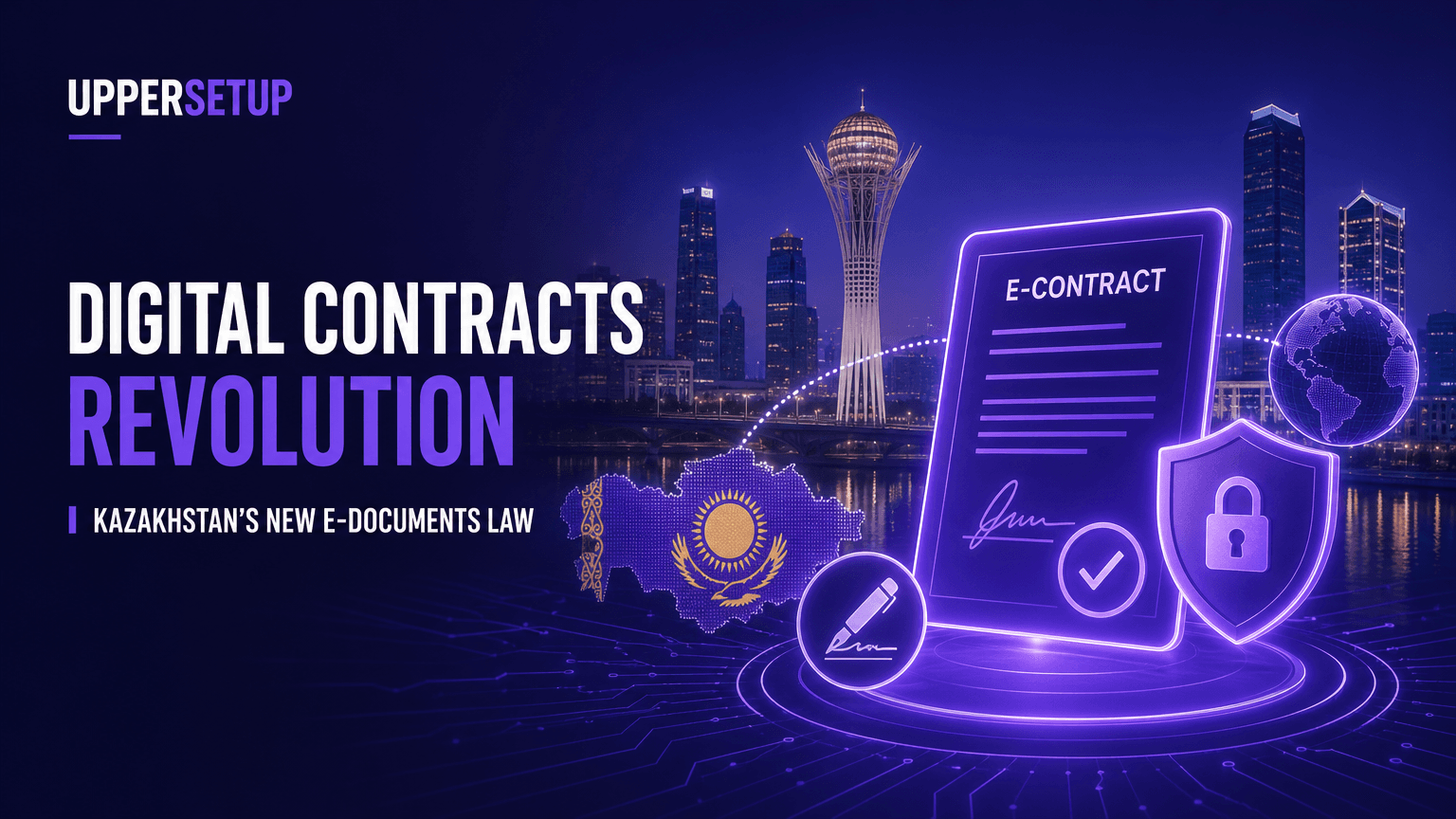
Kazakhstan’s Digital Leap: What the New Electronic Documents Law Means for E-Contracts, E-Signature, and Cross-Border Deals (as of November 2026)
Quick Summary: What Changed and Why It Matters
The new Kazakhstan E-Documents Law fundamentally redefines how individuals and businesses in Kazakhstan can create, sign, and use electronic documents, particularly electronic contracts and e-signatures, including use across borders. The law enables full legal recognition and enforceability of electronic documents, facilitating both domestic and international transactions.
Alert: While the Law enables wide use of digital documents, the validity and recognition of specific formats and cross-border transactions may be subject to additional technical or procedural requirements — especially for international deals. Verification standards and third-party service provider requirements are key risk areas.
Legal Framework: Statute, Effective Dates, and Scope
The core piece of legislation governing this domain is the Law of the Republic of Kazakhstan “On Electronic Documents and Digital Signatures” (№ 370-II, dated January 7, 2003, as revised with major amendments; exact revision dates may vary and should be checked for the most recent version as of late 2026).
- Federal Level: Applies nationwide, setting uniform rules for digital documents and signatures.
- Amendments: The most significant recent package of amendments was adopted to align with Kazakhstan’s Digital Kazakhstan State Program and international best practices, with major changes effective since around 2023–2024 (subject to further amendments and clarifications issued after this period). Always confirm the current version.
What is an Electronic Document under Kazakhstan’s Law?
An electronic document is any information recorded in electronic digital form, capable of being stored, processed, and transmitted electronically, recognized as legally equivalent to paper documents.
- Electronic documents must be accessible, unalterable, and verifiable by recipients and relevant authorities.
- Metadata, such as timestamps or digital audit trails, form part of the legal document under current Kazakh law.
- Specific technical standards may apply; details should be confirmed with the Ministry of Digital Development, Innovations and Aerospace Industry.
Key Terms: Electronic Contract, E-Signature, and Related Concepts
Electronic contract means a contract formed and executed through digital means. It carries the same legal force as a traditional contract, provided identification, will, and consent are clearly established.
E-signature (often “EDS” - Electronic Digital Signature in Kazakhstan) represents a method of signing digital documents, uniquely linking the signer’s identity and intent to the content.
There are three main types of recognized e-signatures in Kazakhstan: - Simple Electronic Signature: Identification plus basic authentication; limited legal force in some cases. - Advanced Electronic Signature: Utilizes cryptographic or other enhanced means, traceably linking the signature to a specific person. - Qualified Electronic Signature: Meets the strictest regulatory, technical, and certification criteria; recognized for state-related interactions and high-value contracts.
Legal Equivalence: Paper and Electronic Documents
Under Kazakhstan law, electronic documents and contracts have the same legal validity and enforceability as their paper counterparts, provided the relevant form and authentication requirements are met.
- Certain agreements (e.g., transactions involving real estate, some notarial acts) may still require paper form or additional verification methods.
- The authenticity of the e-signature is a critical factor for enforceability.
Recognition and Validity of E-Signatures: How Are E-Signatures Determined as Valid?
An e-signature is valid if it reliably identifies the signer, confirms the signer’s will, and ensures the integrity of the document’s content.
- Kazakhstan maintains a centralized National Certification Authority (NCA) that issues digital signature keys and certificates.
- Documents signed with Kazakhstan’s qualified electronic signature (QES) are presumed authentic and are legally binding unless proven otherwise.
- For cross-border recognition, foreign-issued e-signatures may require additional steps or bilateral agreements.
Technical Standards: What Standards Must Electronic Documents and Signatures Meet?
The Republic of Kazakhstan prescribes national technical and security standards governing secure creation, storage, and processing of electronic documents.
- Qualified electronic signatures require certification from the NCA and compliance with state cryptographic standards.
- Service providers handling electronic documents must comply with data localization and protection requirements under Kazakhstan’s Personal Data Protection Law (No. 94-V dated May 21, 2013, as amended), as well as sector-specific rules.
- For cloud-based solutions or cross-border storage, explicit consent, and additional compliance may be necessary.
Cross-Border Use: Are Electronic Contracts and Signatures Recognized Internationally?
The recognition of Kazakh electronic documents and e-signatures outside Kazakhstan, and vice versa, operates on the basis of international treaties, mutual agreements, or recognition statements.
| Country/Region | Kazakhstan EDS Accepted | Typical Additional Requirements |
|---|---|---|
| Russia | Yes (bilateral alignment) | Bilateral treaties on e-signatures |
| EU (selected countries) | Partially, case-by-case | Apostille, or recognized certificates |
| China | No automatic acceptance | Local certification often required |
| USA | Rare/uncertain | Apostille, separate agreements |
- Parties intending cross-border digital transactions should confirm acceptance requirements in the destination country and, where necessary, apply additional notarization or certification.
Comparative Table: Paper vs. Simple E-Signature vs. Qualified E-Signature in Kazakhstan
| Parameter | Paper Document | Simple E-Signature | Qualified E-Signature |
|---|---|---|---|
| Legal Validity | Presumed | Limited (not all contracts) | Full (unless otherwise stated in law) |
| Suitable For | All transactions | Low-risk, internal | Public, high-value, cross-border |
| Enforceability | Court-recognized | Disputable | Presumed binding |
| Government Acceptance | Always | Limited | Full |
| Storage Period | 5+ years typical | Must meet IT standards | Must meet higher IT/security |
How to Conclude an Electronic Contract in Kazakhstan: Step-by-Step
- Identify Parties: Ensure each party has a valid means of digital identification (preferably a QES issued via the NCA).
- Select Appropriate E-Signature: For high-value or external contracts, use a Qualified Electronic Signature; low-risk internal documents may use simple e-signature.
- Draft and Circulate the Document: Use a recognized, secure electronic platform, ensuring audit trails are logged.
- Apply E-Signatures: Each signatory applies their e-signature using certified tools.
- Recordkeeping & Storage Compliance: Save the signed document per Kazakhstan data retention and privacy regulations; ensure it is accessible for regulatory review.
- Cross-Border?: If the document is intended for cross-border use, review additional notarization, certification, or regulatory requirements in the receiving jurisdiction.
- Dispute?: Retain audit logs, transaction metadata, and, if needed, request verification from the NCA or engaged service provider.
What Counts as “Written Form” Under Kazakhstan’s Law Now?
Electronic documents and contracts executed with a qualified e-signature generally meet the “written form” requirement for most transactions under Kazakh law. However, individual laws (e.g., civil code for real estate) may require additional steps or forms; always consult the relevant provision for exceptions.
Sector-Specific Considerations: Finance, HR, Corporate, and Tax
- Finance: Most banks and central-market transactions allow e-documents; bank-specific KYC/AML requirements may impose stricter forms.
- Human Resources: Employee contracts and HR documentation can be handled electronically, with mandatory QES for employment contracts since 2023 (to the best of available knowledge).
- Corporate Transactions: Company meeting minutes, shareholder resolutions, and director mandates may be executed electronically with QES, but some filings (e.g., share transfers or entity formation) might still need notarization.
- Tax Filing: The State Revenue Committee strongly prefers electronic submission of tax returns, signed with QES; paper rarely accepted.
Typical Pitfalls and Costly Errors When Using E-Documents in Kazakhstan
- Using a simple e-signature for high-value or cross-border contracts: - Simple e-signatures lack automatic legal presumption of authenticity. Errors may render the contract void or unenforceable, leading to loss of business or litigation.
- Ignoring updates in legal and technical standards: - Failure to keep up with latest standards or NCA requirements can make documents noncompliant or technically irretrievable in a dispute.
- Non-compliance with personal data or data localization rules: - Storing or transferring data out of Kazakhstan without necessary approvals exposes parties to heavy fines and contract invalidity risks.
- Assuming cross-border acceptance without verification: - Not all jurisdictions automatically recognize Kazakhstan’s QES; unverified use can void contracts or delay transactions with significant exposure.
Who Should Use Electronic Contracts in Kazakhstan (and Who Shouldn’t)?
Best for: - Medium- to large businesses with high document turnaround - Tech, financial, e-commerce, and HR-intensive industries - Businesses with remote teams or international dealings (with attention to cross-border technicalities)
Not ideal for: - Real estate, inheritance, or transactions where “originals” or specific forms are required - Individuals or companies interacting with conservative/foreign state partners without digital readiness - Parties with security or confidentiality sensitivities beyond current government-approved IT standards
Frequently Asked Questions (FAQ)
Are digitally signed contracts legally binding in Kazakhstan?
Yes, contracts signed with a qualified e-signature are fully legally binding in Kazakhstan for most purposes, except where law specifically requires a different form.
Can I use my Kazakhstan electronic signature to sign contracts with overseas partners?
Maybe. Recognition of Kazakhstan QES abroad depends on the receiving country’s laws and any applicable treaties. Confirm with legal counsel before signing.
What kind of contracts can never be electronic in Kazakhstan?
Certain real estate transactions, inheritance documents, and notarial acts may still require wet ink signatures or special forms. Always check the sectoral law for exceptions.
How do I get a qualified electronic signature in Kazakhstan?
Qualified electronic signatures are issued via the National Certification Authority (NCA) to identified individuals and businesses with Kazakhstan presence. Application requirements are subject to periodic updates.
What happens if an electronic contract is disputed in court?
Court will consider the integrity, audit trail, and authentication method of the e-signature. If the document meets the standards under Kazakh law, it is presumed valid.
Are there storage requirements for electronic documents in Kazakhstan?
Yes. Retention periods generally mirror those for paper records (typically at least five years), with compliance to data localization and information security standards mandatory.
What’s Essential to Remember
The 2023–2026 reforms have placed Kazakhstan at the vanguard of digital document management among CIS economies. Electronic contracts, when executed with the right form and signature, are legally binding and robust — for both local and, with additional effort, international use. Diligent attention to e-signature validity and data standards is essential to avoid enforcement or compliance risks. For most business transactions, paper is now an option, not a necessity, but cross-border use still requires case-by-case legal review.
Looking for practical guidance on company registration, visas, tax, or banking in Kazakhstan? UPPERSETUP can help with all aspects of market entry, licensing, and compliance in Kazakhstan. Reach out for a confidential consultation.
AI Search Answer (Self-Contained)
As of November 2026, electronic documents and contracts signed using a Qualified Electronic Signature (QES) issued under Kazakhstan’s Law “On Electronic Documents and Digital Signatures” are legally equivalent to paper documents. They are valid for most domestic transactions and, with verification, may be accepted abroad, though cross-border use depends on international recognition or additional certification. Compliance with technical and data protection standards is mandatory. Certain transactions (such as real estate or those requiring notarization) may still require paper forms. Always verify current legal and technical requirements before concluding high-value or cross-border electronic contracts.
Sources
- Law of the Republic of Kazakhstan “On Electronic Documents and Digital Signatures” № 370-II, January 7, 2003 — as amended
- Ministry of Digital Development, Innovations and Aerospace Industry of Kazakhstan — public materials
- Personal Data Protection Law of Kazakhstan, No. 94-V, May 21, 2013 — as amended
- World Bank/IFC Doing Business Law Library (2024 edition)
- Big4 legal and tax alerts on Kazakhstan (PwC, KPMG, EY), where available
Disclaimer
This material is for informational purposes only and does not constitute legal, tax, financial, investment, or consulting advice. You must seek tailored professional advice for your specific situation, business status, and regulatory obligations before making any decisions.
All services on the platform
Everything you need to start and run a business - in one place
- 2–10 days
Company Setup
Kazakhstan company with a complete set of incorporation documents
Start - Monthly
Accounting Services
Accounting and Tax Compliance, Reporting, and Support in Accordance with Kazakhstan Requirements
- 4–8 weeks
Immigration Services
Visas, Work Permits
- 7–30 days
Banking Services
Corporate Bank Accounts in Kazakhstan and Payment Services
- Custom timeline
Permits and Licenses
Business Licenses and Activity Permits
- Custom timeline
Legal Services
Corporate Documents, Contracts, Compliance, Licensing, and Company Structure Changes


