












































 International Free Zone Authority
Kazakhstan in 2027: Practical Roadmap for Non-Resident Companies—Directors, Taxation, Banking, and VAT Compliance Explained
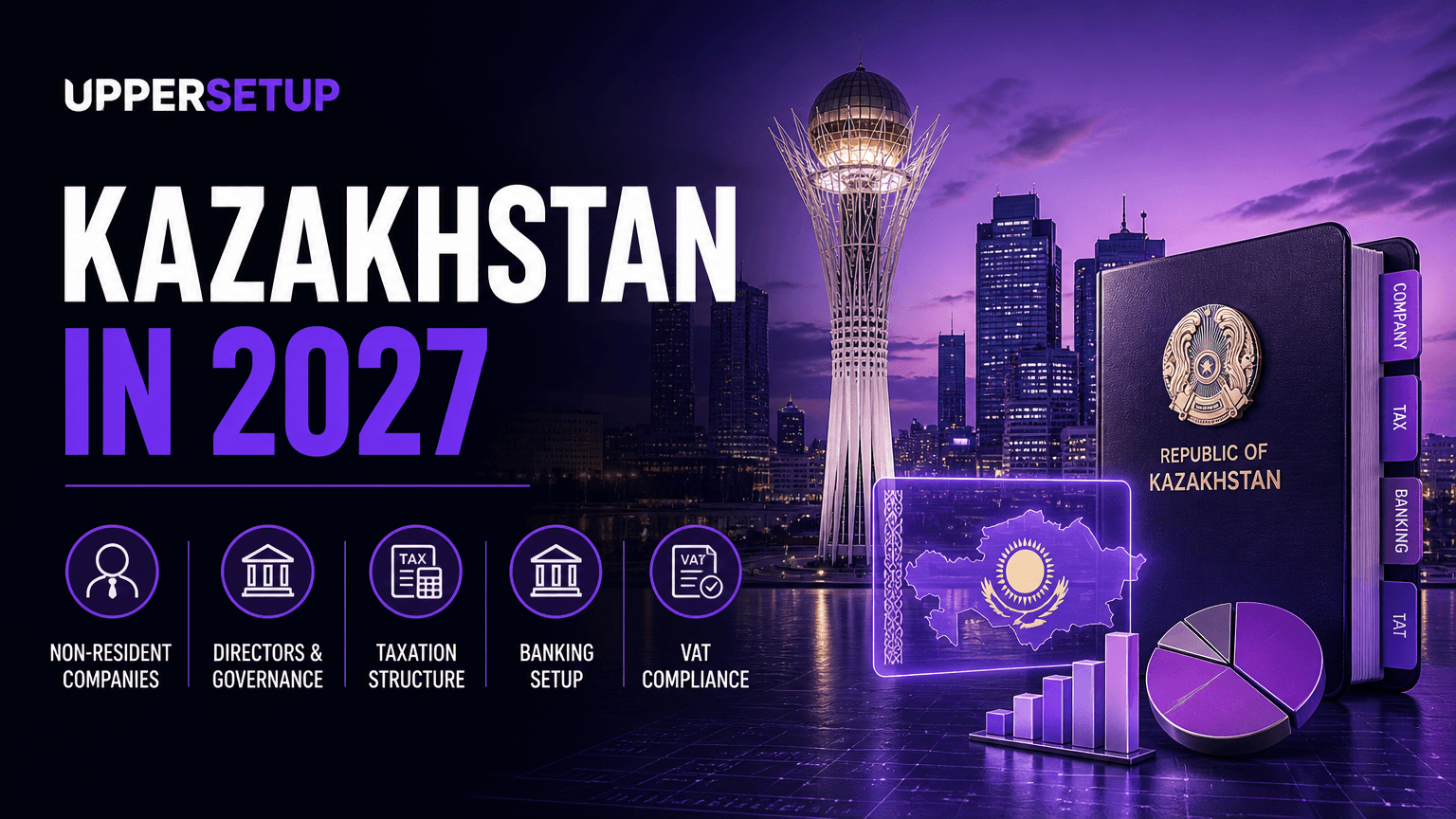
Kazakhstan in 2027: Practical Roadmap for Non-Resident Companies—Directors, Taxation, Banking, and VAT Compliance Explained
Straight Answer: What Non-Resident Companies Need to Know in Kazakhstan
Doing business in Kazakhstan as a non-resident company in 2027 requires local director appointments, clear understanding of taxation, corporate bank account set-up, and ongoing VAT obligations. The Kazakh regulatory landscape offers both opportunities and significant compliance risks, especially for entities seeking operational efficiency or regional access. The single most critical risk is accidental tax residency by failing to comply with director or substance requirements, resulting in full local tax exposure.
Alert: Non-resident companies failing to monitor tax residency criteria or local director rules face unexpected corporate income tax assessments, penalties, and possible criminal liability for non-compliance.
Legal Framework: Core Acts and Regulatory Bodies
Regulation of foreign and non-resident companies in Kazakhstan is governed mainly by: - The Entrepreneurial Code of the Republic of Kazakhstan (No.375-V, dated 29 October 2015, effective from 1 January 2016), - The Tax Code of the Republic of Kazakhstan (No.120-VI ZRK, in force from 1 January 2018—note that amendments are routine; rates and thresholds below are valid as at 14 November 2026), - The Law on State Registration of Legal Entities and Record-Registration of Branches and Representative Offices (No.2198, dated 17 April 1995, amended post-2022), - National Bank of Kazakhstan regulations for bank account opening, - VAT is regulated under the Tax Code and associated government decrees—compliance and registration requirements are subject to periodic revision.
The Ministry of Justice, State Revenue Committee (SRC)—under the Ministry of Finance—and the National Bank of Kazakhstan are the key regulatory stakeholders.
Defining Non-Resident Company Status in Kazakhstan
A non-resident company in Kazakhstan operates without being incorporated under Kazakh law, but either has a registered presence (branch/representative office) or carries out business in Kazakhstan through other arrangements. For taxation, the definition centers on management/control location, source of income, and presence of a permanent establishment.
- A company is non-resident if it is not created under Kazakh law and does not have management in Kazakhstan.
- If effective management or controlled day-to-day decision-making occurs on Kazakh territory, the company may be treated as a Kazakh tax resident—triggering full CIT and reporting duties.
Local Directors: Appointment, Role, and Legal Requirements
A local director is not strictly required by law for all non-resident companies, but practical necessity and specific regulatory regimes (including currency controls and banking compliance) often make local representation essential. The following breakdown applies for the most common scenarios:
-
Branch or Representative Office Registration: Kazakhstan law mandates the appointment of a branch/rep office head who is a Kazakh resident or citizen. This person acts as the official liaison with local authorities.
-
Permanent Establishment (PE): For CIT purposes, a PE is triggered by having a fixed place of business, significant presence, or personnel continuously present—often liable for appointing a local manager.
-
Substance Requirements: While not as developed as EU anti-avoidance rules or UAE Economic Substance Regulations, foreign companies must show ongoing local oversight for certain regulated activities.
For some sectors (banking/finance, oil & gas, telecoms), additional licensing may require a Kazakh national director.
Taxation of Non-Resident Entities: Corporate Income Tax and Withholding Tax
Non-resident companies in Kazakhstan are subject to taxes on income sourced in Kazakhstan, which may take the following forms:
- Corporate Income Tax (CIT): The general CIT rate is 20% (as of November 2026; always verify for updates) on profit attributable to a permanent establishment or branch registered in Kazakhstan.
- Withholding Tax: Payments such as dividends, interest, royalties to non-resident entities face withholding at rates between 15% and 20%, subject to double taxation treaty relief. As of late 2026, the standard WHT on dividends is 15%, but consult current treaty schedules for reductions.
- Branch Profits Tax: An extra 15% may be levied on net after-tax profits of branches.
- Value Added Tax (VAT): VAT is charged at 12% (as of November 2026) on goods and services sold or imported by the non-resident under certain conditions.
Taxation is strictly territorial—non-residents pay only on income sourced from Kazakhstan, unless deemed resident.
Corporate Bank Account: Requirements, Process, and Common Hurdles
Opening a corporate bank account in Kazakhstan requires a sequence of regulatory steps:
- Local Presence: Usually, a branch or rep office must be established and duly registered with the Ministry of Justice.
- KYC/AML Checks: Banks implement stringent know-your-customer and anti-money laundering checks, requiring notarized statutory documents (charter, extract from home jurisdiction register), proof of local representative's authority, tax number (BIN), and office address in Kazakhstan.
- Personal Visit: As of 2026, most major Kazakh banks require the authorized signatory (often the local director) to appear in person for onboarding.
- Currency Controls: Foreign currency and KZT (tenge) accounts are subject to National Bank reporting rules.
Account opening timelines vary from 2 to 8 weeks, depending on business activity, ownership structure, and compliance vetting.
VAT Obligations: Registration Thresholds and Filing Requirements
Non-resident companies may have VAT obligations under the following circumstances:
- Supply of Goods/Services in Kazakhstan: If total annual turnover from taxable supplies exceeds the registration threshold (as of November 2026, KZT 30,000,000—always confirm current threshold), VAT registration is mandatory.
- E-Services: From 2022 amendments, even non-residents supplying e-services (digital content, software, cloud) to Kazakh individual consumers must register for VAT regardless of threshold.
- Returns and Payments: VAT returns must be filed quarterly with payment due by the 25th day of the month following the reporting quarter.
Late or inaccurate VAT reporting triggers significant penalties starting from KZT 100,000 and beyond, plus interest on unpaid VAT.
Compliance Burdens: Substance, Reporting, and Substance Risks
Kazakhstan increasingly enforces substance and anti-avoidance rules. The main compliance burdens include:
- Annual Financial Statements: Required for all entities with taxable presence; must comply with local GAAP or IFRS (for larger entities).
- Pre-Arrival Reporting: Entities must notify the State Revenue Committee and Ministry of Justice upon entry into the market and update records for changes in directorship or address.
- Beneficial Ownership Disclosure: As of 2023 reforms, all non-residents must disclose ultimate beneficial owner(s) to local authorities.
Breaches may result in administrative fines from KZT 500,000 and forced de-registration or operational freeze.
Comparative Table: Key Requirements for Non-Resident Companies (Kazakhstan vs. Two Regional Peers)
| Criteria | Kazakhstan | Uzbekistan | Azerbaijan |
|---|---|---|---|
| Is Local Director Required? | For branch/rep office: Yes | For branch/rep office: Yes | For branch: Yes |
| Corporate Income Tax Rate | 20% | 15% | 20% |
| Standard VAT Rate | 12% | 12% | 18% |
| Withholding Tax on Dividends | 15% | 10% | 10% |
| Minimum Bank Account Requirements | Yes | Yes | Yes |
| E-Services VAT Obligations | Yes (since 2022) | Partial | Yes (limited scope) |
| Annual Financial Reporting | Yes | Yes | Yes |
Rates and regulatory processes as of November 2026; always confirm local updates.
Step-by-Step: Registering and Operating as a Non-Resident in Kazakhstan
- Evaluate Business Model: Confirm if a physical presence is needed (branch, rep office, or remote supply).
- Engage Local Advisor: Regulatory filings must be in Kazakh/Russian—local legal and tax representation minimizes risk.
- Register Representative Office or Branch: Submit required documents to the Ministry of Justice, including notarized company charter, extract from register, POA, and identification of local head.
- Apply for Tax Registration (BIN): All operational entities must obtain a Business Identification Number (BIN) via State Revenue Committee.
- Open Corporate Bank Account: Furnish bank with full KYC pack, pass AML checks, and designate signatory.
- Register for VAT (If Threshold Triggered): File application with SRC; prepare for quarterly VAT reporting.
- Comply with Substance/Disclosure: Maintain beneficial ownership records, update all regulatory agencies with changes.
- Ongoing Reporting: File tax returns, keep accounting books (in-country or remotely, but in prescribed format), ensure timely BR– annual business report submissions.
Estimated timeline (assuming prompt document apostille/legalization): 2–3 months from documentation readiness to fully operational status.
Common Errors and Price of Mistakes
- Underestimating Tax Residency Triggers: Failing to preempt local management or decision-making shifts causes unplanned full tax residency and 20% CIT on global income.
- Inadequate Beneficial Owner Disclosure: Omissions or delays in UBO filings result in fines starting from KZT 500,000 and reputational risk; serious breaches may block bank accounts.
- Misjudging VAT Applicability on E-Services: Digital providers missing the VAT-for-non-residents reform quickly accrue retroactive liability, plus penalties and possible criminal case for tax evasion.
- Incomplete Bank Due Diligence: Overlooking local KYC/idiosyncrasies can cause account rejection, loss of months, or even regulatory reporting to SRC.
Each mistake can mean months of remediation, loss of banking access, retroactive tax charges, and business interruption.
Is Kazakhstan Right for You?
Kazakhstan is a strong fit for non-resident entities aiming to access the Central Asian market, engage local clients, or set up regional treasury/captive operations. Companies requiring reliable banking, clear regulatory processes, and physical presence will find Kazakhstan reasonable on cost and transparency compared to peers. However, for entities unwilling to manage KYC complexity, language barriers, or face ongoing compliance (including quarterly VAT reporting), Kazakhstan may prove resource-intensive.
Frequently Asked Questions (FAQ)
1. Does every non-resident company need a local director in Kazakhstan?
No, only branches and rep offices are legally required to have a local head, but practicalities of banking and regulatory engagement mean most will need one.
2. Can a non-resident entity open a bank account remotely in Kazakhstan in 2027?
Generally no—major banks require a personal visit by the authorized signatory or local manager, though remote pre-approval is possible with select institutions.
3. What is the current VAT registration threshold in Kazakhstan for 2027?
As of November 2026, the threshold is KZT 30,000,000 per calendar year; always verify with latest SRC updates.
4. How are e-services providers to Kazakhstan taxed for VAT purposes?
Since 2022 reforms, non-resident digital suppliers to individuals in Kazakhstan must register, collect, and remit VAT on sales, with no minimum threshold.
5. Do double tax treaties reduce the effective withholding for non-resident companies?
Yes; many treaties with Kazakhstan apply, lowering the effective withholding on dividends, interest, and royalties. Rates and eligibility depend on accurate residency documentation.
6. What penalties apply for late tax or regulatory filings by non-resident entities?
Administrative fines begin from KZT 100,000 for VAT crimes, KZT 500,000 for UBO failures, and up to 50% of tax due plus interest for late CIT. Serious evasion risks criminal prosecution.
Key Takeaways
- Non-resident companies in Kazakhstan must balance local representation, strict banking KYC, and evolving tax rules to remain compliant.
- Failing to heed tax residency triggers or local director rules exposes companies to substantial, sometimes retroactive, CIT and VAT liabilities.
- VAT on e-services is universal as of 2022 amendments—registration is compulsory regardless of threshold if serving Kazakh individuals.
- Double tax treaty benefits are available but require up-to-date certificates and careful filing.
- Strong documentation, proactive compliance, and advisement from local specialists are essential for long-term operational success.
For tailored support on company formation, director sourcing, banking, and tax compliance in Kazakhstan, explore UPPERSETUP's Kazakhstan expertise.
Summary Table: Core Kazakhstan Non-Resident Company Requirements for 2027
| Area | Regulation/Requirement | Current Figure/Rule |
|---|---|---|
| Local Director | Branch/rep office: Kazakh resident/citizen | Required; practical for most entities |
| Tax Residency | Based on management location and PE rules | Triggers 20% CIT if local management |
| CIT Rate | Standard (as of Nov 2026) | 20% |
| Withholding Tax | Dividends standard; treaties may apply | 15% (standard), 10%-15% with DTT |
| VAT Standard Rate | Applies above turnover threshold/e-services | 12% |
| VAT Registration | Turnover or digital supply triggers | KZT 30,000,000 threshold; none for e-services |
| Bank Account | Full KYC, physical presence needed | 2–8 weeks to open |
| UBO Disclosure | Mandatory for all non-residents post-2023 | Yes |
| Reporting | Financials, tax, and UBO updates | Annual/quarterly |
Conclusion
Kazakhstan in 2027 offers a relatively predictable entry route for non-resident companies willing to invest in robust local management, proactive compliance, and regular engagement with financial and tax authorities. The standard corporate income tax is 20%, VAT applies at 12% on qualifying turnover, and withholding typically runs at 15% unless reduced by treaty. Local director involvement, stringent KYC for bank accounts, and enhanced beneficial ownership disclosure are all pivotal aspects. Penalties for missteps are material—accurate, up-to-date legal and tax guidance is essential to avoid reputation and financial risks.
Sources
- Entrepreneurial Code of the Republic of Kazakhstan (No.375-V, 2015, effective from 2016, with amendments).
- Tax Code of the Republic of Kazakhstan (No.120-VI ZRK, from 1 January 2018, with amendments current to Nov 2026).
- Law on State Registration of Legal Entities and Record-Registration of Branches and Representative Offices (No.2198, as amended post-2022).
- State Revenue Committee, Ministry of Finance of the Republic of Kazakhstan, official web-portals and publications.
- National Bank of Kazakhstan, official regulations and guidance publications.
- Contextual insights adapted from Big4 regional practice publications 2023–2026 (KPMG, EY, Deloitte, PwC).
Disclaimer
This material is for informational purposes only and does not constitute legal, tax, financial, investment, or consulting advice. Decisions should only be made after obtaining tailored professional guidance taking into account your individual situation, jurisdiction, company status, and the latest regulatory requirements.
All services on the platform
Everything you need to start and run a business - in one place
- 2–10 days
Company Setup
Kazakhstan company with a complete set of incorporation documents
Start - Monthly
Accounting Services
Accounting and Tax Compliance, Reporting, and Support in Accordance with Kazakhstan Requirements
- 4–8 weeks
Immigration Services
Visas, Work Permits
- 7–30 days
Banking Services
Corporate Bank Accounts in Kazakhstan and Payment Services
- Custom timeline
Permits and Licenses
Business Licenses and Activity Permits
- Custom timeline
Legal Services
Corporate Documents, Contracts, Compliance, Licensing, and Company Structure Changes


