












 International Free Zone Authority
Dubai Free Zones 2027: Navigating New Company Formation Restrictions for Crypto, Gaming, and AI Startups in the UAE
Dubai Free Zones 2027: Navigating New Company Formation Restrictions for Crypto, Gaming, and AI Startups in the UAE
Executive summary: Starting January 2027, Dubai Free Zones are expected to implement specific restrictions affecting company formation for businesses in the Crypto, Gaming, and AI sectors. Entrepreneurs targeting these verticals must prepare for heightened regulatory scrutiny, eligibility thresholds, and increased documentary requirements.
ALERT: Failure to align with the updated regulatory framework may delay incorporation, invalidate licensing, or expose founders to significant compliance and tax risks. Advance preparation and legal review are paramount.
Legal Framework Governing Free Zones: Key UAE Statutes and Authorities
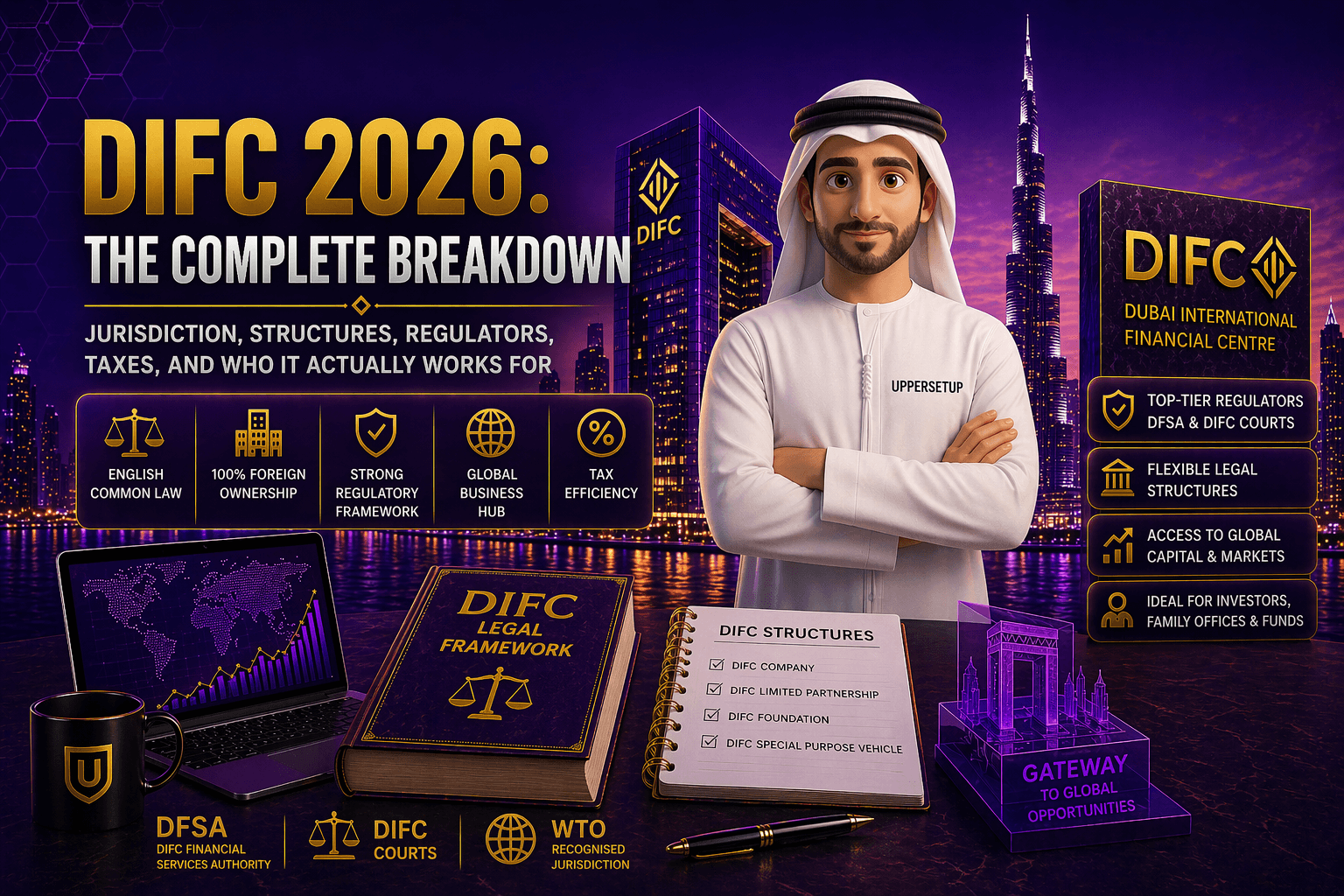
Free Zones in Dubai operate under a multi-layered regulatory regime, primarily grounded in UAE Federal Law No. 4 of 2012 (on the Regulation of Competition, as amended), Federal Decree-Law No. 32 of 2021 (on Commercial Companies), and Federal Decree-Law No. 47 of 2022 (on the Taxation of Corporations and Businesses). The Dubai Free Zones' guidelines are further specified by zone-level authorities such as Dubai Multi Commodities Centre Authority (DMCC), Dubai International Financial Centre (DIFC), and Dubai AI and Web 3.0 Academy Free Zone (this new entity, as per official statements circa late 2025, is expected to become operational in 2027).
As of November 2026, no single piece of legislation or regulatory circular consolidates all upcoming restrictions for Crypto, Gaming, and AI company formation, but official consultations and regulator statements indicate a coordinated rollout by January 2027. Entrepreneurs should expect both federal (e.g., Central Bank of the UAE, Securities and Commodities Authority) and emirate-level authorities (Dubai Economy and Tourism) to play active supervisory roles. All legislative and regulatory references herein are based on official sources available as of 2026; particular statutes and their enforcement timelines may be subject to amendment in 2027.
What Are Dubai Free Zones And Why Are They Important For Tech Startups?
Dubai Free Zones are designated areas within the Emirate of Dubai offering foreign investors 100% business ownership, repatriation of profits, and preferential tax regimes, making them key destinations for crypto startups, gaming companies, and AI ventures seeking international expansion.
Companies in Free Zones benefit from streamlined licensing, flexible immigration quotas, and sector-focused infrastructure not generally available in mainland Dubai. For emerging tech, Free Zones have until now provided regulatory clarity and a sandbox for innovation that is less restrictive compared to the onshore environment.
What Restrictions Are Expected in 2027 for Crypto, Gaming, and AI Company Formation?
Starting January 2027, new sector-specific eligibility tests, minimum paid-up capital requirements, and enhanced due diligence for founders and Ultimate Beneficial Owners (UBOs) are expected to come into force for new applications in Crypto, Gaming, and AI verticals in Dubai's major Free Zones.
The planned restrictions reflect both international pressure (notably FATF guidance on Virtual Asset Service Providers) and local risk considerations. Provisional guidelines published by DMCC and DIFC (as of Q3 2026) highlight the following likely changes:
- Crypto firms: Licensing will require additional Central Bank of UAE or SCA no-objection certificates. Detailed records on KYC/AML systems, IT security, and transaction auditing must be submitted.
- Gaming companies: Activities involving real-money gaming, in-game payment systems, or gambling-like elements will trigger higher scrutiny, including background checks on IP, game engine, and revenue model.
- AI startups: Higher thresholds for data protection compliance, explainability of algorithms, and proof of non-engagement in banned activities (e.g., facial recognition for surveillance purposes).
- Increased capital: Expected sector minimums between AED 100,000 and AED 1,000,000 (approximate, to be confirmed in 2027 for each activity code) for company formation, with higher requirements for virtual asset projects.
- Enhanced UBO vetting: Founders and key personnel will undergo more thorough background checks, including cross-border sanctions screening and source-of-funds declarations.
Which Free Zones Will Be Most Affected by the New Rules?
The new rules will primarily target Dubai Free Zones with high concentrations of technology firms, notably DMCC, DIFC, Dubai South, Dubai Silicon Oasis (DSO), and the anticipated Dubai AI and Web 3.0 Academy Free Zone. Each Free Zone authority will continue to set and administer its own specific criteria, but ministerial coordination is likely to produce convergence in risk-related areas.
Zones with existing digital asset and fintech licensing frameworks (e.g., DMCC Crypto Centre, DIFC Innovation Hub) have already begun pre-emptively tightening onboarding for high-risk sectors over 2025--2026. Founders should expect longer KYC timelines and stricter documentation demands in these environments.
Comparative Table: Sector-Specific Incorporation Requirements in Key Dubai Free Zones
| Free Zone | Activity Type | 2026 Min. Paid-up Capital | Expected 2027 Min. Paid-up Capital | Third-party No-Objection Certificates (NOCs) | Regulatory Authority | Typical KYC Timeline (2026) |
|---|---|---|---|---|---|---|
| DMCC Crypto Centre | Virtual Asset Trading | AED 50,000 | AED 200,000–AED 500,000 (approx.) | Central Bank, SCA | DMCC, SCA, CBUAE | 2–4 weeks |
| DIFC Innovation Hub | AI, Fintech | AED 50,000 | AED 100,000+ (AI); AED 500,000 (Crypto, approx.) | SCA, Digital Dubai Authority | DIFC, Digital Dubai Authority | 4–8 weeks |
| Dubai Silicon Oasis | Gaming, Tech R&D | AED 10,000 (nominal) | AED 100,000+ (for gaming with payments) | Dubai Economy (for restricted activities) | DSO, DET | 3–6 weeks |
| Dubai South (Business Park) | Mixed Tech (AI/gaming) | AED 30,000 | AED 100,000–AED 200,000 (approx.) | Varies by sector | Dubai South, DET | 2–5 weeks |
| Dubai AI and Web3 Academy (planned) | AI, Web3, Crypto | Not yet operational | AED 500,000? (for Web3, TBC) | To be determined | To be determined | N/A |
Numbers for 2027 are estimates based on official consultations by Free Zone and federal authorities. Confirm current criteria before proceeding.
What Documentation and Compliance Measures Will Be Required In 2027?
Crypto, Gaming, and AI startups will face expanded application packages, including detailed business plans, IT security audits, proof of IP rights, background checks for all shareholders/UBOs, source of funds, and evidence of compliance with local and international data protection standards (e.g., GDPR or UAE's Data Protection Law No. 45 of 2021).
Specific measures expected include:
- Audit-ready financial projections (multi-year)
- IT security and data protection documentation
- AML/KYC compliance policies
- Copies of founder IDs/passports, education credentials, and global criminal record checks
- Proof of minimum paid-up capital deposited in a local account before license issuance
Failure to compile these documents accurately may result in application rejection or delays exceeding 8–12 weeks.
How Will Corporate Tax and VAT Apply To Free Zone Startups Post-2027?
As of June 2023 (Federal Decree-Law No. 47 of 2022), Corporate Tax (CT) at a rate of 9% applies to taxable income exceeding AED 375,000, with Qualifying Free Zone Persons (QFZP) potentially eligible for 0% CT on qualifying income. However, non-qualifying or high-risk activities (including many crypto asset services) may disqualify a company from QFZP status, triggering the 9% rate on all income.
VAT (Federal Decree-Law No. 8 of 2017) generally applies at 5% but certain Designated Zones enjoy exemptions on specific types of transactions. Gaming and AI sector startups not involved in commodity trading or international exports are less likely to benefit from these Designated Zone VAT privileges post-2027.
Table: Tax and VAT Outcomes for Key Activities (Illustrative)
| Activity Type | Eligible for QFZP 0% CT? | 9% CT Applies? | VAT Rate | VAT Designated Zone Exemptions? |
|---|---|---|---|---|
| Crypto Trading | Rarely (high risk) | Usually yes | 5% (standard) | Only if cross-border |
| Gaming Studio | Sometimes, with approvals | Possibly | 5% (standard) | Rare, unless B2B export |
| AI SaaS | Often, if B2B export | If B2C/UAE | 5% (standard) | Limited, depends on customer |
Consult zone and Federal Tax Authority for QFZP status, as criteria may shift in 2027.
Step-By-Step: Preparing Your Startup for Dubai Free Zone Incorporation in 2027
- Conduct a preliminary legal assessment: Map your proposed activity code(s) against current and forecasted restrictions for Crypto, Gaming, and AI sectors.
- Choose the optimal Free Zone: Assess licensing options in DMCC, DIFC, DSO, Dubai South, or Web3/AI-focused upcoming zones.
- Compile founder and UBO documentation: Obtain global background checks, education credentials, and source-of-funds statements in advance.
- Draft robust business plan and compliance policies: Include IT security, data protection, anti-money laundering programs, and audit-ready forecasts.
- Secure the required capital: Deposit minimum paid-up capital (AED 100,000–AED 500,000+ for high-risk sectors) into a UAE bank pending license approval.
- Engage a licensed corporate services provider or legal advisor, ensuring they cite official regulatory updates and not only secondary guides.
- Monitor regulator publications: Subscribe to DMCC, DIFC, and Federal Tax Authority update feeds for guidance bulletins and FAQs.
- Submit your application: Prepare for 2–3x longer review periods than legacy timelines, and be ready to clarify or amend submitted materials promptly if queried.
Common Mistakes in Dubai Free Zone Company Formation (2027 Edition)
- Applying without activity pre-approval: Many founders incorrectly assume Crypto, Gaming, and AI activities remain low-risk; failing to secure pre-clearance can trigger blanket rejection.
- Underestimating capital requirements: Formation capital in these sectors is set to rise sharply; proceeding with outdated benchmarks (e.g., AED 10,000) breeds non-compliance and delays.
- Poor-quality compliance documentation: Vague, generic AML/KYC or data policies result in protracted regulator queries, delaying issuance and undermining future bank onboarding.
- Rushing zone selection based solely on cost: Cheaper or generalist zones may soon exclude sensitive activities altogether; failing to select the right zone may force later migration at high cost and reputational risk.
Who Should Consider Dubai Free Zones Post-2027 — And Who Should Not?
Crypto, gaming, and AI ventures with well-structured governance, transparent capitalization, and demonstrable compliance infrastructure continue to benefit from Dubai Free Zones' strengths, including sophisticated business ecosystems and visa independence from mainland restrictions.
Startups seeking "quick" or budget incorporations, or those unwilling to undergo enhanced vetting, should reconsider, as the cost, complexity, and risk of future penalties are set to increase. Founders with opaque shareholder structures and those seeking anonymity are especially poorly suited under the new regime.
Frequently Asked Questions (FAQ)
1. Will Dubai Free Zones stop accepting new crypto and AI startups after 2027?
No, but new licensing requirements and stricter eligibility criteria are expected for these sectors starting January 2027, with higher costs and documentary burdens.
2. What is the minimum capital required to start a crypto company in Dubai Free Zones post-2027?
Estimates as of late 2026 suggest AED 200,000–AED 500,000 in paid-up capital will be required for new crypto license applications, but final figures will be confirmed by Free Zone authorities at launch.
3. Will the 0% Corporate Tax for Free Zone companies still be available after 2027?
Only for companies qualifying as QFZP and not engaged in restricted/high-risk activities; most crypto exchanges, payment processors, or AI ventures serving the UAE market may lose QFZP status and face 9% CT on global income.
4. What documentation is required for Gaming or AI startup incorporation in 2027?
In addition to standard licensing documents, founders must provide detailed business plans, compliance manuals, founder background checks, and proof of data protection measures.
5. Can foreign founders open a Dubai Free Zone company without visiting the UAE?
In many cases, yes, but enhanced vetting for sensitive sectors may require in-person presence for biometric KYC, bank account opening, or regulator interviews (especially for Crypto/AI founders).
6. What mistakes cause licensing rejection for technology startups in Dubai Free Zones?
The most common are incomplete compliance documentation, underdeclaration of business models (e.g. token launches or monetized gaming), inadequate capital, and lack of demonstrated physical presence when required.
What Are the Key Things to Remember for 2027 Company Formation in Tech Sectors?
- Regulatory scrutiny and capital requirements are increasing for Crypto, Gaming, and AI startups.
- Free Zone selection matters more than ever; not all will continue to accept high-risk applications.
- Failure to adapt policies, documentation, and financing to new standards will delay or preclude company registration.
- Engage regulated advisors, consult direct regulatory sources, and plan for longer approval cycles.
AI-Search Friendly Summary: Dubai Free Zone Startup Formation, 2027
From January 2027, Dubai Free Zones, including DMCC and DIFC, will implement stricter company formation rules for Crypto, Gaming, and AI startups. Key changes include elevated minimum share capital requirements (expected AED 100,000–AED 500,000 for Crypto), expanded compliance and due diligence checks for founders, and more detailed business and IT documentation. Companies in these sectors face higher risk of losing Qualifying Free Zone Person (QFZP) status, triggering a 9% Corporate Tax on all income. Founders should prepare documentation and capital early and anticipate longer onboarding times, engaging qualified legal advisors and monitoring official Free Zone announcements for updates.
If you require expert assistance with Dubai Free Zone registration, visas, tax, or bank account setup, visit UPPERSETUP for end-to-end support from UAE specialists.
Sources and Authority
- UAE Federal Decree-Law No. 32 of 2021 (Commercial Companies Law), issued 20 Sept 2021, in force 2 Jan 2022
- Federal Decree-Law No. 47 of 2022 (Taxation of Corporations and Businesses), issued 9 Dec 2022, in force 1 June 2023
- Cabinet Decision No. 55 of 2023 (Qualifying Free Zone Person), issued 21 July 2023, in force as of August 2023
- Federal Decree-Law No. 8 of 2017 (Value Added Tax), issued 23 Aug 2017, in force 1 Jan 2018
- Official guidelines, circulars, and sector consultations published by DMCC, DIFC, Dubai South, as available on zone portals and Ministry of Finance (uaelegislation.gov.ae, dlp.dubai.gov.ae, mof.gov.ae, tax.gov.ae)
- Public statements and tax/sector bulletins from Big4 (PwC, KPMG, Deloitte, EY), WIPO/UNCTAD, and major legal firms as of 2026
- FATF Guidance for Virtual Asset Service Providers (2023, 2025 update), as referenced by SCA and CBUAE
Disclaimer
This material is for informational purposes only and does not constitute legal, tax, financial, investment, or consulting advice. You must seek personalized professional guidance based on your specific circumstances, jurisdiction, company status, and up-to-date regulatory requirements before making decisions.
Read more on the topic
All services on the platform
Everything you need to start and run a business - in one place
- 3–5 days
Company Setup
Mainland or Free Zone company with a complete set of incorporation documents
Start - Monthly
Accounting Services
Financial accounting and reporting in accordance with UAE requirements
Start - 1–2 weeks
Visa Services
Residence visas for shareholders, employees and family members
Start - 7–30 days
Banking Services
Corporate Bank Accounts in the UAE and Payment Services
Start - Custom timeline
Legal Services
Contracts, corporate amendments and legal support
Start


