





































































































 International Free Zone Authority
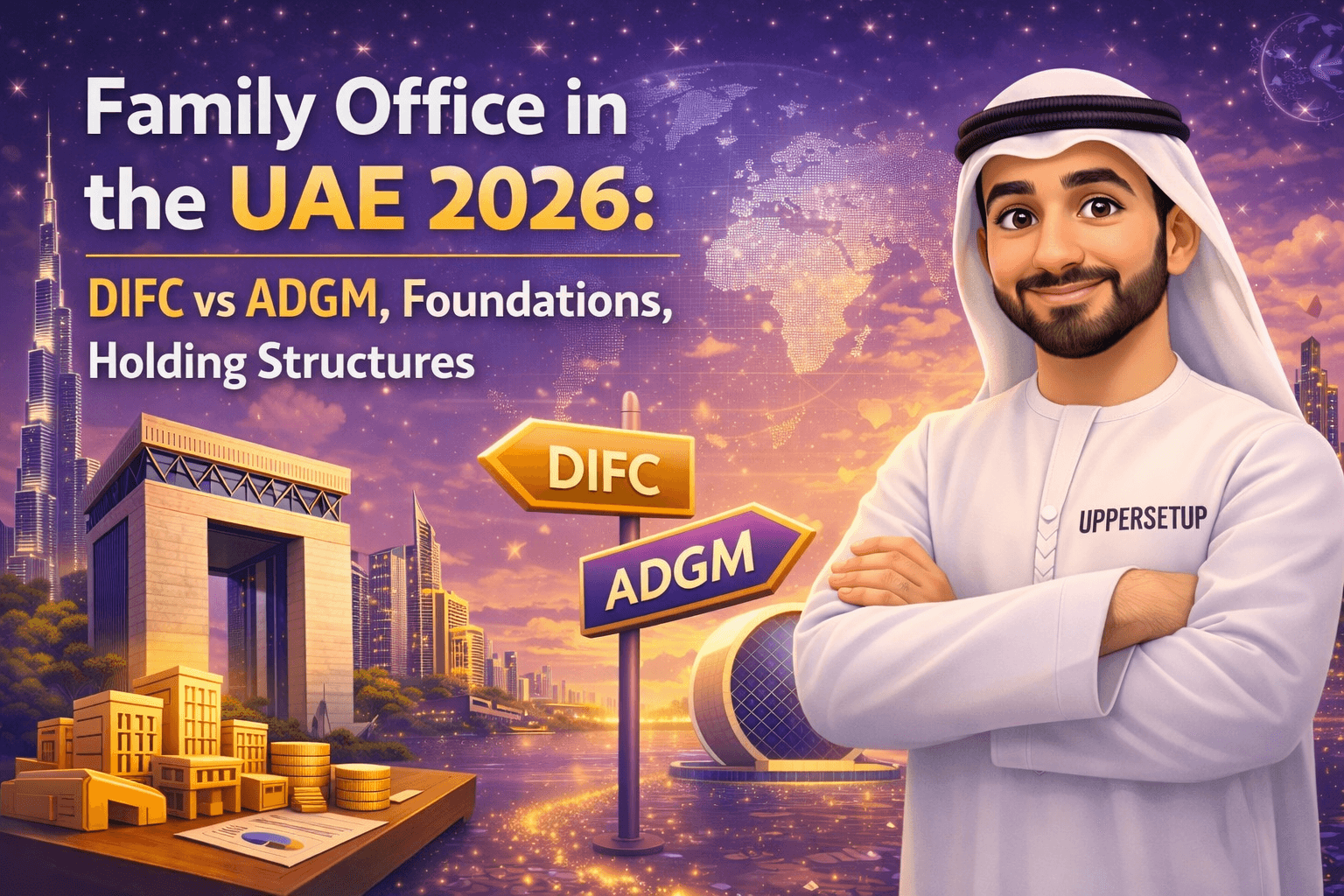
Why DIFC Should Not Be Treated as a “Typical Free Zone” — and Which Businesses Actually Belong There in 2026

1. Why DIFC Should Not Be Analyzed as a “Typical Free Zone”
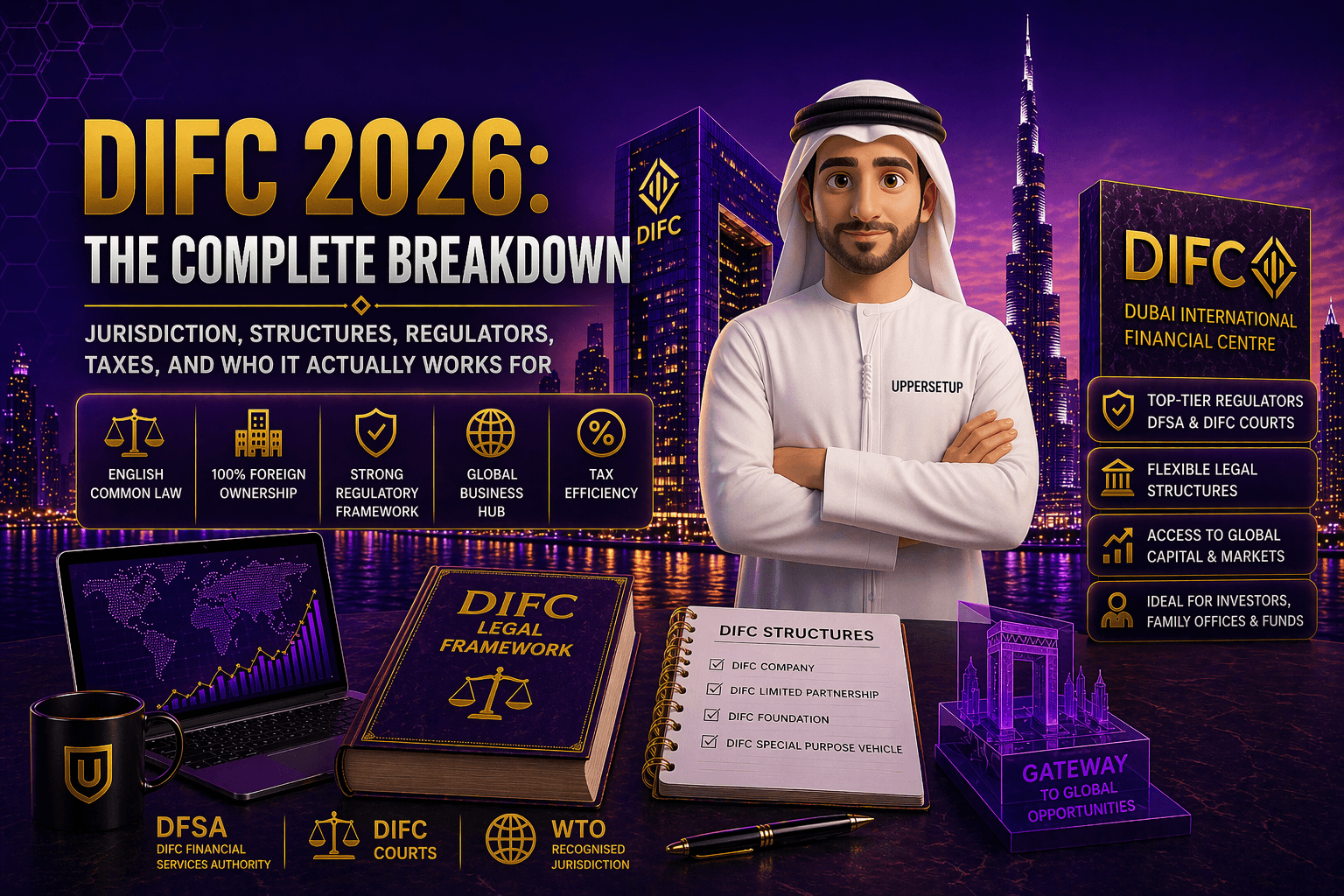
The main mistake entrepreneurs make is placing DIFC in the same category as traditional free zones, where the main question comes down to the cost of the license, office, and speed of registration. DIFC is not just a territory with tax and corporate benefits, but an independent legal and regulatory ecosystem. The official DIFC website clearly states that the centre operates under a robust regulatory and legal framework, and that its judicial system is based on English common law. DFSA, in turn, explicitly states that it is an independent regulator of financial services conducted in or from DIFC.
In practical terms, this means the following. DIFC is not chosen when the goal is “affordable company formation in the UAE”, but when a business critically requires:
— an internationally understandable legal environment;
— a high reputation of the jurisdiction;
— bankability and investor acceptability of the structure;
— access to a financial ecosystem;
— a proper legal wrapper for capital, investors, assets, and complex contracts.
That is why the question about DIFC should not sound like this:
“Where should I open a company?”
But like this:
“Does my business actually require the international financial and legal infrastructure of DIFC?”
2. What Really Differentiates DIFC from Other Jurisdictions in the UAE
2.1. Independent Legal System Based on English Common Law
DIFC officially states that its judicial and legal system is built on English common law. This is not a marketing slogan, but a fundamental characteristic of the jurisdiction. For investors, banks, international lawyers, and private capital structures, this means more predictable contractual logic, clear legal protection mechanisms, and a familiar legal environment for cross-border transactions.
For an entrepreneur, this is particularly important in four scenarios:
if there are international investors in the structure;
if assets or transactions are distributed across multiple jurisdictions;
if the company works with institutional counterparties;
if the structure must go through due diligence, an investment round, or a dispute.
A standard free zone may be sufficient for trading or services. But when it comes to legal protection of capital, governance, and complex corporate relationships, DIFC stops being a “more expensive alternative” and becomes a specialized infrastructure.
2.2. Independent Financial Services Regulator — DFSA
DFSA explicitly states that it regulates financial services conducted in or from DIFC, including asset management, banking and credit services, securities, collective investment funds, custody and trust services, insurance, and other regulated activities. This is a critically important point: DIFC is not just a place where “you can register a financial company”, but a place where you can build a regulated financial business of international level.
This explains why DIFC is particularly suitable for:
— wealth management;
— investment advisory;
— asset management;
— fund-related structures;
— investment platforms;
— financial infrastructure around private capital.
Conversely, if a business does not require such a regulatory environment, part of DIFC’s advantages may simply not be monetized.
2.3. DIFC Is an Ecosystem, Not Just Company Registration
DIFC develops not only its legal framework but also a set of corporate structures and specialized tools. Official DIFC materials on company structures and private/family wealth solutions directly indicate the availability of various corporate forms and solutions, including companies, prescribed companies, foundations, trust-related instruments, and private/family wealth structures. In 2024, DIFC updated its Prescribed Company regime, and in February 2026 announced the adoption of new Variable Capital Company Regulations to expand investment structuring capabilities and proprietary investment structures within the centre.
This means that DIFC is strong precisely where structure is required, not just a license.
3. Which Companies Are Best Registered in DIFC
3.1. Family Offices, Private Wealth, and Wealth Management Structures
If we speak about the most natural profile for DIFC in 2026, one of the strongest categories is family offices, private wealth structuring, succession planning, governance of family businesses, and related structures. DIFC officially supports the Family Wealth Centre and publishes dedicated materials on private and family wealth, including relevant laws, regulations, and checklists for family offices and foundations. DIFC updates in 2025–2026 also emphasize programs related to family office structuring, succession planning, governance, and intergenerational transition.
This makes DIFC particularly logical for:
— single family offices;
— wealth coordination vehicles;
— holding entities for family assets;
— foundations for succession and governance planning;
— structures around family businesses that require not just an ownership shell, but a legally mature governance system.
It is important to understand that DIFC is suitable not because it is a “fashionable zone for wealthy families”, but because it combines:
— a legal framework;
— foundations;
— family-related regulations;
— an internationally recognized judicial system;
— a professional advisory ecosystem.
Why DIFC is particularly strong here
Firstly, because a foundation in DIFC is not an abstract concept, but a legally structured and well-established mechanism. DIFC has a Foundations Law and dedicated checklists for family offices and foundations.
Secondly, because DIFC actively develops the family wealth segment, rather than merely allowing its existence.
Practical conclusion: if the objective involves family capital, succession, governance, and private wealth architecture, DIFC is one of the most appropriate jurisdictions in the UAE.
3.2. Holding Companies, Ownership Structures, and Capital Vehicles
The second major category is holding companies, investment holding structures, ownership vehicles, and corporate entities used to hold assets, shares, rights, and investments. DIFC promotes flexible corporate structures and actively develops the Prescribed Company regime as a structuring tool.
A key distinction must be made:
A basic holding company can be registered in many UAE jurisdictions.
But a holding structure that must be understandable to investors, banks, and lawyers in a cross-border environment requires a different legal wrapper.
DIFC is particularly suitable when:
— assets are located in multiple jurisdictions;
— the structure will undergo investor due diligence;
— English legal logic is important;
— governance and transparent ownership architecture are required;
— the company is part of a broader capital structure, not just a passive entity.
Prescribed Company as a separate tool
In July 2024, DIFC officially updated its Prescribed Company Regulations, stating that the changes expand and simplify the regime. This strengthens DIFC’s position as a jurisdiction for precise ownership structuring.
In practice, DIFC is not for “any company”, but for companies where ownership structure itself is part of the strategy.
3.3. Investment Platforms, Private Capital, and Fund-Facing Structures
The third category is companies that require an investment platform, private capital architecture, a structure oriented toward interaction with funds, a proprietary investment vehicle, or an institutional-grade vehicle for investment activity.
DIFC is particularly strong here for two reasons.
First, it has DFSA as a financial regulator.
Second, in 2026 DIFC further expanded its investment structuring toolkit through the Variable Capital Company Regulations, explicitly stating that the objective is to enhance investment structuring and asset management capabilities for proprietary investment projects in DIFC.
This makes DIFC a logical choice for:
— investment holding platforms;
— venture and private capital ownership structures;
— companies related to investment management;
— proprietary investment vehicles;
— companies being built with a view to working with funds, limited partners, co-investors, and institutional participants.
However, precision is required here. Not every “investment company” requires DIFC. If we are talking about a simple holding company without a regulated component and without an investor-facing orientation, alternatives in the UAE may be cheaper and sufficient. DIFC is needed where not only registration matters, but also the legal and regulatory architecture of the investment platform.
3.4. Regulated Financial Companies and Services That Truly Need a Licensed Environment
This is perhaps the most obvious segment where DIFC is genuinely a specialized jurisdiction. DFSA officially regulates asset management, banking and credit services, collective investment funds, custody, trust services, securities, insurance, and other financial activities. Therefore, if a company truly conducts regulated financial activity, DIFC often turns out not to be “one of the options,” but one of the few appropriate options in the UAE.
These include:
— wealth management;
— investment advisory;
— regulated financial consulting;
— services related to investment funds;
— financial infrastructure.
Why cost cannot be the only consideration here
Many entrepreneurs compare DIFC with a regular free zone based on registration cost. This is a methodological mistake. In regulated financial business, the issue is not the price of the license, but:
— legal certainty;
— regulator perception;
— banking relationships;
— investor confidence;
— enforceability of obligations and compliance architecture.
If a business truly falls within the regulated perimeter, saving on jurisdiction means shifting risk into the future.
3.5. Premium Consulting, Investment Advisory, and High-End Professional Services
There is another category where DIFC may be particularly useful, although formally this is not always pure financial regulation. This refers to companies building investor-facing consultancy, M&A advisory, corporate structuring advisory, private capital support, and high-end professional services — in other words, a service business where the jurisdiction itself and its reputational value form part of the commercial proposition.
A pragmatic conclusion is appropriate here:
if the client is buying not only the service, but also the context, address, legal environment, and reputation of the structure, DIFC can create real commercial advantage.
However, it is also important here not to confuse premium perception with universal necessity. DIFC is not mandatory for every consulting company. It is particularly appropriate if:
— the client base is international or institutional;
— transactions are complex and cross-border;
— trust in the structure has economic value;
— the location and jurisdiction themselves enhance the commercial value of the business.
4. Companies That Can Be Registered in DIFC, but Not Always Rationally
There is a significant number of businesses that can formally be registered in DIFC, but for which DIFC is not always the best choice economically or strategically.
These most often include:
— trading companies;
— e-commerce;
— warehousing and logistics activities;
— manufacturing;
— startups with limited budgets and no institutional investor angle;
— local service businesses aimed at the mass market in mainland UAE.
The reason is simple: the advantages of DIFC are not in warehouse infrastructure, not in low-cost setup, and not in industrial practicality. Therefore, when an entrepreneur chooses DIFC for trade or a simple operating business, they often end up paying for advantages they do not actually use.
5. When DIFC Is Most Often Not the Best Choice
5.1. Trade, Logistics, and Goods Flow
DIFC was not built as an industrial or logistics zone. In its official positioning, the centre is described as an international financial hub, not a trade or industrial platform. Therefore, companies for which the following are critical:
— warehouses;
— import-export logic;
— re-export;
— containerized goods flows;
— production premises;
more often find better-suited jurisdictions in the UAE.
5.2. Small Business with a Limited Budget
If the objective is a budget launch of a company in the UAE, without a complex investment structure, without regulated financial activity, and without an international investor profile, then DIFC will often be an excessive solution. This is not because DIFC is “bad,” but because it is designed as a different product: a more expensive, but more sophisticated and institutionally strong environment.
5.3. Attempting to Use DIFC as a “Tax Benefit Without Structure”
After the introduction of corporate tax in the UAE, it is extremely risky to continue thinking in terms of “free zone = 0% by default.” The Federal Tax Authority explicitly states that the free zone guidance describes the conditions under which a company may be treated as a Qualifying Free Zone Person and apply the 0% rate, and also defines qualifying and excluded activities. In other words, DIFC is not in itself a tax exemption.
6. DIFC Tax Regime: Where Entrepreneurs Most Often Make Mistakes
6.1. Free Zone Status Does Not Eliminate Corporate Tax
The Federal Tax Authority explicitly states that corporate tax applies throughout the UAE, and even if a taxpayer is registered for value added tax, this does not release it from the requirement to register separately for corporate tax. This also applies to companies in DIFC.
Accordingly, a company in DIFC must assess:
— whether corporate tax registration is required;
— whether it qualifies for the Qualifying Free Zone Person regime;
— what type of income it has;
— whether any activity falls under excluded activities;
— how reporting is maintained.
6.2. Qualifying Free Zone Person Is a Conditional Regime
The Federal Tax Authority explicitly states that the 0% rate is available only if the conditions required to obtain Qualifying Free Zone Person status are met, and only if activities are correctly classified as qualifying rather than excluded.
This is especially important for DIFC because many businesses there are complex holding, advisory, and investment structures, where incorrect income classification can be very costly.
6.3. Transfer Pricing Rules Apply Within the UAE as Well
The Federal Tax Authority separately states that transfer pricing rules apply both to domestic and cross-border transactions between Related Parties and Connected Persons, regardless of their location.
This means that a company in DIFC cannot ignore:
— related parties;
— connected persons;
— the arm’s length principle;
— transfer pricing documentation.
7. Hidden Risks Entrepreneurs Often Underestimate in DIFC
7.1. Jurisdiction Reputation Does Not Replace Real Substance
One of the most dangerous misconceptions is to believe that the mere fact of being incorporated in DIFC automatically makes a structure “high-quality” in the eyes of a bank or investor. In reality, the bank and investor due diligence will still examine:
— ultimate beneficial owners;
— source of funds;
— business model;
— governance system;
— transaction logic;
— jurisdictional logic of the structure.
DIFC improves perception, but it does not replace the real operational and managerial foundation of the business.
7.2. High Cost of Error When the Wrong Jurisdiction Is Chosen
If a trading, e-commerce, or warehousing company is registered in DIFC simply “for status,” it may find itself paying for an ecosystem it does not need. This is not a legal error, but an error in business architecture.
7.3. Complex Structures Without Tax Architecture Create a False Sense of Security
It is precisely in DIFC that entrepreneurs are especially inclined to overestimate the strength of the jurisdiction itself. But without a properly built tax position, accounting, related party logic, and transfer pricing system, even a strong legal shell does not protect against problems with tax authorities or banks.
8. Practical Conclusion: Who DIFC Is Best Suited For
If we remove the marketing noise, DIFC is most appropriate for the following categories:
8.1. Family Offices and Private Wealth Structures
When private wealth architecture, succession planning, foundations, governance, and an internationally understandable legal environment are required.
8.2. Holding Companies and Ownership Structures
When the structure must withstand due diligence, governance requirements, and cross-border ownership logic.
8.3. Investment Platforms and Private Capital
When a vehicle is needed for proprietary investments, co-investments, interaction with funds, or institutional investment architecture.
8.4. Regulated Financial Companies
When the activity genuinely falls under DFSA regulation.
8.5. Investor-Facing Advisory and Premium Professional Services
When the jurisdiction, legal environment, and reputational value themselves strengthen the company’s commercial model.
9. UPPERSETUP’s Approach to Choosing DIFC
At UPPERSETUP, the right question is not:
“Can a company be opened in DIFC?”
The right question is:
“Does my business actually require DIFC’s legal, regulatory, and investment infrastructure?”
Therefore, when choosing DIFC, it is necessary to analyze not only the cost of creating the structure, but also:
— the type of income;
— the presence of regulated activity;
— the investor profile;
— the ownership structure;
— related parties and connected persons;
— corporate tax status;
— readiness to work with banks;
— readiness for due diligence;
— the 12–36 month strategy.
This is what distinguishes simple company registration from a properly built capital architecture.
All services on the platform
Everything you need to start and run a business - in one place
- 3–5 days
Company Setup
Mainland or Free Zone company with a complete set of incorporation documents
Start - Monthly
Accounting Services
Financial accounting and reporting in accordance with UAE requirements
Start - 1–2 weeks
Visa Services
Residence visas for shareholders, employees and family members
Start - 7–30 days
Banking Services
Corporate Bank Accounts in the UAE and Payment Services
Start - Custom timeline
Legal Services
Contracts, corporate amendments and legal support
Start


