








































 International Free Zone Authority
Why in 2026 ADGM Is chosen not for business registration, but for capital structuring
Introduction
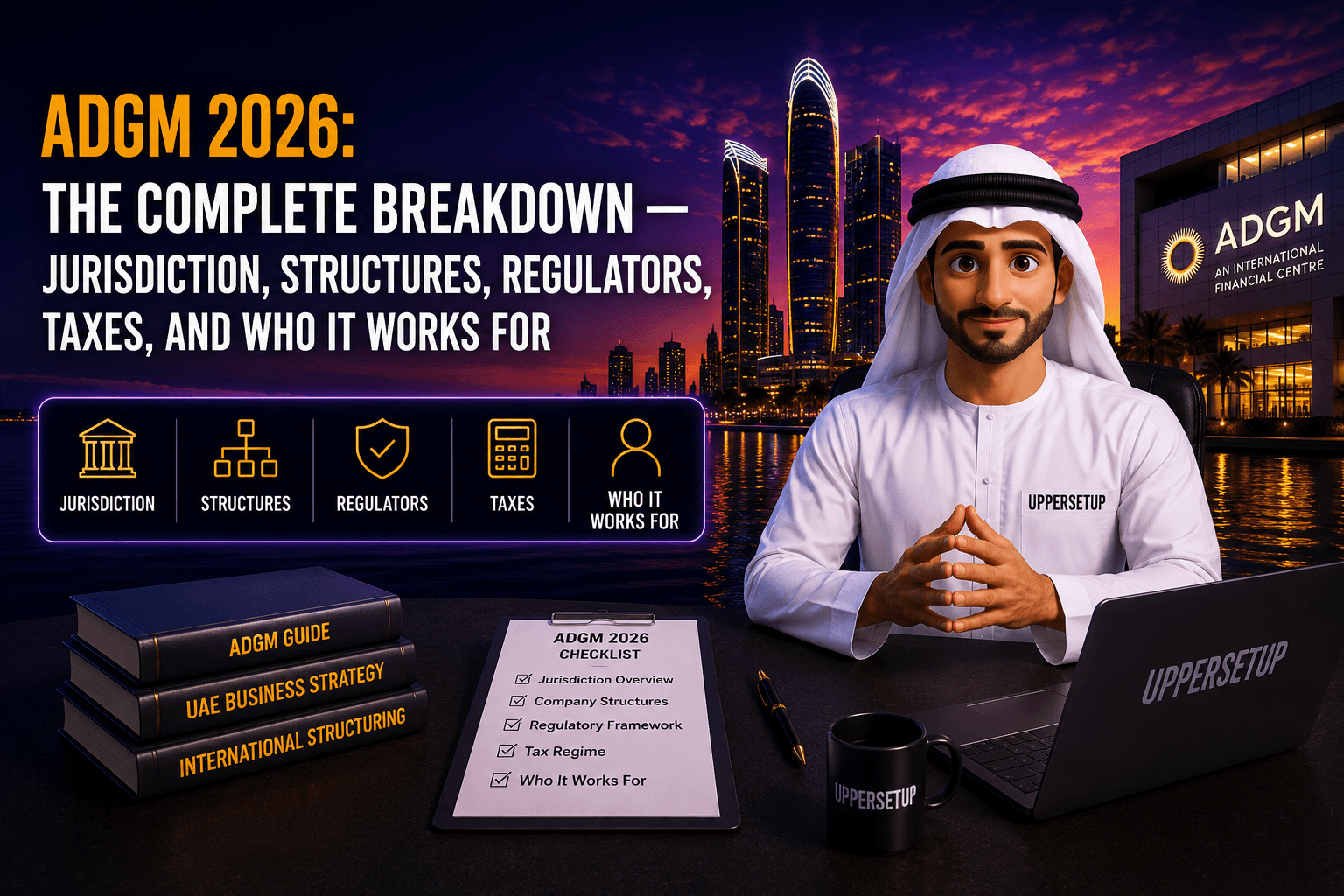
In 2026, ADGM can no longer be correctly described as “just another free zone for company registration.” According to ADGM’s own official model, ADGM is an international financial centre with its own civil and commercial legal system, independent courts, and direct application of English common law. This is a fundamentally different level of jurisdictional design from that of most zones, which the market has become accustomed to perceiving primarily as licensing platforms.
That is precisely why, in 2025–2026, the centre of gravity of ADGM noticeably shifted from the perception of a “zone for fintech and individual special purpose vehicles” to the perception of a “platform for capital structuring, funds, private wealth, and complex ownership structures.” According to ADGM itself, by the end of 2025, assets under management grew by 36%, the number of asset and fund managers reached 171, and the number of funds reached 244. Over the same year, 3,769 new licences were issued, and the total number of active licences reached 12,671. These figures already show not a niche jurisdiction, but a rapidly growing institutional ecosystem of capital.
If one formulates the essence sharply, ADGM in 2026 is chosen not when there is a need to “simply open a company,” but when there is a need to fix rights, control, ownership, inheritance, investment logic, and the structure of a transaction in a jurisdiction understandable to global capital participants. This is where its real strength lies today.
1. ADGM is first and foremost a separate legal system, not just a zone
The key feature of ADGM is that it was created as a financial free zone with its own civil and commercial laws. On the official page of the ADGM legal framework, it is directly stated that the legal framework of the centre is based on federal and emirate legislation, including Abu Dhabi Law No. 4 of 2013, and that ADGM provides market participants with its own world-class legal and regulatory system.
Even more importantly, ADGM directly applies English common law. On the ADGM courts page, it is stated that ADGM is the first jurisdiction in the Middle East to directly apply English common law. A separate page on English common law explains that the basis of civil and commercial law in ADGM is provided by the Application of English Law Regulations 2015, and that English common law, including the principles of equity, applies directly in ADGM. This is not a stylistic detail and not a marketing formulation. For investors, funds, family structures, and international transactions, this means a fundamentally different level of predictability of the legal environment.
It is for this reason that choosing ADGM is always a choice not only of a licence, but also of a legal system. A business that enters ADGM as “just an expensive free zone” very often does not understand that in fact it is choosing a jurisdiction for property rights, corporate governance, dispute structuring, and investor protection.
2. The real shift of 2025–2026: ADGM concentrates capital, not only registrations
The most important indicator of the relevance of ADGM in 2026 is not the number of conversations about it, but the officially published dynamics. ADGM reported that by the end of 2025, assets under management grew by 36%, the number of asset and fund managers reached 171, and the number of funds reached 244. In the same announcement, the centre stated that the number of active licences grew to 12,671, while the number of people working within the ecosystem increased by more than 50% to 44,339.
Even earlier, by the end of the first half of 2025, ADGM had reported 42% growth in assets under management, 154 asset and fund managers, and 209 funds, as well as 11,128 active licences. This is important not only as an illustration of growth. It shows the consistency of the trend: ADGM is growing not through a single-quarter surge, but through a stable institutional movement toward capital management, fund infrastructure, and international structures.
The practical conclusion that follows from this is that in 2026 ADGM should be viewed not as “one of the zones of Abu Dhabi,” but as a platform where asset managers, funds, private capital, and ownership structures are concentrated. For the market, this changes the very angle of assessment. What matters here is no longer only the cost of entry, but the type of capital, rights, and investment logic that this jurisdiction is able to serve.
3. ADGM is less and less about “just business” and more and more about funds, asset management, and private wealth structures
If one looks at the official business directions of ADGM, it directly highlights corporate headquarters, corporate treasury, holding companies, special purpose vehicles, foundations, family office structures, wealth and asset management, capital markets, digital assets, and fintech. In other words, ADGM itself describes itself as a platform not only for regulated financial players, but also for ownership structures, capital, and corporate solutions.
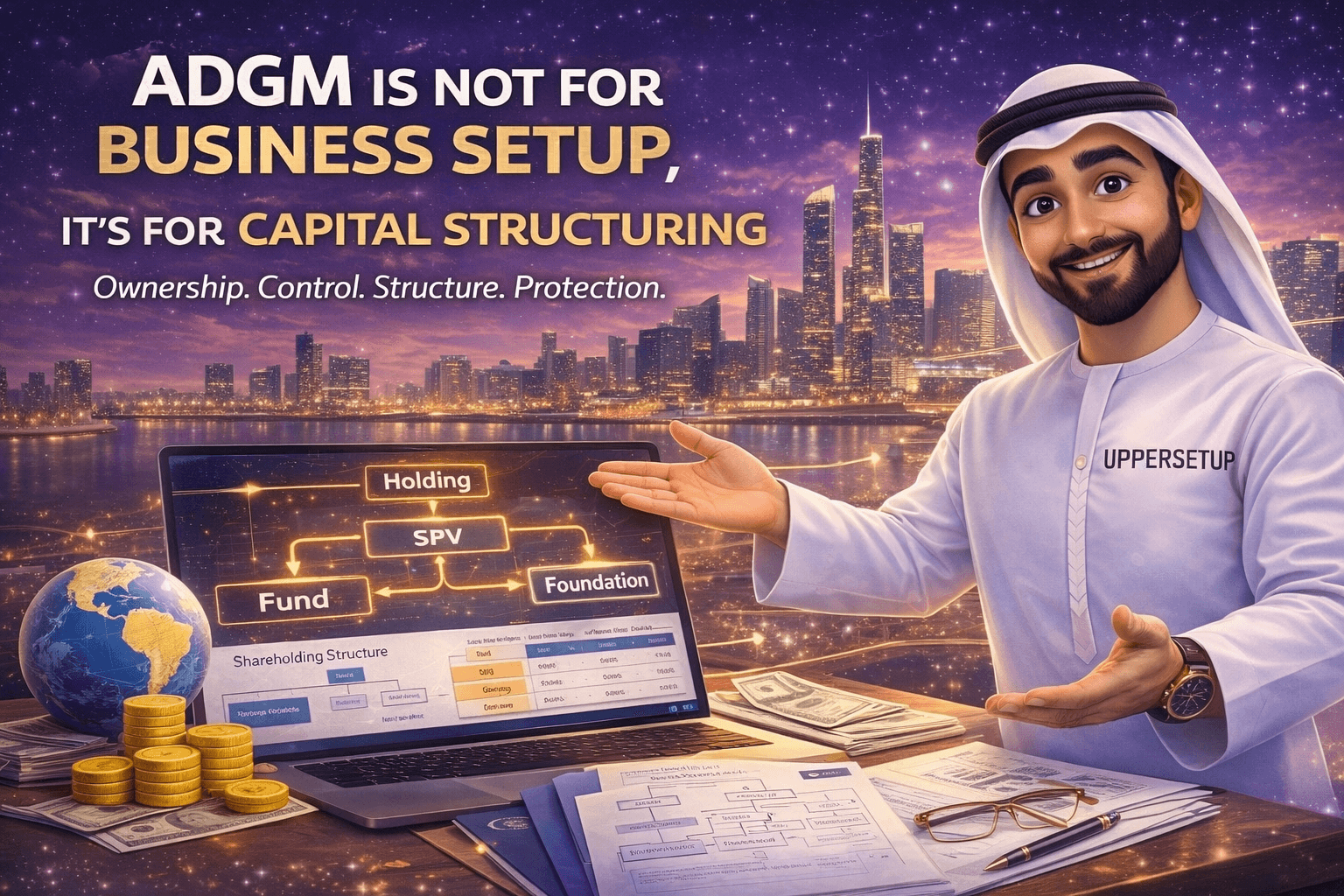
From this follows a very specific practical conclusion. ADGM is especially logical where the task consists of one or several of the following elements: creating a special purpose vehicle to hold an asset or a transaction; structuring a fund or a capital management platform; creating a holding structure with a clear corporate logic; designing a family office structure; building a foundation for asset protection and inheritance; placing treasury or headquarters in a legal environment understood by international participants. In these scenarios, the value of ADGM arises not from the mere fact of registration, but from the combination of law, courts, regulator, and reputational architecture.
4. Family office structures and private wealth: this is no longer a side niche, but a deliberate direction of ADGM
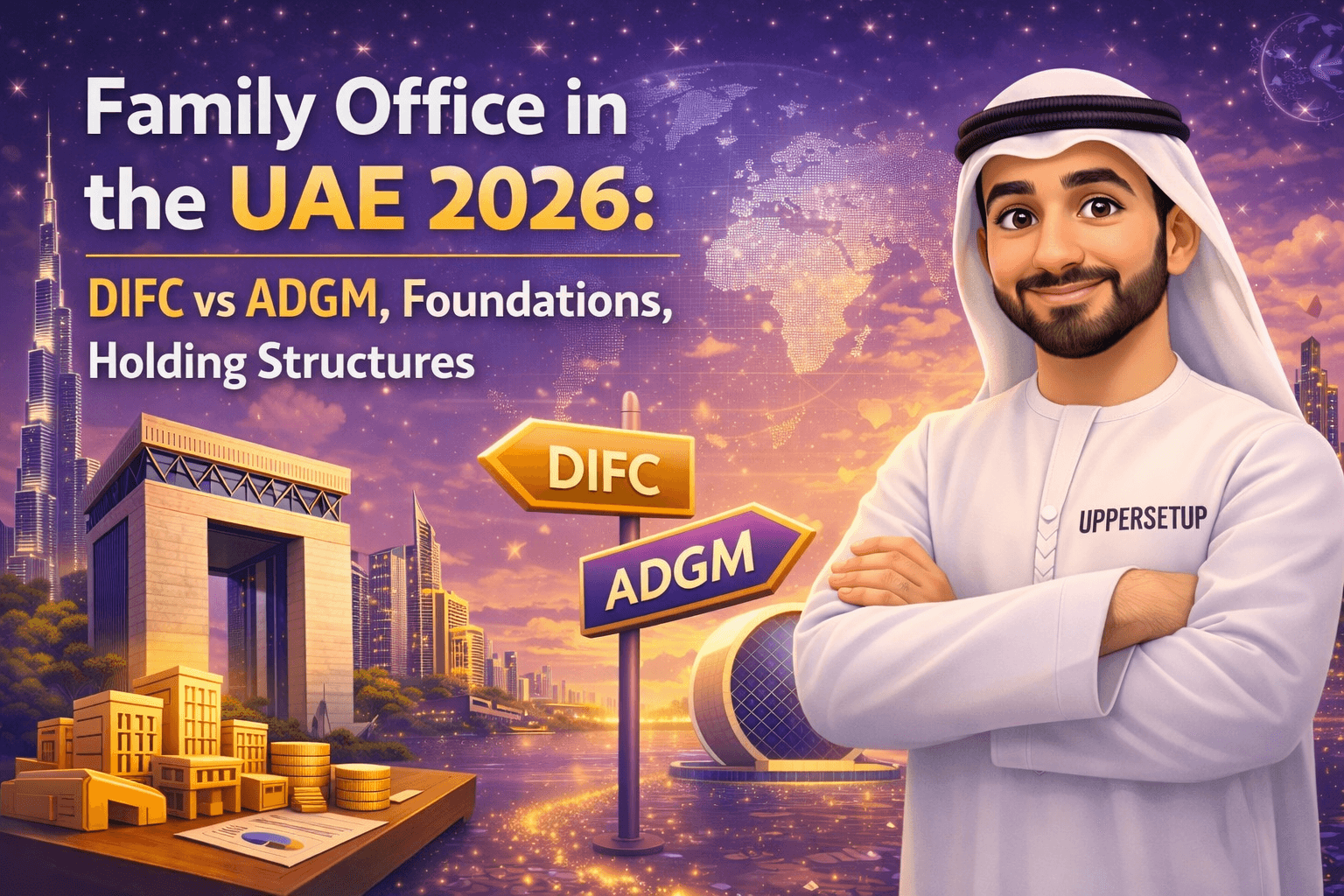
It is particularly telling how ADGM works with the subject of family office structures. In the public consultations of the ADGM Registration Authority, Consultation Paper No. 5 of 2024 is separately posted, concerning Single Family Offices and Company Charges. In it, a Single Family Office is described as a structure whose main purpose is oversight of investment management, inheritance planning, tax management, and other aspects of the capital and assets of one affluent family, including complex financial, legal, and organisational services. The mere fact that such a consultation exists shows that the subject of family office structures for ADGM is not secondary, but institutionally designed.
In addition, ADGM uses the family office agenda at the level of its own events platform. In the announcement regarding the programme of Asset Abu Dhabi and the International Family Office Congress, it was emphasised that the discussion concerned the growth of the family office sector in Abu Dhabi, family capital succession, investment logic, and long-term development. This means that a family office structure in ADGM is already not only a question of legal form, but also part of a broader private wealth ecosystem.
In practice, this changes the attitude of capital owners toward ADGM. If earlier ADGM was often associated primarily with fintech, regulated finance, and special purpose vehicles, now it is increasingly difficult to separate it from topics of wealth preservation, succession planning, investment oversight, and family governance. That is where its relevance lies: it is becoming a jurisdiction where capital is not simply placed, but structured for a long cycle of ownership and transfer.
5. Special purpose vehicles, foundations, and corporate service providers: ADGM institutionalises the very infrastructure of structuring
One of the strongest sides of ADGM is not merely the existence of special purpose vehicles or foundations as products, but how deeply the infrastructure of their use is built. On the page of corporate service providers, ADGM directly points out two key features of the regime: persons who provide or intend to provide corporate services in ADGM must comply with enhanced regulatory requirements; and for the creation and maintenance of a non-exempt special purpose vehicle or foundation, the appointment of a licensed ADGM corporate service provider is required.
This is a very important institutional signal. ADGM does not limit itself to “allowing special purpose vehicles.” It creates a regulated layer of professional participants through whom a significant part of structuring must pass. On a separate guidance and resources page, ADGM clarifies that the mandatory appointment of a corporate service provider is required specifically for non-exempt special purpose vehicles and foundations, whereas for exempt special purpose vehicles and exempt foundations such appointment is not mandatory. In other words, within the regime there is already not merely a form, but a subtle gradation by type of structure and level of required support.
For the market, this means the following: ADGM in 2026 is not simply a jurisdiction where one can register a special purpose vehicle or foundation, but a jurisdiction where structuring itself becomes professionalised and institutionally controlled. For serious capital, this is more of an advantage than a disadvantage: entry discipline is higher, the role of the service provider is clearer, and the chaos of structures is lower. But for those looking for a “quick shell for an asset,” this also means that ADGM will require more logic, more preparation, and higher quality at the entry stage.
6. Foundations in ADGM: this is not a decorative instrument, but a structure for ownership, asset protection, and succession
The regime of foundations in ADGM was from the outset created as an instrument for private capital and ownership structures. In the official material on foundations, it is stated that a foundation allows family assets to be consolidated into a single top holding structure and is used for wealth preservation, family succession planning, asset protection, and corporate structuring. This description is important because it reveals a foundation not as a rare legal form, but as an instrument of real long-term ownership design.
That is precisely why foundations in ADGM must be perceived more broadly than merely as an alternative to a trust or a company. For a capital owner who has several jurisdictions, family interests, assets of different classes, and the task of controlling succession, a foundation becomes not a form “for decoration,” but a legal container for the architecture of ownership. In combination with English common law and ADGM’s own courts, this makes the foundation especially understandable for international capital.
7. ADGM is not suitable for everyone: it is not the best entry point for any operating business
This is exactly where it is important to destroy one more myth. The high status of ADGM does not mean that it is automatically the optimal platform for any business. On the ADGM business setup page, it explicitly divides categories of activity into financial, non-financial, and retail. For financial activity, a separate authorisation process is предусмотрен through the Financial Services Regulatory Authority before the stage of registration and incorporation. The question is not only that ADGM allows different types of business, but that the depth of regulation here is initially higher than in the usual logic of “received a licence and started working.”
In addition, the same page states that physical presence within the jurisdiction is a requirement for ADGM entities, and an exception is expressly made only for special purpose vehicles. In other words, ADGM is not built as a light zone for accidental operational entry. This is a jurisdiction where a business is expected to have a well-thought-out model of structure, activity, and presence.
The practical conclusion here is simple but important: ADGM is especially strong where law, capital structure, investor logic, and corporate governance are more important than low cost and speed of launch. For simple local operating business, especially at an early stage, ADGM will often be excessively complex and strategically not the most rational choice. For capital, a fund, a holding structure, a family office structure, a treasury centre, or a complex transaction — the opposite is true.
8. Banking and compliance logic: ADGM raises trust, but at the same time raises expectations
Although ADGM itself does not open bank accounts, its institutional architecture affects how a structure is perceived by counterparties, investors, and compliance functions. On the page concerning beneficial ownership and control, ADGM directly emphasises that the identification of beneficial ownership is an integral part of the process of reviewing an application for registration of a legal entity and that the relevant records must be kept up to date throughout the entire life cycle of the structure. This is an important marker: the jurisdiction from the outset builds entry through transparency of control and ownership.
In combination with the corporate service provider regime, public registers, and its own legal system, this makes ADGM strong from the point of view of trust, but not “easy” from the point of view of superficial entry. In other words, ADGM helps strong structures look even stronger, while weak or unclear structures become even more visible. For a serious investor, this is an advantage. For those who come without ownership logic, without a clean control structure, and without proper preparation, this becomes a source of additional questions.
9. Where ADGM is especially strong in 2026
If one looks at the official business directions of ADGM, it directly highlights corporate headquarters, corporate treasury, holding companies, special purpose vehicles, foundations, family office structures, wealth and asset management, capital markets, digital assets, and fintech. In other words, ADGM itself describes itself as a platform not only for regulated financial players, but also for ownership structures, capital, and corporate solutions.
A very concrete practical conclusion follows from this. ADGM is especially logical when the task consists of one or several of the following elements: creating a special purpose vehicle for ownership of an asset or a transaction; structuring a fund or a capital management platform; creating a holding structure with a clear corporate logic; designing a family office structure; building a foundation for asset protection and inheritance; placing treasury or headquarters in a legal environment understandable to international participants. In these scenarios, the value of ADGM arises not from the fact of registration, but from the combination of law, courts, regulator, and reputational architecture.
10. The most important conclusion: in 2026, ADGM is a jurisdiction for those who structure capital, not for those who simply launch a business
If one removes the advertising noise and looks only at the official facts, the picture becomes very clear. ADGM is a financial centre with its own legal system, independent courts, direct application of English common law, a growing ecosystem of funds and asset managers, a separate agenda on family office structures, a developed regime for special purpose vehicles and foundations, and an institutionalised layer of corporate service providers. This is no longer “just another free zone.” It is a full-fledged platform for capital structuring.
Therefore, in 2026 ADGM is chosen not because “a company can be opened there.” It is chosen when the question runs deeper: how to formalise ownership, how to protect capital, how to prepare a fund or holding structure, how to build a family office structure, how to ensure legal predictability in a transaction, or how to create a platform understandable to international capital. This is where the real shift lies: ADGM is less and less about business registration and more and more about the architecture of capital.
All services on the platform
Everything you need to start and run a business - in one place
- 3–5 days
Company Setup
Mainland or Free Zone company with a complete set of incorporation documents
Start - Monthly
Accounting Services
Financial accounting and reporting in accordance with UAE requirements
Start - 1–2 weeks
Visa Services
Residence visas for shareholders, employees and family members
Start - 7–30 days
Banking Services
Corporate Bank Accounts in the UAE and Payment Services
Start - Custom timeline
Legal Services
Contracts, corporate amendments and legal support
Start


