










 International Free Zone Authority
Opening a UAE Corporate Bank Account in 2027: How Automation and AI Are Reshaping Approvals
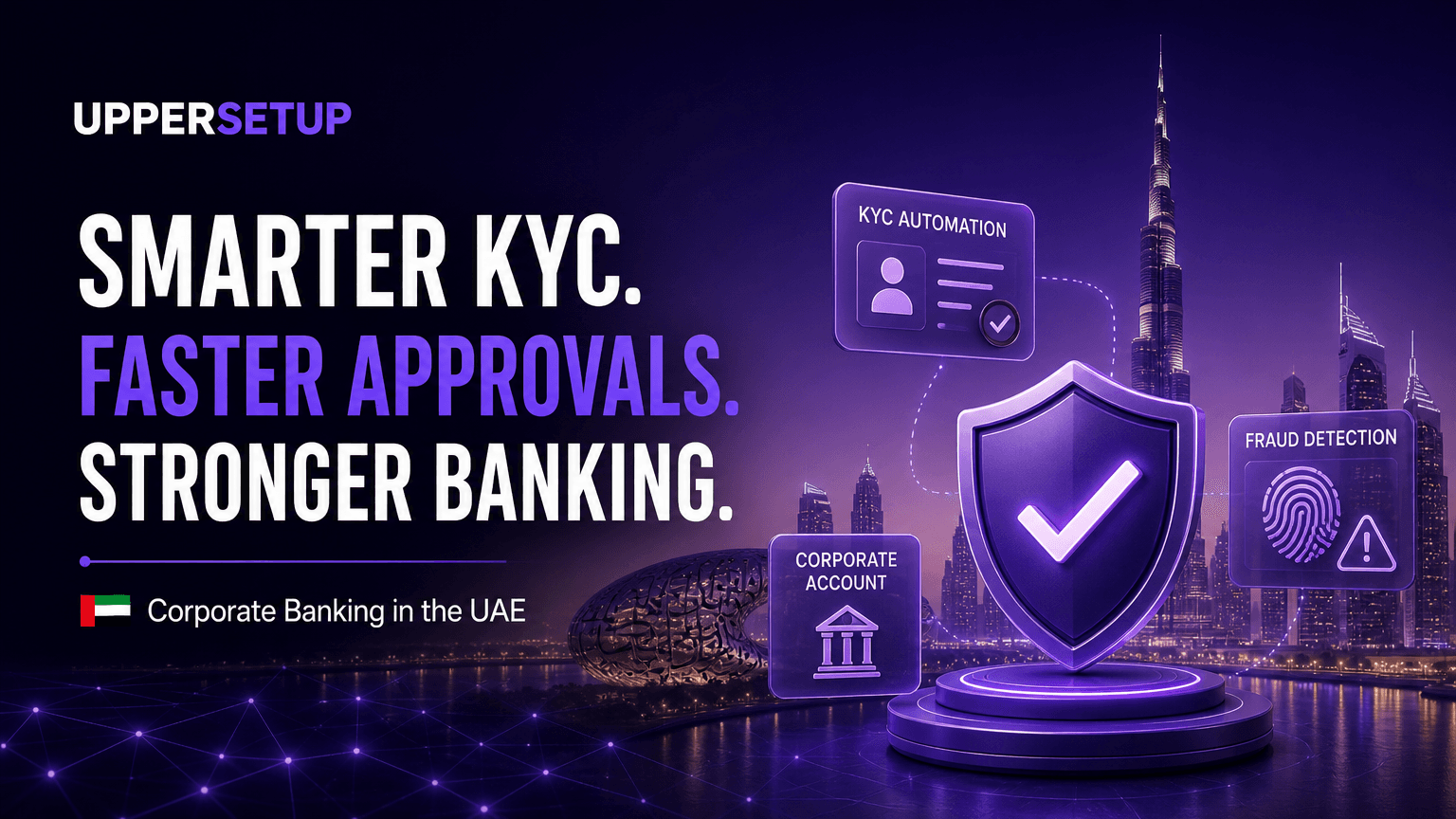
Opening a UAE Corporate Bank Account in 2027: How Automation and AI Are Reshaping Approvals
Setting up a corporate bank account in the UAE has historically presented one of the most significant challenges for both local and international businesses. In 2027, that landscape is being fundamentally reshaped by automated KYC (Know Your Customer) processes and AI-driven fraud screening.
Key Alert: While automation and AI have drastically reduced approval timelines and increased the predictability of outcomes, the risk of fast-track rejections has also risen—especially for applicants with incomplete documentation or opaque ownership structures.
Legal Framework for UAE Corporate Bank Accounts
Corporate bank account opening in the UAE is regulated by the Central Bank of the UAE (CBUAE), free zone authorities, and—where applicable—by anti-money laundering (AML) and counter-terrorism financing (CTF) legislation.
-
The core regulatory framework comes from the Federal Decree-Law No. (20) of 2018 on Anti-Money Laundering and Combating the Financing of Terrorism and Illegal Organizations, issued 23 September 2018, effective 30 October 2018. This decree-law is frequently amended, and applicants should always verify the current version.
-
CBUAE Regulation No. 29/2019 regarding Regulatory Framework for Stored Values and Electronic Payment Systems (issued September 2019, effective December 2019) is directly relevant for fintech-related accounts.
-
Free zones may impose additional, more stringent KYC requirements pursuant to their own regulations (e.g., DIFC, ADGM).
Automated onboarding is permitted where the provider can demonstrate compliance with CBUAE requirements, but the principles of risk-based approach from the 2018 AML Law remain paramount.
What Defines Automated KYC in 2027?
Automated KYC in the UAE refers to the digital onboarding process where corporate clients are verified via electronic document collection, digital identity verification, and machine learning models cross-referencing submitted data with local and international watchlists.
Automated KYC systems must comply with CBUAE rules and often integrate with the UAE Pass ecosystem for local entities.
Key Functions: - Electronic document submission (trade licence, Memorandum of Association, UBO disclosures) - Biometric or digital identity verification for authorised signatories - Real-time cross-checking with Central Bank, Interpol and OFAC sanctions lists - Risk profiling using transaction history (if available) and business activity
How Are AI-Based Fraud Checks Deployed by UAE Banks?
UAE banks leverage AI-driven tools to scan submitted documentation for forgery, check for inconsistencies in corporate structures, and flag high-risk linkages by probabilistic pattern detection.
AI models may include: - Advanced OCR (optical character recognition) to verify document authenticity - Behavioural analytics comparing applicant profiles to typologies of fraud - Network analysis to identify undisclosed related parties or dual-use goods risks
As of late 2026, all Tier-1 banks in the UAE have operational AI-driven screening stages in their corporate onboarding workflows.
Typical Steps in an Automated UAE Corporate Account Application
A standard automated onboarding for a UAE-based corporate account consists of: 1. Pre-qualification via online portal or mobile app 2. Upload of core corporate documents and UBO data 3. Digital verification (often using UAE Pass or similar platform) 4. Real-time cross-validation against public and private databases 5. Automated risk scoring 6. Conditional approval, manual review for red flags, or direct rejection 7. Final onboarding and account activation upon passing all checks
Time to approval is increasingly measured in days, not weeks, for low-risk, transparent cases.
Major Benefits of Automated KYC and Fraud Checks
Automated KYC and AI tools yield significant advantages over traditional manual approaches:
- Faster Processing: Low-risk accounts routinely opened within 2–5 business days (as of Q4 2026; verify with your chosen bank for current benchmarks).
- Reduced Human Error: Document validation and consistency checks performed algorithmically.
- Improved Transparency: Applicants can track application status in real time.
- More Predictable Outcomes: Fewer surprises in final decisions for applicants adhering strictly to declared policies.
Table 1: Manual vs Automated Corporate Account Opening in the UAE (Representative Data 2026)
| Factor | Manual (2019 Baseline) | Automated & AI-Driven (2026 Est.) |
|---|---|---|
| Average Approval Time | 3–7 weeks | 2–7 business days |
| Rejection Rate (Low Risk) | ~18% | <5% |
| Document Resubmission Needed | Frequent | Infrequent |
| Transparency of Status | Limited | Real-time dashboard |
| Compliance Checks (Scope) | Limited watchlists | 20+ global databases, AI patterning |
All figures are approximations based on Big4 and public CBUAE data as at Q3–Q4 2026; check for most current numbers.
Which Entities Are Best Placed to Benefit from These Changes?
Transparent businesses with clear UBO (Ultimate Beneficial Owner) structures, standard licensing in mainland or designated free zones, and UAE-resident directors benefit the most.
Clients with multinational opaque structures, high-risk industries (crypto, fintech, gaming, dual-use goods), or significant offshore elements may face additional scrutiny despite automation.
Core Documents and Information Required for All UAE Corporate Account Applications
Every UAE corporate bank account application (automated or manual) requires a minimum set of documentation, generally including:
- Trade or commercial licence (from DED, free zone or ADGM/DIFC)
- Constitutional documents (MoA, AoA, Board Resolution)
- Shareholder and UBO registry with full disclosure
- Passport, Emirates ID and visa copies for directors/UBO
- Proof of address (utility bill, tenancy contract, Ejari—less than 3 months old)
- Bank statements or professional references (as requested by the bank, especially for new companies with no operating history)
Banks reserve the right to request translated and legalized copies for foreign stakeholders.
Step-by-Step Process: How to Open a Corporate Bank Account in the UAE (2027 Model)
- Pre-qualification: Use the bank or aggregator’s digital pre-screening tool to confirm initial eligibility.
- Document Upload: Submit all required company and UBO documents via secure portal.
- Digital Identity Verification: Complete biometric or video verification for main signatories.
- Risk Profiling: Automated system assesses business activity, ownership, and geographic links.
- Sanctions and Watchlist Screening: Instant cross-referencing with domestic and international lists.
- Conditional Decision: Low-risk outcomes proceed to account setup. Any amber/red flags move to additional review or outright rejection.
- Account Activation: Upon successful review, access is granted to digital and/or in-branch banking services.
Total timeline can range from 2–10 business days for straightforward cases in 2026–2027.
Comparative Table: Corporate Bank Account Requirements by Major UAE Banks (2026–2027)
| Bank Name | Launch Year of Automated KYC | UBO Nationality Restrictions | Minimum Initial Deposit (AED) | Usual Approval Time (2026) |
|---|---|---|---|---|
| ENBD | 2024 | None (case-by-case scrutiny) | AED 50,000 | 3–7 business days |
| FAB | 2025 | None | AED 50,000 | 2–5 business days |
| ADCB | 2026 | Enhanced checks for certain nationalities | AED 25,000 | 4–8 business days |
| RAKBANK | 2024 | Additional KYC for offshore UBOs | AED 10,000 | 2–6 business days |
| Mashreq | 2023 | None | AED 50,000 | 4–9 business days |
Figures as of Q4 2026, by public reporting and sector analysis; confirm for up-to-date specifics with your chosen bank.
Key Risk Factors Impacting Approval in 2027
The most common grounds for automatic rejection in AI-led onboarding are: - Incomplete or contradictory UBO data - High-risk country connections (whether by director, shareholder, or transactional activity) - Non-standard business models (e.g., cross-border crypto, gaming, unlicensed fintech) - Signs of nominee or ‘layered’ ownership with no clear economic rationale
Transparency and simplicity of ownership remain the most reliable predictors of fast approval.
Typical Errors in UAE Corporate Bank Account Applications
-
Overlooking UBO Disclosure: Failing to clearly map beneficial ownership or providing inconsistent data across documents. AI models detect inconsistencies, and such omissions often result in outright rejection.
-
Submitting Outdated or Unattested Documents: Using expired trade licences, duplicate forms, or documents lacking proper legal attestation. Automated systems cross-reference with licensing databases and spot mismatches instantly.
-
Structuring Around ‘Problematic’ Jurisdictions: Attempting to mask or minimize the ties to high-risk, sanctioned, or uncooperative countries. In 2027, cross-border ties are easier to trace and such structures seldom pass automated checks.
-
Delaying Digital Verification: Failing to promptly complete biometric or video verification, leading to application timeouts or flagged delays. Banks prioritise applicants who complete all onboarding steps efficiently.
Each mistake can lead to loss of time, sunk fees (often non-refundable), and negative flags on future attempts with the same or other banks.
Who Should and Should Not Use Automated Account Opening?
Automated onboarding is best suited for: - UAE-registered companies with resident, UAE-based directors - Straightforward business models (consultancy, trading, professional services) - Full digital documentation and no legacy/overseas holding complexity
Applicants who may not benefit or may require additional support: - Multinational structures with offshore layers - Non-resident UBOs from high-risk countries - Crypto/FinTech or dual-use goods businesses
If your structure is complex, proactive legal and compliance planning is critical—consider professional assistance.
Frequently Asked Questions (FAQ)
1. Can a UAE company with only foreign shareholders open a corporate bank account via automated onboarding?
Yes, but expect enhanced scrutiny for UBO and source of funds. Full transparency and attestation are non-negotiable.
2. Is a physical presence required for corporate account approval in 2027?
Physical branch visits are no longer universally required, but biometric/digital identity verification of key signatories is always mandatory.
3. How quickly can I expect approval for a straightforward UAE onshore consultancy?
Most major banks process such applications within 2–7 business days in 2026–2027.
4. Will multiple applications to different banks affect approval chances?
Frequent parallel applications may be flagged by interbank anti-fraud systems, potentially delaying or prejudicing approvals.
5. What is the average minimum balance required for UAE corporate accounts in 2027?
Typical minimum balances range from AED 10,000 to AED 50,000, depending on the bank and applicant profile (verify for product-specific updates).
6. Does a UAE free zone LLC face higher rejection rates than a mainland LLC?
If ownership and activity are transparent, rejection rates are broadly similar; however, some free zones with high-risk reputations may experience greater scrutiny.
What You Should Remember
-
Automation and AI have made low-risk, transparent UAE corporate bank account approval faster and more predictable than ever, but have also raised the bar for documentation accuracy and ownership disclosure.
-
Incomplete, opaque, or high-risk structures face higher and faster rejection rates due to relentless, algorithmic screening.
-
Applicants should always verify up-to-date requirements with both regulators and banks.
Final Takeaways
By late 2026 and into 2027, most UAE Tier-1 and mid-tier banks have integrated automated KYC and AI-based fraud checks into their corporate onboarding. For plain-vanilla UAE-registered companies, approval can now be expected in as little as 2–7 business days, subject to document quality and clarity of ownership. More complex or non-resident structures still face manual review stages and may require several additional weeks. Minimum deposit norms have stabilised in the AED 10,000–50,000 band, but exceptions exist. The strongest advice: invest time up front in document preparation and transparency, as machine-driven checks are both exhaustive and unforgiving.
For hands-on help with UAE company registration, visas, tax structuring, and corporate bank account opening—including in complex, multinational scenarios—contact UPPERSETUP.
Sources
- Central Bank of the UAE (CBUAE): cbuae.gov.ae
- Federal Decree-Law No. (20) of 2018 on AML/CTF (Official portal: uaelegislation.gov.ae)
- Big4 sector analyses as of Q3/Q4 2026 (last public reporting)
- ADGM, DIFC and major free zone official guidelines (as at late 2026)
Disclaimer
This material is for information purposes only and does not constitute legal, tax, financial, investment, or consulting advice. You must seek individual professional consultation taking into account your specific situation, jurisdiction, company status, and current regulatory requirements.
Read more on the topic
All services on the platform
Everything you need to start and run a business - in one place
- 3–5 days
Company Setup
Mainland or Free Zone company with a complete set of incorporation documents
Start - Monthly
Accounting Services
Financial accounting and reporting in accordance with UAE requirements
Start - 1–2 weeks
Visa Services
Residence visas for shareholders, employees and family members
Start - 7–30 days
Banking Services
Corporate Bank Accounts in the UAE and Payment Services
Start - Custom timeline
Legal Services
Contracts, corporate amendments and legal support
Start


