







 International Free Zone Authority
Opening a Corporate Bank Account in the UAE for Crypto & Web3 Businesses in 2027: Rules, Challenges, and Compliance Essentials
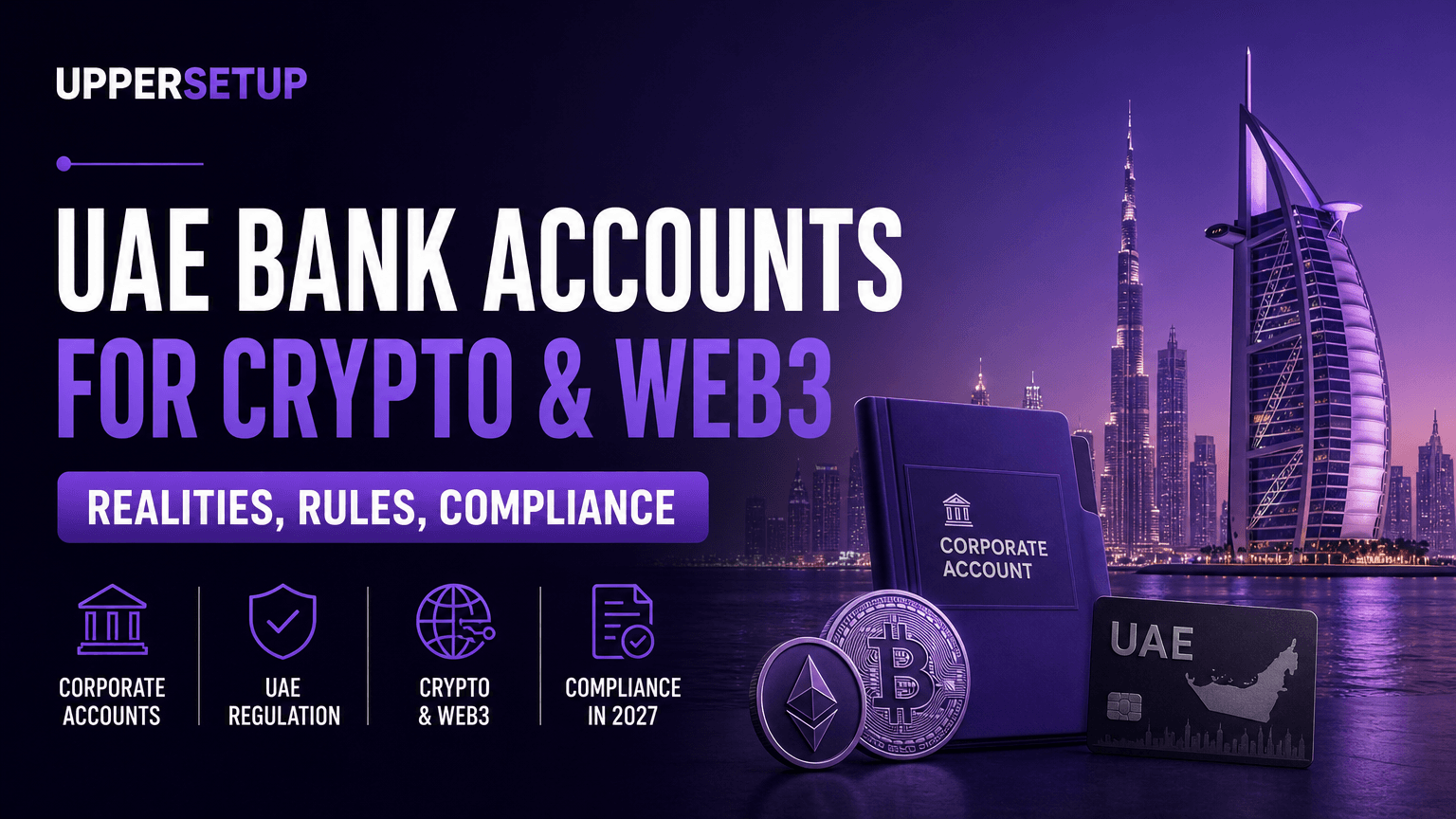
Opening a Corporate Bank Account in the UAE for Crypto & Web3 Businesses in 2027: Rules, Challenges, and Compliance Essentials
Opening a UAE corporate bank account for crypto or Web3 business is possible in 2027, but the process involves stricter compliance, enhanced due diligence, and significant banking scrutiny compared to conventional sectors. The most significant challenge for exchanges, OTC desks, and blockchain startups is managing regulatory expectations and demonstrating robust compliance structures—without which, even basic account onboarding can be delayed or denied.
Alert: As of late 2026, even properly registered and licensed crypto and Web3 businesses in the UAE can face protracted onboarding timelines (often 2–6 months), and some local banks categorically refuse to serve certain segments such as unlicensed exchanges or projects dealing in privacy coins. Absolute clarity on corporate purpose, full beneficial ownership disclosure, and an auditable compliance policy are now prerequisites for any successful application.
Regulatory Framework: Laws and Authorities Governing Crypto/Web3 Banking in the UAE
The primary regulation of business bank accounts for crypto and Web3 entities in the UAE is set by a mix of federal laws and financial zone frameworks, reflecting both local and international AML/CTF demands.
- Federal Level:
- The Federal Decree-Law No. 20 of 2018 on Anti-Money Laundering and Combating the Financing of Terrorism and Financing of Illegal Organizations (enacted October 2018, effective October 2018; amended as of late 2023) is the core law establishing AML/CTF standards for banks and designated non-financial businesses.
- Cabinet Decision No. (10) of 2019 issues the executive regulations, clarifying reporting and KYC requirements.
- Financial Regulatory Authority: The Central Bank of the UAE (CBUAE) and the Securities and Commodities Authority (SCA) share oversight, especially following SCA Decision No. 23 of 2020 regulating Virtual Asset Service Providers (VASPs); enforcement is ongoing and evolving.
- Emirate Level and Free Zones:
- The Dubai Virtual Assets Regulation Law No. 4 of 2022 (enacted March 2022, effective March 2022; may have seen minor clarifying amendments since) created the Virtual Assets Regulatory Authority (VARA) for Dubai (excluding DIFC).
- In Abu Dhabi Global Market (ADGM), the Regulation of Crypto Asset Activities is under the Financial Services Regulatory Authority (FSRA) (latest iteration released 2022).
- Dubai International Financial Centre (DIFC) currently operates under its own DFSA Crypto Token Regime (in force from November 2022).
Note: Federal AML/CTF rules apply throughout the UAE, even in financial free zones, but licensing, permitted activities, and monitoring vary zone by zone.
What Types of Crypto and Web3 Businesses Can Register in the UAE?
The UAE allows a variety of crypto and Web3 business structures, from token issuers to full-featured exchanges, with different banking access implications for each type.
Types of eligible businesses, as of late 2026, commonly include: - Centralized and decentralized crypto exchanges (must be licensed; see below) - OTC (over-the-counter) trading desks - Custody and wallet service providers - DeFi protocols and blockchain infrastructure startups - NFT platforms - Blockchain development companies (e.g., offering smart contract audits, infrastructure dev, etc.)
Unlicensed token sales, privacy-focused mixers, and projects with anonymous or pseudonymous founders typically encounter banking refusals or enhanced scrutiny.
How Do UAE Banks Evaluate Crypto/Web3 Business Account Applications?
UAE banks apply several layers of review for crypto business bank account applications, including detailed KYC/KYB, project due diligence, and proactive risk assessment as mandated by federal and zone-level rules.
- Corporate structure clarity: Banks scrutinize UBO chains (ultimate beneficial owners), seeking full transparency, especially if foreign SPVs or nominee structures are involved.
- Licensing and regulatory approvals: Possession of a valid VASP, DIFC, ADGM, or VARA license is a de-facto prerequisite. Applications without clear regulatory credentials are almost always rejected.
- Business model analysis: Banks require a detailed business plan indicating transaction flows, customer types (retail/institutional), and planned counterparties.
- Onboarding interviews: Senior management, compliance officers, and sometimes principal investors may be interviewed by bank compliance teams.
Key fact: There is a material difference in onboarding timelines and acceptance rates between major local banks (e.g., Emirates NBD, ADCB, FAB), international players (e.g., HSBC, Standard Chartered), and digital-only neobanks—each has different risk policies that shift regularly. As of November 2026, most international banks in the UAE continue to maintain general restrictions on any exchange-linked operations, absent high-level regulatory engagement.
Specific Requirements for Crypto Exchange and OTC Desk Applications
Crypto exchanges and OTC desks face some of the most rigorous standards in banking due to elevated AML/CTF risk categorization.
- Minimum paid-up capital: UAE-licensed exchanges (especially those regulated by VARA or ADGM) are required to show minimum paid-up capital, typically above AED 1,000,000 (check current thresholds as authorities may have adjusted these for 2025–2027).
- Regulatory sandbox or full commercial license: Only entities with a commercial or innovation license can apply.
- Transaction monitoring capacity: Banks expect formalized compliance tools capable of real-time transaction screening and suspicious transaction reporting (STR) capability.
- Local compliance officer: A named resident compliance officer is required for most exchange account applications.
OTC desks must demonstrate counterparty diligence, source of funds/wealth tracking, and, if facilitating fiat conversion, strict on-/off-ramp controls.
Blockchain Startups and DeFi Platforms: Are Their Banking Challenges Different?
Blockchain infrastructure startups—such as development houses, protocol deployers, and auditors—usually have less burdensome requirements, provided their activity is not directly involved with regulated virtual assets or customer fund management.
- Less exposure to direct AML risk: Startups not handling customer funds or assets can often be treated as ordinary tech/software companies for banking, subject to routine business KYC and lower risk flagging.
- DeFi platforms: Projects with DAO (decentralized autonomous organization) governance or full decentralization often struggle to meet UBO disclosure and licensing requirements; banks may decline accounts unless a clear legal entity structure is in place and authorized signatories/management can be identified.
Which UAE Banks Serve Crypto, Web3, and Blockchain Businesses?
A limited number of UAE banks accept crypto or Web3 clients in 2027, with banking options generally more numerous in free zones (notably DIFC and ADGM) than through onshore banks.
Table 1: Major UAE Banks and Their Policy Toward Crypto/Web3 Corporate Account Applications (as of November 2026)
| Bank | Licensed Crypto Exchange | OTC Desk | Blockchain Startup | DeFi/DAO | Comments |
|---|---|---|---|---|---|
| Emirates NBD | Yes (Selectively) | Rare | Yes | No | Long due diligence timelines |
| First Abu Dhabi Bank | Yes (Selectively) | Rare | Yes | No | More favorable to ADGM clients |
| Mashreq Bank | Yes | Yes | Yes | Rare | Pilots with regulated VASPs |
| Dubai Islamic Bank | No | No | Yes | No | Crypto excluded from Sharia-compliant ops |
| Standard Chartered UAE | Yes (Case by case) | Maybe | Yes | No | Preference for large licensed firms |
| Wio Bank (neobank) | Yes (Pilot program) | Yes | Yes | Pilot | Fastest onboarding, changing regularly |
Note: Policies change often, and new pilot programs may open or close on short notice. Always check with the specific bank for current criteria.
What Does Compliance Mean for Crypto and Web3 Businesses in 2027 in UAE?
UAE compliance for crypto and Web3 companies in 2027 is defined by a sophisticated three-pillar regime: (1) Organizational transparency, (2) Transaction monitoring, and (3) Real-time regulatory reporting.
- Organizational transparency: All beneficial owners (including above 10% threshold under some free zone standards) must be disclosed with KYC information, both to regulators and to banks.
- Transaction monitoring: Automated tools (such as blockchain analytics, address screening, and on-chain/off-chain surveillance) are mandatory for exchanges, OTCs, and custodians. Suspicious activity must trigger internal escalation and, if warranted, external reporting.
- Regulatory reporting: Monthly or on-request transaction summary submissions, SAR/STR filings, and regular AML audits are standard regulatory requirements. Non-compliance can lead to account freezes (even for minor technicalities).
Strengthened cross-border compliance: UAE banks request detailed origin and destination of cross-border funds, especially for any wire transfers involving high-risk jurisdictions or newly listed tokens.
Key Numbers: Minimum Capital, Fees, and Average Onboarding Timeline
| Parameter | Standard Business (Non-Crypto) | Crypto Exchange (Dubai/ADGM) | OTC Desk | Blockchain Startup |
|---|---|---|---|---|
| Minimum Paid-up Capital | AED 50,000–100,000 (most FZs) | AED 1,000,000–2,000,000 (approx.)* | AED 250,000–500,000 (approx.)* | AED 50,000–100,000 |
| Account Opening Fee | AED 2,500–5,000 | AED 10,000–35,000 (plus due diligence) | AED 7,500–20,000 | AED 2,500–5,000 |
| Ongoing Compliance Cost (annual) | AED 5,000–20,000 | AED 50,000–300,000 (audit, officers) | AED 25,000–100,000 | AED 10,000–30,000 |
| Onboarding Timeline | 2–6 weeks | 2–6 months (approx.) | 2–4 months (approx.) | 1–2 months |
*Values marked “approx.” are indicative for late 2026; confirm with regulator and bank for latest thresholds applicable in 2027.
Step-by-Step Guide to Opening a UAE Corporate Bank Account for a Crypto or Web3 Business
- Company Incorporation: Register in the appropriate UAE free zone (e.g., ADGM, DIFC, Dubai Multi Commodities Centre if allowed) or onshore, selecting a business activity code aligned with crypto/Web3.
- Obtain Licensing: Secure a Virtual Asset Service Provider (VASP) license from VARA (Dubai), FSRA (ADGM), or DFSA (DIFC) as relevant to the intended operations.
- Appoint Compliance Officer: Nominate and onboard a resident compliance officer with UAE banking and regulatory experience.
- Draft AML/CTF Policies: Prepare detailed compliance manuals, including source of funds controls, customer risk profiling, and enhanced due diligence processes.
- Gather Documentation: Compile all incorporation docs, licenses, business plan, compliance procedures, UBO registers, and identity documents for all key stakeholders.
- Select Compatible Bank: Identify banks with up-to-date policies for crypto/Web3 accounts and pre-arrange onboarding calls if possible.
- Submit Application: Deliver a thorough application package to the chosen bank, ensuring full disclosure of crypto activities; anticipate requests for additional detail.
- Onboarding Interview: Prepare key leadership and compliance personnel for in-depth questioning by bank KYC/AML teams.
- Ongoing Reporting: Once account is open, institute regular compliance filings and keep internal/external records audit-ready at all times.
Typical Mistakes and Their Costs
- Non-disclosure of actual business model: Masking crypto or Web3 activities (e.g., registering as “consulting” or “IT company” but operating as an exchange) leads to fast account closure and potential blacklisting within the UAE banking system.
- Incomplete UBO transparency: Failure to provide full beneficial ownership details or using nominee fronts results in near-certain rejection.
- Absent or generic compliance policies: Using template or non-specific AML/CTF documents triggers requests for additional information or outright denial—customized policies referencing UAE-specific rules are mandatory.
- Choosing a bank unprepared for crypto risk: Applying to mainstream retail or Islamic banks not accepting virtual asset businesses not only results in time/resource loss but can flag the entity with other banks, reducing future acceptance.
Who Should (and Should Not) Use the UAE for Crypto/Web3 Business Banking?
Suitable for: - Well-resourced crypto businesses able to invest in compliance oversight and transparent operations - Blockchain technology developers not handling client funds - Licensed exchanges, custodians, and fintech firms seeking MENA regional presence
Not suitable for: - Projects with anonymous/pseudonymous founders or unclear beneficial ownership chain - Any operation intending to service prohibited uses (e.g., privacy coins, mixers, unlicensed retail trading) - Entities unwilling or unable to comply with ongoing regulatory reporting and audits
Frequently Asked Questions
1. Can an unlicensed crypto business open a UAE corporate bank account?
No, UAE banks require a valid license (VARA, DFSA, or FSRA) for any company engaged in crypto asset activity.
2. How long does it take to open a bank account for a crypto or Web3 company in the UAE?
The usual onboarding timeline is between 2 and 6 months for licensed entities; incomplete documentation can extend this further. Standard tech startups may onboard in 1–2 months.
3. Are there UAE banks that serve DAOs or decentralized entities?
Most UAE banks require a clear legal entity structure and identifiable UBOs; DAOs without these cannot open corporate accounts as of November 2026.
4. Can a UAE corporate crypto account receive payments from foreign exchanges?
Yes, but banks require full documentation of the transaction, the sending entity, and proof of regulatory compliance in both jurisdictions.
5. Do UAE banks allow accounts for companies active in privacy coins or mixers?
Generally not; most banks explicitly prohibit activities involving anonymous or privacy-focused cryptocurrencies.
6. What happens if a business omits crypto activity from its application?
Omissions or misstatements can result in immediate closure of the account and potential reporting to regulators, impacting the company’s ability to bank elsewhere in the UAE.
Key Takeaways
To open a UAE corporate bank account for crypto or Web3 activities in 2027, companies must hold an appropriate local license, demonstrate full UBO transparency, comply with zone/federal AML rules, and invest in ongoing compliance. Banks remain risk-averse and selective, with onboarding for exchanges and OTCs typically taking 2–6 months and minimum paid-up capital requirements often exceeding AED 1,000,000. A clear legal/compliance structure and open dialogue with banks are indispensable for success.
Conclusion: UAE Crypto & Web3 Banking in 2027 — What to Expect
In summary, while the UAE remains one of the most progressive jurisdictions for regulated crypto and Web3 ventures, business banking access requires persistent, resource-intensive compliance. Successful applicants are those who bring transparency, local licensing, and tailored risk controls to the table—resulting in much higher setup costs and timelines than for traditional businesses, but with the reward of a rapidly growing regional hub. Routine changes to bank policy and regulatory updates make professional local advice essential for all entrants.
If you’re considering launching a crypto or Web3 company in the UAE, or need assistance with account opening, licensing, or compliance, UPPERSETUP provides tailored support for incorporation, visas, taxes, and banking—visit https://uppersetup.com to learn more.
Sources
Laws & Official Guidance: Federal Decree-Law No. 20 of 2018 (AML/CFT), Cabinet Decision No. (10) of 2019, SCA Decision No. 23 of 2020, Dubai Virtual Assets Regulation Law No. 4 of 2022, FSRA Guidance (ADGM), DFSA Crypto Token Regimes (DIFC), Central Bank of the UAE publications, ADGM and DIFC official notices (dates and status per knowledge as of November 2026).
Analytical/Industry Context: Regulatory insights from PwC UAE, Deloitte GCC, EY MENA, AGBI, Bloomberg Law, and large local banks’ public compliance updates (all as available by November 2026).
Disclaimer
This material is for informational purposes only and does not constitute legal, tax, financial, investment, or consulting advice. Before making any decision, obtain individual professional guidance tailored to your situation, jurisdiction, company status, and current regulatory requirements.
Read more on the topic
All services on the platform
Everything you need to start and run a business - in one place
- 3–5 days
Company Setup
Mainland or Free Zone company with a complete set of incorporation documents
Start - Monthly
Accounting Services
Financial accounting and reporting in accordance with UAE requirements
Start - 1–2 weeks
Visa Services
Residence visas for shareholders, employees and family members
Start - 7–30 days
Banking Services
Corporate Bank Accounts in the UAE and Payment Services
Start - Custom timeline
Legal Services
Contracts, corporate amendments and legal support
Start


