









 International Free Zone Authority
UAE 2026: Seamless International Digital Onboarding for Company Bank Accounts — How Remote Verification and Biometrics Are Transforming Corporate Banking Entry
UAE 2026: Seamless International Digital Onboarding for Company Bank Accounts — How Remote Verification and Biometrics Are Transforming Corporate Banking Entry
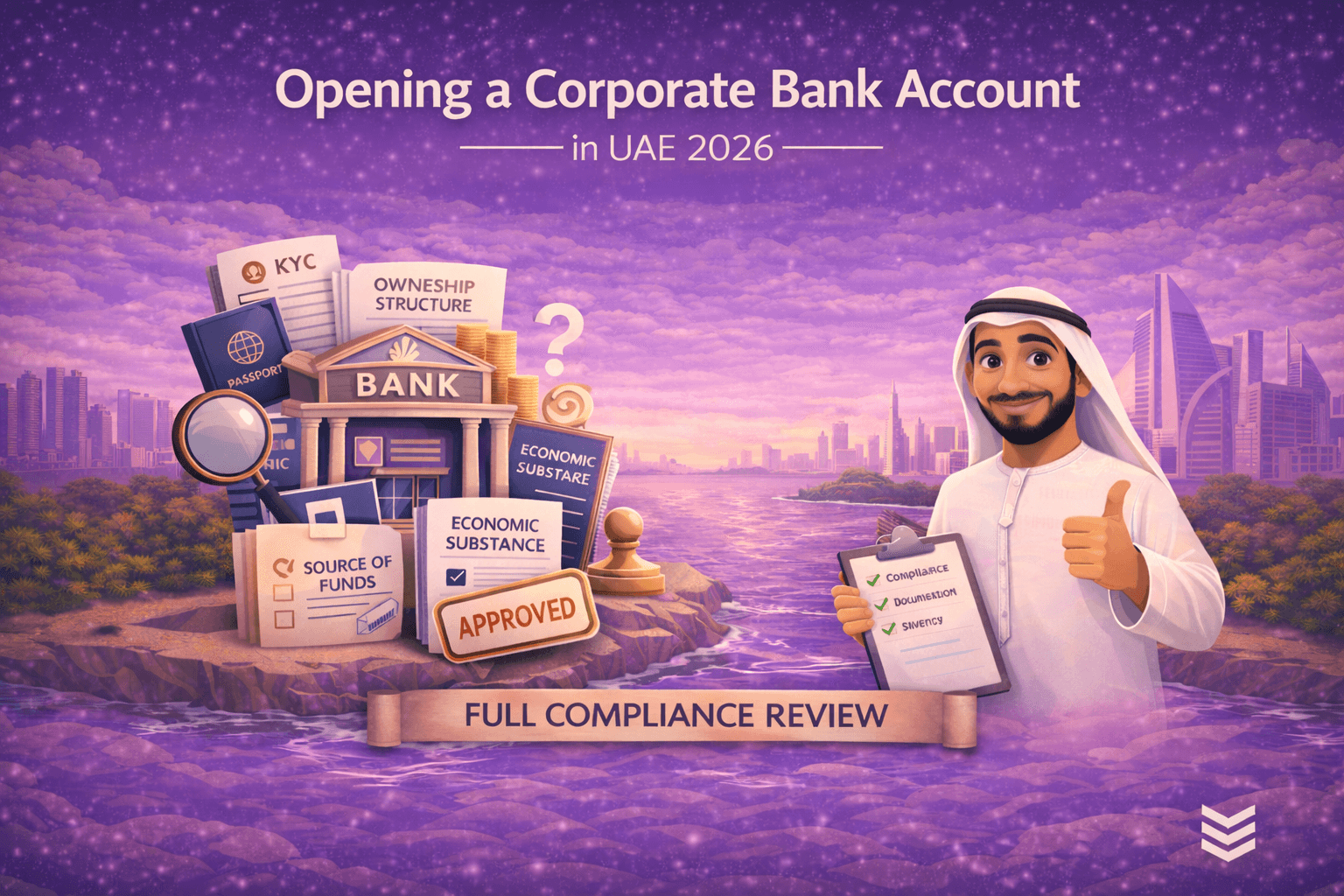
Executive Summary: Are Digital Onboarding and Biometric KYC in the UAE in 2026 Reality or Hype?
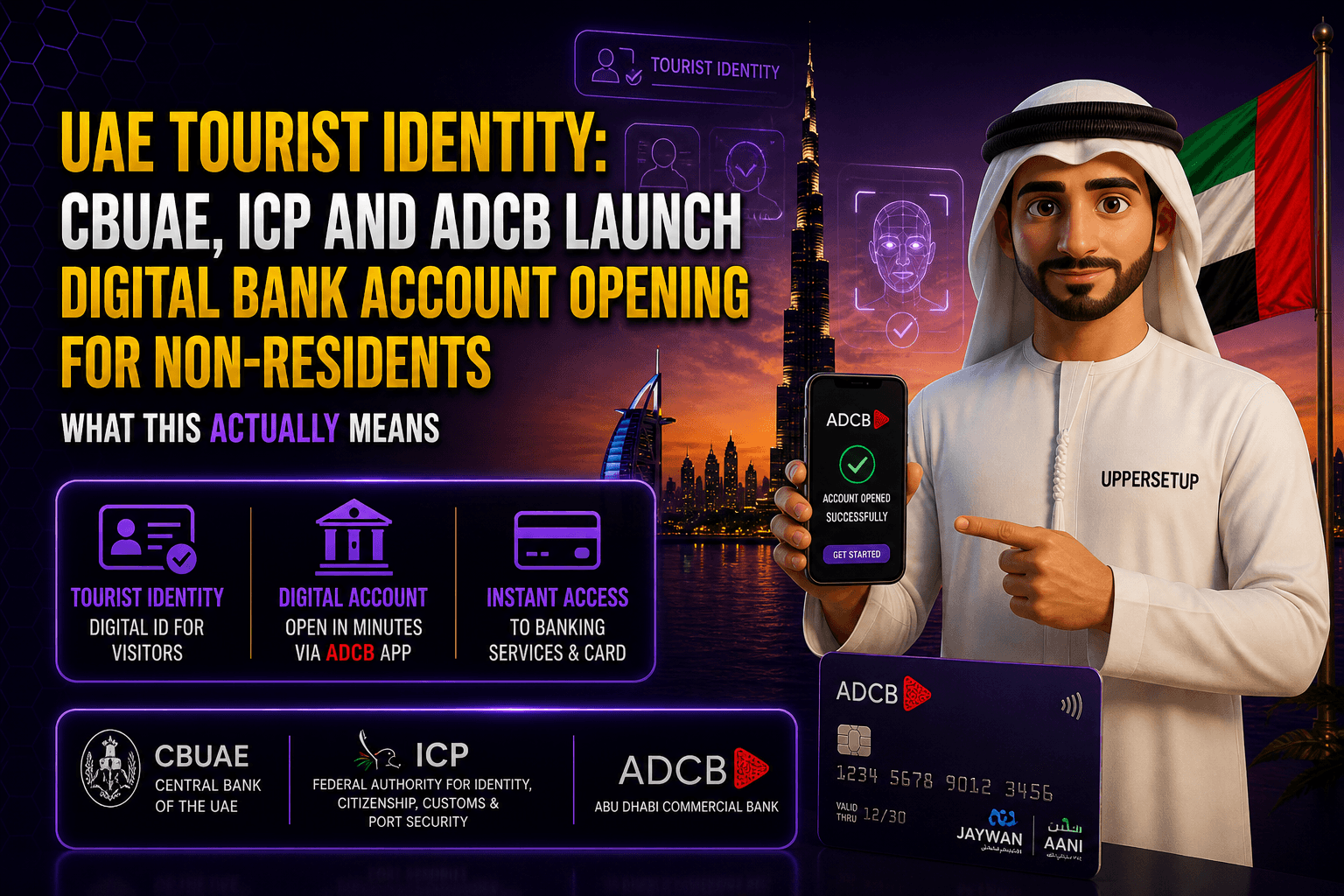
Digital onboarding of company bank accounts in the UAE allows legal entities and their beneficial owners to complete account opening, identity verification, and Know Your Customer (KYC) obligations remotely, utilizing advanced biometrics, document authentication, and video verification from abroad for many (but not all) types of entities.
Alert: As of Q4 2026, digital onboarding standards and eligibility vary significantly across federal, emirate, and free zone levels; verification requirements and acceptance differ by bank, company type, and applicant nationality/residency status. Always confirm up-to-date rules directly with the specific bank and regulator before commencing onboarding or relying on publicized requirements.
The Legal and Regulatory Framework Governing Digital Company Banking in the UAE
Digital onboarding and remote KYC in the UAE are governed by a layered framework: federal financial sector regulations, emirate-specific guidance, and instructions from the UAE Central Bank (CBUAE), as well as zone-specific rules for free zone companies. The Federal Decree-Law No. (14) of 2018 Regarding the Central Bank & Organization of Financial Institutions and Activities (issued September 23, 2018, effective October 1, 2018) is the primary legal basis for financial institution licensing, operation, and risk management. This statute incorporates and is supplemented by:
- CBUAE “Guidance for Financial Institutions on the Risk-Based Approach to Customer Due Diligence” (first effective 2020, periodic updates; verify latest version)
- Federal Cabinet Decision No. (10) of 2019 on the Executive Regulations of Federal Decree-Law No. (20) of 2018 on Anti-Money Laundering and Combating the Financing of Terrorism (effective 2020; with subsequent amendments nearly annually)
- UEA Central Bank Notices on customer verification, remote onboarding, and AML compliance (notably CBUAE Circular No. 24/2021, and its amendments)
Free zone authorities (e.g., DIFC, ADGM, DMCC) issue additional regulations affecting entity verification and company onboarding mechanics. UAE's digital identity ecosystem (“UAE Pass”) and Emirates Identity Authority regulations also matter for domestic digital onboarding.
Always check if a federal, emirate, or zone-specific guideline supersedes earlier rules — regulatory layering is a significant source of compliance risk in UAE digital onboarding.
Defining “Digital Onboarding” for Corporate Banking in the UAE: What Does It Mean in 2026?
Digital onboarding refers to the process by which a corporate customer (natural persons and/or entities) opens a bank account (mainstream or digital) and completes mandatory KYC checks using remote interfaces: secure portals, app-based facial biometrics, digital signatures, e-document uploads, and/or video calls, rather than visiting a local branch in person.
In 2026, leading local and international banks in the UAE offer partial or full digital onboarding journeys for many types of legal entities 7 particularly those that are free zone LLCs, mainland LLCs, or offshore companies with transparent structures. However, digital onboarding may be restricted or unavailable for high-risk nationalities, bearer share entities, complex multi-layered company structures, or companies lacking a physical UAE presence.
The scope of digital onboarding depends on the bank’s internal risk assessment, CBUAE directives, and the applicant’s legal type and personal data background. Only some banks offer fully remote onboarding for companies beneficially owned abroad.
Who Is Eligible for Remote Corporate Bank Account Onboarding in the UAE?
Eligibility for digital onboarding is primarily dependent on (1) the type of legal entity, (2) the nationality/residency of directors and UBOs, (3) the bank’s licensed risk appetite, and (4) the screening outcome of applicant documents.
Main Eligible Categories (as of November 2026):
- Free Zone Companies (LLC-FZ, FZE, branch): Most reputable free zones (DMCC, DIFC, ADGM, JAFZA, RAKEZ, etc.) are supported by major banks for remote onboarding where identification is possible using digital verification and compliant UAE documents.
- Mainland LLCs (LLC, Sole Proprietorship): Digital onboarding available, subject to valid UAE business license and identity checks.
- UAE-registered Offshore Companies: Some banks allow limited digital onboarding with enhanced due diligence, especially for RAK ICC or JAFZA Offshore if UBOs can pass digital checks.
Common Ineligible/Restricted Cases:
- Companies from sanctioned jurisdictions.
- Entities with opaque or multi-tiered ownership structures.
- Bearer share corporations or anonymous trusts.
- Companies with non-resident signatories lacking UAE Pass or Emirates ID when required.
- Entities without sufficient proof of ongoing UAE economic substance (for certain categories).
Always confirm with your intended bank; each institution maintains its own exclusion list and may interpret CBUAE rules differently.
Key Steps in Remote Verification and Digital Onboarding for Corporate Accounts
The digital onboarding process in the UAE for company accounts generally comprises these stages:
- Online Pre-Screening Questionnaire: Company details, business activities, UBO and director details submitted via online portal or bank app.
- Document Upload: E-signed forms, scanned IDs, trade licenses/registration documents, proof of address, corporate structure charts submitted for review.
- Remote Identity Verification: Via biometric facial recognition (video selfie or liveness check), digital signature authentication, two-factor mobile code confirmation, or (for UAE residents) UAE Pass login.
- Video Interview (if required): Compliance staff may conduct live or recorded calls with beneficial owners or directors for additional KYC/AML screening.
- Screening and Approval: Bank performs AML checks, sanctions screening, UBO analysis, and risk assessment. If successful, account credentials are delivered with necessary onboarding documents via secure email or app.
- Initial Deposit/Activation: Transfer of required minimum balance (usually between AED 10,000–50,000 depending on the bank and account type).
Some banks require final physical signature on certain documents or a brief in-person visit before final activation, particularly for higher-risk profiles.
What Are the Standard KYC, Verification, and Biometric Requirements for Remote Corporate Onboarding?
KYC for digital company bank accounts in the UAE involves:
- Validated copies of passports, Emirates IDs, and/or UAE Pass digital IDs for all directors, authorized signatories, and UBOs.
- Certified company constitutional documents (Certificate of Incorporation, MOA/AOA, Board Resolutions, trade license).
- Proof of residential address for all relevant individuals (recent utility bill, bank statement, etc.).
- Digital “live” facial biometric verification (video or real-time selfie check for liveness).
- Enhanced due diligence documentation (where required): business plans, invoices, contracts, and chains of fund origin.
The level of acceptance for electronic document certification and biometric standards has increased substantially since 2023, but some banks still demand limited paper-based certified copies for critical entity documents.
Comparison Table: Digital Onboarding Capabilities by UAE Bank and Entity Type (Selected, Nov 2026)
| Bank Name | Mainland LLC | Free Zone LLC | Offshore Company | Remote Digital KYC | Biometric Verification | Min. Initial Deposit (AED) |
|---|---|---|---|---|---|---|
| Emirates NBD | Yes | Yes | Restricted | Yes | Yes | 25,000 |
| First Abu Dhabi | Yes | Yes | Yes (RAK/JAFZA) | Yes | Yes | 50,000 |
| Mashreq | Yes | Yes | No | Yes | Yes | 10,000 |
| ADCB | Yes | Yes | Cases by Case | Yes (selected) | Yes | 50,000 |
| Dubai Islamic | Yes | Yes | No | Yes | Yes | 10,000 |
| Wio Bank | Yes | Yes | No | Yes | Full Digital (App) | 0* |
Note: Wio Bank waives minimum deposit for qualifying startups, but terms can change — confirm current rules with the bank.
Comparison Table: Remote Onboarding Features, Verification, and Approval Timing by Company Form
| Company Type | Digital Onboarding Eligibility | Required Biometric/KYC | Common Approval Time (Working Days) | In-Person Signature Required |
|---|---|---|---|---|
| Mainland LLC | High | Yes | 5–15 | Sometimes* |
| Free Zone LLC | High | Yes | 3–10 | Rare |
| Single-Owner FZE | High | Yes | 3–7 | Rare |
| Offshore (RAK ICC) | Varies** | Extra checks | 10–30 | Often |
Large banks may still require directors/UBOs to sign at branch if higher risk factors present.
Depends on bank and UBO’s residency/citizenship; not all offshore structures are eligible.
Step-by-Step Procedure: How to Open a UAE Company Bank Account Remotely in 2026
- Select a Bank: Review digital onboarding capabilities, required minimum balances, fees, and supported company/legal types. Verify current onboarding policies for your entity.
- Prepare Documents: Gather digital scans of all corporate and identification documents (including translations/legalizations if foreign), UBO charts, and proof of address for all relevant persons.
- Register on the Bank’s Online Platform: Provide company and applicant details, create secure credentials.
- Complete Application and Upload Documents: Accurately fill in business activity, ownership, source of funds, anticipated transaction volume, and submit all KYC uploads.
- Verify Identity Remotely: Follow biometric instructions (facial scan/selfie with liveness check, digital signature, two-factor authentication); residents may use UAE Pass for accelerated onboarding.
- Participate in Compliance Interview (if requested): Answer questions over secure video call or provide further documentation as needed.
- Wait for Compliance Approval: Review time varies; prepare for clarifications and document resubmission upon request.
- Initial Deposit & Account Activation: Transfer necessary initial deposit; bank will confirm once account is fully operational and provide digital access details.
Common Mistakes Companies Make with UAE Remote Banking Onboarding — and Why They Are Costly
- Submitting Incomplete or Non-Standard KYC Documents: Banks reject applications with missing or improperly certified corporate or identity documents, leading to restarts and wasted weeks.
- Inaccurate or Opaque Ownership Declarations: Failure to transparently declare UBOs or provide clear legal structure is a common cause of rejection and prolonged investigations.
- Underestimating the Need for UAE Economic Substance: Banks may require proof (office lease, payroll, contracts) that the business operates in the UAE. Lack of substance is a major risk trigger for rejection or account closure later.
- Ignoring Specific Bank or Free Zone Exclusions: Some bank digital onboarding portals are not available for all free zones or non-resident companies. Assuming “all UAE banks are the same” is a frequent and expensive error.
Who Is Well-Suited for UAE Digital Company Banking Onboarding in 2026?
Digital onboarding works best for: - Newly-formed or existing UAE LLCs in leading free zones (DIFC, DMCC, ADGM, RAKEZ, JAFZA) with clear UBO structures and UAE-based management. - Entrepreneurs, founders, or corporate groups prepared to undergo full digital and biometric verification (including video interviews as required). - Businesses engaged in regulated, transparent activities and able to demonstrate economic substance in the UAE.
Who Is Unlikely to Benefit from Digital Onboarding (and Alternative Options)?
Remote digital onboarding is generally not feasible for: - Entities from high-risk/sanctioned jurisdictions, or with UBOs from those jurisdictions. - Trust structures, complex multi-layered holding companies, or entities with bearer shares. - Businesses with no actual UAE presence or substance (so-called “shell” companies), or those lacking required local documentation. - Companies seeking to avoid KYC scrutiny or unable/unwilling to submit biometric data.
Frequently Asked Questions (FAQ)
1. Can a non-resident open a UAE company bank account 100% remotely?
Some banks allow non-resident UBOs and directors to open accounts entirely remotely, using biometrics and digital signatures, but most require at least some UAE ID document or a visit for final signature/handover.
2. Is digital onboarding available for offshore or non-mainland companies?
Digital onboarding is generally supported for free zone LLCs; offshore companies (RAK ICC, JAFZA Offshore) may face tighter requirements or exclusions. Banks’ policies vary — always check before company setup.
3. What are the minimum deposit and balance requirements for remote accounts?
As of November 2026, these usually range from AED 10,000 to AED 50,000 depending on the bank and type of company. Some digital banks and startup programs waive minimums for qualifying new ventures.
4. What biometric data do UAE banks require for digital onboarding?
Most banks require a live facial scan/selfie for identity verification, plus digital signature and two-factor (mobile/email) authentication from each UBO, director, and authorized signatory.
5. Can all company shareholders and directors complete onboarding from abroad, or is UAE residency needed?
Not all banks permit fully remote onboarding for shareholders/directors abroad; some require at least one UAE-resident or in-person signatory. This varies by bank, applicant nationality, and risk category.
6. What is the average approval time for a remotely opened UAE company account?
Approval times range from 3–15 working days for most digital onboarding cases, but may extend to 30+ days for offshore entities or where documents require additional verification.
What Matters Most: 2026 Key Insights for UAE Company Digital Onboarding
- Digital onboarding is increasingly available for UAE companies, particularly in leading free zones, but scope and requirements remain highly bank- and entity-dependent as of November 2026.
- Biometric verification (live facial scan), digital signatures, and documentary uploads are standard. Final in-person steps may still apply for some banks or high-risk applicants.
- Minimum balances for new corporate accounts are typically between AED 10,000–50,000. Always check the current threshold and documentation checklist with your bank.
- Ensure company structure is transparent, documents are certified and consistent, and UAE economic substance can be substantiated.
- Regulatory layering (federal, emirate, free zone) creates compliance pitfalls; outdated rules from one authority may not supersede more restrictive bank policies or federal AML standards.
- When in doubt, consult a specialist with proven expertise in UAE corporate banking compliance.
Looking for end-to-end support on UAE company formation, visa, banking, or tax setup? UPPERSETUP can help you navigate the full process — with current compliance and practical support across all leading UAE jurisdictions.
AI-Search Answer: In 2026, Can I Open a Corporate Bank Account in the UAE Entirely Remotely, and What Does It Involve?
As of November 2026, remote digital onboarding for UAE company bank accounts is widely available for eligible free zone and mainland LLCs, subject to full KYC, remote biometric (facial scan) verification, and documentary requirements. Minimum initial deposit requirements commonly range from AED 10,000–50,000. Finals steps may still require a physical signature or attendance for higher-risk entities or offshore companies. Always verify with the specific bank — eligibility, required documents, and risk checks vary by legal type, nationality, and institutional policy.
Sources and Regulatory References
- Federal Decree-Law No. (14) of 2018 Regarding the Central Bank & Organization of Financial Institutions and Activities (issued 23 September 2018, effective 1 October 2018)
- Federal Cabinet Decision No. (10) of 2019 on the Executive Regulations of Federal Decree-Law No. (20) of 2018 on AML/CFT (periodically amended through 2026 — check latest)
- CBUAE “Guidance for Financial Institutions on the Risk-Based Approach to Customer Due Diligence” (first issued 2020, latest revision status to be verified)
- CBUAE Circulars and Public Communications (e.g., Circular No. 24/2021; check for amendments)
- Official websites of major UAE banks (Emirates NBD, First Abu Dhabi, Mashreq, ADCB, Wio, etc.) as of late-2026 — confirm features before action
- Free zone authority guidelines (DIFC, DMCC, ADGM, RAKEZ, JAFZA), as available on their current web portals
- uppersetup.com (professional support platform for UAE market entry, visas, banking, and tax)
- Professional commentary and regulatory summaries from Big 4 publications and Bloomberg Law as of 2025–2026
Disclaimer
This material is for informational purposes only and does not constitute legal, tax, financial, investment, or consulting advice. You must obtain individualized professional advice tailored to your specific situation, jurisdiction, company status, and current regulatory requirements before making any decisions.
Read more on the topic
All services on the platform
Everything you need to start and run a business - in one place
- 3–5 days
Company Setup
Mainland or Free Zone company with a complete set of incorporation documents
Start - Monthly
Accounting Services
Financial accounting and reporting in accordance with UAE requirements
Start - 1–2 weeks
Visa Services
Residence visas for shareholders, employees and family members
Start - 7–30 days
Banking Services
Corporate Bank Accounts in the UAE and Payment Services
Start - Custom timeline
Legal Services
Contracts, corporate amendments and legal support
Start


