


































 International Free Zone Authority
Are Your E-Signatures on Commercial Contracts in the UAE Legally Binding? What Businesses Need to Know About the New 2026 Regulations
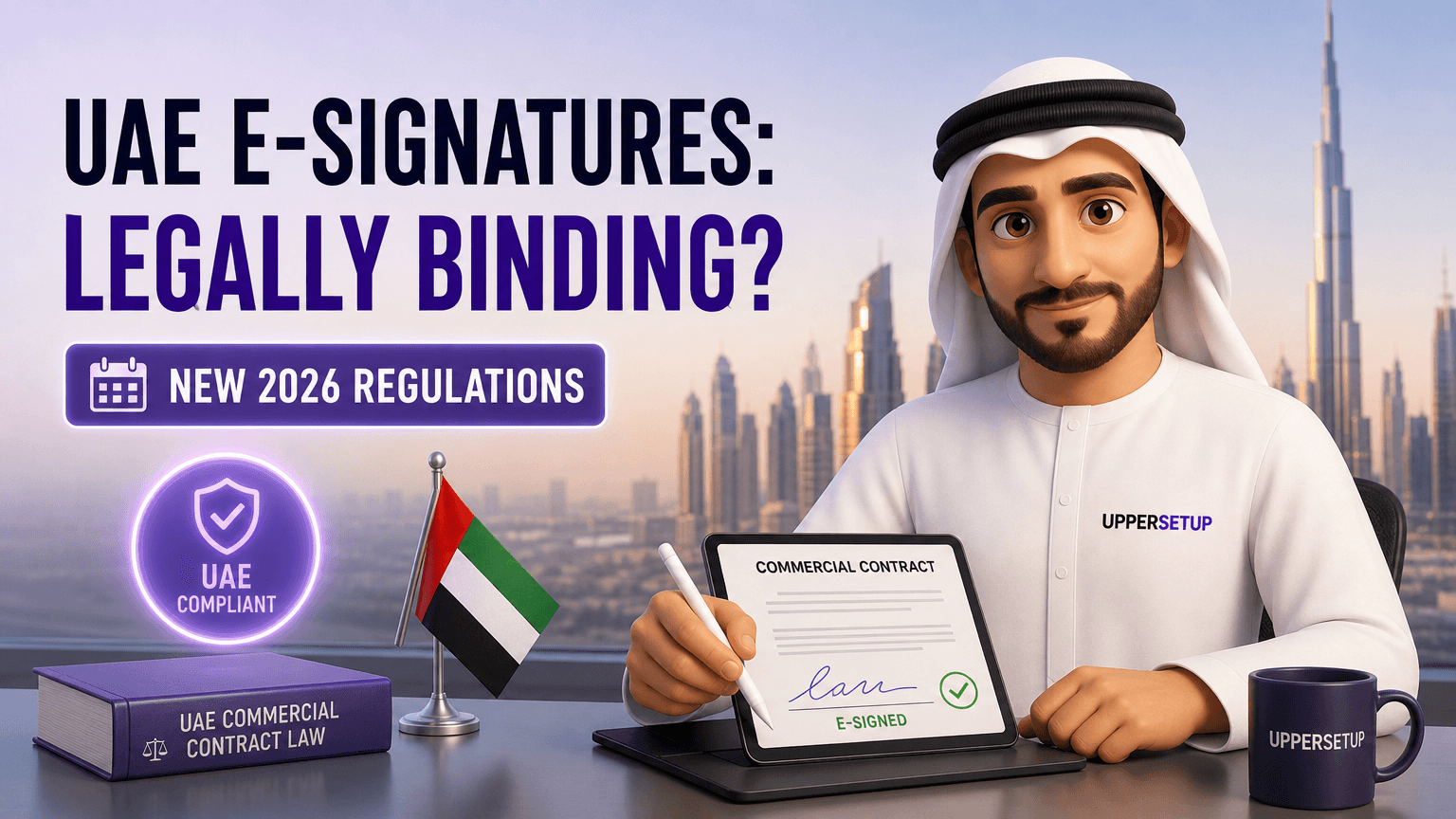
Are Your E-Signatures on Commercial Contracts in the UAE Legally Binding? What Businesses Need to Know About the New 2026 Regulations
Quick Answer: Where Do UAE Electronic Signatures Stand as of 2026?
Electronic signatures on commercial contracts in the UAE are legally recognized and enforceable under updated federal law, subject to specific regulatory requirements and authentication protocols. However, some critical exceptions and practical nuances must be considered to ensure your e-contracts are legally binding and admissible in UAE courts.
Alert: While most commercial contracts can now be validly executed by e-signature in the UAE, certain categories—including real estate transactions and personal status documents—require traditional “wet ink” signatures or notarial formalities. Failure to comply can render a contract null or unenforceable.
Statutory Framework: Key UAE Legislation on E-Signatures
The primary piece of legislation governing electronic signatures in the UAE is the Federal Decree Law No. 46 of 2021 on Electronic Transactions and Trust Services (the ETT Law), published in September 2021 and effective from January 2, 2022. This decree law replaced the earlier Federal Law No. 1 of 2006 (Electronic Transactions and Commerce Law), updating and expanding provisions on electronic identification, trust services, and the evidentiary weight of digital agreements.
Additionally, certain emirates, such as Dubai, and regulated Free Zones (notably the Dubai International Financial Centre—DIFC—and the Abu Dhabi Global Market—ADGM), have separate regulatory and technical frameworks for e-signature recognition. These frameworks align in most major respects with federal standards, but can introduce additional compliance requirements for entities operating within their jurisdictions.
Key Source Level 1: uaelegislation.gov.ae – Federal Decree Law No. 46 of 2021; dlp.dubai.gov.ae – Dubai e-signature regulations; difc.ae – DIFC Contract Law and Electronic Transactions Regulations; adgm.com – ADGM Electronic Transactions Regulations.
Defining an Electronic Signature in the UAE
An electronic signature is defined by Article 2 of Federal Decree Law No. 46/2021 as “any letters, numbers, symbols, voice, or processing system in electronic, digital, or optical form affixed or logically associated to a document with the intent of authenticating it.”
This definition covers a wide range of formats: from typing a name at the end of an email, to scanned signatures, to advanced cryptographic methods utilizing digital certificates. The legal validity depends not just on the signature's form, but on compliance with required security measures and intent to sign.
Are All Electronic Signatures Valid Under UAE Law?
Not all electronic signatures are considered legally binding in the UAE. The law differentiates between ordinary Electronic Signatures, Advanced Electronic Signatures, and Qualified Electronic Signatures—with increasing levels of security, authentication, and legal validity.
A standard electronic signature (e.g., typed name, email acceptance) may be sufficient for low-risk commercial agreements, but for high-value, regulated, or cross-border contracts, parties are strongly encouraged to adopt advanced or qualified methods that provide robust identification and audit trails.
The Practical Legal Test for E-Signature Enforceability
To be legally binding and admissible in UAE courts, an electronic signature must: 1. Reliably identify the signatory. 2. Clearly indicate the signatory’s intention to be bound by the document. 3. Be associated with the relevant e-contract in a manner that allows detection of any subsequent modification. 4. Comply with any authentication requirements set by UAE regulators or, if applicable, free zone authorities.
A signature that cannot be attributed to a known individual/entity or is not protected from tampering may be rejected as evidence, particularly if contested in litigation.
Excluded Transactions: Where E-Signatures Are Not Allowed in the UAE
Some transactions are expressly excluded from the scope of the ETT Law. As of November 2026, these include (based on Article 7 and known practice): - Real estate dispositions and registration instruments. - Wills, trusts, powers of attorney, and related personal status documents. - Notarial acts and court pleadings. - Documents requiring public registration with UAE government registries (unless specifically permitted).
Parties attempting to sign such documents electronically risk invalidity, and the contract may not be enforceable in UAE courts. Always verify the latest list with official sources, as exceptions may evolve by emirate or free zone.
Table 1: Typical Permitted and Excluded Contracts for E-Signature in the UAE (2026)
| Contract Type | E-Signature Permitted | Wet Ink/Notarial Required | Notes |
|---|---|---|---|
| Standard B2B Services Agreement | Yes | No | Advanced/qualified recommended above AED 100,000 |
| Employment Contract (Private) | Yes | No | Must meet MoHRE digital protocols in some cases |
| Sale of Goods Agreement | Yes | No | Watch for regulatory/sector exceptions |
| Real Estate Sale/Lease >10 yrs | No | Yes | Must be notarized/registered |
| Power of Attorney | No | Yes | Notarial formalities required |
| Will or Guardianship Document | No | Yes | Must follow personal status law |
| Commercial Agency Agreement | No* | Yes | Some agency registrations may accept digital methods* |
| Board or Shareholders’ Resolution | Yes | No | Company AoA may impose additional requirements |
* Certain regulated sectors and Free Zones (notably DIFC/ADGM) may allow e-sign for agency agreements under defined technical conditions. Always confirm with the relevant Authority.
Free Zone vs. Mainland: Are E-Signature Rules the Same?
Electronic signature enforceability in the UAE varies distinctly between - Mainland UAE (federal and emirate laws), - Free Zones (e.g., Dubai Multi Commodities Centre, JAFZA), and - Financial Free Zones (DIFC and ADGM).
While the ETT Law aims for nationwide harmonization, DIFC and ADGM maintain their own electronic transactions regulations. Generally, DIFC and ADGM provide more flexibility for cross-border recognition and digital signature platforms, but require strict adherence to platform security, and their decisions may not automatically be enforceable outside their boundaries.
For contracts executed within a Free Zone but intended for use or enforcement in Mainland UAE, best practice is to use the highest available standard of electronic authentication and cross-check enforceability with a UAE legal professional.
Security Standards: What Makes an E-Signature “Qualified” in the UAE?
A Qualified Electronic Signature (QES), as defined by the Emirati regulator, relies on: - Technologies such as asymmetric encryption and digital certificates from a government-recognized Trust Service Provider (TSP). - Secure methods to prevent signature tampering and enable audit trails. - Mandatory use for certain high-value or government-related transactions.
Qualified digital signatures enjoy a presumption of validity and evidentiary weight in UAE courts. As of Nov 2026, TSPs approved by the UAE Telecommunications and Digital Government Regulatory Authority (TDRA) are required for QES.
| Security Level | Example Use Cases | Evidence Presumption in UAE Courts | Required TSP Certification? | Estimated Cost Range (Annual) |
|---|---|---|---|---|
| Basic | Internal HR, Low-risk | No presumption | No | AED 0–200 |
| Advanced | B2B, High-value sales | Some presumption | Preferable | AED 500–3,000 |
| Qualified | Banking, Government, M&A | Strong presumption of validity | Yes | AED 5,000–12,000+ |
Estimated cost ranges only; confirm current rates with the relevant TSP or authority.
Cross-Border Recognition: Are UAE E-Signatures Valid Overseas?
E-signatures created in the UAE may not necessarily be recognized as legally valid or enforceable in other countries. The UAE’s ETT Law calls for reciprocity, meaning e-signatures are accepted for inbound foreign transactions only if the counterparty’s jurisdiction provides equivalent recognition to UAE signatures.
Parties engaging in cross-border contracting should: - Clearly specify the applicable law and jurisdiction in the contract. - Where possible, utilize platforms offering internationally recognized digital certificates (e.g., eIDAS, UETA/ESIGN Act compliant). - Seek local counsel in the destination country to validate outbound validity of an UAE-signed document.
How to Prepare Legally Binding E-Signed Contracts: Step-by-Step
- Confirm Transaction Admissibility: Ensure the contract type is not excluded from electronic signature by UAE or Emirate law.
- Select the Correct E-Signature Level: Choose between standard, advanced, or qualified, based on transaction value and counterparty risk.
- Choose an Approved Platform: Use platforms that meet UAE TSP certification, especially for qualified signatures (refer to current TDRA listings).
- Authenticate All Signatories: Obtain documentary proof of each party’s authority and identity. Advanced and qualified platforms build these steps in.
- Retain Full Audit Trail: Document IP address logs, timestamps, and technology used. Courts will require strong proof if a signature is contested.
- Archive and Back Up Contracts: Store original digital files on secure systems to prevent data loss.
- For Cross-Border Deals: Consider dual-execution (electronic + wet ink) or platform compliance with both UAE and foreign standards.
Table 2: Checklist for Ensuring UAE E-Signature Validity
| Action Item | Required For (Standard/Adv/QES) | Recommended Platform Feature |
|---|---|---|
| TSP Certification (UAE or Global) | Adv/QES | E-sign platform verified by TDRA |
| Identity Authentication | Adv/QES | Two-factor or individual digital ID |
| Secure Document Hashing | Adv/QES | Tamper-evident storage |
| Comprehensive Audit Trail | Adv/QES | IP, time, method logs |
| Bilingual Execution (AR/EN) | All, if parties require | Full document versioning |
Typical Mistakes: Costly E-Signature Errors in the UAE
- Using E-Signature for Excluded Contracts: Attempting to e-sign real estate, POAs, or personal status documents can completely void an agreement and expose parties to sanctions.
- Improper Authentication of Signatories: Accepting a generic, non-secure e-signature leads to “non-attributable” contracts—often rejected in court if contested.
- Relying on Non-Approved Platforms: Foreign or unlicensed signature providers may not satisfy local evidentiary standards, especially for QES-level transactions.
- Assuming Free Zone Standards Apply Nationally: DIFC/ADGM e-signature recognition is robust within those zones, but not always enforceable in mainland or other emirates without proper formalities.
Contractual disputes from these errors routinely result in lost claims, unenforceable contracts, regulatory penalties, or re-execution costs that can easily exceed AED 25,000–50,000 per occurrence.
Who Benefits from E-Signature Adoption in the UAE?
E-signatures are particularly valuable for UAE-based: - International businesses and holding structures requiring cross-border agility. - SaaS and Tech sector companies managing high transaction volumes. - Private firms seeking to digitalize B2B and employment paperwork. - Financial institutions conducting routine transactions and banking consents.
E-signatures are not recommended for businesses dealing frequently with excluded transaction types, or for those unable to meet advanced authentication requirements.
Frequently Asked Questions (FAQ)
1. Can I sign all types of UAE contracts with an e-signature?
No, some contracts—such as real estate deeds, wills, and POAs—still require traditional signatures or notarization.
2. Are e-signed contracts automatically valid in every UAE Free Zone?
No, each Free Zone may impose its own additional technical or procedural standards. Always verify with the relevant authority.
3. Do UAE courts accept e-signatures as evidence in litigation?
Yes, provided the signature is reliably attributed and meets security/authentication requirements. Qualified electronic signatures have the strongest evidentiary presumption.
4. Do both parties need to use the same e-signature platform?
No, but for legal certainty and audit trail integrity, using a mutually accepted and secure platform is recommended.
5. How can I get a qualified digital signature in the UAE?
Through a licensed Trust Service Provider (TSP) approved by TDRA. Costs and onboarding times vary—budget AED 5,000–12,000 annually for enterprise accounts.
6. Are scanned signatures on PDFs legally binding in the UAE?
They may be sufficient for simple, low-risk agreements, but do not qualify as “advanced” or “qualified” under the law and carry lower evidentiary weight.
What Is Most Important to Remember About UAE E-Signature Laws in 2026?
Electronic signatures are widely accepted across most commercial agreements in the UAE when implemented in accordance with Federal Decree Law No. 46 of 2021. Confirm whether your transaction type, platform choice, and signatory authentication meet current federal, emirate, and, where applicable, Free Zone and financial Free Zone requirements. For higher-value or cross-border transactions, always use a qualified e-signature with a government-approved TSP and maintain an unbroken evidentiary trail. Regulatory exceptions remain for real estate, personal status, agency, and certain notarial acts—failure to comply can nullify your contract.
Final Summary
As of November 2026, most commercial contracts in the UAE can be validly executed using electronic signatures, subject to important legal and technical requirements under Federal Decree Law No. 46 of 2021 on Electronic Transactions and Trust Services (effective Jan 2022). E-signature admissibility hinges on signatory identification, intention to be bound, secure platform use, and compliance with any sector-specific or Free Zone regulations. Key exclusions persist for real estate, POA, wills, and notarial acts. For critical transactions, especially those exceeding AED 100,000 in value, best practice is to employ qualified e-signatures via TDRA-approved platforms. Non-compliance with these requirements can lead to unenforceable agreements and substantial financial loss. Always seek professional legal advice before executing or relying on e-signed contracts in the UAE.
For full-service support with business setup, residency visas, tax registrations, and compliant digital onboarding in the UAE, UPPERSETUP provides expert guidance at every stage, from choosing the right Free Zone to ensuring your contracts are fully compliant with 2026 regulations.
Sources
- Federal Decree Law No. 46 of 2021 on Electronic Transactions and Trust Services (uaelegislation.gov.ae)
- Ministry of Economy, UAE (moe.gov.ae)
- Dubai Digital Government Legal Portal (dlp.dubai.gov.ae)
- Telecommunications and Digital Government Regulatory Authority (tdra.gov.ae)
- DIFC Courts and Regulations (difc.ae)
- ADGM Regulations (adgm.com)
- PwC, KPMG, DLA Piper practice guides and legal updates (as of 2023–2026)
- World Intellectual Property Organization (wipo.int)
Disclaimer
This material is provided for informational purposes only and does not constitute legal, tax, financial, investment, or consulting advice. You must seek individual professional guidance tailored to your specific situation, jurisdiction, company status, and current regulatory requirements before making any decisions.
Read more on the topic
All services on the platform
Everything you need to start and run a business - in one place
- 3–5 days
Company Setup
Mainland or Free Zone company with a complete set of incorporation documents
Start - Monthly
Accounting Services
Financial accounting and reporting in accordance with UAE requirements
Start - 1–2 weeks
Visa Services
Residence visas for shareholders, employees and family members
Start - 7–30 days
Banking Services
Corporate Bank Accounts in the UAE and Payment Services
Start - Custom timeline
Legal Services
Contracts, corporate amendments and legal support
Start


