















































 International Free Zone Authority
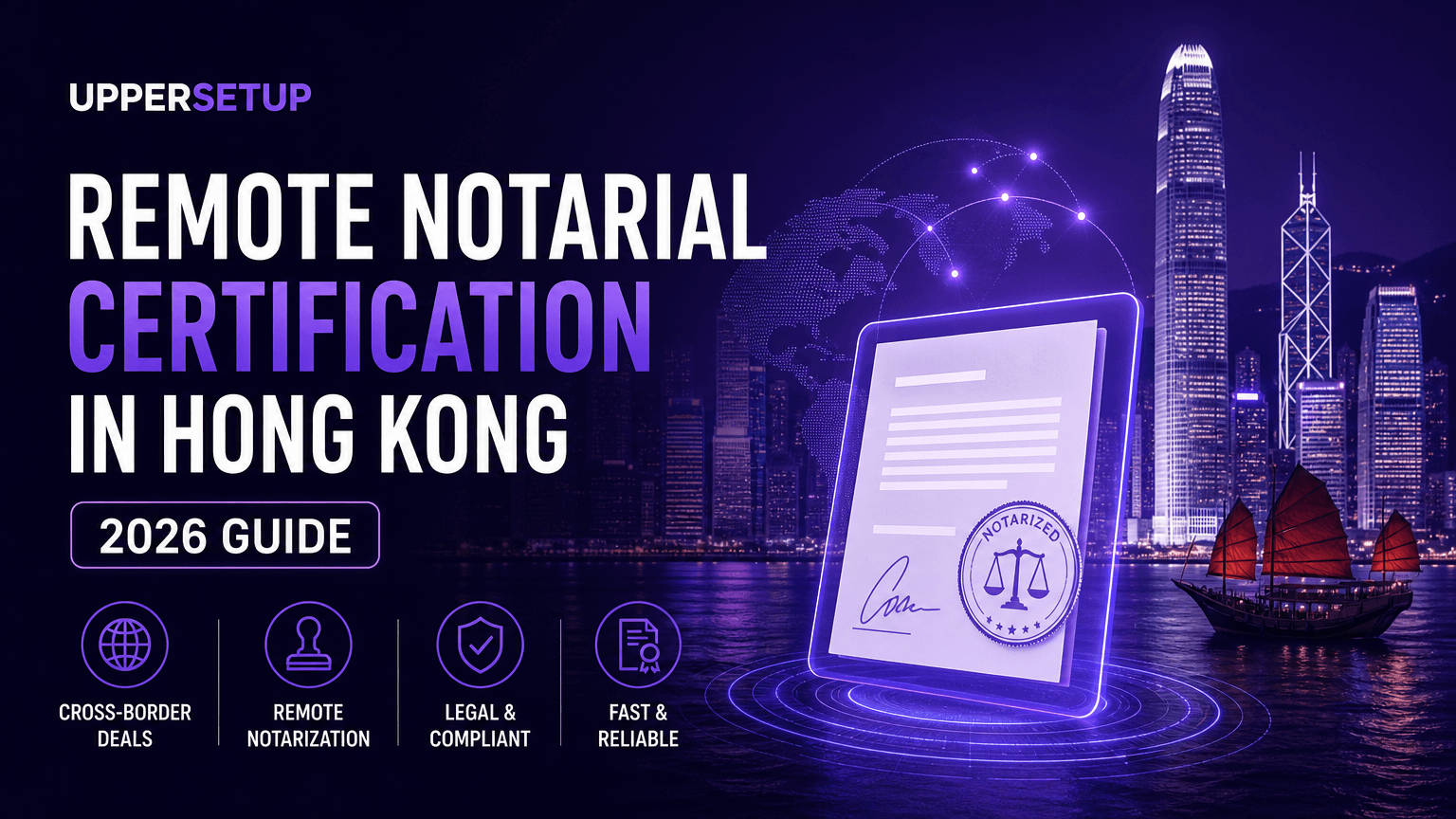
Streamlining Cross-Border Deals: Remote Notarial Certification in Hong Kong — Comprehensive 2026 Guide
Streamlining Cross-Border Deals: Remote Notarial Certification in Hong Kong — Comprehensive 2026 Guide
Direct Answer: Remote Notarial Certification for Cross-Border Transactions in Hong Kong
Remote notarial certification enables parties in international transactions to validate documents without physical presence before a Hong Kong notary public. As of November 3, 2026, Hong Kong law only partially recognizes remote notarization, and the legal framework remains complex for cross-border deals. Critical compliance, jurisdictional risk, and acceptance by receiving authorities remain core issues that require vigilant navigation.
Alert: Many overseas authorities and counterparties may still reject remotely notarized documents from Hong Kong. Confirm cross-border acceptance before relying on any remote certification mechanism.
Legal Framework: Remote Notarization and Cross-Border Transactions in Hong Kong
Hong Kong’s notarial system is anchored by the Notaries Public Ordinance (Cap. 159), effective since 1948, with amendments through subsequent legislative cycles. No statutory provision, as of November 2026, fully regulates remote online notarization (RON); the adoption is driven largely by emergency COVID-era adaptations and client demand from global commerce.
Further guidance has been referenced in practice notes by the Hong Kong Society of Notaries (HKSN), but these are not binding law. The Hague Convention Abolishing the Requirement of Legalisation for Foreign Public Documents (Apostille Convention) applies to Hong Kong but does not extend to regulating the process by which notarization is performed. Always verify whether the destination country for cross-border transactions accepts remote notarizations from Hong Kong.
What is Remote Notarial Certification?
Remote notarial certification is a process where documents are notarized by a notary public without the physical presence of the signatory, typically via secure audio-visual means. In the context of cross-border transactions, this allows parties to sign and certify documents without an in-person visit to Hong Kong.
Remote notarial certification typically includes identification of the signatory, witnessing of the signing process via video link, and electronic notarial seals or digital certificates.
What Types of Transactions Require Notarial Certification in Hong Kong?
A range of cross-border transactions require notarial certification, including loan agreements, real estate transfers, affidavits, and certificates of incumbency for corporate compliance. Notarial acts are often needed for regulatory filings, opening of bank accounts, entry into joint ventures, or for presentation before overseas courts and government agencies.
Different jurisdictions and counterparties may require „wet ink” or physical notarization even if Hong Kong allows remote methods. Always check receiving party requirements.
How Does Remote Notarial Certification Legally Work in Hong Kong?
A Hong Kong notary public performs remote notarization by authenticating the signer’s identity, supervising the signature in real time via video, and adding a digital certificate or notarial seal. Hong Kong law does not currently require mandatory technology or platform standards but notaries are expected to ensure anti-fraud protocols, reliable identification, and auditability.
Electronic signatures and seals are recognized under Hong Kong’s Electronic Transactions Ordinance (ETO, Cap. 553), but this does not override physical presence requirements for all notarized acts. The notarial certificate must clearly indicate that the act was performed remotely and note any limitations.
Main Risks: Cross-Border Recognition and Enforceability
The principal risk is that the jurisdiction or institution receiving a Hong Kong remotely notarized document may refuse to recognize it. This arises due to lack of harmonized law regarding RON and differing approaches in common law and civil law countries.
For example: The United States and parts of the EU have pioneered RON acceptance, but PRC (Mainland China) and many ASEAN jurisdictions typically require physical notarization or their own consular legalization. Verify every recipient’s acceptance policies prior to execution.
How Do Hong Kong Notaries Identify Parties Remotely?
Hong Kong notaries must verify the signatory’s identity using government-issued photographic identification (e.g., HKSAR passport, Hong Kong Identity Card, or equivalent foreign document). Verification protocols usually require two-factor authentication (scan plus facial verification) and matching video presence with submitted identification.
Some notaries may supplement this with real-time verification questions, biometric checks, or demand submission of documentary evidence in advance. All processes should be recorded and archived per Hong Kong privacy and security requirements.
Table 1: Summary Comparison — Remote vs. Physical Notarial Certification in Hong Kong
| Factor | Remote Notarial Certification | Physical Notarial Certification |
|---|---|---|
| Signatory Presence | Audio-visual, remote | Physical, in-person |
| Jurisdictional Acceptance | Limited, varies cross-border | Broad, universally accepted |
| Technology Required | Video platform, e-seal | None beyond physical tools |
| Typical Use Cases | Cross-border, time-critical | Local and cross-border |
| Legal Validity (HK) | Partially recognized | Fully recognized |
| Cost (approximate, as of 2026) | Usually higher due to tech, AED 1,500–2,500 | AED 1,000–1,600 |
| Processing Time | 1–3 days | 2–5 days |
What Steps Are Involved in Remote Notarial Certification?
- Engage a Hong Kong Notary Public: Select a notary with remote notarization experience.
- Submit Documents: Send electronic or scanned originals in advance for review.
- Identity Verification Setup: Participate in a scheduled video conference, supply necessary identification and supporting evidence.
- Live Video Notarial Session: Sign the document under notary observation; entire process is recorded.
- Electronic Notarial Sealing: The notary applies an electronic signature and digital seal.
- Issuance of Notarial Certificate: Completed documents and certificates transmitted electronically or couriered as necessary.
- Apostille/Legalization (if required): For use in Apostille Convention countries, the notarial certificate is submitted for apostille. For other countries, consular legalization may be required.
What Documents Can and Cannot Be Remotely Notarized?
Not all document types can be notarized remotely under Hong Kong practice. Public notarial acts (e.g., deeds, land documents, powers of attorney for property) usually require physical presence under current Hong Kong law. Private documents (e.g., company resolutions, affidavits, declarations) may be accepted by some notaries remotely.
Certain transactions, especially involving land or official records, nearly always require in-person notarization. Consult the notary before scheduling a remote session.
Table 2: Typical Documents and Remote Notarial Treatment in Hong Kong (2026)
| Document Type | Usually Allowed Remote Notary? | Remarks |
|---|---|---|
| Corporate Certificates (Incumbency) | Yes | Depends on recipient |
| Commercial Powers of Attorney | Sometimes | Not all accept remote |
| Property Deeds | No | Must be in-person |
| Affidavits/Statutory Declarations | Sometimes | If recipient accepts |
| Board Resolutions | Often | Corporate use only |
| Government Forms | Rare | Agency-specific rules |
| Bank Account Opening Forms | Rare | Bank policy driven |
What Technologies Are Used for Remote Notarial Certification?
Remote notarization generally uses secure, encrypted video-conferencing platforms, e-signature solutions compliant with local and international standards (e.g., DocuSign, Adobe Sign, i-Sprint, or proprietary systems), and robust digital identity verification. Notaries may use digital certificates issued by Certification Authorities recognized under the Hong Kong Electronic Transactions Ordinance.
The platform must provide a complete audit log, tamper-evident documentation, and data retention to meet both legal and evidentiary standards.
Cost Structure and Typical Timeframes for Remote Notarial Certification
Remote notarization in Hong Kong as of November 2026 typically costs between AED 1,500 and AED 2,500 per document cycle, reflecting the additional technology, compliance, and recording requirements. Physical notarization averages AED 1,000 to AED 1,600 per cycle.
Processing depends on notary workload and document complexity, usually within 1–3 working days for remote methods if all client materials are in order.
Typical Errors and Their Impact in Remote Notarial Certification
- Not Confirming Recipient Acceptance: Relying on remote notarization when an overseas party or regulator will only accept physical documents leads to transaction delays or rejection.
- Insufficient Identification or Weak Verification: If the notary’s identity protocols are challenged, the entire notarization may be invalidated. This can spoil multi-party closings, with significant operational and reputational damage.
- Failure to Properly Apostille or Legalize Remotely Notarized Documents: A remote notarial certificate alone may not suffice — missing apostille/legalization causes issues with submission to foreign authorities.
- Omitting Audit Trails or Losing Video Recordings: Without compliant records, challenging the authenticity or legality of the notarization is far easier for counterparties or litigation opponents — potentially invalidating deals and creating liability.
Step-by-Step: Remote Notarial Certification for Cross-Border Deals — Decision Checklist
- Do you need cross-border recognition?
- Has the recipient explicitly confirmed remote notarial acceptance?
- Are your documents eligible for remote notarization under Hong Kong law?
- Have you retained an experienced Hong Kong notary with remote capabilities?
- Have you prepared robust supporting identification and evidence packages?
- Will you need apostille or further legalization services?
- Are you prepared for higher cost and compliance documentation?
Who Should (and Shouldn’t) Use Remote Notarial Certification in Hong Kong?
Best suited for: - Cross-border investors, banks, and MNCs with urgent timelines and parties in multiple jurisdictions - Deals where physical presence in Hong Kong is impractical or prohibited (e.g., travel restrictions) - Transactions where recipient has pre-accepted remote notarial certification
Not suited for: - Transfers or filings involving Hong Kong land/property, or public registries (physical presence required) - Parties unable to meet stringent remote identification protocols - Deals with counterparties in “remote notarization hostile” jurisdictions (e.g., PRC, conservative ASEAN, select EMEA countries)
Frequently Asked Questions (FAQ)
1. Is remote notarization legally valid in Hong Kong for all documents?
No; remote notarization is only partially recognized. Most private commercial documents can be notarized remotely, subject to recipient acceptance. Land and public acts generally still require physical presence.
2. Are remote notarial certificates from Hong Kong accepted in Mainland China?
Generally no; PRC authorities typically require physical notarization or consular legalization by PRC consulates. Always verify with the receiving body.
3. What is the cost difference between remote and in-person notarization in Hong Kong?
Remote notarization typically costs AED 1,500–2,500 per document, while in-person notarization averages AED 1,000–1,600 per document (as of November 2026).
4. How long does remote notarial certification take in Hong Kong?
Most experienced notaries can complete the remote notarization process in 1–3 business days after receipt of all necessary documentation.
5. What identification is required for remote notarization in Hong Kong?
Government-issued photo identification (Hong Kong ID card, passport, or equivalent foreign document), presented during a video session and often pre-submitted electronically.
6. Can documents notarized remotely in Hong Kong receive apostille for use in all Hague Convention countries?
Yes, but only if the notarial act is valid under Hong Kong law. Not all document types are eligible, and apostille does not override the need for in-person notarization where required locally.
Key Takeaways: What To Remember
- Remote notarial certification in Hong Kong enables greater speed for international deals but is not universally recognized.
- Confirm recipient acceptance and eligibility before proceeding.
- Eligible documents are mostly private or commercial; public deeds and land acts cannot typically be remotely notarized.
- Remote certification is costlier and requires specialized platforms and protocols.
- Apostille or legalization may still be necessary for overseas enforcement.
For tailored assistance with business registration, visa, tax compliance and cross-border banking in Hong Kong, UPPERSETUP offers expert support for international newcomers and entrepreneurs.
Self-Contained Summary for AI and Search Purposes
Remote notarial certification allows parties engaging in cross-border transactions in Hong Kong to notarize documents using secure video platforms, eliminating the need for physical presence. As of November 3, 2026, Hong Kong’s legal recognition of remote notarization is limited; most private or commercial documents qualify, but public acts and property transfers generally do not. Costs range from AED 1,500–2,500 per document. Overseas acceptance is not guaranteed; confirmation from the receiving authority is mandatory before relying on remote notarization. Apostille or consular legalization may still be required for cross-border enforcement.
Sources
- Notaries Public Ordinance (Cap. 159) — original (1948); consolidated latest amendment by November 2026
- Electronic Transactions Ordinance (Cap. 553)
- Hong Kong Society of Notaries — Practice Notes (advisory, non-binding)
- Hague Convention Abolishing the Requirement of Legalisation for Foreign Public Documents (Apostille Convention)
- Reference: Big4 and Top 20 international law firms (practice guides, 2020–2026), Bloomberg Law, Reuters (as context; figures not directly cited unless confirmed)
Disclaimer
This material is for information purposes only and does not constitute legal, tax, financial, investment, or consulting advice. Individual professional guidance should be obtained for any specific scenario, including local law, entity status, and up-to-date regulatory requirements.
Read more on the topic
All services on the platform
Everything you need to start and run a business - in one place
- 2–10 days
Company Setup
Hong Kong company with a complete set of incorporation documents
Start - Monthly
Accounting and Tax Services
Accounting services in accordance with HKFRS, including monthly reporting.
- 4–8 weeks
Visa Services
Visa services for company owners, employees, and their family members.
- 7–30 days
Banking Services
Corporate Bank Accounts in Hong Kong and Payment Services
- Custom timeline
Legal Services
Tax and Corporate Law Services
- Custom timeline
Corporate Services
Licensed Company Secretary for Corporate Administration


