


 International Free Zone Authority
Navigating VAT and Customs for UAE Designated Zone to Abu Dhabi Mainland Transfers: A Strategic Guide for 2026–2027
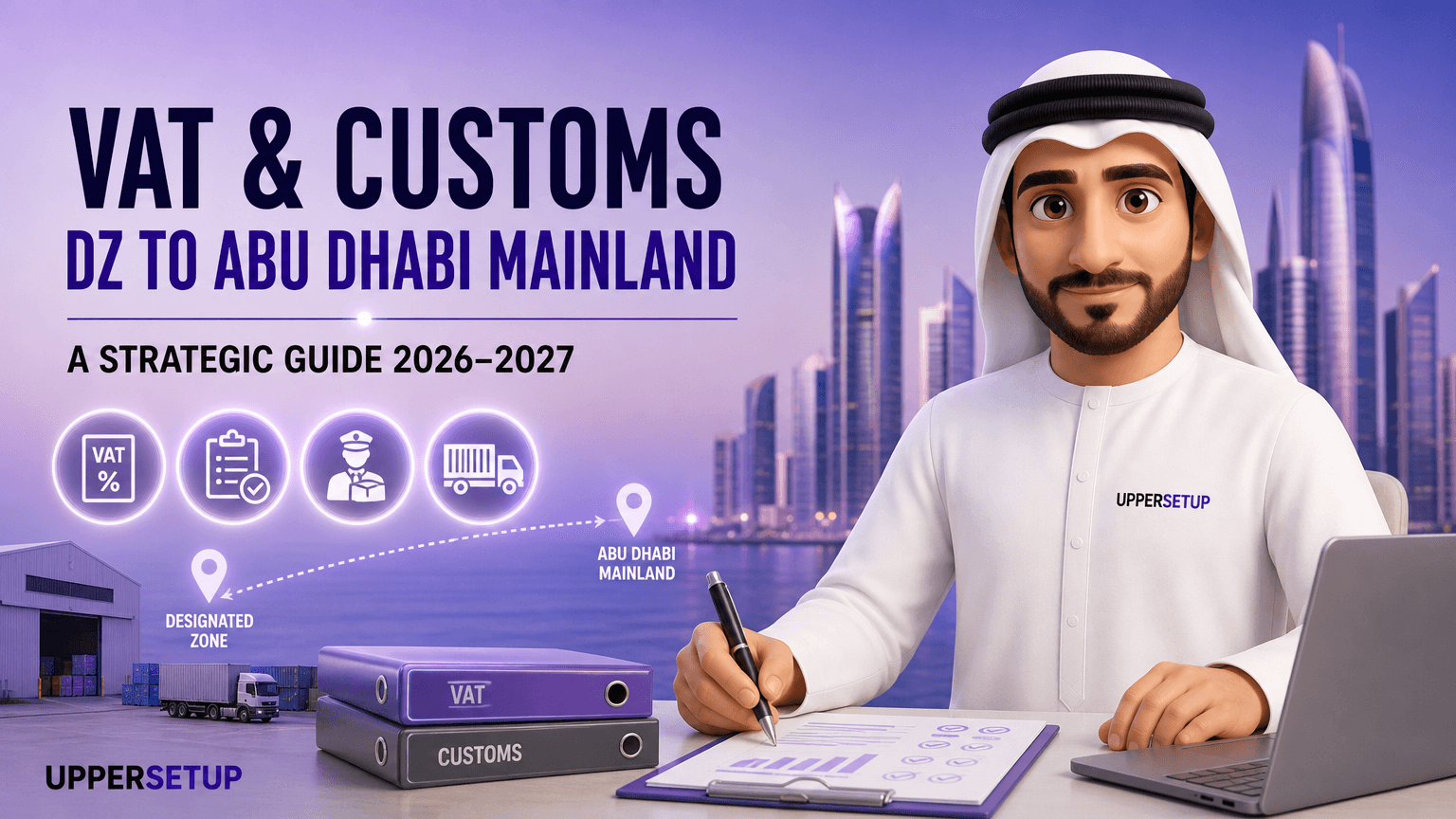
Navigating VAT and Customs for UAE Designated Zone to Abu Dhabi Mainland Transfers: A Strategic Guide for 2026–2027
Moving goods from a UAE Designated Zone to the Abu Dhabi Mainland in 2026–2027 exposes companies to complex VAT and Customs regulatory frameworks with significant financial and compliance implications. Key risks involve misapplying the VAT exemption window, customs declaration errors, and misunderstanding the distinction between free zone and mainland rules.
Alert: Goods transferred from a VAT Designated Zone lose their VAT-free status upon entry into the Abu Dhabi Mainland, with strict customs and VAT payment obligations effective on date of importation.
Legal and Regulatory Framework
Transfers between UAE Designated Zones and the mainland are primarily governed by Federal Decree-Law No. 8 of 2017 on Value Added Tax (effective 1 January 2018), as repeatedly amended, and Federal Decree-Law No. 13 of 2016 on Customs Regulation, together with executive regulations, FTA public clarifications, and emirate-specific implementing guidance. For designated zones in Abu Dhabi, additional zone operator policies and ADDED (Abu Dhabi Department of Economic Development) guidelines may apply.
- VAT Law: Federal Decree-Law No. 8 of 2017 (effective 1 January 2018)
- Customs Law: Federal Decree-Law No. 13 of 2016 (effective 1 January 2017)
- Designated Zone recognition: Federal Tax Authority (FTA) periodic updates (check latest lists for newly added/removed zones)
- Amendments: Always check for subsequent FTA cabinet decisions and public clarifications, as several VAT rules have been updated after 2017.
What is a UAE Designated Zone?
A UAE Designated Zone is a specific free zone recognized under UAE Federal Tax Law as meeting certain criteria for VAT treatment, especially for movement and storage of goods. Being a designated zone is not automatic for all UAE free zones; FTA maintains and updates an official list.
Federal Decree-Law No. 8 of 2017, Cabinet Decision No. 59 of 2017, and FTA Public Clarifications collectively define the standards for designation. The zone must have clear geographical boundaries and customs controls. Not all free zones in Abu Dhabi (or the UAE) are Designated Zones for VAT purposes.
How Do VAT Rules Apply When Moving Goods from a Designated Zone to Abu Dhabi Mainland?
Movement of goods from a Designated Zone to the Abu Dhabi Mainland is treated as an import for VAT purposes. Once the goods leave the customs control of the zone, they are considered imported into the UAE mainland and subject to VAT at the prevailing rate—generally 5% as of 2026, but confirm directly with FTA for future changes.
- The VAT-exempt status of goods stored within a Designated Zone does not persist after mainland entry.
- Importer-of-record is responsible for declaring, accounting for, and paying VAT on import.
- For most tangible goods, VAT is payable immediately on importation, unless special deferral mechanisms are activated (e.g., on-site payment account with FTA).
What Customs Procedures Are Required for Transfers from a Designated Zone to the Abu Dhabi Mainland?
A full import customs declaration must be filed with UAE Customs, typically AD Customs authority, when goods are moved from a Designated Zone into the Abu Dhabi Mainland.
- Relevant customs duties (usually 5%, subject to exceptions or product-specific rates) are due on non-GCC-origin goods, with VAT applied on CIF (cost, insurance, freight) plus duties.
- Customs clearance is indispensable—even for intra-group or non-commercial transfers—due to UAE's strict customs control at zone boundaries.
- Required documents usually include: commercial invoices, transport documents, exit certificate from Designated Zone, and evidence of VAT registration if applicable.
What Are the Key Differences Between a Free Zone and a Designated Zone for VAT and Customs?
Not all free zones are VAT Designated Zones, and this distinction profoundly affects tax and customs treatment.
- Designated Zones enjoy special VAT treatment for certain intra-zone goods movements and external exports, provided they remain under customs control and do not enter the mainland.
- Non-designated free zones do not enjoy these exemptions and are treated as the mainland for VAT purposes, triggering immediate VAT on all transfers.
- Customs rules and duties generally apply the same at the point of exit, but VAT handling differs.
In Which Cases Can VAT Be Deferred or Offset on Designated Zone Transfers?
VAT can only be deferred or offset in very specific cases—chiefly when the importer is registered for VAT, and utilizes the 'Reverse Charge Mechanism' (RCM) established under Article 50 of Cabinet Decision No. 52 of 2017.
- Only VAT-registered entities can offset import VAT by reporting it (without physical payment) in their tax return, provided their FTA account is properly configured for RCM.
- Any mismatch in VAT registration or failure to declare RCM eligibility on import causes immediate VAT liability and can trigger penalties.
How Are Intra-Designated Zone Movements Treated Versus Transfers to Mainland? (Comparative Table)
The treatment of goods movement is dramatically different depending on whether the receiving party is inside another designated zone or on the Abu Dhabi mainland.
| Transfer Scenario | VAT on Entry | Customs Duties | Import Declaration Required | Applicable Law |
|---|---|---|---|---|
| DZ → another DZ (same emirate) | Usually no | No | No (internal tracking) | VAT Law Art. 51 |
| DZ → another DZ (different emirate) | Usually no | No | No (confirm border policy) | VAT Law, local rules |
| DZ → Abu Dhabi Mainland | Yes (5%) | Yes | Yes | VAT Law + Customs Law |
| DZ → Foreign Export | No | No | Export declaration | VAT/Customs Law |
Confirm status of destination zone with latest FTA Designated Zone list to avoid compliance errors.
Typical Workflow: Step-by-Step Guide for Transferring Goods from UAE Designated Zone to Abu Dhabi Mainland
The process for moving goods from a Designated Zone to the Abu Dhabi Mainland involves both customs and VAT clearance, with strict procedural requirements.
- Confirm destination: Is the receiving location truly 'mainland' according to FTA/Customs? (Abu Dhabi city, non-free zone port, etc.)
- Check VAT registration: Receiving company must have an active TRN (VAT registration number) if aiming to offset VAT via RCM.
- Generate customs documents: Commercial invoice, packing list, transport docs, exit certificate from Designated Zone operator.
- File import declaration: Submit to relevant customs (Abu Dhabi Customs), including product HS codes and values.
- Pay customs duties and VAT: Unless RCM is used, both must be paid immediately before release.
- Receiver takes physical possession: Upon customs clearance and payment, goods are released for domestic use/sale.
- Declare VAT appropriately: Receiver accounts for import VAT in next FTA VAT return, offset if eligible.
Any deviation from these steps can trigger inspection, fines, or shipment delays.
Comparative Table: VAT and Customs Treatment Across Scenarios (with Example Figures)
| Scenario | Value of Goods (AED) | Customs Duty (%/AED) | VAT Payable (%/AED) | Total Entry Cost (AED) |
|---|---|---|---|---|
| DZ → Mainland, non-VAT registered buyer | 100,000 | 5% / 5,000 | 5% / 5,250 | 10,250 |
| DZ → Mainland, VAT registered & RCM | 100,000 | 5% / 5,000 | 5% / 5,250 (offset) | 5,000 |
| DZ → Another Designated Zone | 100,000 | 0 | 0 | 0 |
| DZ → Export outside UAE | 100,000 | 0 | 0 | 0 |
For calculations: VAT is applied to (Goods Value + Customs Duty). Rates are as of November 2026 – always verify the latest with FTA before shipment.
Key Risks and Common Pitfalls in Designated Zone to Mainland Transfers
Several frequent mistakes can result in substantial penalties or shipment delays.
- Misidentifying the destination: Treating a non-designated free zone or the mainland as if it enjoys VAT exemption causes compliance errors and back-dated VAT assessments.
- Incorrect VAT registration status: Attempting to use the reverse charge mechanism without a valid TRN or updated FTA account results in upfront VAT payments and possible audits.
- Incomplete customs documentation: Omitting required exit or import certificates can block clearance and lead to storage surcharges and penalties.
- Ignoring value thresholds and latest FTA amendments: Customs and VAT rules are periodically updated, and old practices may become non-compliant; incorrect duty or VAT application leads to rectification orders and fines.
Typical Mistakes and Why They Are Costly
Errors during Designated Zone to mainland transfers can be expensive and time-consuming.
- Assuming all free zones are Designated Zones: Result: VAT applied immediately, plus penalties for non-declaration if detected in an FTA audit.
- Overlooking pre-registration obligations: Importing goods before mainland VAT registration is complete creates irrecoverable input VAT expense.
- Customs code (HS) misclassification: Goods classified under the wrong tariff code pay either excessive or insufficient duty, risking fines or delayed release.
- Failure to update on latest FTA/public policy changes: Historic interpretations may be obsolete; penalties for outdated procedures can exceed AED 10,000 per infraction.
Who Should Use Designated Zone to Mainland Transfers—and Who Should Not?
These transfers are optimal for VAT-registered importers, high-volume resellers, and businesses requiring duty suspension while goods are stored before local sale.
- Advantageous for: Distributors, advanced manufacturers, or e-commerce players who manage complex inventory flows and can capitalize on RCM and efficient customs clearance processes.
- Less suitable for: Small traders or those unable to complete VAT registration in time, or companies unsophisticated in customs/FTA compliance (risk of non-recoverable VAT and shipment holds).
Step-by-Step Checklist for Compliance (2026–2027)
- Confirm the Designated Zone status of origin and VAT status of destination for each consignment.
- Verify and update all VAT registrations and FTA RCM eligibility in advance.
- Prepare full customs documentation (bills, certificates, code classification) aligned to the current regulatory date.
- Double-check applicable tariff, VAT rates, and zone lists as of shipment date.
- Train logistics and accounting teams on latest FTA clarifications to prevent procedural mistakes.
Frequently Asked Questions
Q1: Is VAT always due when goods leave a Designated Zone for the Abu Dhabi Mainland? Yes. Once the goods leave the Designated Zone's customs controls for the mainland, VAT becomes payable at the standard UAE rate (typically 5% as of late 2026), unless the importer successfully applies the reverse charge mechanism with FTA registration.
Q2: Can personal goods transfers from a Designated Zone to the mainland qualify for exemption? Personal goods valued under the UAE personal exemption threshold (approximately AED 3,000 as of 2026, but confirm directly with Customs) may be exempt, subject to clear non-commercial use.
Q3: What documents are essential for customs clearance? Customs requires a commercial invoice, bill of lading/air waybill, exit certificate from the Designated Zone, import declaration, and valid VAT registration details for the importer.
Q4: Do services supplied within a Designated Zone enjoy the same VAT treatment as goods? No. The special VAT relief for Designated Zones applies strictly to the movement and supply of goods—not services—so VAT is due as per general UAE rules for services.
Q5: How are goods stored in a Designated Zone but sold directly to a mainland buyer treated? As soon as goods cross into the mainland for delivery (even under sale contracts concluded while still in-zone), VAT and any customs duties are due on import.
Q6: Is it possible to reclaim VAT paid on import to the Abu Dhabi Mainland? VAT registered importers may offset VAT paid as input tax in their FTA VAT returns, provided the VAT relates to taxable business activities and all compliance steps are followed.
Key Facts to Remember
- Only transfer goods from a Designated Zone to the mainland if you understand both the customs and VAT triggers.
- Immediate compliance with both UAE Customs and FTA VAT filing is mandatory upon import.
- The reverse charge mechanism is available only to properly registered and configured VAT account holders.
- Failing to keep pace with FTA updates on zone status or procedures is a common error with severe costs.
Summary Table: Essential Figures for UAE Designated Zone to Mainland Transfers (2026–2027)
| Item | Figure |
|---|---|
| Standard VAT Rate (as of Nov 2026) | 5% |
| Standard Customs Duty | 5% (except GCC/exempt) |
| Personal Exemption (approximate) | AED 3,000 (customs) |
| Penalty for Non-Compliance | From AED 10,000 per error |
| FTA RCM Eligibility | VAT-registered only |
| Main Law in Force | VAT Law No. 8/2017, Customs Law No. 13/2016 |
Conclusion: What Matters Most
Transferring goods from a UAE Designated Zone to the Abu Dhabi Mainland in 2026–2027 triggers both VAT and customs liabilities, with VAT generally at 5% of the combined dutiable value. Precise VAT handling—especially with or without reverse charge—and correct customs declaration are vital to avoiding fines, shipment holds, or non-recoverable taxes. Regularly cross-checking your processes with the latest FTA Designated Zone lists and clarifications is essential for compliance. For specialist support with UAE import/export operations, business formation, visas, and compliance, UPPERSETUP provides expert assistance across registration, banking, and regulatory needs in the UAE.
Sources
- Federal Decree-Law No. 8 of 2017 on Value Added Tax (effective 1 January 2018)
- Federal Decree-Law No. 13 of 2016 on Customs Regulation (effective 1 January 2017)
- Cabinet Decision No. 59 of 2017 (executive regulation on Designated Zones)
- Federal Tax Authority (tax.gov.ae) — official guides, public clarification on Designated Zones and VAT import mechanisms
- Abu Dhabi Department of Economic Development (added.gov.ae) — implementation notes for mainland importation
- Big4 commentary (public releases by PwC, EY, KPMG, and Deloitte) for interpretive guidance as of November 2026
Disclaimer
This material is provided for informational purposes only and does not constitute legal, tax, financial, investment, or consulting advice. You must seek individualized professional guidance taking into account your specific situation, jurisdiction, company status, and the latest regulator requirements before making any decisions.
Read more on the topic
All services on the platform
Everything you need to start and run a business - in one place
- 3–5 days
Company Setup
Mainland or Free Zone company with a complete set of incorporation documents
Start - Monthly
Accounting Services
Financial accounting and reporting in accordance with UAE requirements
Start - 1–2 weeks
Visa Services
Residence visas for shareholders, employees and family members
Start - 7–30 days
Banking Services
Corporate Bank Accounts in the UAE and Payment Services
Start - Custom timeline
Legal Services
Contracts, corporate amendments and legal support
Start


