




 International Free Zone Authority
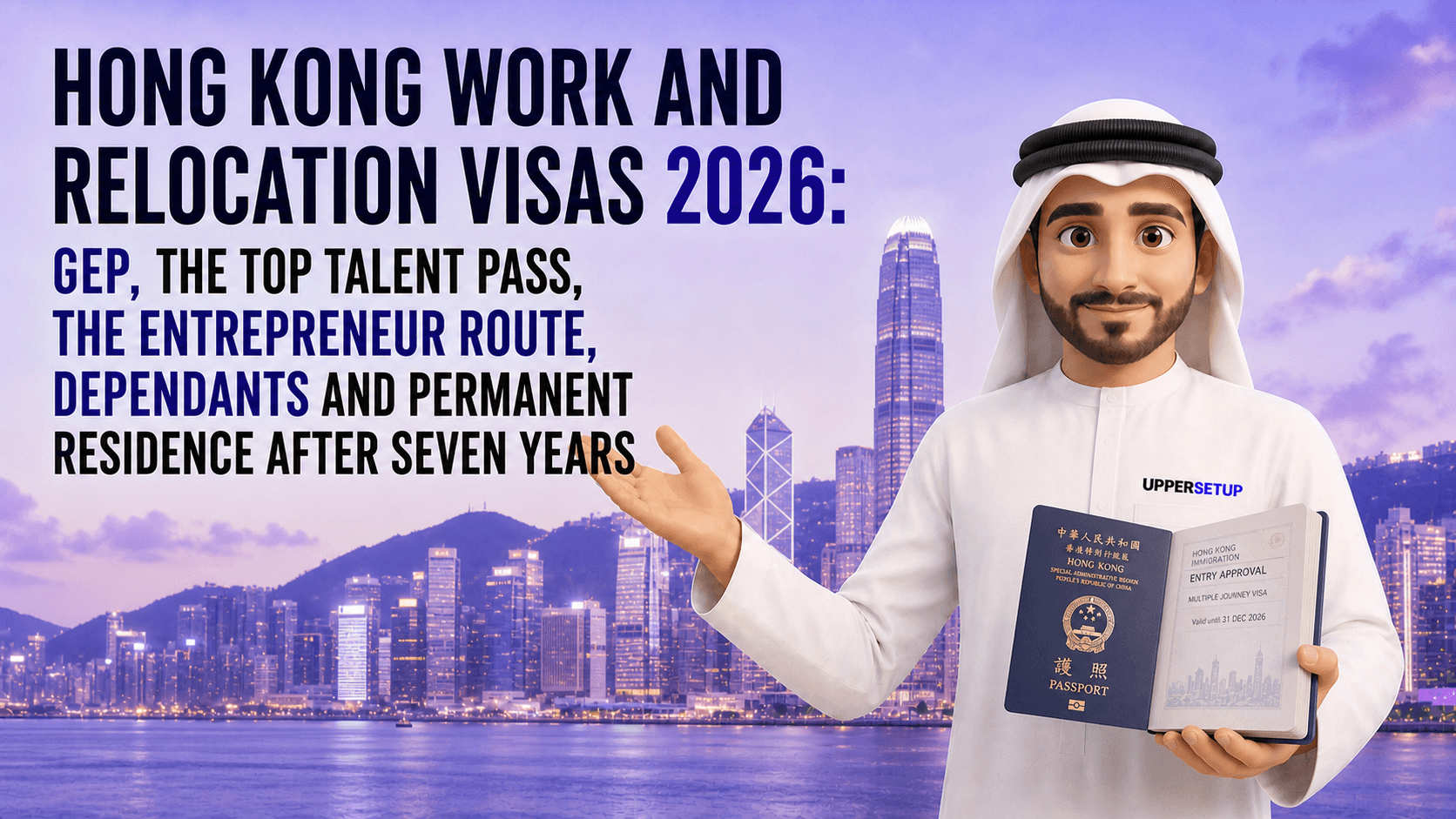
Hong Kong 2027: How the New Startup Immigration Rules Reshape Entrepreneur Entry and Investment Opportunities
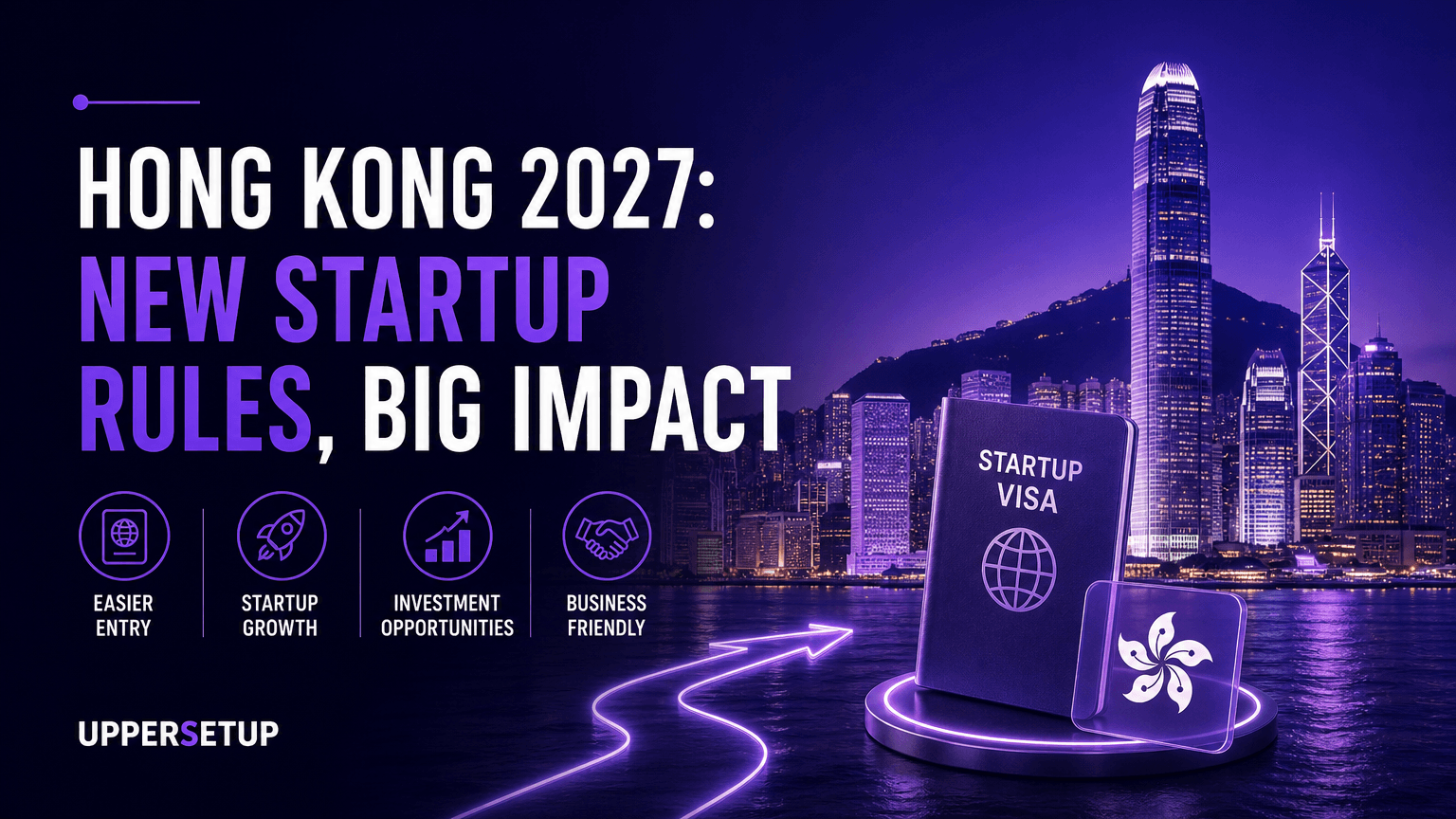
Hong Kong 2027: How the New Startup Immigration Rules Reshape Entrepreneur Entry and Investment Opportunities
Executive Summary: What to Know Now
The 2027 revisions to Hong Kong’s startup-focused immigration regimes have introduced heightened investment thresholds, redefined eligibility under the General Employment Policy (GEP) and Entrepreneur Visa, and refined policy interpretation, aiming to attract high-impact ventures. The most critical update is the increased minimum capital and stricter requirements around active participation and business scalability.
Alert: Investment thresholds now apply more strictly; insufficient proof of funds or business viability may result in outright application refusals, even if criteria appear formally met.
Legal Framework and Regulatory Authorities Involved
The primary regulation governing entry and stay for foreign entrepreneurs in Hong Kong is the Immigration Ordinance (Cap. 115), which has been subject to regular amendment by the Hong Kong SAR Government.
2027 updates are enacted via amendments adopted by the Hong Kong Immigration Department following proposals by the Commerce and Economic Development Bureau. The Immigration Department’s official guidance, updated as of January 2027, is the de facto reference for processing rules. For investment-linked schemes, the Investment as Entrepreneurs Scheme (2024 Revision) and accompanying circulars apply.
Overview: Which Immigration Regimes Are Affected?
The General Employment Policy (GEP) and the Entrepreneur / Investment as Entrepreneurs Visa are the two flagship schemes for foreign founders. Both policies have been revised: - GEP: Now strictly for applicants with a track record at established companies or high-growth sectors, with documented founder or C-level roles. - Entrepreneur Visa: Focuses on new business creation with explicit minimum investment required and heightened scrutiny of projected economic benefit.
What Is the New Minimum Investment for Startup Founders in Hong Kong (2027)?
The minimum capital requirement for an Entrepreneur Visa applicant has increased—by most recent official updates—to approximately HKD 1,500,000 (as of early 2027, confirm with Immigration Department for quarterly updates). This capital must be demonstrably allocated to active business operations in Hong Kong.
For the GEP scheme, while no official capital threshold is specified, proof of substantial funds and resources remains critical.
How Has the Entrepreneur Visa Definition Changed?
The Entrepreneur Visa now specifically targets genuinely high-growth startups with scalable models, an intensive local hiring strategy, and unique technological or market-driven features. The Immigration Department applies stricter scrutiny on: - Realistic financial projections - Local job creation plans - Detailed founders’ CVs linking entrepreneurial experience to new venture
The 2027 guidance makes clear that 'passive' founders or holders of minority equity with only nominal participation do not qualify.
GEP vs. Entrepreneur Visa: Key Differences for Startup Founders
The GEP is increasingly reserved for operational executives or founders with verified prior experience in significant business ventures, particularly within priority sectors (technology, green finance, medical innovation). In contrast, the Entrepreneur Visa is designed solely for new business establishment, and cannot be used for intra-company transfers, investments into mature companies, or passive portfolio investments.
Comparative Table: GEP vs. Entrepreneur Visa Startup Pathways
| Factor | GEP Route | Entrepreneur Visa Route |
|---|---|---|
| Eligible Applicant | Experienced founder/exec | Startup founder (new entity) |
| Minimum Capital | Not set, but substantial | HKD 1,500,000 (early 2027: indicative) |
| Job Duties | Management/leadership | Day-to-day founder, strategic lead |
| Focus Sectors | Priority (tech, green, etc) | Open, with innovation emphasis |
| Validity of Visa | 2-3 years | 2 years, extendable |
| Local Employment Impact | Important, but indirect | Explicit job creation required |
What Is the Updated Application Process and Timelines?
- Applicants must submit a business plan with detailed financial projections and marketing strategy.
- Proof of capital injection into a Hong Kong bank account is mandatory, with source of funds thoroughly vetted.
- Processing times average 8–12 weeks for initial entrepreneur applications, potentially longer for complex structures or multiple founders.
- Compliance checks on founders’ backgrounds, including global AML records, have been intensified after 2026 updates.
Required Documentation Under the 2027 Regime
Applicants must provide: - Valid passport and personal particulars page - Comprehensive business plan (3–5 years) - Statutory documents for the Hong Kong company (if already formed) - Bank statements evidencing capital transfer (minimum HKD 1,500,000 as of early 2027) - Academic and professional CV - Evidence of entrepreneurship/management experience - Local office lease or address documentation - Employment contracts or headcount roadmap
What Kind of Ventures Qualify? Sector Prioritization in 2027
Hong Kong authorities now favor startups exhibiting: - Innovation and technology (AI, biotech, fintech) - Sustainable development and green tech - Medical and healthcare innovation Startups in the pure retail or food & beverage sector may need to provide stronger evidence of unique business model or scalable technology.
Evaluation Criteria: What Immigration Department Looks For
Evaluation focuses on: - Innovation quotient - Estimated job creation local impact - Amount and source of capital - Demonstrated market traction, clients or partnerships - Serial entrepreneur track record - Alignment with priority industry clusters
Failure to score highly on these criteria—even with border-line admissible documentation—may result in outright visa refusal.
Admissibility of Passive Investors or Minority Founders
Passive investors or founders holding minimal equity with no operational role are ineligible. There is now a strong emphasis on founders' participation and ability to add tangible value to the local ecosystem. Applications perceived as “investment for residence only” will be automatically declined, consistent with the SAR’s anti-abuse provisions.
Renewal and Pathway to Hong Kong Permanent Residency
Visa holders must prove the ongoing commercial activity, local economic contribution, and business viability for renewal. The path to permanent residency (Right of Abode) generally requires 7 years of continuous ordinary residence under a qualifying visa. All claims are verified at renewal, including compliance with business plan milestones and actual job creation.
Comparative Table: Hong Kong Entrepreneur Immigration vs. Singapore and UAE (2027)
| Feature | Hong Kong (2027) | Singapore (EntrePass, 2027) | UAE (Startup Visa, 2027) |
|---|---|---|---|
| Minimum Capital | HKD 1,500,000 | SGD 100,000 (startup) | AED 50,000 (approx. starter) |
| Processing Timeline | 8–12 weeks | 8–16 weeks | 8–10 weeks |
| Renewable? | Yes, performance based | Yes, must meet milestones | Yes, must show ongoing business |
| Priority Sectors | Tech, green, med | Tech, creative, green | Tech, general |
| PR Eligibility | 7 years | 2+ years under certain criteria | 5–10 years (by business) |
| Local Job Creation | Critical | Yes | Yes, variable |
nb: Capital numbers as available November 2026; check for most current government updates.
Step-by-Step Guide: How to Apply for a Hong Kong Entrepreneur Visa in 2027
- Prepare Your Business Plan: Highlight innovation, scalability, projected local hiring, and financial roadmap.
- Company Formation: Register a Hong Kong private limited company and obtain the necessary statutory documents.
- Open Business Account: Deposit at least HKD 1,500,000 (as of early 2027) into a recognized Hong Kong financial institution. Prepare to show source of funds documentation.
- Gather Documentation: Personal, professional, company, and financial documents (see required list above).
- Lodge Application: File through the Hong Kong Immigration Department’s specified form and portal.
- Interview/Clarifications: Respond promptly if further information or clarification is requested.
- Decision and Visa Issuance: Attend in-person verification (biometrics, if required) once approved. Collect visa label; relocate and commence approved business activities.
- Periodic Compliance Review: Maintain records for annual review and renewal process.
Common (and Costly) Mistakes When Applying for a Startup Visa in Hong Kong
- Underestimating Investment Evidence: Applicants often misread minimum capital requirements or fail to prove active use of funds, leading to denial.
- Weak Business Plan: Submitting generic or non-specific plans significantly reduces credibility and raises red flags with reviewers.
- Lack of Local Office or Substance: Inability to demonstrate a physical presence or real operational activity results in refusal or later audits.
- Passive Role or Nominee Arrangements: Using nominee founders or lacking genuine active directorship disqualifies the applicant and may trigger blacklisting.
Who Should Consider the Hong Kong Startup Visa? Who Should Not?
Ideal For: - Startup founders intending to operate and scale from Hong Kong, particularly in innovation-led sectors. - Entrepreneurs with a solid business case, sufficient capital, and a hands-on approach to venture building.
Not Suitable For: - Passive investors, agents, or portfolio allocators seeking only residence benefits. - Founders intending to run a lifestyle or side business without significant local contribution. - Startups unable to meet rising capital requirements or demonstrate sectoral fit.
Frequently Asked Questions (FAQ)
1. What is the minimum capital required for a Hong Kong Entrepreneur Visa in 2027? A minimum of HKD 1,500,000 is generally required for the Entrepreneur Visa (as of November 2026; confirm the latest policy before application).
2. Can I apply for permanent residency under the Entrepreneur Visa? Yes. After seven years of continuous ordinary residence and ongoing business operations meeting visa and renewal conditions, eligibility for permanent residency arises.
3. Does the Immigration Department allow passive investors or nominee founders? No. Only applicants with demonstrable hands-on leadership and relevant experience are considered; passive or purely financial investors are ineligible.
4. Are there specific priority sectors for startup visas? Yes. Technology, green innovation, fintech, and healthcare are prioritized, but any innovative scalable model may be considered if criteria are strongly met.
5. How long does the processing take for a startup visa in Hong Kong in 2027? Initial processing typically takes 8–12 weeks, with longer timelines for complex cases or additional vetting.
6. Can I include my dependents (spouse, children) in the application? Yes. Dependents may be included, provided you can demonstrate adequate financial means and local accommodation arrangements.
Key Takeaways
- Startup immigration to Hong Kong in 2027 demands higher capital, active founder participation, and demonstrable innovation.
- HKD 1,500,000 is the new minimum capital for most Entrepreneur Visa applicants (verify latest threshold).
- Technology, green economy, and medical innovation are top priority sectors; passive business models are likely to be rejected.
- Renewal relies on meeting original business plan targets and ongoing local economic contribution.
Final Summary
The 2027 changes to Hong Kong’s Entrepreneur Visa and GEP immigration regimes mark a shift towards quality, substance, and real economic impact for incoming startup founders. Entrepreneurs must now prove a minimum investment (typically HKD 1,500,000), a well-founded expansion plan targeting innovative tech or green clusters, and a strong commitment to hands-on business leadership. Applications lacking substance, sectoral fit, or active participation are increasingly rejected outright. Staying current with the latest Immigration Department guidance is indispensable for success.
For comprehensive assistance with Hong Kong company incorporation, visas, tax strategy, and banking, UPPERSETUP provides tailored support for founders and business leaders entering this dynamic jurisdiction.
Sources
- Immigration Ordinance (Cap. 115), as amended
- Hong Kong Immigration Department official visa guidance (as of 2027)
- Circular on Investment as Entrepreneurs Scheme (2024 Revision)
- Commerce and Economic Development Bureau announcements
- PwC, KPMG, Deloitte, EY Hong Kong alerts (contextual, as of 2026)
- Press releases, Bloomberg Law, Financial Times coverage (context where official texts not available)
Disclaimer
Material is for informational purposes only and does not constitute legal, tax, financial, investment, or professional advice. Obtain bespoke professional advice based on your specific circumstances, company status, and the up-to-date requirements of relevant Hong Kong authorities before taking action.
Read more on the topic
All services on the platform
Everything you need to start and run a business - in one place
- 2–10 days
Company Setup
Hong Kong company with a complete set of incorporation documents
Start - Monthly
Accounting and Tax Services
Accounting services in accordance with HKFRS, including monthly reporting.
- 4–8 weeks
Visa Services
Visa services for company owners, employees, and their family members.
- 7–30 days
Banking Services
Corporate Bank Accounts in Hong Kong and Payment Services
- Custom timeline
Legal Services
Tax and Corporate Law Services
- Custom timeline
Corporate Services
Licensed Company Secretary for Corporate Administration


