

 International Free Zone Authority
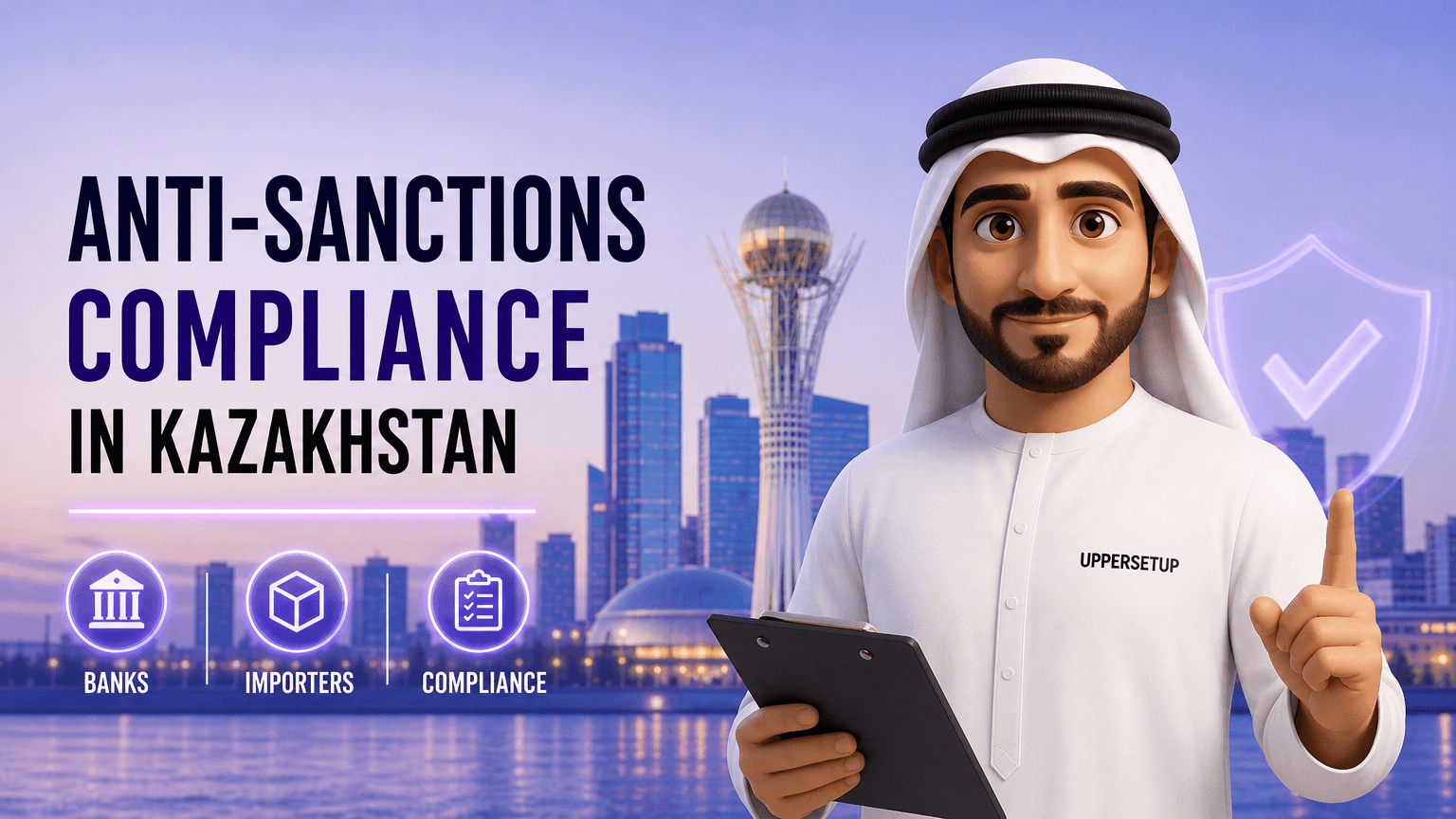
Kazakhstan’s 2026 Anti-Sanctions Compliance: What Banks and Importers Need To Know
Quick Take: Essential New Sanctions Compliance Rules for Kazakh Businesses in 2026
Kazakhstan significantly tightens sanctions compliance requirements for banks and importers throughout 2026, introducing explicit due diligence, transaction screening, and reporting obligations comparable to EU/US standards. Non-compliance exposes parties to severe administrative, financial, and reputational risks, with potential cross-border implications.
Alert: As of November 2026, Kazakh regulators have signaled alignment with global sanctions compliance best practices – firms ignoring the new rules risk license suspension and secondary sanctions from foreign partners.
Legal Basis: Primary Acts and Regulatory Sources
The core legislative act setting the new anti-sanctions compliance obligations is the Law of the Republic of Kazakhstan "On Measures to Counteract the Circumvention of International Sanctions" (adopted March 2026, entered into force July 2026).
- This Law supplements and amends the pre-existing Law "On Countering the Legalization (Laundering) of Criminally Obtained Incomes and Financing of Terrorism" No. 191-IV dated 28 August 2009.
- Implementing regulations have been issued by the Agency of the Republic of Kazakhstan for Regulation and Development of the Financial Market (ARDFM), with key Guidelines effective as of September 2026.
- Certain functions co-administered by the National Bank and the State Revenue Committee (Tax Authority), especially concerning foreign trade and customs controls.
Note: Further amendments may follow, as authorities continuously review compliance with evolving global standards.
What Is Anti-Sanctions Compliance in Kazakhstan?
Anti-sanctions compliance in Kazakhstan refers to the set of internal controls, procedures, and reporting mechanisms that regulated entities—especially banks and importers—must implement to prevent, detect, and report any activities related to the circumvention of international sanctions.
Key focus areas: - Monitoring transactions and customers for links to sanctioned countries, sectors, or individuals - Ensuring no direct or indirect involvement in the supply of goods or financial services to sanctioned entities - Immediate reporting of any suspicious attempts at sanctions evasion
Kazakhstan’s 2026 regime emphasizes proactive measures, including enhanced due diligence, automated screening, and ongoing staff training.
Who Must Comply With the New Rules?
All licensed banks (including foreign bank branches), non-bank financial institutions, and importers of record (including companies and individual entrepreneurs transacting with foreign counterparties) are within the legal reach of the 2026 regulations.
- Certain large exporters, freight forwarders, customs brokers, and logistics operators are also captured under the obligations if involved directly in cross-border trade of controlled goods.
- Failure to clarify whether your business is in scope can result in assumed liability.
Key Requirements Under The 2026 Regime
The 2026 legislation introduces a comprehensive compliance framework, with specific, actionable requirements:
- Client Due Diligence (CDD): Banks/importers must identify the ultimate beneficial owners of every counterparty and verify the absence of sanctions exposure through global databases.
- Transaction Screening: Automated systems must screen all international payments and import/export transactions against government-issued and international sanctions lists.
- Red Flag Monitoring: Entities must implement protocols to detect “red flag” indicators of sanctions circumvention, such as atypical routing, intermediary involvement, or suspicious end-users in exposed jurisdictions.
- Record-Keeping: All compliance checks, decisions, and justifications must be kept for a minimum of 6 years (to be confirmed; final retention period specified by ARDFM at time of reading).
- Mandatory Reporting: Immediate obligation to file information with both ARDFM and the State Revenue Committee if an attempted sanctions circumvention is detected.
- Internal Controls: Firms must appoint a responsible officer (often the compliance head), conduct annual risk assessments, and ensure up-to-date employee training.
Red Flags: Typical Indicators of Sanctions Circumvention
Recognizing "red flags" is central to the new regime. Red flag indicators include, but are not limited to:
- Use of shell companies or complex ownership chains with unclear beneficiaries
- Transactions routed through countries known for facilitating sanctions evasion (e.g., re-export hubs)
- Repeated changes in suppliers or end-users for the same class of goods
- Discrepancies between stated shipment contents and actual trade documentation
- Unusual payment structures, especially in cryptocurrencies or high-risk currencies
- Pressure or requests for non-standard documentation by the counterparty
Entities failing to react to such red flags can be found in willful blindness and exposed to the same penalties as direct violators.
Comparison Table: Kazakhstan, EU, and UAE Anti-Sanctions Compliance Rules (2026)
| Compliance Aspect | Kazakhstan 2026 | EU 2026 | UAE 2026 |
|---|---|---|---|
| Mandatory transaction screening | Yes, all cross-border transactions | Yes, all transactions | Limited, high-risk only |
| Beneficial owner due diligence | Yes, upfront and ongoing | Yes, robust | Yes, certain thresholds |
| Reporting requirement | Within 48h of incident | Within 24h of discovery | Only upon regulator request |
| Penalty for non-compliance | Up to approx. KZT 50,000,000 (subject to update) and permit suspension | Up to EUR 5,000,000 and criminal charges | Up to AED 2,000,000, administrative only |
| Internal controls & training | Annual, legally required | Annual, part of licensing | Encouraged but not always mandatory |
All figures as of November 2026. Verify specifics for current period.
Step-by-Step: How Should Banks and Importers Structure Compliance?
- Compliance Team Assignment: Designate a dedicated compliance officer or team, reporting directly to senior management.
- Regulatory Gap Assessment: Conduct a detailed gap analysis against the latest Law and ARDFM guidance.
- Screening System Procurement: Select and implement a screening solution capable of real-time checks against global watchlists.
- Document Procedures: Formalize CDD and transaction screening policies in line with regulators’ sample templates.
- Supply Chain Assessment: Map all suppliers, intermediaries, and logistics partners for possible exposure.
- Staff Training: Ensure all staff handling trade and payments are trained, with regular refreshers.
- Testing and Simulation: Conduct annual “red team” audits or compliance tests to identify weaknesses.
- Incident Reporting Protocol: Establish mandatory internal escalation and external regulator reporting chains.
- Ongoing Monitoring and Audits: Schedule quarterly reviews and adapt controls to reflect evolving risks and sanctions lists updates.
Typical Mistakes and Their Real Cost
- Improper or Outdated Screening Tools: Relying on generic or old sanctions list databases leads to missed hits; enforcement actions can lead to fines and reputation loss.
- Ignoring Indirect Exposure: Focusing only on direct transactions, not tracing ownership or end uses; secondary liability applies.
- Failure to Train Staff: Low employee awareness increases human error, with repeated breaches leading to permit suspension.
- Inadequate Record-Keeping: Poor documentation disables a defense against regulators—firms are liable even if intent to circumvent is not proven.
Each error above undermines international market access and risks cross-border banking restrictions.
Who Is Affected, and Who Is Not?
Covered Entities
- All licensed banks in Kazakhstan
- Non-bank financial organizations authorized for cross-border payment services
- Any company acting as importer or exporter of record (including independent trading desks)
- Relevant logistics, customs, and freight forwarding providers
Not Directly Covered (but may face indirect risks)
- Purely domestic (“in-country only”) retailers without import/export activity
- Sole proprietors with no foreign transactions
Note: Even if not named in the law, entities may face “secondary exposure” if upstream partners are non-compliant.
FAQ: Kazakhstan Anti-Sanctions Compliance, 2026
1. What is the minimum penalty for a first-time compliance breach in 2026? The statutory minimum is not expressly specified, but administrative fines starting from approximately KZT 2,000,000 (subject to updates) have been reported.
2. How soon must a suspicious transaction be reported? Regulations require immediate reporting, generally interpreted as within 48 hours of the incident or reasonable awareness.
3. Are software providers of screening tools regulated? No, but banks and importers are responsible for the effectiveness and up-to-dateness of their vendors’ tools.
4. Is there liability for honest mistakes if no actual circumvention occurred? Yes, lack of proper controls itself may be penalized even if intent or actual goods/services transfer did not occur.
5. Can individuals (not just companies) be fined or prosecuted? Yes, responsible officers can be held personally liable, with possible disqualification from financial sector work.
6. What should a company do if it suspects customer misuse but lacks full proof? Report suspicions to ARDFM and the State Revenue Committee immediately; the law does not require full evidence, only reasonable suspicion.
Key Points to Remember
- Kazakhstan’s 2026 sanctions compliance regime requires entities to proactively prevent, detect, and report any sanctions circumvention activity—simply reacting after the fact is no longer sufficient.
- Entities across banking and import/export must maintain robust screening, due diligence, and reporting processes, with significant fines and licensing action for non-compliance.
- There is a duty to continually update policies as international sanctions lists and best practices evolve.
Summary: What Has Changed in 2026?
As of November 2026, banks and importers in Kazakhstan face a robust new compliance landscape under the Law "On Measures to Counteract the Circumvention of International Sanctions". All entities handling cross-border payments or import/export transactions must screen clients and transactions against international sanctions lists, detect and act on “red flag” indicators, and report any suspicious incidents within 48 hours. Penalties for non-compliance range from administrative fines (commonly starting around KZT 2,000,000 and rising to KZT 50,000,000 for serious violations) to license suspension and reputational loss. The obligations apply broadly to all regulated banks, importers, and related logistics service providers. International alignment brings Kazakhstan in line with EU and G7 best practices. Entities failing to upgrade their compliance practices face rapid enforcement actions and risk being locked out of the global financial system. For up-to-date assistance with bank account setup, compliance planning, registration, and migration support in Kazakhstan, contact UPPERSETUP — experts in cross-border regulatory regimes.
Primary Legislative and Regulatory Sources
- Law of the Republic of Kazakhstan “On Measures to Counteract the Circumvention of International Sanctions” (Adopted: March 2026, Entered into force: July 2026)
- Law “On Countering the Legalization (Laundering) of Criminally Obtained Incomes and Financing of Terrorism” No. 191-IV (August 28, 2009, as last amended in September 2026)
- ARDFM (Agency for Regulation and Development of the Financial Market) Guidelines and Circulars, as of November 2026
- Comparative data referenced from publicly available compliance guidelines (EU Commission, UAE Ministry of Economy) as of November 2026
Disclaimer
This material is for informational purposes only and does not constitute legal, tax, financial, investment, or consulting advice. A professional assessment tailored to your specific situation, jurisdiction, company status, and current regulator requirements is essential before making any compliance decisions.
All services on the platform
Everything you need to start and run a business - in one place
- 2–10 days
Company Setup
Kazakhstan company with a complete set of incorporation documents
Start - Monthly
Accounting Services
Accounting and Tax Compliance, Reporting, and Support in Accordance with Kazakhstan Requirements
- 4–8 weeks
Immigration Services
Visas, Work Permits
- 7–30 days
Banking Services
Corporate Bank Accounts in Kazakhstan and Payment Services
- Custom timeline
Permits and Licenses
Business Licenses and Activity Permits
- Custom timeline
Legal Services
Corporate Documents, Contracts, Compliance, Licensing, and Company Structure Changes


