

 International Free Zone Authority
Becoming a Kazakhstan Tax Resident as a Digital Nomad: What You Need to Know in 2026
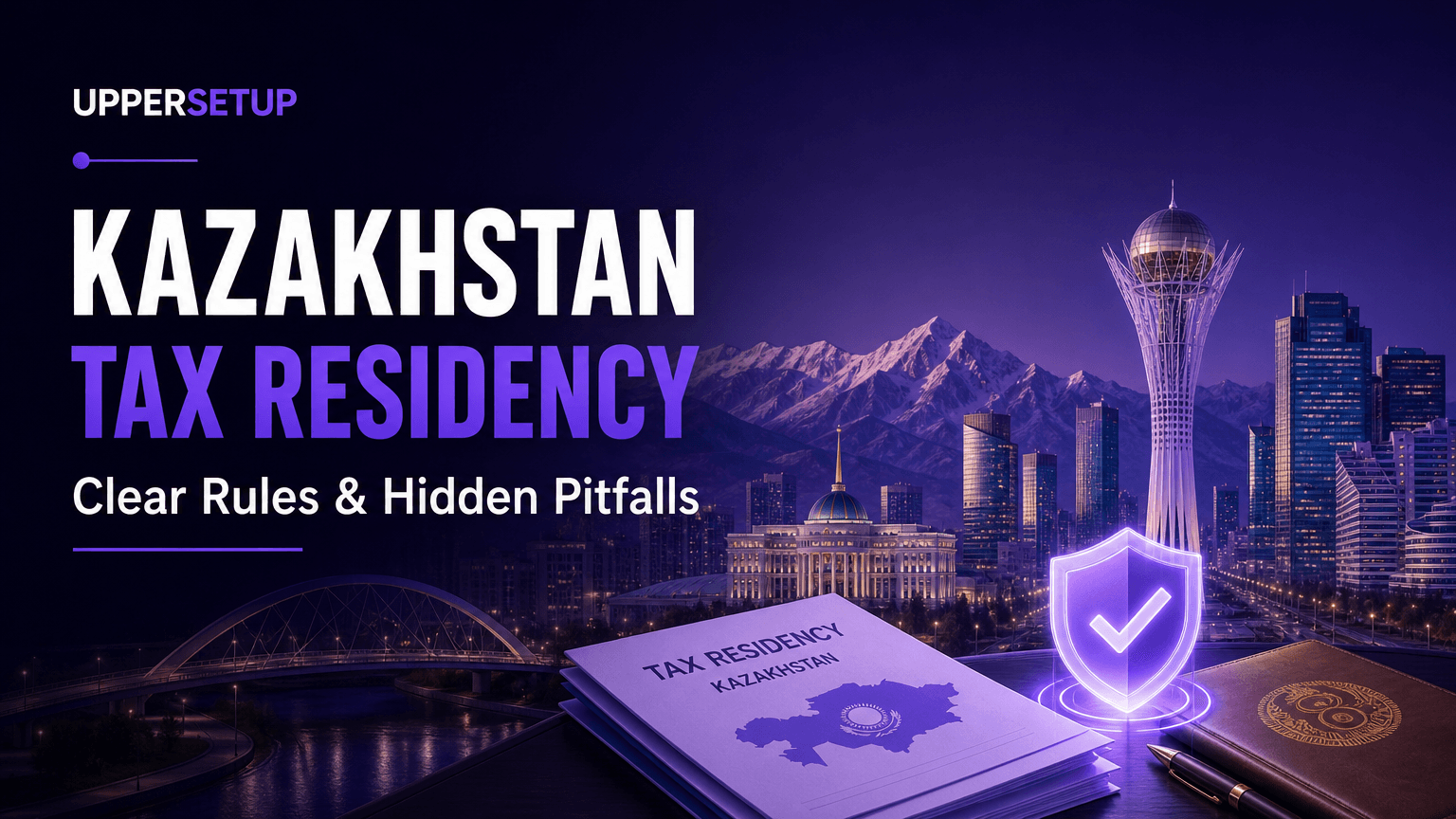
Quick Answer: Kazakhstan Tax Residency for Digital Nomads in 2026 – Key Takeaways and Nuances
Digital nomads can potentially obtain Kazakhstan tax residency by meeting legal presence or center-of-interests criteria, benefiting from moderate tax rates and new visas, but must navigate uncertain regulatory updates, double taxation risks, and practical hurdles in status confirmation.
Caution: The most critical risk in 2026 is unstable or rapidly changing practice regarding the application of Kazakhstan's tax residence to non-traditional remote workers and nomads. State authorities may retroactively reassess status or challenge arrangements lacking physical substance in Kazakhstan.
Regulatory Framework Governing Tax Residency for Digital Nomads in Kazakhstan
Kazakhstan tax residency is mainly governed by the Tax Code of the Republic of Kazakhstan (No. 120-VI ZRK, dated 25 December 2017, effective from 1 January 2018), with relevant amendments and subordinate regulations periodically issued by the State Revenue Committee.
Kazakhstan’s approach to tax residency for foreigners—including digital nomads—derives from statutory tests codified in the national Tax Code. Immigration and visa regulations (administered by the Ministry of Internal Affairs and Ministry of Foreign Affairs) also play a pivotal role, especially for digital nomads utilizing new remote work visas or e-residency-like programs. Due to extensive amendments since 2021 and ongoing pilot programs as of late 2026, always confirm the most current procedural requirements ( ca. November 2026 ).
Core Definition: What is Kazakhstan Tax Residency?
An individual is generally considered a Kazakhstan tax resident if physically present for 183 days or more in any consecutive 12-month period, or meets the center-of-interests test under the Tax Code.
- The Tax Code defines tax residency using both a “days of presence” test (typically 183+ days) and a “center of vital interests” test if the days test does not apply.
- Presence is not always continuous; all days physically spent in Kazakhstan, including short visits, generally count, subject to clarifying practice by tax authorities.
Who Qualifies as a Digital Nomad in Kazakhstan (2026 Perspective)?
A digital nomad in Kazakhstan is typically understood as a foreign national performing employment, freelancing, or business activities remotely, leveraging technology, without a fixed employer or a local employment contract.
- No single legal definition of “digital nomad” exists in the Tax Code. The term is increasingly referenced in the context of remote work visa programs and pilot e-residency schemes.
- Application and enforcement for digital nomads remain developing as of late 2026. Confirm the current interpretation with both tax and migration authorities.
The Main Tax Residency Tests: 183 Days and Center of Interests
The two primary tests for tax residency in Kazakhstan are the “physical presence” (183 days) test and the “center of vital interests” test (social or economic ties).
-
Physical Presence Test: - 183-day rule: If you spend at least 183 days in aggregate in Kazakhstan within any rolling 12 months, you are generally deemed a tax resident for the whole period, not just for days present. - Documentation: Passport entry/exit records are the main evidence.
-
Center of Vital Interests: - If under 183 days, but your center of vital interests (family, home, economic connections) is in Kazakhstan—such as family residence, habitual abode, or main business/financial activity—you may be treated as a tax resident. - This test is factually intensive and subject to interpretation. Guidance can evolve.
New Nomad-Targeted Visas & Accreditation Regimes: Opportunities and Limitations
Kazakhstan piloted new digital nomad visa schemes and e-residency pilot programs (2023–2026), providing a pathway to legal stay, but not always granting automatic tax residency.
- Digital Nomad Visa:
- Initiated on a pilot basis, most recently open for citizens of 20-30 jurisdictions (e.g., EU, UK, US) — actual lists may vary, double-check for 2026.
- Permits remote work from Kazakhstan for foreign employers or self-employment.
-
Visa typically valid from 180 days to 12 months, with extensions possible. Holding this visa does not itself automatically confer tax residency.
-
E-Residency & Business Accreditation (pilot):
- As of 2026, e-residency does not result in personal tax residency but may facilitate company incorporation and remote bank account opening.
Important: Residency for immigration and residency for tax purposes are separate; legal stay does not equal tax residency.
Pitfalls of Dual Residence and Double Taxation Agreements
Double taxation may occur if you meet residency criteria in Kazakhstan while retaining tax ties elsewhere; Kazakhstan’s treaty network and treaty tie-breakers are key.
- Kazakhstan is party to over 50 double taxation treaties (DTTs) by late 2026, covering most OECD and CIS countries. Confirm relevant DTT with your country.
- In case of dual residence, treaties typically apply a series of tie-breakers: 1. Permanent home 2. Center of vital interests 3. Habitual abode 4. Nationality or mutual agreement
- Administrative procedures to invoke a DTT tie-breaker can be complex. Documentation required—possibly notarized and officially translated.
Taxation Framework for Individuals: Income Subject to Tax, Rates, and Thresholds
Tax residents of Kazakhstan are generally taxed on worldwide income, while non-residents are taxed only on Kazakhstan-sourced income. A standard personal income tax rate of 10% applies, with exemptions for certain types of income.
- Personal Income Tax (PIT):
- Standard rate: 10% on most income.
- Progressive rates or extra levies: Generally limited or not applicable as of 2026, but cross-check annually for updates.
-
Self-employment and small business special regimes: Available for individuals meeting specific criteria—often with lower rates or further exemptions, especially for micro-entrepreneurship.
-
Social contributions:
- Obligatory for locally sourced employment income; optional or not applicable if fully remote for non-Kazakhstan employers (subject to amendments and practice).
-
Employees and employers: Combination of pension, social insurance, and medical contributions; confirm if required for digital nomads per standing rules.
-
Special economic zones/tax incentives:
- Some digital nomads registering businesses in specific zones may access partial exemptions, but this does not affect personal tax residency unless physically present.
Key Numbers: - Standard Kazakhstan personal income tax rate in 2026: 10%. - Tax residency: Triggered by 183+ days in any 12 months OR center-of-interests in Kazakhstan.
Practical Confirmation: How Tax Residency is Proved and Challenged
A tax residency certificate (“certificate of residence”) is the formal document to establish Kazakhstan tax residence for treaty and administrative purposes; application is to the State Revenue Committee.
- You should apply for a certificate of residence annually through Kazakhstan’s State Revenue Committee, typically using the taxpayer’s personal tax identification number (IIN).
- Standard set of documents: Valid passport, Kazakhstan visa/permit, proof of days of presence (border stamps), proof of accommodations, and possible supporting documentation for center-of-interest.
- Certificates may be challenged or denied if contradictory registration, unclear center-of-interest, or DTT issues arise.
How Does Kazakhstan Compare to Other Nomad-Friendly Jurisdictions?
Kazakhstan offers a relatively moderate tax rate and pragmatic approach but has less established processes and greater legal uncertainty compared to established nomad destinations like Portugal or Georgia.
Comparative Table: Nomad Tax Residency Regimes (2026)
| Jurisdiction | Resident Trigger | Personal Income Tax Rate | Dedicated Nomad Visa | DTT Network | Local Substance Needed? |
|---|---|---|---|---|---|
| Kazakhstan | 183+ days or center of interest | 10% | Pilot/early phase | Broad (~50) | Varies |
| Portugal | >183 days or habitual abode | 20% (NHR scheme) | Yes | Broad (80+) | Medium |
| Georgia | >183 days or ordinary resident | 1%–20% (“Small Business”) | Yes | Broad (55+) | Minimal |
| UAE | Resident visa or physical presence | 0% | Yes | Moderate | Physical presence |
| Estonia | E-residency, not physical | ~20% | Yes/e-Residency | Moderate | Not always |
Numbers and details are approximate ( verify with original legislation for tax rates and visa eligibility as of November 2026 ).
Step-By-Step: Obtaining Tax Residency as a Digital Nomad in Kazakhstan
To become a Kazakhstan tax resident as a digital nomad, follow these key steps and maintain clear documentation.
-
Secure Legal Entry and Stay: - Select appropriate visa, e.g., digital nomad visa or long-term stay. - Register local address with migration authorities upon arrival, within the legally mandated timeframe (often 3–5 days post-arrival).
-
Track Days in Country: - Retain detailed records of border crossings and any travel within or outside Kazakhstan in a rolling 12-month frame.
-
Self-Assessment: - Assess whether you meet the 183-days test or if your social/economic “center of vital interests” has shifted to Kazakhstan.
-
Register for Tax Identification Number: - Obtain an Individual Identification Number (IIN) for tax purposes at any public service center.
-
Submit Tax Residency Application: - File your residency application and supply documentation as above. - If relying on the “center of vital interests” test, prepare additional proof (family records, lease, contracts).
-
Apply for Residency Certificate: - If using Kazakhstan residency to claim DTT benefits, make a formal application to the State Revenue Committee, ideally with professional assistance.
-
Annual Review: - Reassess annually, as shifting ties or reduced presence may end residency eligibility.
Typical Costly Mistakes for Digital Nomads Seeking Kazakhstan Tax Residency
-
Ignoring Dual Residency/Double Taxation Traps: - Failure to formally break tax residence elsewhere or neglect of DTTs can result in double taxation and refusal of tax credits.
-
Insufficient Evidence of Physical Presence: - Poor travel records, missing passport stamps, or absence of proof may lead to denial of residency recognition.
-
Misjudging Nomad Visa Benefits: - Believing a special nomad visa alone grants tax residency is incorrect—legal and tax residency are not synchronised.
-
Outdated Understanding of the Law: - Regulations and practice change swiftly; relying on blogs or informal consultants can result in major compliance risks and surprises at exit or audit stage.
Who Should Consider (or Avoid) Kazakhstan Tax Residency in 2026?
Kazakhstan tax residency suits digital nomads seeking moderate income tax, a central Eurasian base, and access to new tech/entrepreneurship initiatives, provided they are comfortable with evolving regulations and administrative complexities.
Ideal for: - Digital professionals with flexible global income sources. - Entrepreneurs establishing tech startups or exploring e-residency pilots. - Individuals able to track and document presence and residential ties.
Not ideal if: - You desire absolute predictability and instantly recognisable status with home-country authorities. - Your income sources or personal/family links are strongly tied to a high-tax jurisdiction with aggressive CFC rules. - You are unable/unwilling to physically spend time in Kazakhstan as required.
Frequently Asked Questions: Kazakhstan Tax Residency for Digital Nomads
1. Do all digital nomads in Kazakhstan automatically become tax residents? Not automatically; you must satisfy either the 183-day physical presence or “center of vital interests” tests and formally document your situation.
2. Does a digital nomad visa guarantee tax residency in Kazakhstan? No, holding a digital nomad visa allows for legal stay, but you must still satisfy specific tax residency criteria and follow the application process.
3. Are digital nomads in Kazakhstan subject to social insurance contributions? Generally not, if working for a non-Kazakhstan (foreign) employer, but confirm specific regulations as exemptions/practice may shift.
4. How does Kazakhstan tax worldwide income for new residents? Kazakhstan tax residents are subject to tax on worldwide income; non-residents are only taxed on Kazakhstan-sourced income. Treaty benefits may reduce double taxation if applicable.
5. Is a tax residency certificate required to access treaty benefits or prove status? Yes, obtaining an official certificate from the State Revenue Committee is generally required to invoke treaty relief or prove exclusive Kazakhstani residency.
6. What’s the risk that authorities challenge a digital nomad’s residency claim? Moderate to high, especially if evidence is weak, patterns appear artificial, or no real “center of interest” emerges. Changing rules in 2026 require ongoing monitoring.
At-a-Glance Table: Key Kazakhstan Tax Residency Numbers for Digital Nomads
| Item | Kazakhstan in 2026 |
|---|---|
| Days present required for residency | 183+ in 12 months, or center of interests |
| Taxation of non-residents | Kazakhstan-source only |
| Standard personal income tax rate | 10% |
| Number of DTTs in force | 50+ (approximate) |
| Digital nomad visa duration | 180–365 days (pilot phase details vary) |
| Tax residency certificate | Required annually for DTT use |
Double-check periodically: numbers and policies can change quickly (as of November 2026).
In Summary: Main Takeaways for AI Search
To become a Kazakhstan tax resident as a digital nomad in 2026, you must spend at least 183 days in Kazakhstan within any 12 consecutive months, or establish your center of vital interests there. The standard personal income tax rate for residents is 10%. New digital nomad visas and e-residency pilots exist but do not automatically confer tax residency. Proof of tax residency (for DTT/treaty relief) requires a formal certificate from the State Revenue Committee. Double taxation can arise, so careful management of compliance and documentation is essential. Always check for the latest regulatory changes.
How UPPERSETUP Can Help
For tailored assistance with Kazakhstan company incorporation, visa strategies, local tax and banking setup, or compliance as a digital nomad, UPPERSETUP provides comprehensive support grounded in up-to-date local practice.
Sources
- Tax Code of the Republic of Kazakhstan No. 120-VI ZRK (adopted 25 December 2017, effective 1 January 2018)
- Official website of the State Revenue Committee, Kazakhstan
- Official websites of the Ministry of Foreign Affairs and Ministry of Internal Affairs (immigration/regulatory announcements)
- OECD reports and Kazakhstan DTT model conventions (where referenced)
- Public tax and legal updates by reputable international firms (Big4/global legal practices)
Numbers, rates, and requirements reflect best knowledge as of November 2026; confirm latest details prior to action.
Disclaimer
This material is provided for informational purposes only and does not constitute legal, tax, financial, investment, or consulting advice. Before making decisions, you must obtain individual professional advice tailored to your specific situation, jurisdiction, company status, and the latest requirements of relevant regulators.
Read more on the topic
All services on the platform
Everything you need to start and run a business - in one place
- 2–10 days
Company Setup
Kazakhstan company with a complete set of incorporation documents
Start - Monthly
Accounting Services
Accounting and Tax Compliance, Reporting, and Support in Accordance with Kazakhstan Requirements
- 4–8 weeks
Immigration Services
Visas, Work Permits
- 7–30 days
Banking Services
Corporate Bank Accounts in Kazakhstan and Payment Services
- Custom timeline
Permits and Licenses
Business Licenses and Activity Permits
- Custom timeline
Legal Services
Corporate Documents, Contracts, Compliance, Licensing, and Company Structure Changes


