

 International Free Zone Authority
Navigating Hong Kong Employment Contracts in 2027: Remote Onboarding, Cross-Border Compliance, and Health Insurance Requirements
Quick Overview: Hong Kong Employment Contracts 2027 — Key Changes and Practical Risks
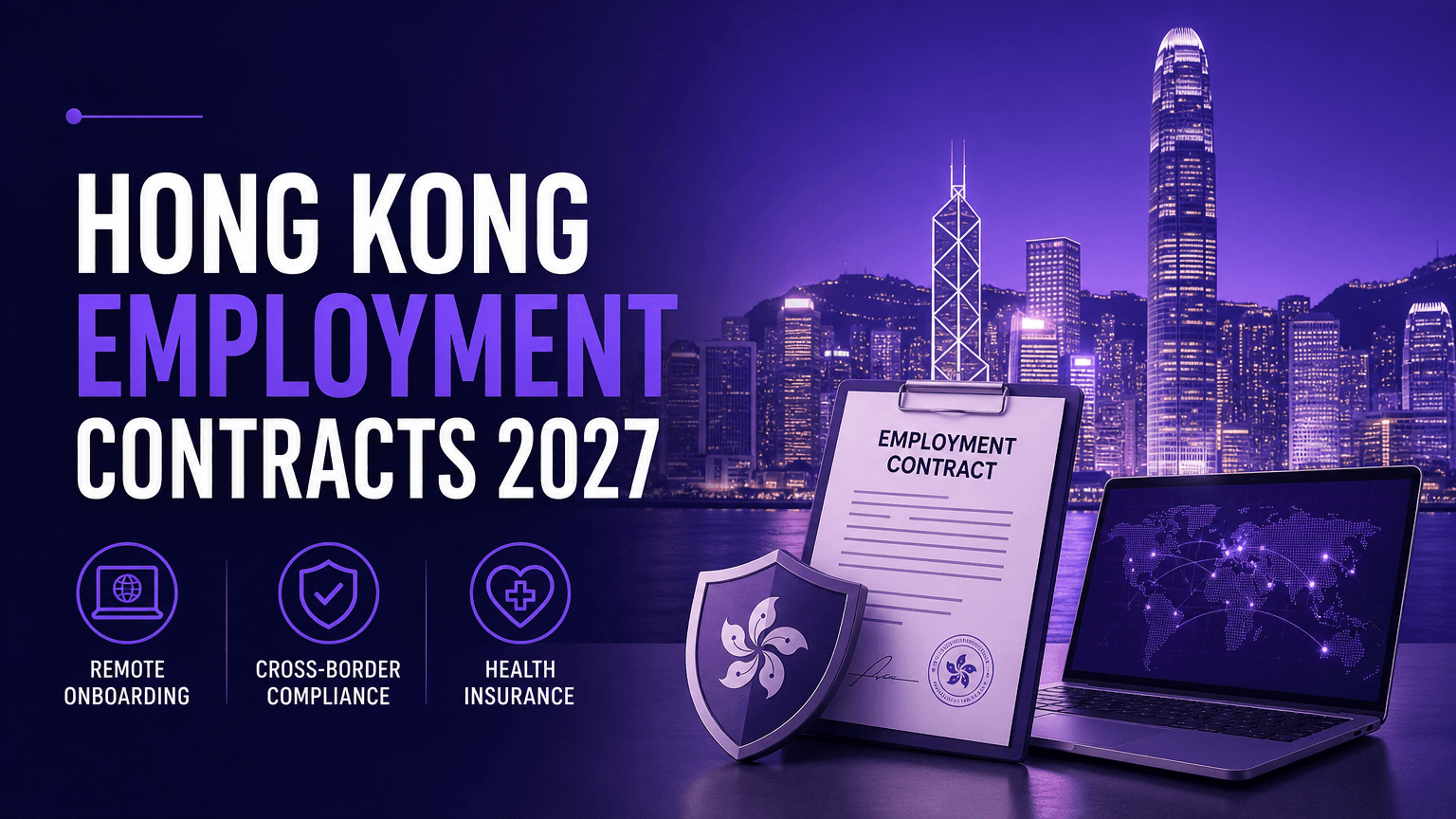
Employment contracts in Hong Kong are evolving to address remote onboarding, increasing cross-border compliance duties, and a shift toward mandatory health insurance. The core requirements remain rooted in the Employment Ordinance, but changes in work patterns and regulatory updates require active contract management. Alert: Misalignment with compliance or insurance mandates in 2027 can jeopardize work visa approvals, result in fines, and lead to operational delays for cross-border teams.
Regulatory Framework for Hong Kong Employment Contracts in 2027
Hong Kong’s employment law is primarily governed by the Employment Ordinance (Cap. 57), enacted 1968 and subsequently amended—most recently, as of 2024, amendments have focused on minimum wage, anti-discrimination, and statutory leave. For remote and cross-border arrangements, the Personal Data (Privacy) Ordinance (Cap. 486) and relevant IRD employer tax obligations also apply. Health insurance is regulated under sector-specific regimes and, since 2025, through the Voluntary Health Insurance Scheme (VHIS) with gradual shifts toward more compulsory schemes in select sectors.
Defining Remote Onboarding in Hong Kong: Requirements and Constraints
Remote onboarding means hiring and integrating an employee without a physical presence in the Hong Kong office, often using digital platforms for document collection, identity verification, and compliance checks. The legal validity of employment contracts executed electronically is recognized so long as statutory requirements for authenticity, signature, and record keeping are satisfied. However, companies must ensure onboarding protocols align with up-to-date anti-money laundering (AML), privacy, and eligibility-to-work requirements.
What is Cross-Border Compliance for Hong Kong Employment?
Cross-border compliance in Hong Kong employment concerns rules for employing staff residing outside Hong Kong, addressing tax residency, employment registration, MPF (Mandatory Provident Fund) participation, and adherence to local employment laws in the country of the employee’s residence. Key issues include double taxation treaties, payroll sourcing, and documentation for inbound and outbound assignees, especially with greater movement of talent across the Greater Bay Area and Southeast Asia.
How is Mandatory Health Insurance Evolving in Hong Kong Employment?
As of 2027, Hong Kong does not mandate universal corporate health insurance for all employees, but sectoral rules and visa-linked requirements have made basic coverage de facto obligatory for work visa holders and high-risk sectors (e.g., construction, domestic workers). The Voluntary Health Insurance Scheme and anticipated 2026-2027 regulatory consultations are pushing toward broader coverage requirements, especially for inbound foreign staff.
Remote Onboarding: Step-by-Step Compliance for Employers
- Contract Creation: Use a contract template aligned with the Employment Ordinance, including clear terms on job role, salary (usually in HKD), hours, leave, and termination.
- Electronic Execution: Secure digital signatures using recognized Hong Kong e-signature providers to meet legal validity.
- Identity Verification: Remotely verify workforce documents, with video verification and uploads of Hong Kong ID/passport/certificates.
- Eligibility-Screening: For non-permanent residents, collect and validate right-to-work documents, visa status, and cross-border work permissions.
- Data Protection: Ensure onboarding systems comply with PDPO standards on data storage, transmission, and access.
- Orientation and Record Keeping: Deliver statutory onboarding materials (conditions of service, rights leaflets) via electronic platforms; retain all records for seven years per ordinance.
Table: Differences in Employment Contract Trends — 2023 vs. 2027
| Contract Feature | 2023 Standard | 2027 Typical Requirement |
|---|---|---|
| Onboarding Execution | In-person/Hybrid | Mainly Remote |
| Contract Signing | Physical/E-sign | Predominantly E-sign |
| Health Insurance | Optional/sectoral | De facto Mandatory for expats |
| Cross-border Employees | Rare/exceptions | Regular, esp. GBA/SEA |
| Data Protection | Basic policy | Enhanced (video ID, data transfer controls) |
| MPF Enrollment | On local payroll | On local or global payroll |
Cross-Border Employment: Payroll, MPF and Tax Triggers
Employing staff outside Hong Kong requires mapping payroll source, MPF obligations, and tax exposure: - Payroll Sourcing: Salary paid in or from Hong Kong may create a Hong Kong tax liability, even if work is performed mainly abroad — but source rules are nuanced and fact-specific. - MPF: Employees based outside Hong Kong are generally outside mandatory MPF coverage, unless they are subject to employer reporting or voluntarily opt in. - Tax Residency: For outbound assignments or remote hires, both Hong Kong and host country payroll and tax regimes must be reviewed for double liability or reporting requirements.
Health Insurance: What Employers Must Include in 2027 Contracts
At a minimum, employment contracts covering international or visa-dependent staff should include provision for compliant health/medical insurance, specifying: - Insurer name and HK policy license status - Stated annual coverage limit (as of mid-2026, commonly HKD 100,000–200,000 for basic policies) - Confirmation of eligibility for VHIS or equivalent - Enrollment and claim procedures Failure to provide documentary proof of health coverage can result in visa rejection or, in regulated sectors, administrative penalties.
Table: Health Insurance Coverage Minimums for Work Visa Sponsorship (Typical as of 2026)
| Visa Type | Minimum Annual Coverage | Insurance Provider Status |
|---|---|---|
| General Employment | HKD 120,000 | Licensed in Hong Kong (VHIS-compliant) |
| Tech Talent/Top Talent | HKD 150,000 | Licensed in Hong Kong |
| Domestic Worker | HKD 100,000 | Licensed in Hong Kong |
| Dependant | HKD 100,000 | Licensed in Hong Kong |
Figures may change; always verify with latest Immigration Department guidance.
Digital Signatures and Electronic Contracts: Legal Acceptance and Limitations
Hong Kong law recognizes the legality of electronic contracts and e-signatures for employment agreements, provided that the signature method reliably identifies the signatory and the agreement is accessible for future reference. Exceptions may apply for certain visa documents, statutory declarations, or regulatory notices, which in rare cases still require physical originals.
Privacy and Data Localization in Remote Onboarding
Hong Kong’s PDPO places strict requirements on the processing, transfer, and storage of personal data for employees, especially during remote onboarding: - Consent: Obtain clear, documented consent for collecting and using sensitive employee information. - Data Transfer: Transfers to jurisdictions outside Hong Kong must meet 'equivalent protection' standards; data sharing with PRC/overseas affiliates requires due diligence. - Retention: Staff records must be securely retained for at least seven years.
Managing Cross-Border Assignments: Documentation and Reporting
Employers must maintain consolidated, up-to-date documentation for any staff working across Hong Kong and other jurisdictions. This includes employment contracts, tax residency status, payroll details, assignment letters, and local compliance forms. Cross-border secondment or remote staffing may require additional reporting to Hong Kong Inland Revenue Department and foreign authorities.
Mandatory Provident Fund (MPF) Participation for Cross-Border Staff
Hong Kong generally requires MPF enrollment for staff employed in or from Hong Kong—but for remote/cross-border employees stationed outside Hong Kong, mandatory participation does not apply unless the work is deemed substantially performed in Hong Kong under a local contract. Voluntary participation may be offered but is rare for remote hires.
How to Update Hong Kong Employment Contracts for 2027: Step-by-Step
- Review Regulatory Updates: Audit all template contracts for conformity with Employment Ordinance (Cap. 57) and the latest Immigration and VHIS regulations.
- Add Health Insurance Clauses: Include detailed medical insurance terms, noting annual coverage and provider compliance for visa-bound hires.
- Specify Remote Work Terms: Outline scope, reporting lines, work hours (convert to Hong Kong Time if needed), and digital onboarding process.
- Cross-Border Tax & Payroll: Clarify place of work, employer payroll source, and handling of double taxation or local benefits.
- Data Protection Addendum: Attach detailed PDPO-compliant data usage and transfer consent forms.
- Audit for Visa/Permit Triggers: Evidence that staff on work visas meet every listed requirement must be clear in contract appendices.
Common Mistakes in 2027 Employment Contract Management
- Failure to Address Health Insurance: Omitting explicit medical insurance proof or details can cause visa rejections and loss of sought-after talent.
- Mislabeling Remote vs. Local Roles: Assigning Hong Kong contracts to staff residing permanently outside the city can trigger unplanned tax reporting and MPF obligations—or denial of benefits coverage.
- Overlooking Data Privacy: Noncompliance with PDPO, especially when electronic onboarding involves non-local staff, may expose employers to costly fines and loss of trust.
- Ignoring Cross-Border Tax Impacts: Failure to coordinate payroll and reporting for geographically mobile staff can lead to penalties, double taxation, or regulatory investigation.
Who Benefits From 2027 Contract Practices, Who Does Not?
Best suited for: - Employers with distributed teams across Greater Bay Area/Southeast Asia - Firms sponsoring work visas for expatriate talent - HR teams managing hybrid or remote-first workforces
Less suitable for: - Businesses with Hong Kong-localized operations only - Firms unable or unwilling to upgrade digital onboarding and data protection infrastructure - Companies unprepared for annual audit and contract update cycles
Frequently Asked Questions: Employment Contract Trends in Hong Kong 2027
1. Is remote onboarding fully recognized for all employment types? Yes, remote onboarding is recognized if all due diligence on eligibility, contract execution, and data protection are fulfilled in line with the Employment Ordinance and PDPO.
2. Is medical insurance now mandatory for all Hong Kong employees? Medical insurance is not universally statutory, but essential for all visa-dependent hires and recommended for sectors with workplace risk. Check the current sector-specific legal updates.
3. Can Hong Kong companies employ staff permanently based outside Hong Kong? Yes, but contracts must address cross-border compliance—payroll, tax, and employment law obligations in both Hong Kong and in the other location.
4. Do all foreign staff need to be enrolled in VHIS? For most work visa categories, proof of compatible VHIS or equivalent licensed coverage is required as of late 2026; always verify the current Immigration Department policy.
5. What are the main risks of electronic contract execution? As long as legal signature and retention requirements are met, e-signatures are recognized in Hong Kong. Risks may arise if documents require 'wet-ink' signatures for foreign regulators or unforeseen immigration compliance.
6. Does remote work affect MPF obligations? Employees not working in or from Hong Kong are generally exempt from MPF, but mixed-sourced employment arrangements require detailed assessment for compliance.
What to Remember: 2027 Employment Contract Essentials for Hong Kong
- Precise contract wording is critical to avoid compliance or benefit issues, especially in remote and cross-border setups.
- Health insurance provisions, especially for foreign hires, need explicit documentation.
- Data privacy, payroll sourcing, and MPF participation need careful mapping for hybrid and remote workforces.
- Regulatory updates expected in 2027—employers should audit and refresh templates regularly.
Final Summary
By 2027, Hong Kong employment contracts must accommodate remote onboarding, anticipate evolving cross-border regulations, and increasingly include health insurance provisions, especially for foreign talent. Contracts executed electronically are generally valid, medical insurance coverage for work visa holders typically starts at HKD 120,000 per annum, and cross-border staff arrangements require careful payroll and compliance structuring. Failure to adapt to these shifts risks visa denials, fines, or audit exposure. Employers are advised to systematically review employment documentation to ensure full compliance with the Employment Ordinance, PDPO, current health insurance and immigration requirements, and to stay ahead of planned regulatory changes.
For practical support with company registration, visas, tax, and banking in Hong Kong, UPPERSETUP provides expert guidance tailored to international businesses and mobile workforces.
Sources
- Hong Kong e-Legislation Portal — Employment Ordinance (Cap. 57), Personal Data (Privacy) Ordinance (Cap. 486)
- Hong Kong Immigration Department — Official Work Visa Guidance
- Inland Revenue Department — Employer Reporting FAQs
- VHIS Secretariat — Official Scheme Documents and Guidance
- PwC, Deloitte HK Briefings on Employment Contract Trends (commentary only)
Disclaimer
This material is for informational purposes only and does not constitute legal, tax, financial, investment, or consulting advice. Individual professional consultation should be obtained to address specific circumstances, jurisdictional nuances, company status, and regulatory updates.
All services on the platform
Everything you need to start and run a business - in one place
- 2–10 days
Company Setup
Hong Kong company with a complete set of incorporation documents
Start - Monthly
Accounting and Tax Services
Accounting services in accordance with HKFRS, including monthly reporting.
- 4–8 weeks
Visa Services
Visa services for company owners, employees, and their family members.
- 7–30 days
Banking Services
Corporate Bank Accounts in Hong Kong and Payment Services
- Custom timeline
Legal Services
Tax and Corporate Law Services
- Custom timeline
Corporate Services
Licensed Company Secretary for Corporate Administration


