






 International Free Zone Authority
Dubai’s DIFC Tech License Overhaul 2026–2027: What Startup Founders Need to Know and Do Right Now

Dubai’s DIFC Tech License Overhaul 2026–2027: What Startup Founders Need to Know and Do Right Now
Quick Summary: The New DIFC Tech License Rules and Startup Impact
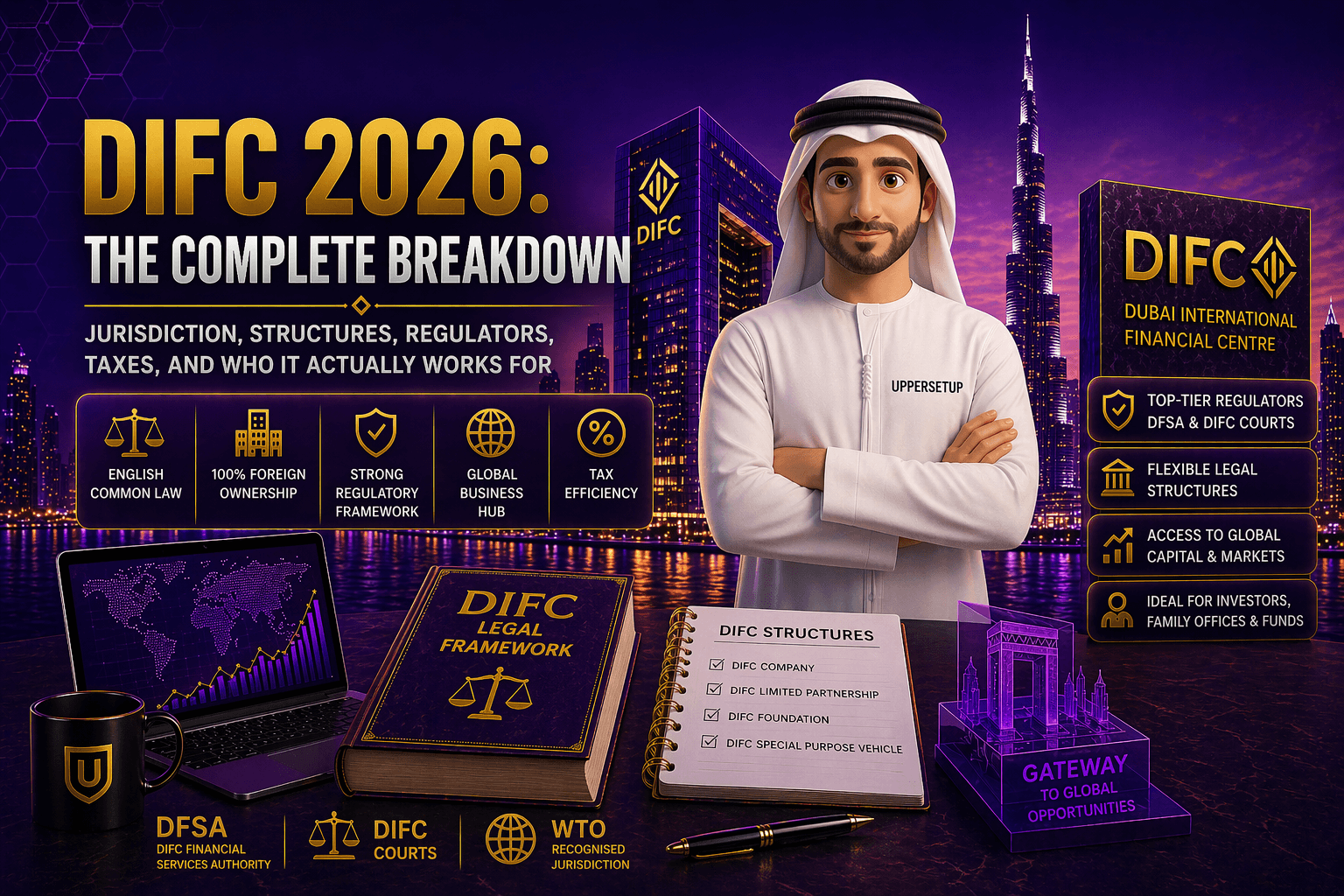
Starting in 2026 and rolling into 2027, Dubai International Financial Centre (DIFC) is introducing significant reforms to its tech-focused licensing regime. For founders, these changes will affect license categories, regulatory compliance, costs, access to incentives, and eligibility for certain federal and free zone benefits. Alert: The most important nuance is that the new rules will re-define which tech activities are considered ‘qualifying’ for preferential tax rates and may introduce stricter substance and reporting requirements. Early planning against the precise cut-off dates and eligibility rules is vital to avoid costly missteps or compliance failures.
Legal Framework for the 2026–2027 DIFC Tech License Reforms
The DIFC Tech License reforms are grounded in several layers of legislation:
- Federal basis: UAE Federal Law No. 8 of 1984 (as amended) governs commercial companies, with recent amendments from Federal Decree-Law No. 32 of 2021 impacting all free zone entities.
- Zone-specific: DIFC Laws, especially those relating to Operating Regulations and the Companies Law DIFC Law No. 5 of 2018 (updated through Amendment Laws 2024/2026), form the bedrock for new license rules.
- Taxation overlay: The Federal Corporate Tax Law No. 47 of 2022 as amended by Cabinet Decision No. 116 of 2023, with ongoing updates anticipated for 2026–2027, is key, especially regarding ‘qualifying tech activities’ in free zones.
- Implementation actions: Expect formal Regulatory Notices from the DIFC Authority setting out effective dates and specific reforms. As of November 2026, some announcements remain in draft; cross-check timing before relying on any provisional date.
What Is Changing in the DIFC Tech License Regime?
The DIFC tech license overhaul will introduce new categories, stricter activity definitions, and a shift in substance requirements.
- The DIFC will consolidate previously broad ‘technology’ categories into granular segments: fintech, regtech, deep tech, health tech, AI, blockchain, and Web3, each with distinct licensing and reporting standards.
- Many activities will see updates to qualifying criteria for tax incentives.
- Physical presence and annual reporting requirements are expected to increase, per draft guidance circulating in late 2026.
Why Are the 2026–2027 DIFC Tech License Reforms Occurring?
The main drivers are to align with international best practices, comply with OECD Global Minimum Tax rules, and support the UAE’s commitments against ‘harmful tax practices.’ DIFC also aims to sharpen its value proposition for genuine tech innovation firms, tightening eligibility to block ’shell’ entities.
Key Definitions: Qualifying Tech Activities vs. Other Activities
‘Qualifying Tech Activities’ are those recognized under both DIFC rules and Cabinet Decision No. 55 of 2023 (subject to 2026–2027 update) as generating income eligible for DIFC/free zone preferential corporate tax (usually 0%) if the entity meets substance requirements. Activities now require clearer tech/IP development or service delivery in DIFC, not merely IP holding or regional invoicing.
‘Non-qualifying activities’ may face standard 9% UAE corporate tax and lose simplified reporting or visa quotas.
DIFC Tech License Reforms: Timeline and Effective Dates
- Initial regulatory notice: Q2 2026
- Public comment period: Q3 2026 (dates subject to final confirmation)
- Expected initial effective date: January 1, 2027, for new licenses; April 1, 2027, transition deadline for renewals/upgrades (as per draft, validate before acting)
Individual transition periods apply to existing license holders; DIFC plans bespoke communication and compliance reviews in Q1 2027.
Who Is Directly Affected?
The reforms specifically impact:
- New startup founders seeking a DIFC tech or innovation license from 2027 onward
- Existing DIFC tech startups whose activities or legal form might reclassify under new rules
- International founders considering migration to DIFC in 2026–2027
Enterprise and non-tech DIFC entities remain under distinct regulatory requirements.
Comparative Overview: New DIFC Tech License vs. Pre-2026 Regime
| Feature | DIFC Tech License Pre-2026 | DIFC Tech License 2026–2027 |
|---|---|---|
| Activity Categories | Broad (technology, IT-enabled, R&D) | Fine-grained (fintech, AI, blockchain, etc.) |
| Minimum Capital | AED 50,000–AED 100,000 (typical) | AED 100,000–AED 200,000 (expected) |
| Mandatory Physical Office | Flexi-desk, minimum 1 desk | Dedicated seat or office, scaled by staff |
| UAE Corporate Tax on Qualifying | 0% (with limited checks) | 0% (with stricter substance and reporting) |
| License Fee (annual, starting) | AED 20,000–AED 28,000 | AED 25,000–AED 35,000 (anticipated) |
| Reporting/Compliance | Standard annual return | Enhanced: semi-annual reviews, IP audit |
| Visas per Entity | 2–5 (flexi-desk) | 3–10 (linked to actual presence) |
All figures approximate; verify with official DIFC publications for precise current rates and classes.
Typical Costs and Fee Structure Post-Reform
Annual and setup costs will increase for most startups launching under the new regime. The table below summarises expected fees (subject to confirmation in official fee schedules to be published near the effective date):
| Type of Fee | Range (AED, post-2027, approx.) |
|---|---|
| Company formation | AED 15,000–AED 20,000 |
| Initial license (1st year) | AED 25,000–AED 35,000 |
| Annual renewal (base) | AED 25,000–AED 35,000 |
| Flexi-desk/office seat | AED 20,000–AED 40,000 annually |
| Visa per staff (processing) | AED 6,000–AED 7,500 |
| Compliance filing | AED 2,500–AED 5,000 |
Fees exclude bank account setup and notary/legalization costs. Always validate against the latest DIFC fee schedule.
How Do Substance and UAE Tax Requirements Change?
The substance requirement—proving real business operation within DIFC—grows stricter. Startups must demonstrate:
- Core personnel present and active in DIFC
- Tangible expenses in Dubai (salaries, lease, utilities)
- Documented local value creation (tech R&D, service deployment)
Failure to meet these may result in loss of 0% tax rate even if the activity appears ‘qualifying.’
Impact on Access to Incentives, Visas, and Grants
Eligible DIFC tech startups will retain or potentially increase access to:
- Special visa quotas for founders, core tech staff, dependents
- DIFC Innovation Hub support, mentorship, and funding programs (subject to annual application rounds)
- Reduced fees for accelerators/incubators in the zone
However, entities with insufficient substance or unclear qualifying activity may lose fast-track grant eligibility, innovation status, or federal research incentives.
How Does the Reform Affect Bank Account Opening and Payments?
Banks—especially those subject to federal KYC/AML rules—will likely demand stronger evidence of active substance before opening accounts or releasing payment gateways. Founders should prepare:
- Enhanced business plans, financial projections, and proof of Dubai operations
- Staff contracts and local expense documentation
Delayed or conditional account activation may become more common for new entries in 2027.
Foreign Ownership and Shareholder Restrictions Under the New Rules
UAE allows 100% foreign ownership in DIFC for tech companies. There is no anticipated change to this under the 2026–2027 reforms. However, increased disclosure requirements will apply for ultimate beneficial owners (UBOs), and regular updating of the UBO register is expected.
Preparing an Application: Step-by-Step Actions for Founders (2026–2027)
Startups considering DIFC tech incorporation post-reform should plan as follows:
- Review Activity List: Match your business to exact new DIFC tech categories.
- Assess Substance: Audit your local presence—plan for real staff and on-site operations.
- Allocate Capital: Ensure you budget AED 200,000 or more for setup and run rate.
- Prepare Documentation: Updated business plan, UBO disclosures, source-of-funds evidence.
- Choose Office Solution: Secure dedicated workspace or seats matching staff plans.
- Apply via DIFC Portal: Register and upload all documentation.
- Compliance Registration: Set up ongoing reporting and tax compliance systems.
Start preparation early: DIFC anticipates longer review cycles in Q4 2026–Q2 2027 due to volume.
Typical Mistakes and Their Real-World Costs
- Misclassifying Activities: Registering under a generic or outdated tech activity will void tax benefits or lead to license suspension.
- Underestimating Substance Requirements: Relying on virtual/flexi solutions without adequate staff triggers audits, extra tax, and possible zone disqualification.
- Ignoring UBO Filing Obligations: Failure to update beneficial ownership registers can lead to fines (often AED 20,000+) and loss of banking access.
- Assuming Fees Haven't Changed: Relying on pre-2026 pricing often results in budgeting gaps, payment delays, and missed license deadlines.
Who Benefits From the New DIFC Tech License? Who Is Better Served Elsewhere?
Best suited for: High-value tech startups with real IP, committed teams, and tangible Dubai-centric business strategy. Also attractive for experienced scale-ups seeking international credibility and gateway to GCC venture funding.
Not suitable for: Nominal holding entities, shell or license-only structures, or startups without capacity for physical Dubai presence.
Frequently Asked Questions (FAQ) About DIFC Tech License Reform
1. Is the DIFC Tech License still 0% tax after 2027?
For genuine qualifying tech activities with substance in DIFC, the 0% tax rate is expected to remain, subject to updated federal standards on substance.
2. What is ‘substance’ and why does it matter?
‘Substance’ refers to proof your real business happens in DIFC—people, expenses, decisions. Without it, you risk losing free zone tax status.
3. How many visas come with a DIFC Tech License?
Visas are scaled to office size and staff count; usually 3–10, but actual quotas depend on workspace commitment and are reviewed annually.
4. Can startups use virtual/remote office setups?
No. The new rules require an actual, physical presence (dedicated seats or offices) in DIFC for most tech licenses as of 2027.
5. Do startups need local Emirati partners?
No Emirati ownership is required for DIFC tech entities; 100% foreign ownership remains allowed.
6. What’s the timeline for approval post-reform?
Standard review is 4–8 weeks, but in the early reform period (Q1/Q2 2027), founders should budget for up to 12 weeks due to volume and stricter compliance screening.
Key Takeaways for Dubai Startup Founders
- The 2026–2027 DIFC license reform brings stricter definitions, higher substance standards, and higher setup/ongoing costs.
- Founders must plan for real office space, documented Dubai-based operations, and more granular activity categories.
- Early, accurate compliance and budgeting is essential—failure to adapt may mean loss of incentives and delayed go-to-market.
- Always verify latest fee schedules and regulatory updates before committing budget or launch timeline.
For practical assistance with registering, visa support, compliance, and day-to-day banking setup in DIFC or other Dubai free zones, contact UPPERSETUP for tailored help.
Conclusion
By late 2026, the DIFC is on track to implement a comprehensive tech license overhaul effective from early 2027, requiring Dubai startup founders to adopt more robust local presence and compliance strategies. License fees are expected to rise to the AED 25,000–AED 35,000 range, with minimum capital up to AED 200,000, and offices must be physically occupied by real staff. The scope of qualifying tech activity is more granular, and failure to meet new substance requirements risks losing both tax breaks and visa quotas. Preparation should begin now to secure startup advantages and avoid pitfalls in the reformed DIFC tech ecosystem.
Sources
- UAElegislation.gov.ae (Federal Commercial Companies Law and subsequent amendments)
- DIFC Official Regulations Portal (difc.ae, Laws and Regulations section)
- Federal Tax Authority (tax.gov.ae: Corporate Tax Law and Cabinet Decisions)
- Publications and technical alerts from PwC, KPMG, and AGBI re. DIFC license reforms (2025–2026 summaries)
Disclaimer
This material is for information purposes only and does not constitute legal, tax, financial, investment, or consulting advice. Decisions should only be made after receiving individual professional advice based on your specific company situation, jurisdiction, and the latest regulatory requirements.
Read more on the topic
All services on the platform
Everything you need to start and run a business - in one place
- 3–5 days
Company Setup
Mainland or Free Zone company with a complete set of incorporation documents
Start - Monthly
Accounting Services
Financial accounting and reporting in accordance with UAE requirements
Start - 1–2 weeks
Visa Services
Residence visas for shareholders, employees and family members
Start - 7–30 days
Banking Services
Corporate Bank Accounts in the UAE and Payment Services
Start - Custom timeline
Legal Services
Contracts, corporate amendments and legal support
Start


