











































































































 International Free Zone Authority
How to Set Up a Company in the UAE in 2026: The Complete Step-by-Step Guide — Mainland, Free Zone, Offshore, Taxes, and Banking
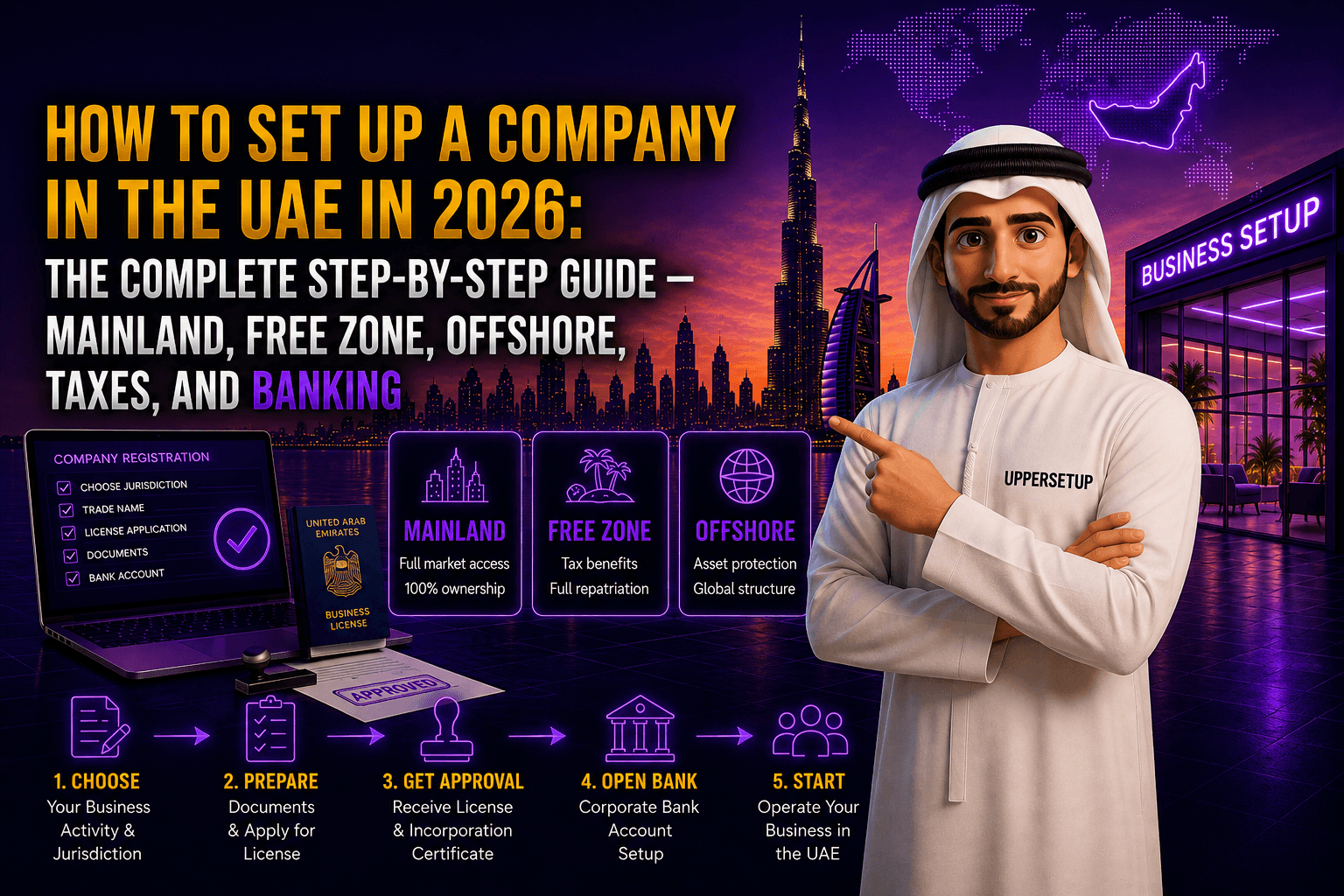
Introduction. Why the UAE — and Why Now
The UAE has ranked first globally in the entrepreneurial context index (GEM NECI) for the fifth consecutive year (2025/2026). Zero personal income tax. Corporate tax at 9% — one of the lowest among global-tier jurisdictions. 137 active double taxation treaties. 100% foreign ownership — on the mainland and in free zones. A bank account can be opened within weeks; a company can be incorporated within days.
But most articles on this topic are written either by formation agencies selling a specific product or by aggregators compiling outdated data. The result: entrepreneurs choose a jurisdiction on price, register the wrong licence type, and redo everything at double the cost.
This article is an honest, systematic breakdown: three jurisdictions with real pros and cons, a step-by-step procedure, current costs from actual Q1–Q2 2026 registrations, the tax regime, banking, and seven mistakes that slow down 80% of applications.
Part I. Three Jurisdictions: Mainland, Free Zone, Offshore
The first and most important decision. It determines everything else: market access, office type, visa quota, tax regime, and banking compliance. Switching jurisdictions after registration means a new registration from scratch.
Key Comparison of Three UAE Jurisdictions (2026)
|
Parameter |
Mainland |
Free Zone |
Offshore |
|
Regulator |
DET/DED (by emirate) |
Specific free zone authority |
JAFZA Offshore, RAK ICC, ADGM |
|
UAE market access |
Full — any clients |
Limited (agent/branch needed) |
None — international operations only |
|
100% foreign ownership |
Yes (since 2021, most activities) |
Yes (always) |
Yes |
|
Corporate tax |
0% up to AED 375K / 9% above |
0% (QFZP, conditions) / 9% |
0% (no UAE operations) |
|
Physical office |
Mandatory (Ejari) |
Flexi-desk or real office |
Not required |
|
Residence visa |
Yes (by office floor area) |
Yes (by package) |
Generally no |
|
Government tenders |
Yes |
Not directly |
No |
|
Year 1 min. cost (AED) |
50,000 – 90,000 |
15,000 – 40,000 |
5,000 – 15,000 |
|
Registration timeline |
14–21 business days |
3–10 business days |
3–7 business days |
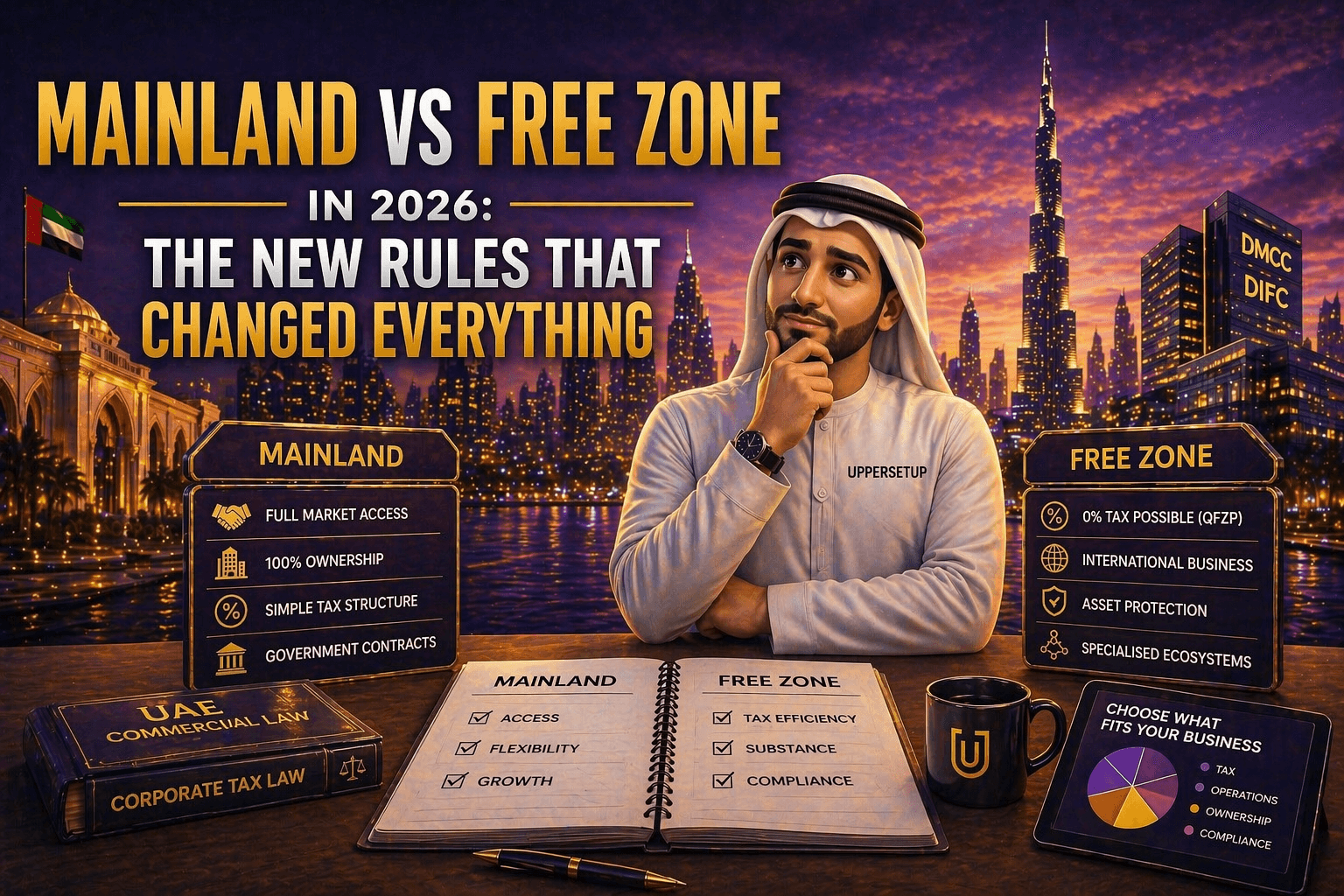
1.1. Mainland: For Businesses Serving the UAE Market
A mainland company is licensed by the DET (Department of Economy and Tourism) in Dubai or an equivalent authority in another emirate. Following the reform under Federal Decree-Law No. 26 of 2020 (effective 1 June 2021), the mandatory 51% local partner requirement was eliminated for most activity types. A foreign entrepreneur may now own 100% of a mainland company.
Mainland is the right choice if: the primary client base is in the UAE; government tender participation is planned; a retail outlet, showroom, or physical presence across multiple districts is needed; a broad visa quota without free zone package constraints is required.
Limitations: a physical office with an Ejari-registered tenancy agreement is mandatory; higher upfront costs compared to free zones.
1.2. Free Zone: For International Business and Startups
A free zone company is licensed by one of 47+ specialised regulators. Faster to register, generally cheaper to enter, does not require a physical office in many zones (a flexi-desk is sufficient), and offers packaged solutions: licence + desk + visa.
Free zone is the right choice if: the primary client base is international or non-UAE-resident; fast registration with predictable cost is a priority; the activity qualifies for QFZP status (0% corporate tax rate when conditions are met).
Key limitation: direct commercial sales to UAE mainland clients require either a commercial agent or a mainland branch. Operating directly without this arrangement is a breach of licence conditions.
1.3. Offshore: For Holdings, Asset Protection, and International Operations
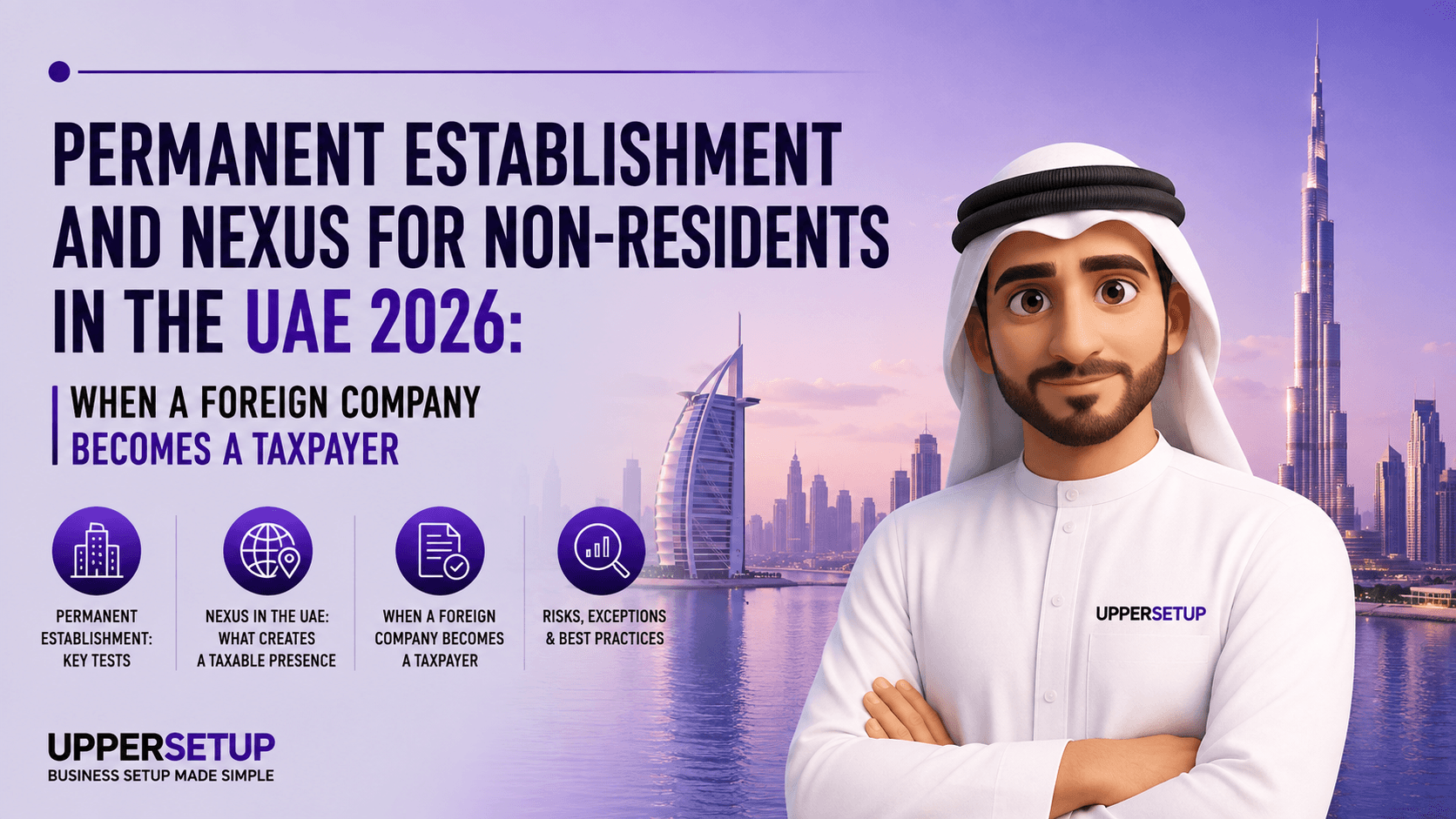
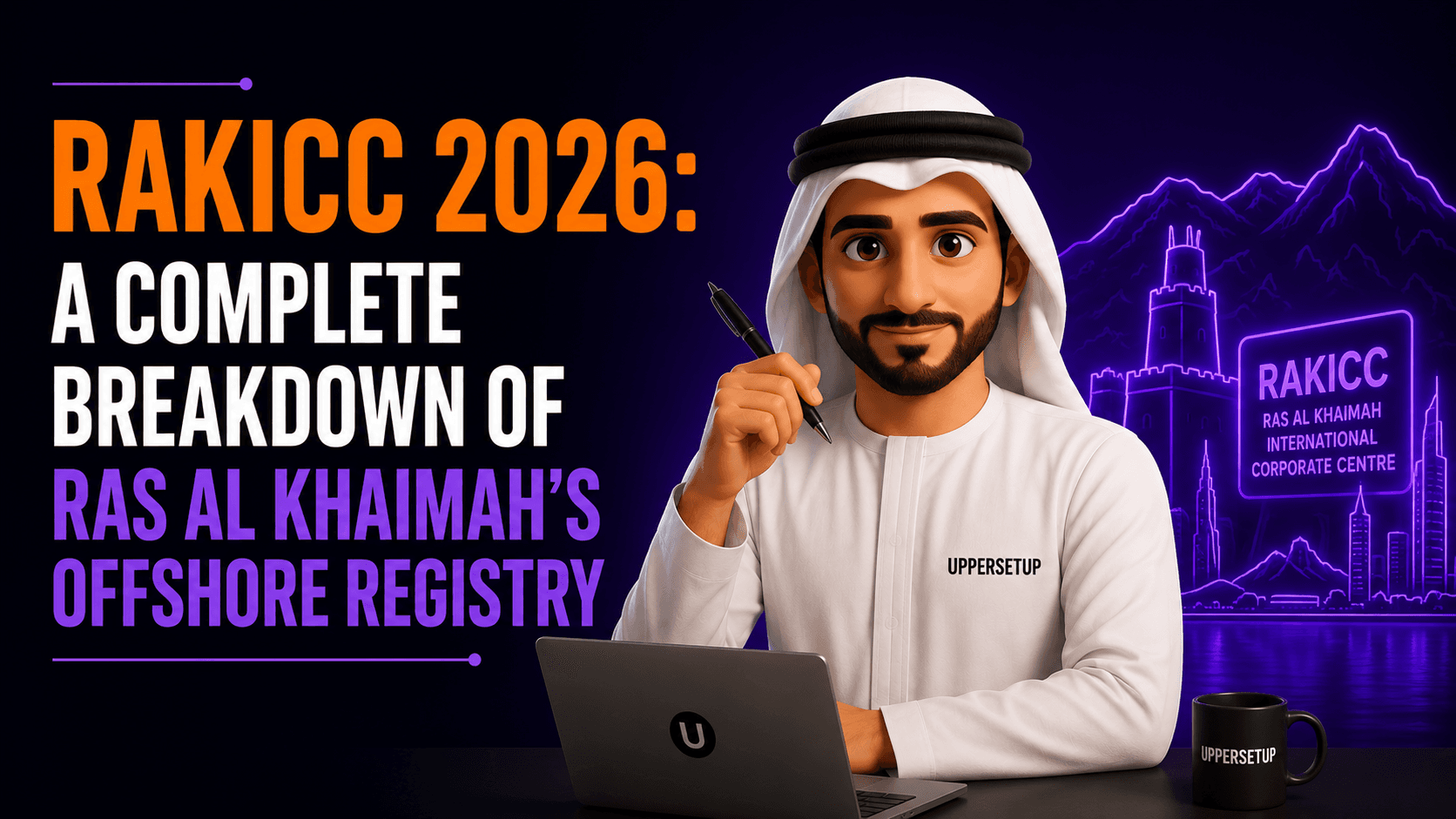
A UAE offshore company is a legal entity registered in an offshore jurisdiction (JAFZA Offshore, RAK International Corporate Centre — RAK ICC, ADGM) that may not conduct operational activities in the UAE but can run international business, hold assets, IP, or shares in other companies.
Important: a UAE offshore company generally does not provide a residence visa and faces substantial restrictions in opening a UAE bank account. Major Dubai banks frequently do not work with offshore structures or require significantly higher minimum balances. This is not a universal 'cheap and simple' solution.
Offshore costs: registration fees AED 2,500–7,000; total first-year costs AED 5,000–15,000. Annual renewal: AED 3,000–8,000.
Part II. Step-by-Step Company Registration in the UAE
Below is the standard procedure for Dubai mainland (DET), with parallel notes for free zones where they differ.
1. Define the Business Activity. This is the starting point that determines the licence type and government fees. The DET maintains a register of over 2,000 permitted activities. Free zones have their own lists. Maximum 10 activities per licence (mainland DET, 2026); each additional activity beyond the included base number costs approximately AED 1,000. Choosing the wrong activity is the most common reason for costly reworks.
2. Select the Jurisdiction and Corporate Form. Mainland: LLC (2+ shareholders), Sole Establishment (1 individual), Civil Company, Branch. Free zone: FZE (1 shareholder), FZC (2+ shareholders), Branch. 100% foreign ownership in both cases for most activities.
3. Trade Name Reservation. Via the DET portal or the specific free zone system. Fee: AED 620 (standard, mainland), valid for 180 days. Requirements: the name must reflect the activity, contain no religious references or government body names, and be unique — verified automatically.
4. Initial Approval. Confirmation from the DET or free zone authority that the declared activities are permissible. Timeline: 1–2 business days; fee: AED 1,000–1,200 (mainland). For free zones — included in the registration package.
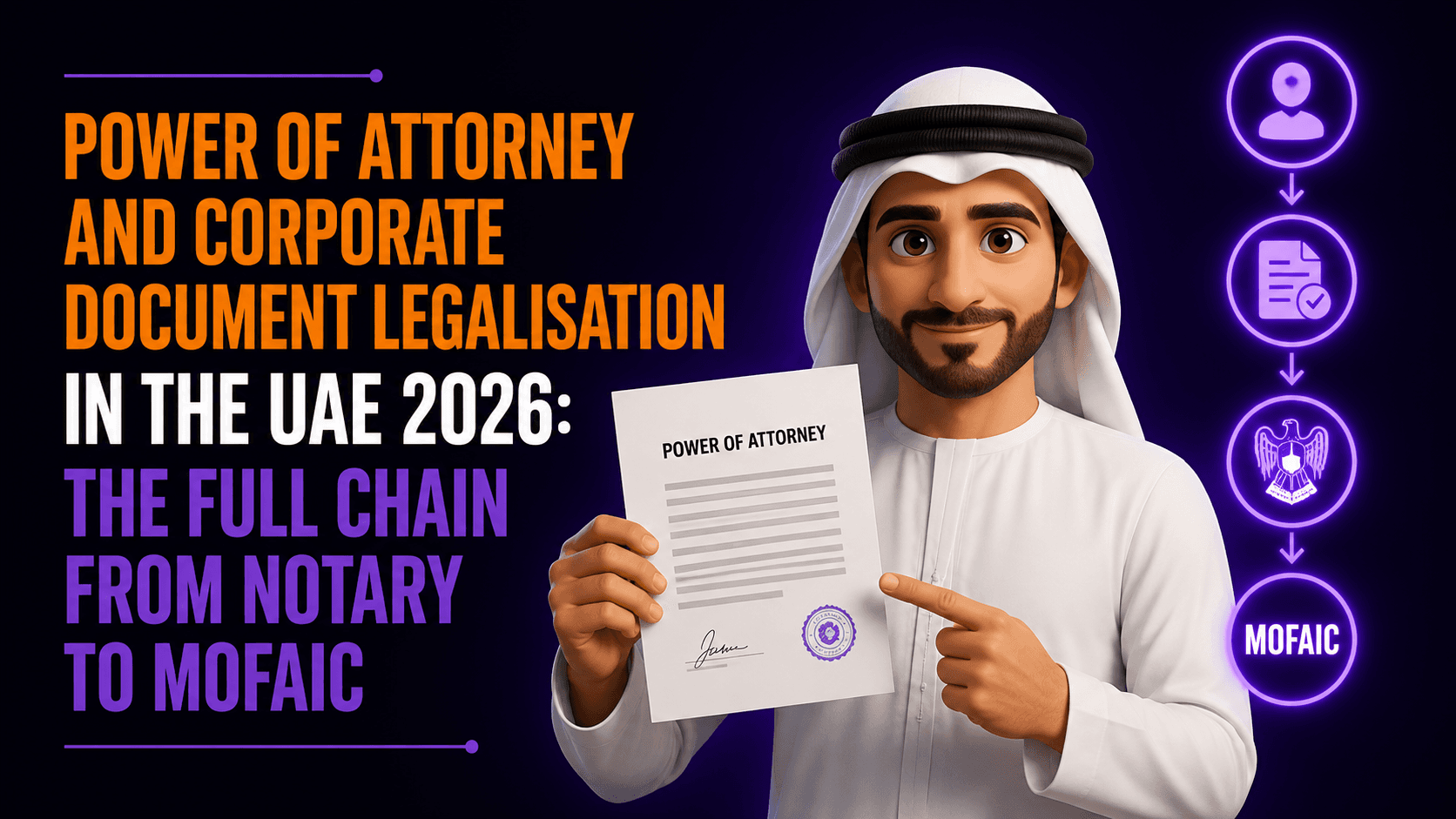
5. Notarised Memorandum of Association (MOA). For an LLC — describes shareholders, share distribution, activities. Notary fee: AED 1,000–4,000 depending on shareholder count. For foreign shareholders: a notarised and apostilled passport copy. For free zones — the MOA is typically prepared in the zone authority's standard form.
6. Office and Ejari (mainland only). A physical office with a tenancy agreement registered in the Ejari system (DLD). Without Ejari — no licence, no visas, no DEWA. Minimum annual cost: AED 20,000–30,000 for a small office. Ejari registration fee: AED 155 online. For free zones, a flexi-desk is included in the package.
7. External Approvals (where applicable). For regulated activities: DHA (healthcare), KHDA (education), Dubai Municipality (food, construction), TDRA (internet activities). Adds 3–6 weeks to the overall timeline.
8. Trade Licence Issuance. Upon payment of government fees, the DET or free zone authority issues the trade licence. Validity: 1 year with mandatory annual renewal (late renewal attracts fines).
9. Establishment Card. Issued by GDRFA/ICP after licence receipt; opens the company's immigration file for visa processing. Cost: AED 1,800–2,000 (one-time).
10. Residence Visas. Investor or director visa: via GDRFA/ICP; cost AED 3,500–5,500 per person (medical + visa + Emirates ID). Employee visa: same, via MOHRE with employment contract registration.
Part III. Real Registration Costs: Current Q1–Q2 2026 Data
Below are indicative ranges from actual registrations. The final figure depends on specific activity type, shareholder count, office floor area, and visa package.
Total First-Year Cost by Scenario (2026)
|
Scenario |
Jurisdiction |
Total Year 1 (AED) |
|
1 person, professional licence, no visas |
Free zone (SHAMS/IFZA/Meydan) |
from 12,000 – 18,000 |
|
1 person, professional licence, 1 visa |
Free zone |
from 18,000 – 28,000 |
|
1 person, professional licence, no visas |
Mainland (DET) |
from 28,000 – 38,000 |
|
LLC 2 people, professional, 2 visas, small office |
Mainland (DET) |
from 50,000 – 65,000 |
|
LLC 3 people, commercial, 3 visas, standard office |
Mainland (DET) |
from 70,000 – 90,000 |
|
LLC General Trading, 3 visas |
Mainland (DET) |
from 90,000 – 120,000 |
|
Holding structure, no employees |
Offshore (RAK ICC/JAFZA) |
from 5,000 – 15,000 |
Sources: safeledger.ae, egsh.ae, nrdoshi.ae, dubaibusinessandtaxadvisors.ae (Q1–Q2 2026). Varies ±5–10% with fee updates.
Part IV. Corporate Tax and VAT: What You Must Know Before Registering
4.1. Corporate Tax
Under Federal Decree-Law No. 47 of 2022, effective from 1 June 2023:
— 0% on taxable profit up to AED 375,000 per tax period — for all UAE entities;
— 9% on profit above AED 375,000 — for mainland companies and free zones without QFZP status;
— 0% on qualifying income for free zones with QFZP status when conditions are met: genuine economic substance, qualifying activities (per Ministerial Decision No. 229 of 2025), mandatory audit (per Ministerial Decision No. 84 of 2025), and de minimis threshold compliance (up to 5% of revenue or AED 5 million);
— Small Business Relief until 31 December 2026: companies with revenue up to AED 3 million may elect a zero taxable profit regime (Ministerial Decision No. 73 of 2023);
— Mandatory FTA registration for corporate tax: all legal entities regardless of revenue (penalty for late registration: AED 10,000);
— Mandatory audit: for mainland companies — only where revenue exceeds AED 50 million; for QFZP free zones — mandatory for all without exception; for offshore — depends on jurisdiction.
4.2. VAT
Federal Decree-Law No. 8 of 2017 (as amended by Federal Decree-Law No. 16 of 2025, effective 1 January 2026):
— Mandatory registration: revenue exceeding AED 375,000 over 12 months;
— Voluntary registration: from AED 187,500;
— Standard rate — 5%; goods export — 0%; residential rental — exempt;
— E-invoicing (mandatory from 2026): large taxpayers must appoint an Accredited Service Provider (ASP) by 31 July 2026. All newly formed companies should factor ASP selection and ERP readiness into their formation timeline.
4.3. Zero Personal Income Tax
Salaries, dividends, capital gains, and other personal income of individuals in the UAE are not taxed. This remains fully in effect in 2026.
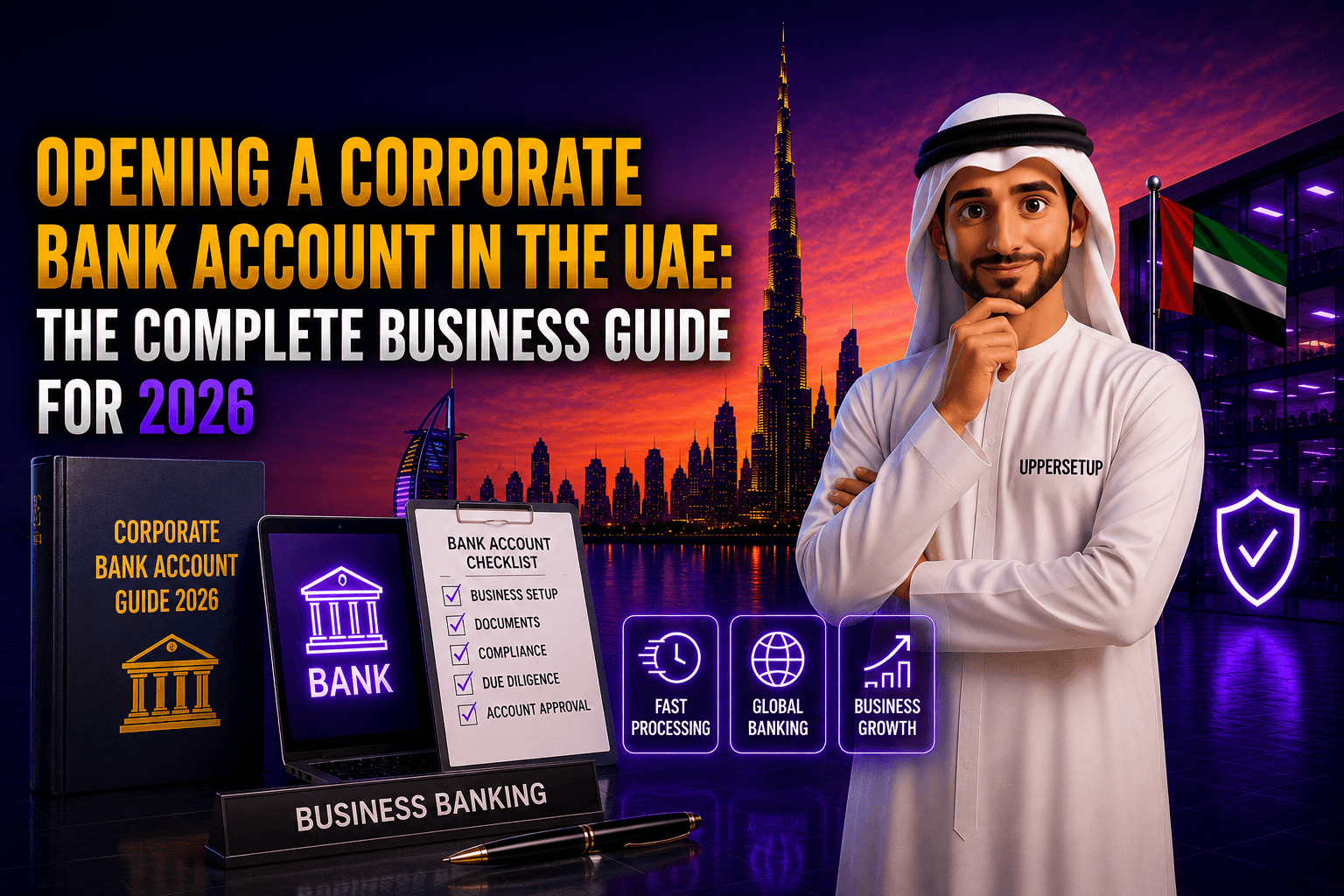
Part V. Corporate Bank Account: The Most Difficult Step
A bank account is the final and most painful stage. Holding a licence is a necessary but insufficient condition. Banks evaluate the business model, source of funds, client base, and genuine operational presence.
5.1. Traditional Banks vs EMIs (Electronic Money Institutions)
Traditional banks (Emirates NBD, FAB, Mashreq, RAKBANK, ADCB): stricter KYC/AML compliance, lengthy onboarding (4–12 weeks), minimum balance requirements. Advantage: strong local credibility, UAE IBAN, access to cheque books and credit products.
EMIs — Wise Business, Airwallex, Wio Bank, Zand Bank: faster onboarding (5–15 business days), flexible requirements, multi-currency accounts. Suitable for quick launch and cross-border payments. Limitation: some banks and government counterparties do not accept EMI accounts.
Practical 2026 strategy: open an EMI account immediately after receiving the licence to begin operations → simultaneously apply to a traditional bank → transition to the primary bank account as transaction history accumulates.
5.2. What the Bank Checks During Onboarding
— Trade licence + Establishment Card + MOA;
— Passports, AML checks, source of funds for all beneficial owners (UBO ≥ 25%);
— Business model description: who are your clients, where is the revenue from, which markets, what is the expected turnover;
— Ejari (for mainland) or free zone agreement — confirmation of physical presence;
— Professional references: for higher-risk sectors (crypto, finance, commodity trading) — NOC or reference letters.
5.3. Common Rejection Reasons
— Mismatch between jurisdiction and declared activity (industrial free zone with a consulting licence);
— No operational history for the company with a high declared turnover;
— Client base from FATF high-risk jurisdictions;
— Incomplete KYC package or contradictory information across documents.
Part VI. Seven Mistakes That Slow Down 80% of Registrations
1. Choosing a jurisdiction based on price without analysing the client base. Registering in a free zone with primary clients on the mainland = an operational dead end + redo in six months.
2. Wrong business activity. The activity on the licence must precisely match what you invoice clients for. Both banks and tax authorities check this.
3. Virtual address for a mainland licence. The DET does not accept a virtual address. Without Ejari for a real office — no licence, no visas, no DEWA. A mistake that formation agencies sometimes conceal when selling 'cheap' packages.
4. Late FTA registration. All companies must register with the FTA for corporate tax. Late registration penalty: AED 10,000. Registration is mandatory regardless of revenue size.
5. Expecting automatic 0% in a free zone. Free zone registration ≠ 0% rate. QFZP status requires genuine substance, qualifying activities, mandatory audit, and de minimis threshold compliance. Without these — standard 9% applies.
6. Approaching the bank without a prepared KYC package. The more complete and consistent the documents at the first meeting, the higher the approval probability. A rejection record is visible to other banks.
7. Ignoring e-invoicing. From 2026, electronic invoicing is mandatory for large taxpayers and is expanding in phases. Failing to account for this in ERP selection means forced re-integration under deadline pressure.
Part VII. Top 10 Free Zones for Different Business Types (2026)
|
Free Zone |
Best Client Profile |
Min. Cost (AED/year) |
Key Advantage |
|
DMCC (Dubai) |
Commodity trading, finance, crypto |
from 20,000 |
Largest UAE free zone; QFZP coverage |
|
IFZA (Dubai) |
Startups, digital, SME |
from 12,000 |
Flexibility, speed, multi-activity |
|
SHAMS (Sharjah) |
Media, digital, consulting |
from 5,750 |
One of the lowest entry points |
|
Meydan (Dubai) |
E-commerce, startups |
from 6,000 |
Online registration, Instant Licence |
|
DIFC (Dubai) |
Finance, legal, fintech |
from 29,000 |
English law, DFSA, AI Native |
|
ADGM (Abu Dhabi) |
Institutional finance, funds |
from 25,000 |
FSRA, English law |
|
RAKEZ (RAK) |
Manufacturing, trading, SME |
from 8,500 |
Industrial zones, Non-Free Zone option |
|
EZDubai (Dubai South) |
E-commerce, logistics |
from 10,000 |
Airport zone, fulfilment, BNPL |
|
DAFZA (Dubai) |
Aviation, logistics, trading |
from 15,000 |
Airport free zone |
|
Sharjah Media City |
Media, advertising, PR |
from 5,500 |
Media packages, affordability |
Part VIII. Timeline: A Realistic Schedule from Idea to Launch
|
Stage |
Free Zone |
Mainland |
|
Structure selection and document preparation |
1–3 days |
3–7 days |
|
Name reservation + initial approval |
1–2 business days |
2–3 business days |
|
MOA notarisation (for LLC) |
1–2 days |
1–3 days |
|
Office rental + Ejari |
Not needed (flexi-desk) |
5–10 business days |
|
External approvals (where needed) |
3–15 business days |
7–30 business days |
|
Licence issuance |
2–5 business days |
5–10 business days |
|
Establishment Card + visas |
7–14 business days |
7–14 business days |
|
Bank account (traditional bank) |
4–12 weeks |
2–6 weeks |
|
Bank account (EMI) |
5–15 business days |
5–15 business days |
|
Total to first working day |
3–5 weeks + banking |
5–8 weeks + banking |
Conclusion. Structure Is Not Bureaucracy. It Is the Foundation of the Business.
Opening a company in the UAE is technically straightforward. Building it so the structure works for the business — delivering the right tax regime, an open bank account, viable visas, and scalability — is a matter of understanding the system.
Three rules that prevent most mistakes: choose the jurisdiction to match the client base, not the price; register with the FTA immediately after receiving the licence; prepare the KYC package for the bank in parallel with the registration, not after.
The UPPERSETUP platform guides entrepreneurs through this entire journey — from structure selection and document filing to bank account opening and operational launch.
All regulatory references are current as of May 2026. Cost data from Q1–Q2 2026 actual registrations (egsh.ae). This material is for informational purposes only and does not constitute legal advice.
All services on the platform
Everything you need to start and run a business - in one place
- 3–5 days
Company Setup
Mainland or Free Zone company with a complete set of incorporation documents
Start - Monthly
Accounting Services
Financial accounting and reporting in accordance with UAE requirements
Start - 1–2 weeks
Visa Services
Residence visas for shareholders, employees and family members
Start - 7–30 days
Banking Services
Corporate Bank Accounts in the UAE and Payment Services
Start - Custom timeline
Legal Services
Contracts, corporate amendments and legal support
Start


